Disclosure: This post contains affiliate links. If you purchase through these links, I may earn a commission at no extra cost to you.
Of all the food at Seoul’s most famous market, one dish is the reason the crowds form. Gwangjang Market bindaetteok, the fried mung bean pancake, is the market’s signature, and this is everything I want you to know before you eat one: what it is, how it is made, how to order it, and where the good stalls are. I grew up in Seoul, have lived in Sydney for twenty years, and a fresh bindaetteok is the first thing I eat every time I land home. Let me set you up to enjoy it properly.
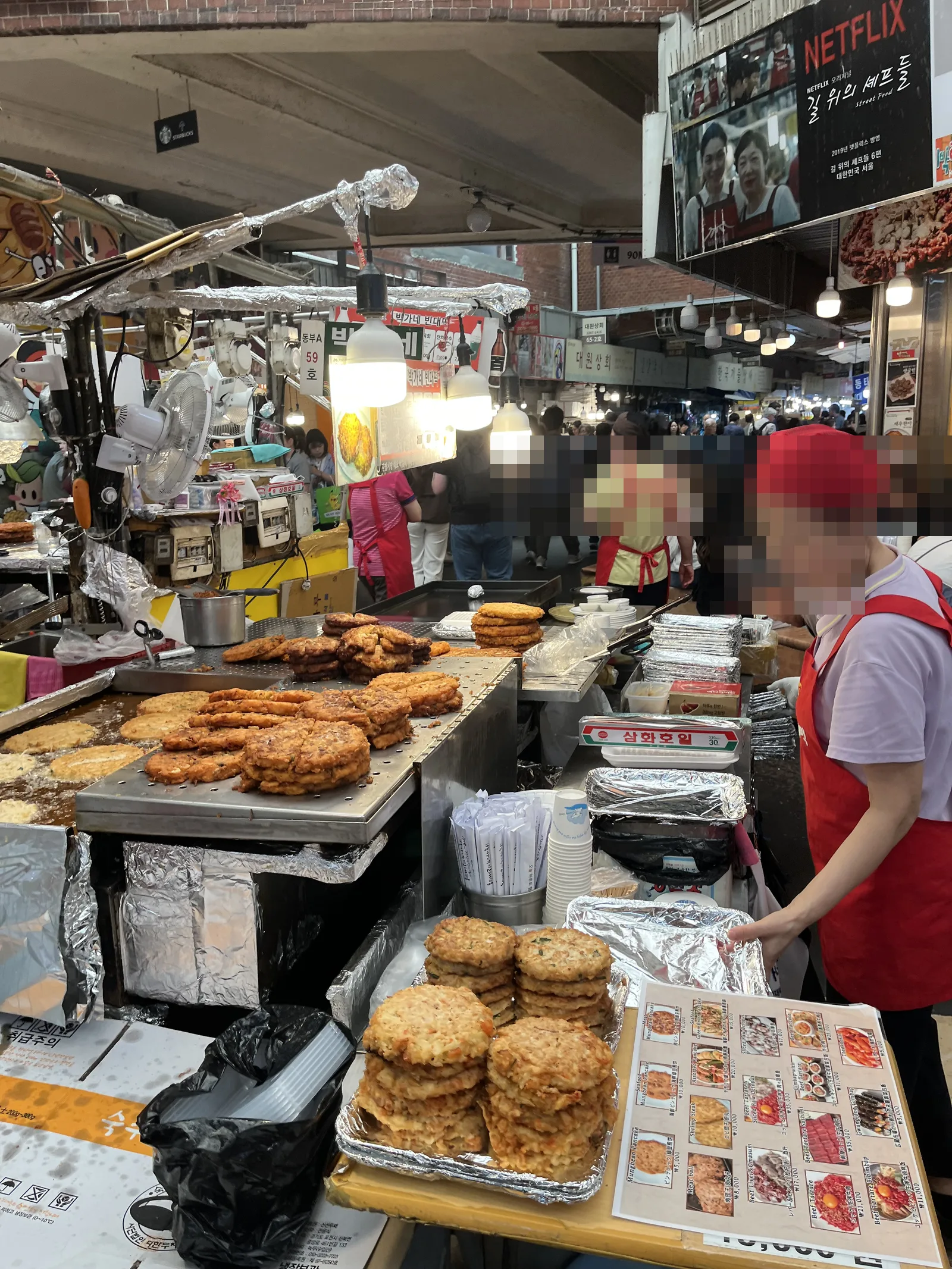
What Gwangjang Market Bindaetteok Is
Bindaetteok is a savoury pancake made from ground mung beans, not flour, which is what gives it its distinctive nutty, hearty character. Soaked mung beans are ground into a coarse batter, mixed with mung bean sprouts, scallion, and often a little pork or kimchi, then fried in shallow pools of oil until the edges go lacy and crisp. The result is thick, golden, and deeply savoury.
At Gwangjang, this is not a side dish; it is the headline act. The central food alley is lined with stalls doing little else, their wide pans crowded with pancakes at every stage of frying. The smell of hot oil and mung bean is, for me, the smell of the market itself, and it hits you the moment you step inside.
It is worth knowing that bindaetteok is a humble, old dish with working-class roots, traditionally an affordable way to make beans filling and delicious. That history is part of why it feels so at home in a century-old market. You are eating something Seoul has made the same way for generations.
There are regional and seasonal cousins worth knowing about too. Some versions lean heavier on kimchi for a tangy kick, others fold in more pork, and around holidays families fry their own at home as part of the spread of jeon. At Gwangjang you are getting the market street version, bigger and crisper than the homemade kind, built for eating on the spot rather than plating at a table. That distinction is half of why the market one tastes the way it does, all edges and steam.
Why It Is the Market’s Signature
Plenty of markets sell bindaetteok, but Gwangjang is the place most associated with it, and there are good reasons. The concentration of dedicated stalls, all frying fresh in front of you, creates a scale and theatre you do not get elsewhere. Watching a vendor flip a dozen pancakes at once is part of the experience.
The freshness is the other reason. Because the stalls sell constantly, you are rarely eating one that has sat around; it comes off the pan to your tray within minutes. A bindaetteok is at its absolute best in those first few minutes, crisp outside and steaming inside, and Gwangjang’s turnover means you almost always catch it at that peak.
It has also become a symbol of the market’s fame, helped along by television and travel shows. That attention brought crowds, but the dish earns it. For the wider context of how Gwangjang fits Seoul’s market scene, see my Seoul food markets guide, which places this stall culture in perspective.
There is a reason the pancake, specifically, became the market’s emblem rather than any of its other excellent dishes. It is visual: the rows of golden discs frying in open pans photograph beautifully and pull you in from down the aisle. It is communal: a big shared pancake torn between friends with cups of makgeolli is exactly the kind of scene that defines a Korean market. And it is affordable theatre, cooked in plain sight. All of that turned one humble bean pancake into the face of a hundred-year-old institution.
How It Is Made
Watching bindaetteok being made is half the fun, and understanding it helps you spot a good stall. It starts with mung beans soaked until soft, then ground, traditionally on a stone mill, into a thick, slightly coarse batter. That coarseness matters; it gives the pancake texture rather than a smooth, flat finish.
The batter is ladled into shallow pans holding a generous layer of oil, almost shallow-frying rather than dry-griddling, which is what makes the edges so crisp and lacy. Sprouts, scallion, and sometimes pork or kimchi go in, and the pancake is flipped once to brown both sides. A good vendor manages a whole pan of them at staggered stages, never letting one overcook.
Here is a Korea-versus-Australia aside. Back in Sydney I can buy frozen bindaetteok in a Korean grocer and pan-fry it at home, and it is fine, genuinely. But it is to a Gwangjang pancake what a supermarket croissant is to a French bakery one. The fresh grind, the deep oil, and the speed of service simply cannot be boxed and frozen, which is why I do not even try to recreate it anymore and just wait for my trip home.
How to Order and Eat It
Ordering bindaetteok is refreshingly simple, which is good when you are surrounded by sizzle and noise. Point at the pancakes, hold up how many you want, and the vendor will plate one up hot, usually with a small dish of soy-vinegar dipping sauce and some raw onion. One pancake is plenty to share between two as a starter.
Eat it hot, and eat it with the dip. The soy-vinegar sauce cuts the richness of the fried batter perfectly, and a slice of the raw onion alongside keeps each bite fresh. Tear it into pieces rather than wrestling a whole one, and do not wait around, because a bindaetteok loses its magic as it cools. This is a dish to eat the second it lands.
A small etiquette note that makes the experience nicer: if you grab a stool at a busy stall, order promptly and do not linger too long once you have finished, since seats are in high demand and turnover is how these tiny operations survive. Nobody will rush you rudely, but reading the room and moving on when you are done is the polite, local thing to do. It is the same unspoken courtesy you would extend at any packed counter, and it keeps the whole alley flowing.
Many people pair it with a drink, traditionally makgeolli, the cloudy rice wine, which is a classic and very Korean combination if you fancy it. If you are grazing the market, slot the pancake early in your crawl while you are hungriest, then move on to lighter things. The rest of the must-eats sit alongside it in my what to eat at Gwangjang Market list.
Gwangjang Market Bindaetteok at a Glance
Here is the quick reference for the market’s signature dish. Treat the price as rough 2026 guidance, since it varies by stall and size.
| Detail | What to Expect |
|---|---|
| What it is | Fried mung bean pancake, thick and savoury |
| Rough cost | ~₩5,000 each |
| Best eaten | Piping hot, straight off the pan |
| Eat it with | Soy-vinegar dip, raw onion, optional makgeolli |
| Portion | One shares well between two as a starter |
| Payment | Card usually fine, carry some cash |
Where to Find the Best Stalls
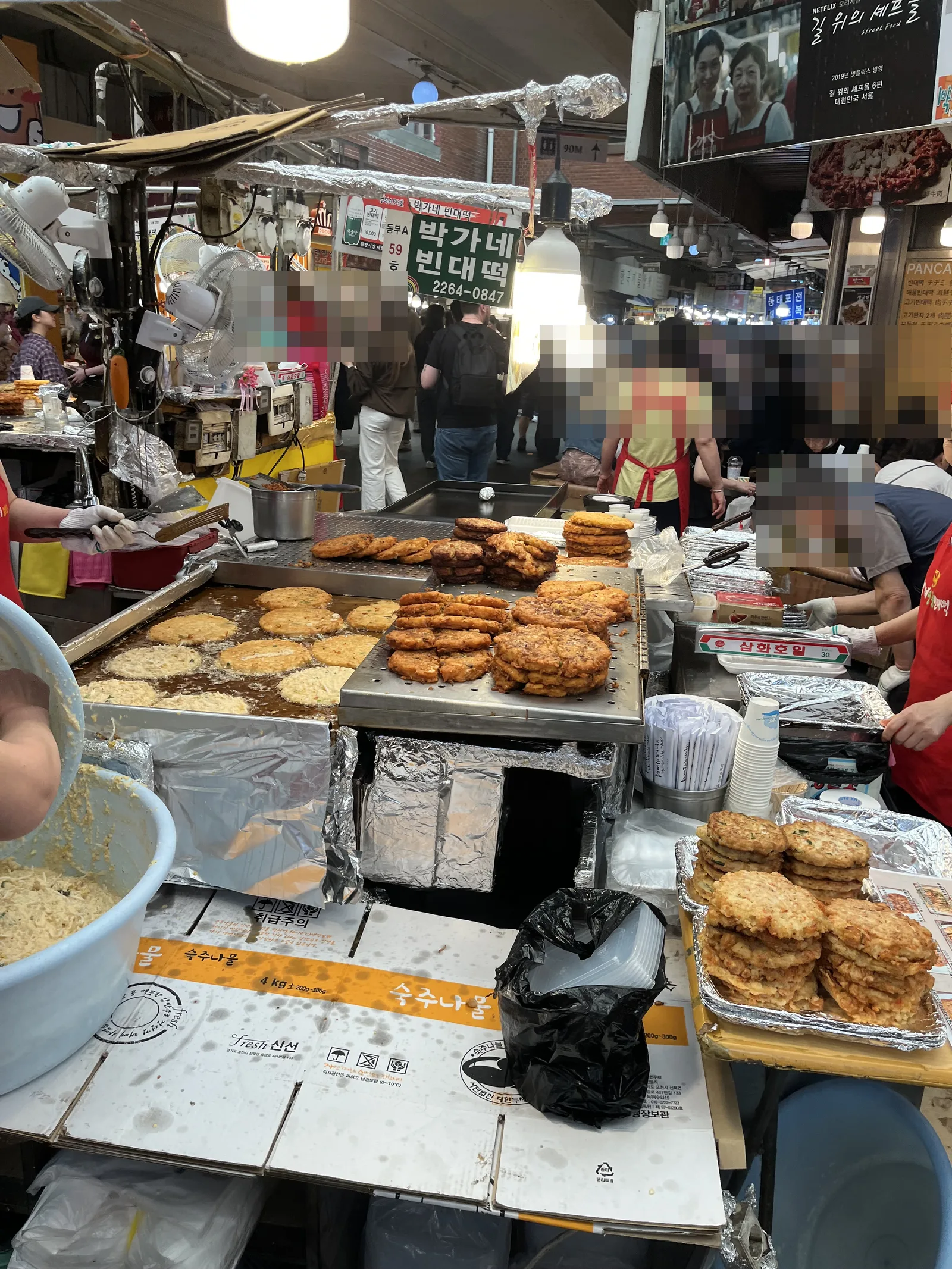
The bindaetteok stalls cluster along the main central food alley of Gwangjang, so you do not need an address; you need your nose. Walk into the market, follow the smell of frying oil and the rows of golden pancakes, and you are there. The busiest stretch is the one with the most pans going at once.
My simple rule for choosing a stall is to follow the locals and the turnover. A stall with a steady queue of Korean regulars and pancakes leaving the pan constantly will serve you a fresher, better one than a quieter stall where they sit waiting. Do not agonise over picking the single “best” stall; the famous names are good, but so are their neighbours, and the fresh-off-the-pan factor matters more than the sign.
It is also worth knowing that some stalls offer a slightly different style, thinner and crisper versus thick and dense, so if your first one is not quite your texture, the next stall along may suit you better. Do not be shy about trying two from different vendors on a hungry day; they are cheap enough that comparing is part of the fun, and you will quickly form your own opinion on the perfect bindaetteok. That little taste-test is exactly the kind of thing the market is made for.
Go a little outside the absolute peak lunch and dinner rushes if you want a stool and a moment to enjoy it. For how the pancake fits a wider day of eating around the old town, my Myeongdong street food and Seongsu-dong food guide map out the other neighbourhoods worth grazing. The official Visit Seoul site is handy for current market hours, and the Korea Tourism Organization has background on the market itself.
FAQ
What is bindaetteok made of?
Bindaetteok is made from ground mung beans rather than flour, mixed with mung bean sprouts, scallion, and often a little pork or kimchi, then fried in shallow oil until crisp. The mung bean base gives it a hearty, nutty character and a texture quite different from a flour pancake. It is savoury, filling, and best eaten hot.
How much does bindaetteok cost at Gwangjang Market?
A bindaetteok costs around ₩5,000, depending on the stall and size, and one comfortably shares between two as a starter. Prices nudge up over time, so treat this as 2026 guidance. Most stalls accept cards now, but it is wise to keep some cash for the smaller vendors.
How should I eat bindaetteok?
Eat it piping hot, straight off the pan, torn into pieces and dipped in the soy-vinegar sauce the stall provides. A slice of raw onion alongside keeps each bite fresh, and many Koreans pair it with makgeolli rice wine. Do not let it cool, as a bindaetteok loses its crisp magic quickly.
Which stall has the best bindaetteok at Gwangjang?
Rather than chasing one famous name, follow the locals and the turnover. A stall with a steady queue and pancakes leaving the pan constantly will serve a fresher, better one than a quieter stall. The famous stalls are good, but so are their neighbours, and freshness matters more than the sign.
Is bindaetteok vegetarian?
It can be, but not always. The base of mung beans, sprouts, and scallion is vegetarian, yet many stalls add pork or kimchi that may contain seafood. If you do not eat meat, point and ask before ordering, or look for a stall that makes a plain vegetable version. When in doubt, check rather than assume.
My Thoughts
Bindaetteok is the dish that tells me I am really home. It is humble, cheap, and unglamorous, and yet a fresh one eaten in the steam of Gwangjang beats almost any fancy meal I could name. There is honesty in food this simple done this well.
My real advice is to make it your first bite at the market, while you are hungriest and the pancake can shine. Eat it hot, share it, dip it, and resist the urge to wander off and let it cool. Everything else at Gwangjang is wonderful, but this is the one I would cross the city for.
It is also the dish I use to explain Korean comfort food to friends back in Sydney. It is not spicy, not challenging, not trying to impress anyone; it is just warm, savoury, and deeply satisfying, the edible equivalent of a market that has quietly fed people for over a century. If you can only carry one food memory home from Gwangjang, let it be a hot bindaetteok eaten in the steam, and you will understand why I keep going back.
And if you cannot get to Seoul soon, know that the frozen versions in your local Korean grocer are a fine stopgap, just not the real thing. The real thing waits for you in a steamy alley in Jongno, and it is worth the trip.
When you do get there, take a second before your first bite to just look around: the pans, the stacks, the vendor’s practised hands, the regulars on their stools. That small pause is part of the meal, and it is the bit that stays with you long after the pancake is gone. Food this simple, in a place this old, deserves a moment of attention.
Chasing the Perfect Bindaetteok?
Make it your first stop at Gwangjang, while your appetite is fresh and the pancake is at its crisp best. Follow the smell to the busiest stall, share one between two with the soy-vinegar dip, and eat it the moment it lands. Read this with the rest of the Gwangjang series before you go, and you will eat the market’s signature dish exactly the way it is meant to be eaten.
🍜 Eat your way through after dark: Gwangjang Market & Royal Palace Foodie Night Tour (affiliate link)