Disclosure: This post contains affiliate links. If you purchase through these links, I may earn a commission at no extra cost to you.
If you only have time for one traditional market in Seoul, make it this one. This Gwangjang Market food guide is the honest version I give every friend who visits me: what to eat, where the famous stalls actually are, how to order without panic, and which crowds to dodge. I grew up in Seoul, have lived in Sydney for twenty years, and I come home once a year, so I see this market through two sets of eyes. Let me walk you through it the way I would walk you through it in person, one stall at a time.
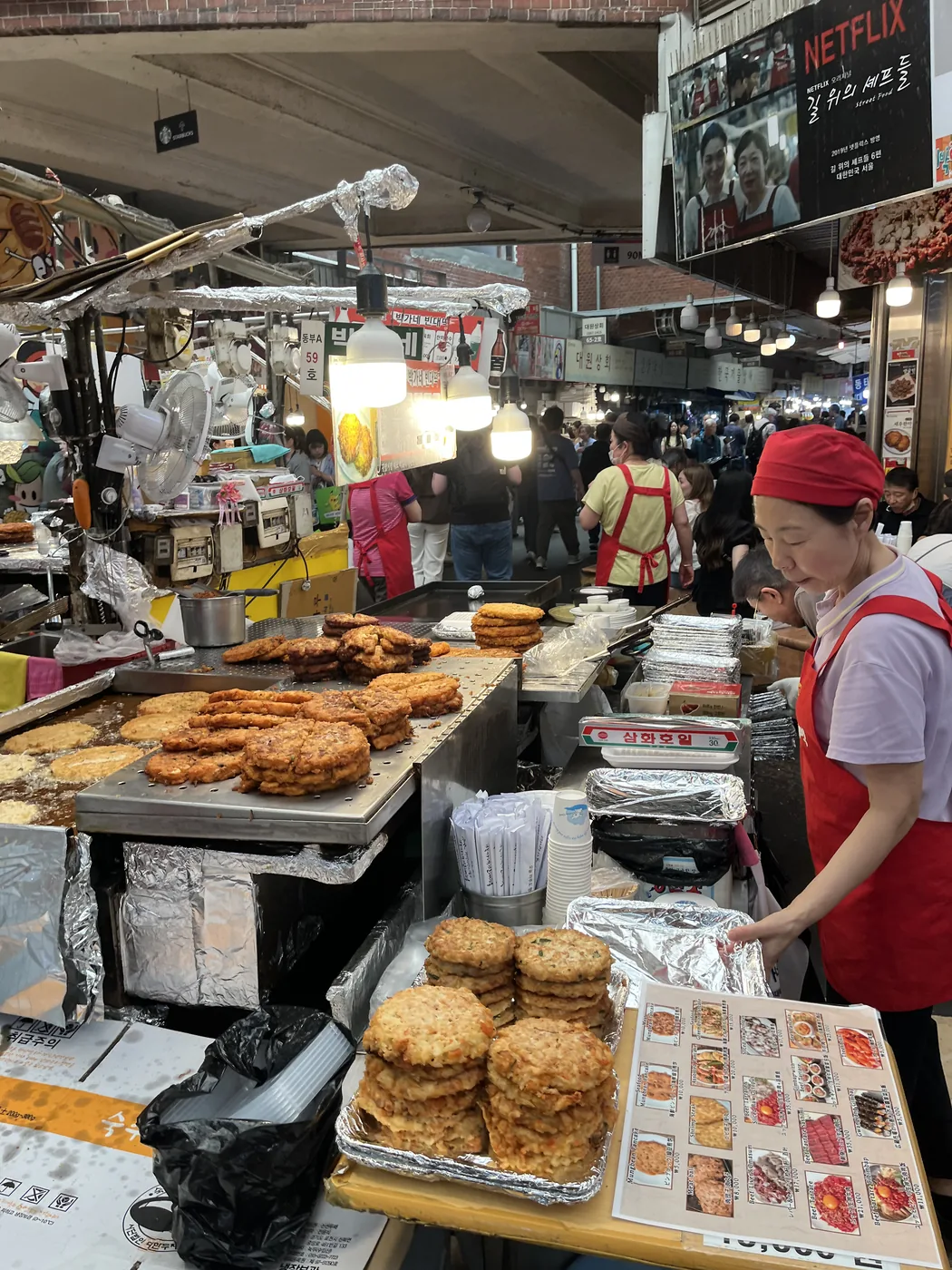
What Gwangjang Market Actually Is
Gwangjang Market is one of the oldest permanent markets in Korea, sitting in the Jongno district of central Seoul. It opened in 1905, which makes it well over a century old, and it has been a working food and textile market that whole time. The food alleys are what made it world-famous, especially after they appeared on Netflix, but locals have eaten here for generations.
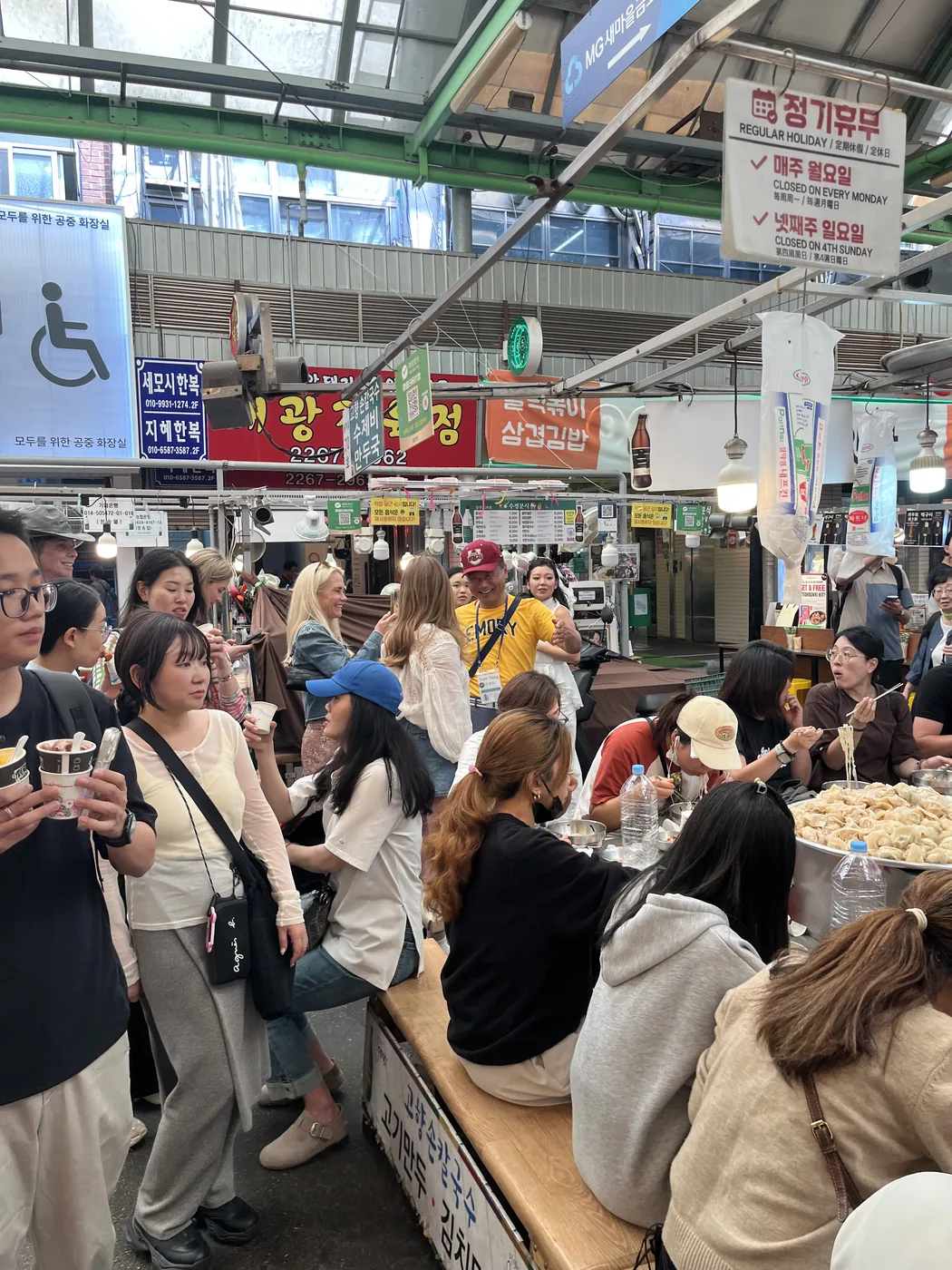
Physically, it is a covered grid of narrow lanes packed with stalls. Down the middle run the food alleys, where vendors cook in front of you and you eat standing or perched on a low stool. Around the edges and upstairs you find fabric, hanbok, and dried-goods sellers. It is loud, steamy, elbow-to-elbow, and completely alive in a way no food court ever manages.
What surprises first-timers is that it is not a tourist set piece, even though tourists flock here now. Office workers grab lunch, old regulars have their one stall they have used for thirty years, and grandmothers run pancake griddles with terrifying efficiency. You are eating in a real, functioning market, and that authenticity is the whole reason to come.
It also has the weight of history behind it, which you can feel in the worn stools and the family stalls passed down through generations. Gwangjang is often cited as Korea’s first permanent daily market, born when merchants needed a fixed place to trade rather than a roaming one. The Korea Tourism Organization keeps a useful overview of its background and layout if you like a little context before you go. Knowing you are eating somewhere this old adds something to every bite, at least for me.
How I Eat My Way Through Gwangjang
When I bring a visitor here, I have a routine that saves them from the two classic mistakes: filling up at the first stall, and freezing because everything looks overwhelming. We do a full lap first, no buying, just looking. The market is compact enough that one slow loop shows you where the bindaetteok stalls cluster, which stalls have the longest local queues, and where the seating actually is.
Only after the lap do we start eating, and we share everything. Two people can taste five or six dishes if you order one of each and split it, rather than committing to a full portion at the first stall. I always start with something fried and hot, move to the mayak gimbap, then finish with a noodle or a bowl of something brothy. Pace it like a tasting menu, not a single meal.
The other half of the routine is going with the flow rather than fighting it. The aisles are tight and the crowd moves like a slow river, so I stop worrying about being in anyone’s way and just drift with it, peeling off when something catches my eye. Trying to power through purposefully only leads to frustration; the market runs at its own pace and it is happier if you do too. Some of my best finds here came from simply stopping where the crowd thickened to see what everyone was queuing for.
Here is my honest Korea-versus-Australia moment. In Sydney, a weekend market means paying twelve to eighteen dollars for one gourmet thing, eating it on a curb, and calling it lunch. At Gwangjang I can taste a fried pancake, a plate of tiny seaweed rolls, and a bowl of noodles for less than the price of that single Sydney market plate, all cooked in front of me. The density of choice and the price are the whole luxury, and I never stop appreciating it after a year away.
The Foods Gwangjang Is Famous For
Gwangjang has a handful of signature dishes that the whole market is built around, and knowing them in advance turns chaos into a plan. You do not need to try everything; you need to try the right things. Below are the ones I steer every visitor toward, with the rest as happy extras.
The undisputed star is bindaetteok, a mung bean pancake ground from soaked beans and fried crisp in shallow pans of oil. The frying stalls are the visual heart of the market, gold discs sizzling in rows, and a fresh one eaten hot is genuinely one of Seoul’s great cheap pleasures. The deeper story of this dish is its own post, my Gwangjang Market bindaetteok guide.
The second icon is mayak gimbap, literally “narcotic” seaweed rolls, named for how addictive the little bite-sized rolls are with their mustard-soy dip. After that come the noodle stalls, the mandu dumplings, the tteokbokki, and for the brave, sannakji, freshly cut octopus. For the full ranked rundown of what to prioritise, I keep a separate what to eat at Gwangjang Market list. The broader context of Seoul’s markets also lives in my Seoul food markets guide.
Gwangjang Market at a Glance
Here is the market boiled down to the essentials so you can plan before you go. Treat the prices as rough 2026 guidance, since they nudge up over time and vary by stall.
| Detail | What to Expect |
|---|---|
| Location | Jongno, central Seoul, near Jongno 5-ga Station |
| Best for | Bindaetteok, mayak gimbap, noodles, mandu |
| Rough cost per dish | ₩4,000–₩12,000 |
| Payment | Card widely accepted, keep some cash |
| Best time | Late morning or mid-afternoon, weekdays |
| Seating | Low stools at stalls, communal and tight |
Ordering, Paying, and Seating
Ordering at Gwangjang is easier than it looks, and a little confidence goes a long way. Most stalls have photo menus or the food on full display, so you can simply point if your Korean is shaky. Vendors are used to visitors and will hold up fingers for the price or tap it into a calculator. Do not overthink it.
Payment has modernised a lot. Most food stalls now take cards, including foreign ones, but a few of the smaller or older vendors still prefer cash, so I carry ₩20,000 to ₩30,000 in small notes just in case. There is no tipping, the price you are shown is the price you pay, and you generally pay when you order rather than at the end.
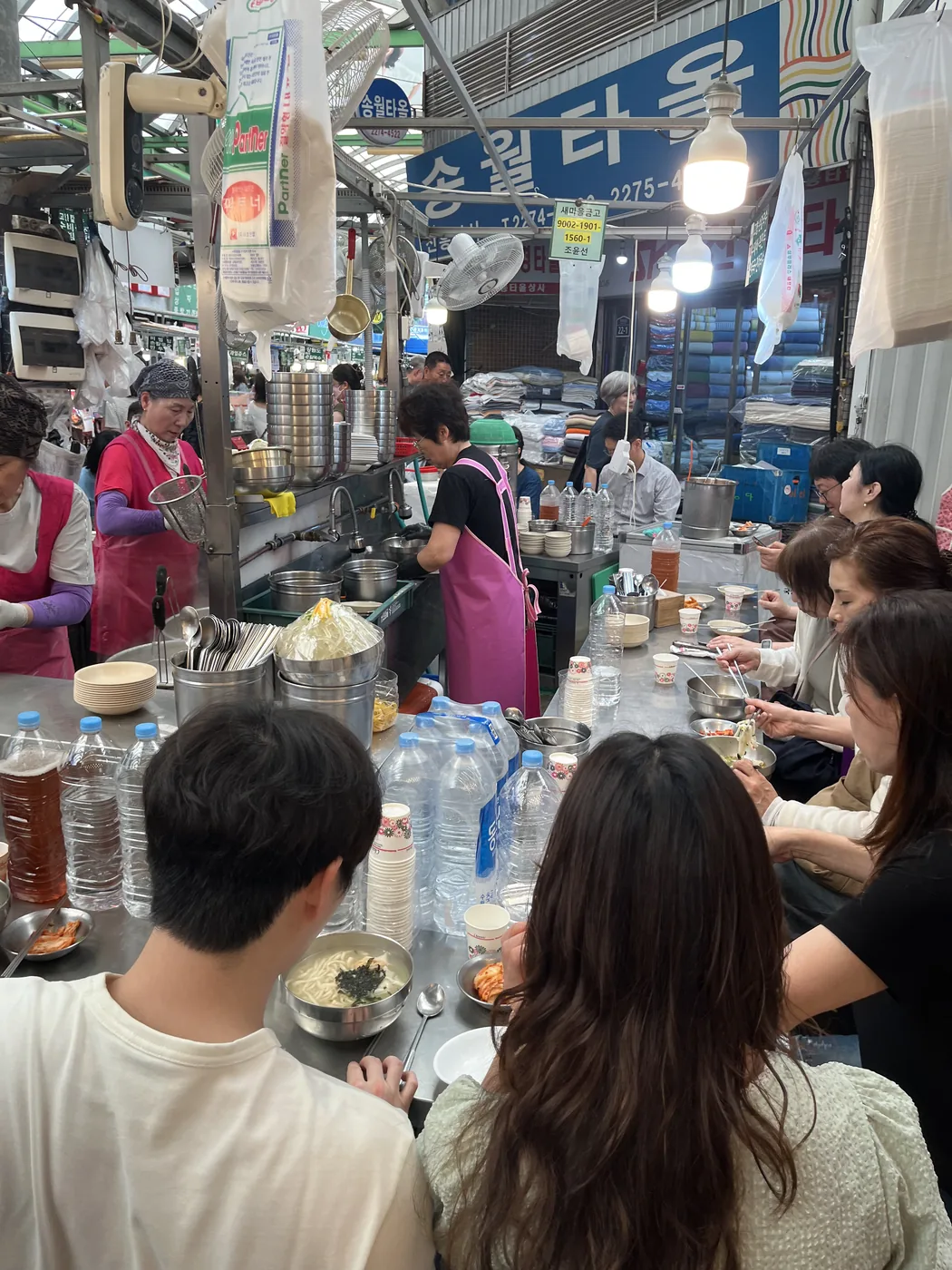
Seating is the part that trips people up. The popular stalls have a few low stools along a counter, and at peak times you hover until one frees up. It is communal and tight, so do not expect a table to yourself. If you would rather walk and eat, plenty of items like the pancakes and rolls travel perfectly well in a paper tray. When in doubt, follow what the locals around you are doing.
The Best Times to Go
Timing changes the whole experience at Gwangjang, more than most people expect. The market has two very different moods depending on the hour and the day, and choosing well is the difference between a relaxed graze and a shoulder-to-shoulder shuffle.
My sweet spots are late morning, around 11am, and mid-afternoon, around 3pm. The stalls are fully up and cooking, the food is fresh, and you can actually move and find a stool. Lunchtime, roughly noon to 1pm, brings the local office crowd, and evenings draw the after-work and tourist rush. Both are fun for the buzz but harder if you want space.
Weekends roughly double the crowd, and the famous stalls develop real queues, so if your schedule is flexible, go on a weekday. The market keeps long hours through the day, but some stalls wind down earlier in the evening than you would think, so do not leave the must-eats too late. For official opening details and seasonal notes, the Visit Seoul site is worth a quick check before you go.
How Gwangjang Fits Your Seoul Trip
Gwangjang works best as a half-day anchored around a meal, and where you slot it shapes the rest of your day. It sits in the historic Jongno core, so it pairs naturally with the palaces, Insadong, and a walk along the nearby stream, making an easy culture-plus-food day.
I usually treat it as an early lunch, then roll into the surrounding old town on foot. If you are building a wider food itinerary, it slots neatly alongside the street-food scenes elsewhere in the city, which I cover in my Myeongdong street food guide, and the bigger picture of regional Korean eating lives in my Korea food travel guide. Think of Gwangjang as the traditional, old-Seoul counterpoint to the glossier night-market energy elsewhere.
This guide is really the map, and the close-ups live in the rest of this little series. The signature bindaetteok deserves its own deep dive, the full what-to-eat ranking is its own list, and the practical how-to-visit logistics are a separate post. I preview each below, so use this as your overview and jump into whichever piece matters most for your trip.
FAQ
What is Gwangjang Market famous for?
Gwangjang is famous for its food alleys, above all bindaetteok mung bean pancakes and mayak gimbap, the addictive little seaweed rolls. It is also known for noodles, mandu dumplings, tteokbokki, and raw dishes like yukhoe and sannakji. It is one of Korea’s oldest markets and a benchmark for traditional Seoul street food.
How much does it cost to eat at Gwangjang Market?
Most individual dishes run from around ₩4,000 to ₩12,000, so two people can taste several things for a modest total by sharing. Prices vary by stall and nudge up over time, so treat these as 2026 guidance. Carry some cash, though most stalls now accept cards including foreign ones.
When is the best time to visit Gwangjang Market?
Late morning around 11am or mid-afternoon around 3pm are the calmest windows, when stalls are cooking but the lunch and evening rushes have not hit. Weekdays are far less crowded than weekends. Do not leave the famous stalls too late, as some wind down earlier in the evening than expected.
Can I use a card at Gwangjang Market?
Yes, most food stalls now accept cards, including foreign ones, which is a big change from years ago. That said, a few smaller or older vendors still prefer cash, so it is wise to carry ₩20,000 to ₩30,000 in small notes. There is no tipping and the displayed price is what you pay.
How do I get to Gwangjang Market?
Gwangjang sits in Jongno in central Seoul, a short walk from Jongno 5-ga Station on subway Line 1, with Euljiro 4-ga on Lines 2 and 5 also nearby. It pairs easily with the palaces and Insadong for a culture-and-food day. Use a transit card, tap in and out, and you are a few minutes from the food alleys.
My Thoughts
Gwangjang is the market I miss most when I am back in Sydney, and the first place I go when I land in Seoul. There is something honest about eating a fresh pancake on a low stool, surrounded by steam and noise and people who have done this their whole lives. No restaurant recreates that.
My real advice from this whole Gwangjang Market food guide is to come hungry, come curious, and share everything. Do not try to plan the perfect order; do one slow lap, follow the queues and your nose, and taste widely in small bites. The market rewards grazing far more than committing to one big meal.
And do not be put off by the crowds or the language. Point, smile, hold up two fingers, and you will eat brilliantly. This is the most welcoming kind of chaos Seoul has, and it has been feeding people for over a hundred years for a reason.
Planning Your Gwangjang Visit?
Come with an empty stomach and a plan to share. Do one slow lap first, then graze in small bites so two of you can taste five or six dishes, and go on a weekday late morning for the calmest run at the famous stalls. Read this alongside the close-up posts below before you go, and you will skip the rookie mistakes and eat like someone who has done it for years.
🍜 Want a local to walk you through it?: Gwangjang Market Half-Day Street Food Experience with Souvenir (affiliate link)
🍜 Gwangjang on a shoestring — or not?
Gwangjang is famously affordable, but it’s often just one stop on a longer Seoul trip. See how the whole trip adds up — food markets, hotels, transport, and activities — in one place.
Build your Seoul food trip budget →