Ikseon-dong Hanok Village is a block of 1920s Korean houses turned into cafes, restaurants and tiny shops, two minutes from Jongno 3-ga Station. It is one of the most photographed corners of Seoul right now, and on a sunny Saturday it earns that. I spent an October afternoon here, with a slow coffee beside the Jongmyo stone wall first and lunch in the alleys after. This guide is the version I’d hand a friend: what the place is, which exit to take, what to see, and where I’d eat.
What Ikseon-dong Hanok Village Actually Is
Ikseon-dong is a hanok neighbourhood developed in the 1920s, when the houses went up as small city homes packed tightly along alleys barely wide enough for two people. For decades it was quiet and a little forgotten. Then the cafes arrived, and now the whole block is one of the busiest hundred metres in Jongno.
One thing to know before you go. Visit Seoul lists Ikseon-dong as a hanok village, but it is not Bukchon. Bukchon is where people live; Ikseon-dong is where people eat, drink and shop. The roofs and timber beams are real, and so are the queues.
The part most guides miss is the street next door. Seosulla-gil runs along the western wall of Jongmyo Shrine, a few minutes north of the alleys. It has shade, the long stone wall of the shrine and hanok cafes facing it. Pair the two and you get the best of Ikseon-dong with a calm place to sit before or after.
My Saturday Afternoon in Ikseon-dong
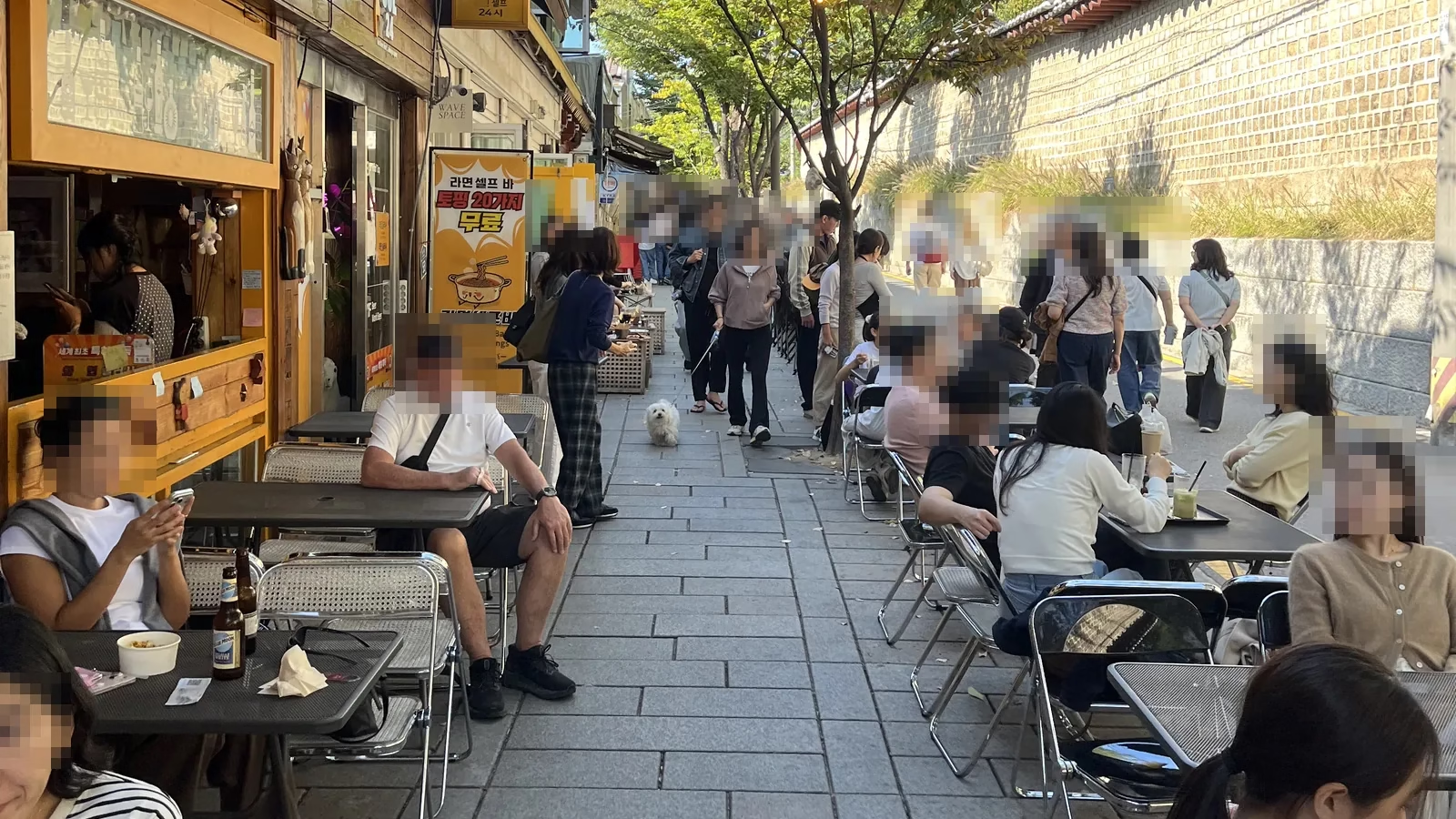
I came in on a bright Saturday in mid-October and spent a little over two hours here, lunch included. The whole area was in a good mood. The trees over the Jongmyo wall had their first yellow leaves. The cafe terraces on Seosulla-gil were full of people with iced coffees, and the alleys of Ikseon-dong were humming by early afternoon.
My first stop was the wooden bench outside Seosulla-gil Hanok Cafe, with an iced americano and the stone wall in front of me. I’d flown in from Sydney a few days earlier, where October means warm weekends and jacarandas. On that bench the swap of seasons finally landed: lower light, cool shade, and a dry edge to the air that Sydney doesn’t get until June.
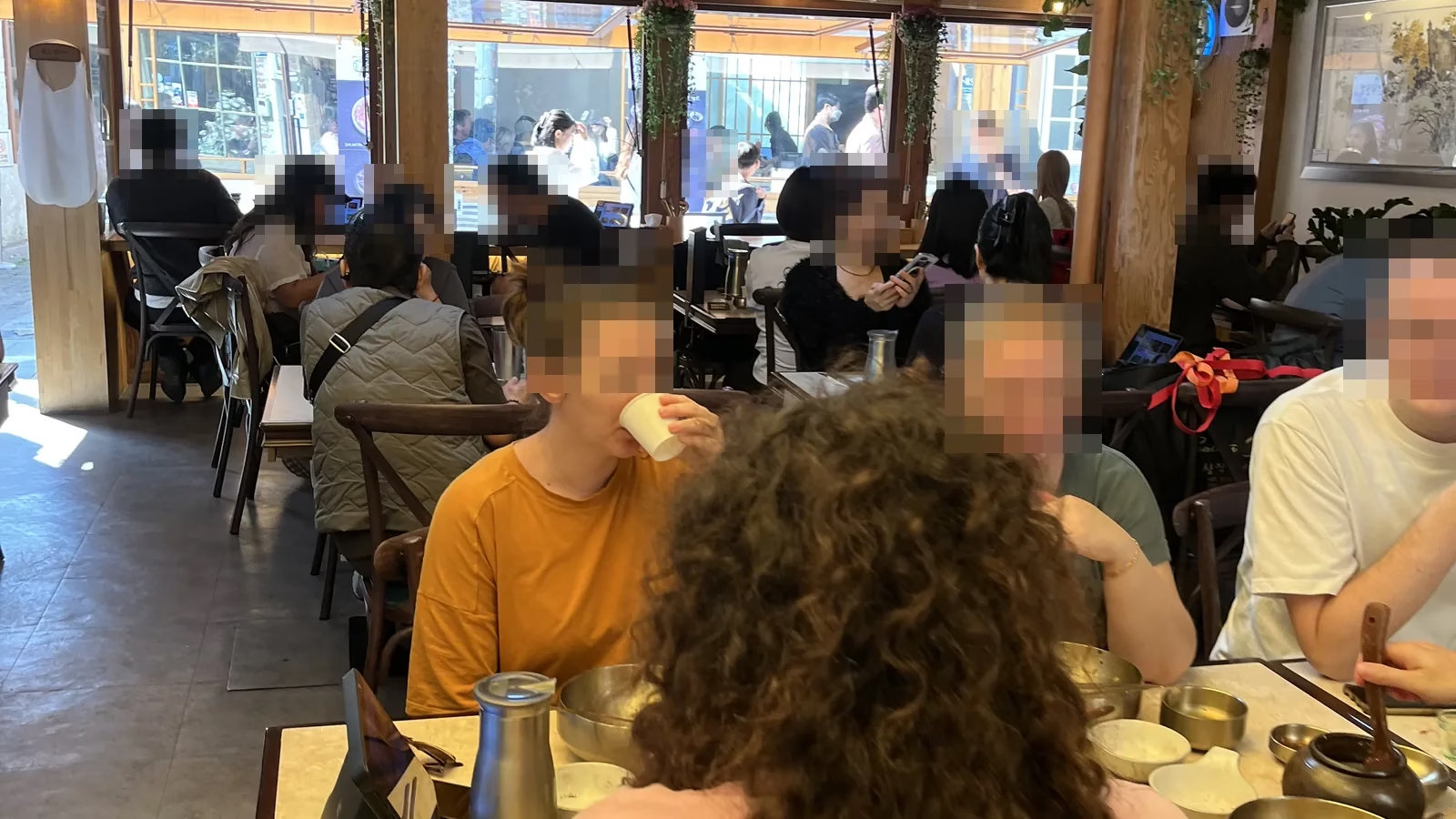
Lunch was a sprout bibimbap at Ikseon-dong Yeonriji, a hanok restaurant one alley in from the main lane. I got a table straight away just after one, which on that day felt like a small win. The afternoon ended with a slow loop of the quieter southern alleys, and I walked out happy I’d done it in that order.
Getting There: Which Exit to Take
Jongno 3-ga Station is on Lines 1, 3 and 5, and the exits are a real five-minute walk apart above ground. Decide on the platform, not after you’ve come up.
- Exit 4 is the direct way in. It comes up beside the Best Western Insadong, with Ikseon-dong right behind it. Visit Seoul puts the entrance at 123 metres, which matches what I walked.
- Exit 6 also works for the alleys if you arrive on Line 1 or Line 3.
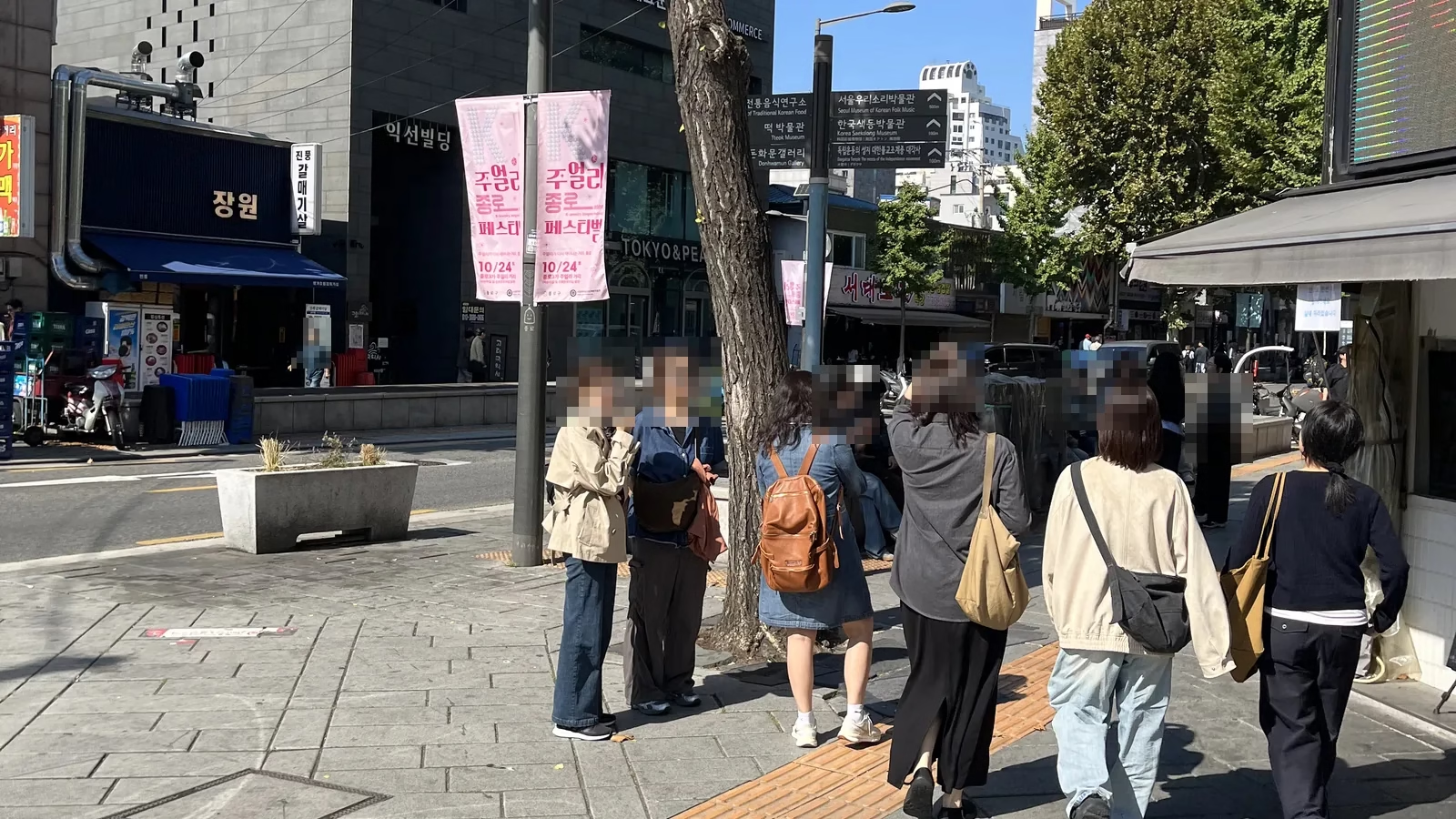
- Exit 7 is for the order I recommend: Seosulla-gil first, alleys second. It’s a long brick-walled corridor with a yellow tactile strip, and the stone wall starts about 250 metres from the top of the stairs.
A T-money card covers the trip from anywhere central. From Myeongdong, take Line 4 one stop to Chungmuro and change to Line 3 for two more stops; there is no direct line. If you surface at the wrong exit, don’t go back down. Everything in this guide sits inside a ten-minute walk.
What to See in the Alleys
Ikseon-dong rewards looking up and drifting sideways. The whole block is small, so you can’t really get lost. Here is how it breaks down.
The Main Alley
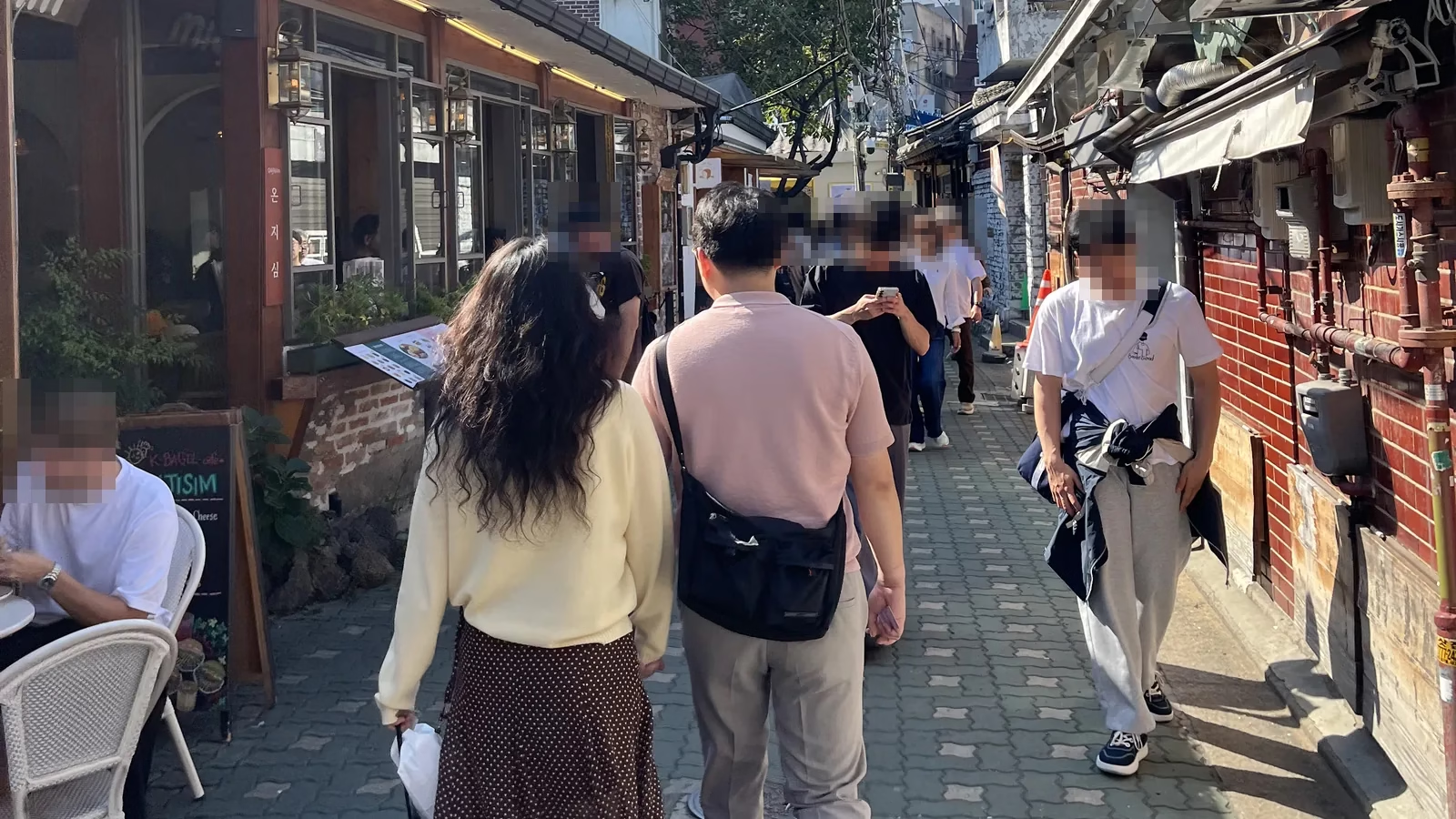
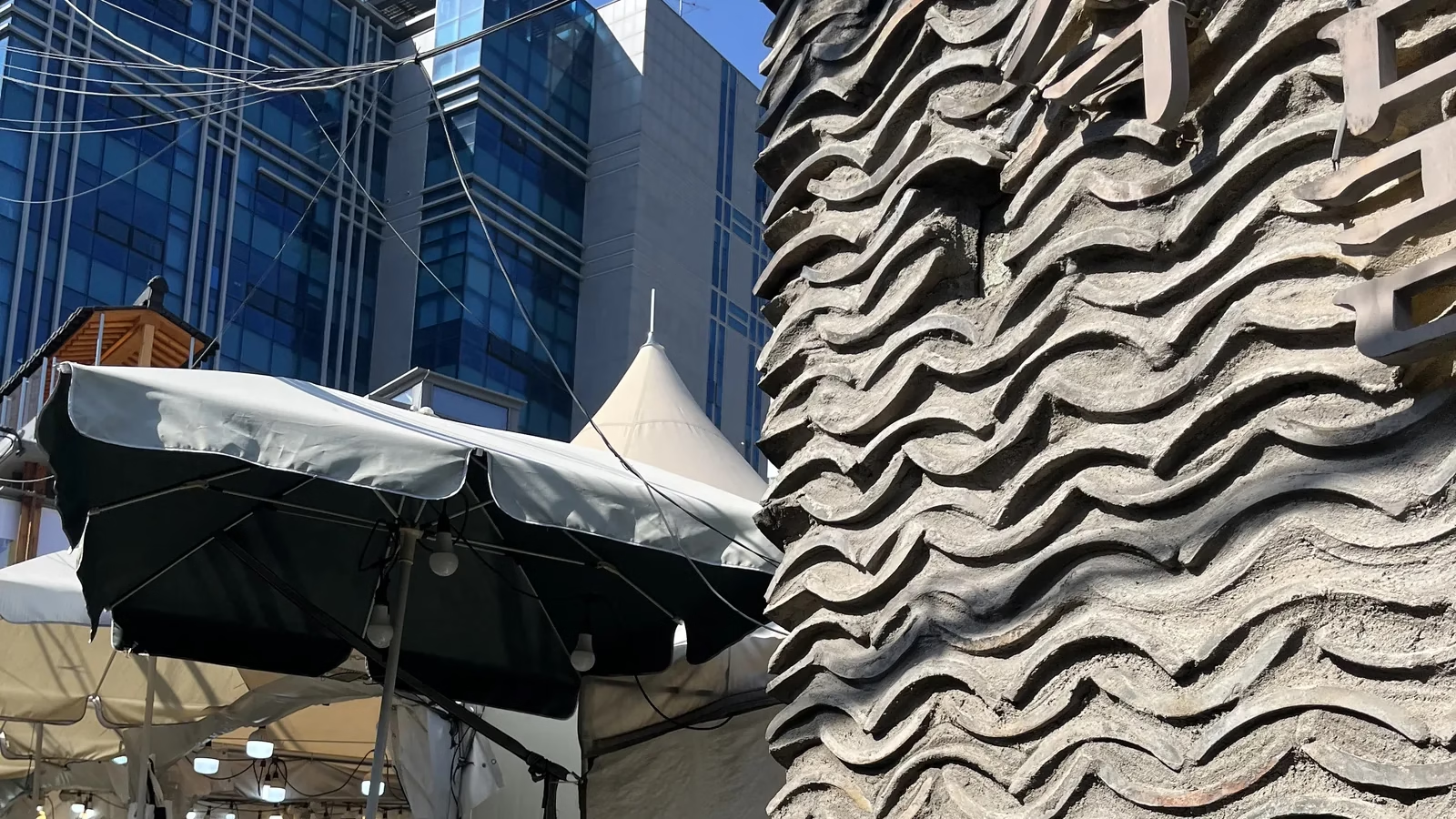
The main alley runs in from Donhwamun-ro, the road on the eastern edge. Within three bends you’re in the heart of it. Solsot, a pot-rice restaurant, has a yellow bench outside for its queue. Standard Bread has a poster of a cartoon loaf in a traditional horsehair hat. Sikmul, a cafe-bar, has a wall built entirely from stacked roof tiles.
Between them are a newspaper-themed photo studio, a caricature shop and accessory stalls where keyrings spill onto tables. The lane is one person wide in places, so you walk at the pace of the person in front. That is part of the fun.
Eight seconds of the main alley, so you can see how narrow it really is before you go.
Look Up, Then Look Sideways
The hanok eaves are real. Old timber rafters show under the new paint, and the glass office towers stand right behind the rooflines in every photo. That old-and-new contrast is Ikseon-dong in a single frame, and it’s why the place photographs so well.
The side alleys hide the better finds. One has a bamboo garden with a restaurant called Songam Onban inside it, with a menu stand among the plants. Another opens onto a two-storey glass hanok with a cafe on both floors. Take the turning that looks like it goes nowhere.
The Quiet South Side and the Hanbok Shops
When I went, the southern alleys were the gentlest part, and far fewer people had wandered that far. The shops here sell clothes and small goods: folding fans, knitted beanies in a dozen colours, baskets of socks. There was room to stand still even on a Saturday. If the main alley gets too much, drift south for ten minutes and come back.
On the way out to Donhwamun-ro you’ll pass the hanbok rental shops, Hanboknam and Soonradam, with pink and dusty-rose hanbok on mannequins outside. I didn’t rent one this time. If it’s on your list, do it before the alleys. The lanes are narrow and the skirts are not.
Seosulla-gil: The Stone-Wall Street Next Door
Seosulla-gil is a one-lane street along the western wall of Jongmyo, the royal ancestral shrine. The wall and its trees take one side. Hanok cafes, wine bars and jewellery workshops take the other. The street is free to walk, and Visit Seoul spells it Seosulla-gil, which is the spelling to search. The shrine itself (20 November) is a separate visit through the main gate on the south side.
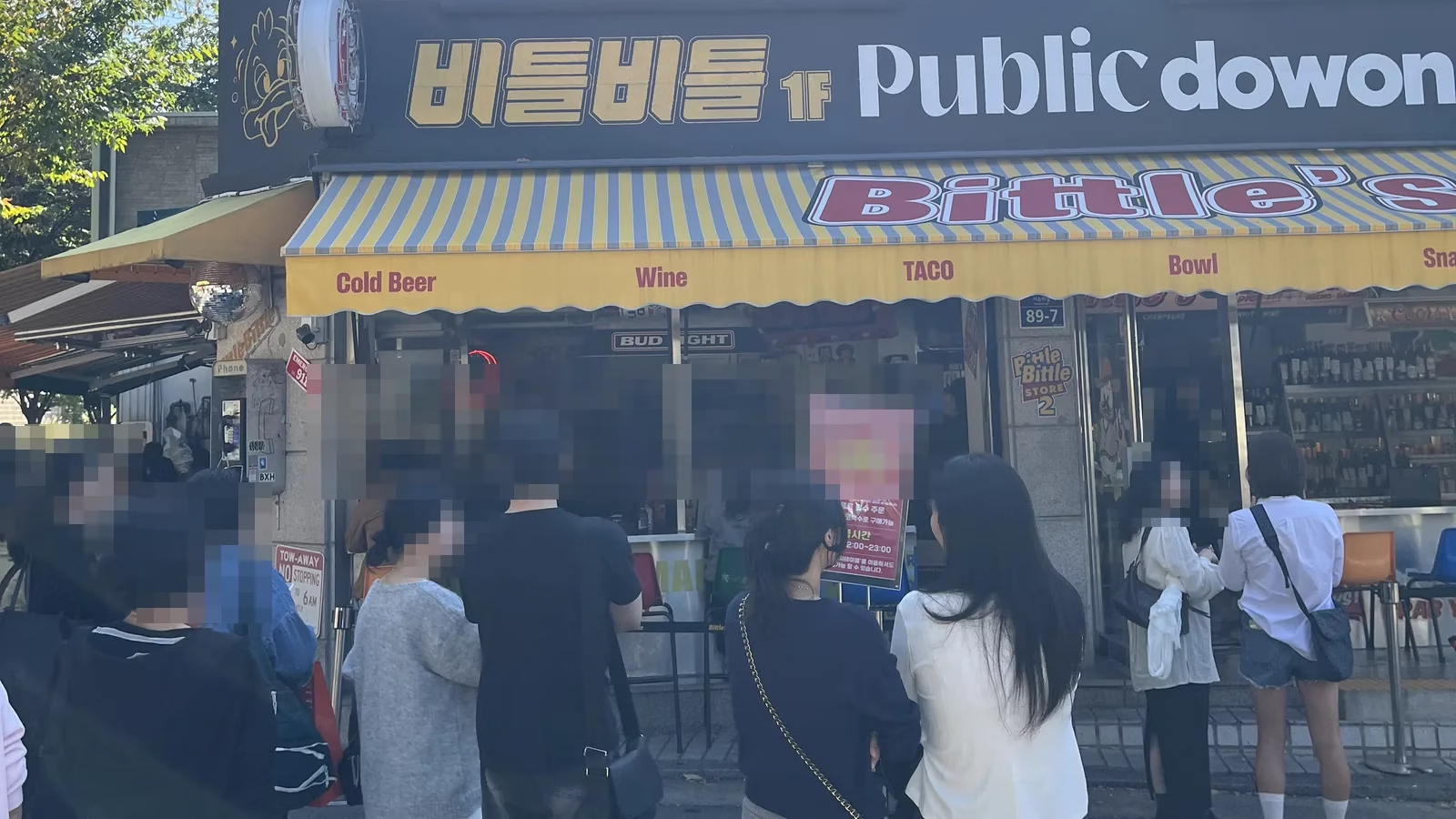
If you only stop once, make it Seosulla-gil Hanok Cafe (서순라길 한옥카페, map), near the south end. A long wooden bench runs along its front and faces the wall across the lane. That is where I had my iced americano, and it is the seat I’d send you to first. Further north the street gets busier: the corner building with the yellow awning is Bittle’s taco bar, and its line reached the crossing before half past twelve on my Saturday.
The street deserves more than a paragraph, so the cafes and bars I passed along the wall, with map links, are in my Seosulla-gil cafes post (25 October). For this guide, all you need to know is: walk it north, sit once, then come back down Donhwamun-ro into the alleys.
Where to Eat in Ikseon-dong
You can eat well here without joining a single queue, as long as you don’t fixate on the famous names. Here is what I ate, and what the busiest places were serving.
What I Ate: Ikseon-dong Yeonriji
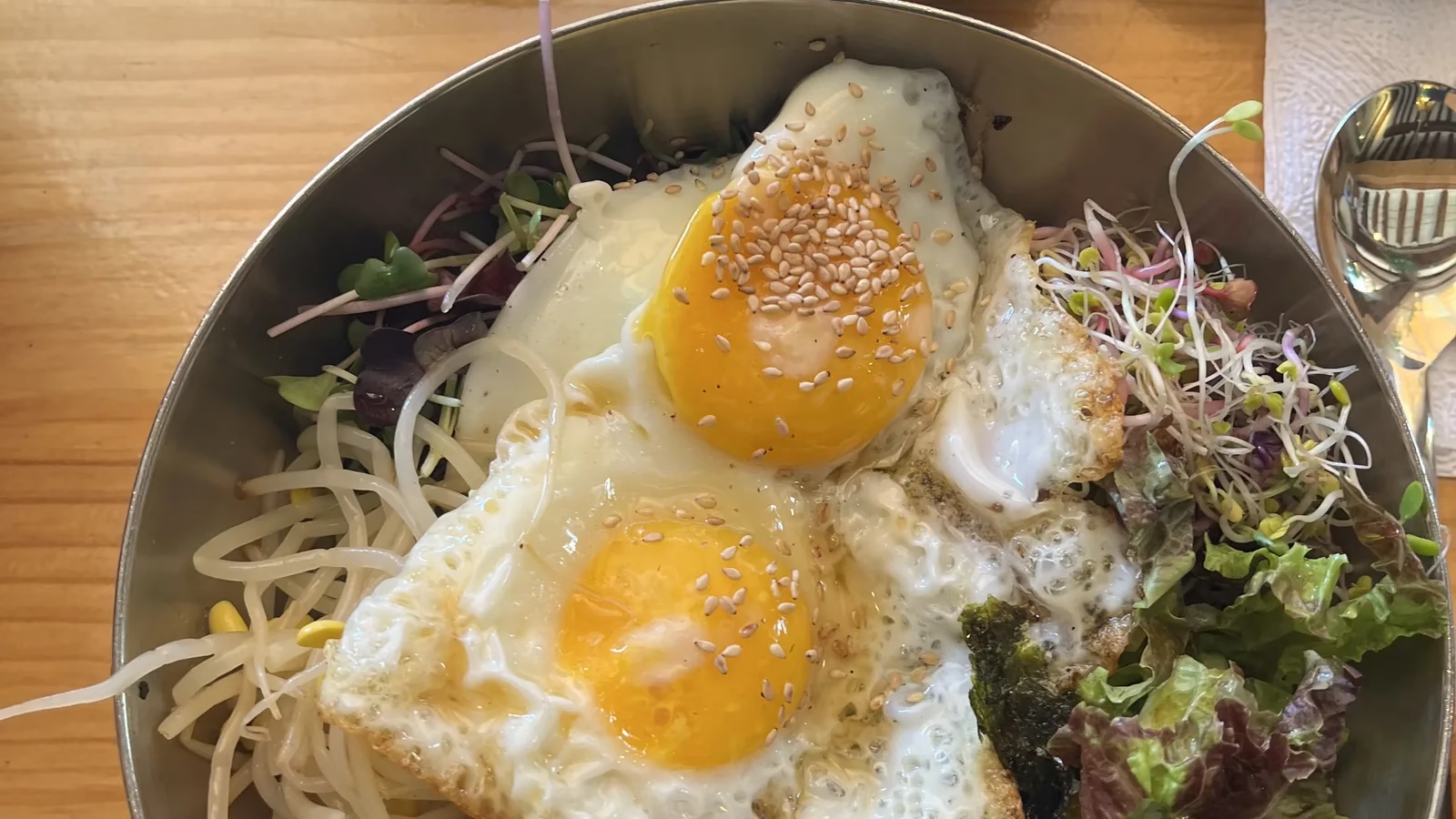
Ikseon-dong Yeonriji (익선동 연리지, map) is a hanok restaurant on an inner alley, with a glass front that folds open onto the lane. You order on a tablet at the table, and there’s a language button. My sprout bibimbap with two fried eggs was ₩14,000, served in a stainless bowl with a clear soup and three side dishes. Fresh, filling and exactly what I wanted after the walk.
The Places with Queues
Three places had lines all afternoon. Solsot‘s (솔솥 익선점, map) pot rice runs from ₩14,900 for cockle to ₩25,900 for freshwater eel, according to the board outside. Songam Onban (송암온반, map), in the bamboo garden, lists its pork-and-rice soup at ₩12,000. Bittle’s on Seosulla-gil does tacos and cold beer, and its line was the longest of the day.
I didn’t join any of them, so I can’t tell you how they taste. If one is on your must-eat list, go before noon and treat the wait as part of the outing.
Coffee and a Sit-Down
For coffee, Seosulla-gil Hanok Cafe is the one I’d pick, facing the wall. In the alleys, Sikmul‘s chalkboard lists coffee, matcha latte, Basque cheesecake and cocktails, open daily until 11pm. Save a sit-down for the end of the walk. Your feet will thank you.
Ikseon-dong at a Glance
Everything here is from the day I visited. Prices are what I paid or read on a board.
| Item | Detail |
|---|---|
| Station | Jongno 3-ga (Lines 1, 3, 5); Exit 4 direct, Exit 7 for Seosulla-gil first |
| Route I recommend | Seosulla-gil north → Yulgok-ro → Donhwamun-ro south → Ikseon-dong alleys |
| Time | I spent just over two hours including lunch; allow three to four hours at a relaxed pace |
| Cost to visit | Free to walk; the alleys and Seosulla-gil are public streets (Jongmyo charges admission) |
| Lunch I had | Sprout bibimbap at Yeonriji, ₩14,000, tablet ordering |
| Best time | Before noon on weekends, going by my one Saturday; weekdays untested |
| Busiest points | First three bends of the main alley; the taco-bar corner on Seosulla-gil |
| Quietest points | South end of Seosulla-gil before noon; the southern alleys |
| Nearby | Insadong-gil five minutes west; Jongmyo and Changdeokgung next door |
Tips for Visiting Ikseon-dong
A few things that will make the visit better:
- Do the wall first, then the alleys. Seosulla-gil is quietest before noon, and you’ll want the alleys when you’re hungry rather than at the start.
- Lunch after one worked for me. The first wave was already seated, and the restaurants one bend in from Donhwamun-ro had tables when the front ones didn’t.
- Photo booth on the way in. The booths on Seosulla-gil had queues of their own by early afternoon. Do the caricature, tarot or booth photo while they’re empty.
- Hanbok before the alleys. The rental shops are on Donhwamun-ro, and the skirts don’t love a one-person lane.
- Watch for delivery motorbikes. The alleys feel pedestrian, but bikes still come through.
- Weekdays are a guess. I only have one Saturday to go on. Calmer is what I’d expect, not something I’ve checked.
How Ikseon-dong Fits Your Seoul Trip
Ikseon-dong is a half-day, and it joins onto the rest of old Jongno. Insadong-gil starts about five minutes west, so Seosulla-gil, Ikseon-dong and Insadong can be one continuous afternoon on foot. I’d give Insadong its own slot rather than the tail of a tired day, and I’ve covered it in my Insadong guide.
If you’d rather add heritage than shopping, the north end of Seosulla-gil faces Donhwamun, the main gate of Changdeokgung. The shrine behind the wall is one of the quietest UNESCO sites in the city. My palace and museums guide explains how the royal sites fit together. A palace morning followed by Ikseon-dong is a full, unhurried day. Cheonggyecheon stream is ten minutes south of the station if you want to keep walking after dark.
FAQ
Which exit of Jongno 3-ga Station is best for Ikseon-dong?
Exit 4 puts you straight into the alleys. Exit 6 also works on Lines 1 and 3. Take Exit 7 if you want to start on Seosulla-gil and reach Ikseon-dong second, which is the order I recommend.
How long do you need in Ikseon-dong Hanok Village?
I spent a little over two hours including a sit-down lunch. Allow three to four hours if you want to sit down twice, browse the shops and walk Seosulla-gil as well as the alleys.
Is Ikseon-dong the same as Bukchon Hanok Village?
No. Bukchon is a residential hanok neighbourhood north of here. Ikseon-dong is a block of 1920s hanok converted into cafes, restaurants and shops. They are a short bus or taxi ride apart and feel very different.
Is Ikseon-dong free to visit?
Yes. The alleys and Seosulla-gil are public streets with no entry fee. You only pay for what you eat and drink. Jongmyo Shrine behind the wall charges admission and is a separate visit.
Is Ikseon-dong very crowded on weekends?
On the Saturday I visited, the main alley was busy from early afternoon and the most popular restaurants had queues before noon. The southern alleys and the south end of Seosulla-gil stayed noticeably calmer.
My Thoughts
I’d put off Ikseon-dong for years, assuming it was a photo set with cafes attached. The main alley is busy, no question. But the hanok are real, the food was good, and the stone wall next door turns a shopping stop into a proper afternoon.
Start at the wall. Eat one alley in from the crowd. Leave time for the quiet south side. Do it in that order and Ikseon-dong is one of the easiest half-days in Seoul. I’ll be back on a weekday to see the version without the queues.
Planning the Rest of Your Jongno Day?
Two more posts from the same afternoon, with more photos:
- Seosulla-gil Cafes (25 October) — the cafes and bars I passed along the Jongmyo wall, and the bench I’d sit on again.
- Ikseon-dong Photo Spots (26 October) — eight corners worth the walk, and how to handle the noon light.