Disclosure: This post contains affiliate links. If you purchase through these links, I may earn a small commission at no extra cost to you. I only recommend products I personally use and trust.
If Myeongdong is Seoul’s loud, neon-lit shopping face, Insadong is the quiet old soul a few subway stops away. This Insadong guide is the one I wish someone had handed me when I first started bringing my Australian friends here, because the area rewards people who slow down and confuses people who rush. I grew up in Korea and have lived in Sydney for twenty years, so I notice exactly how much of “old Korea” survives on these narrow lanes — and how easy it is to walk past it without realising.
Why Insadong Still Matters
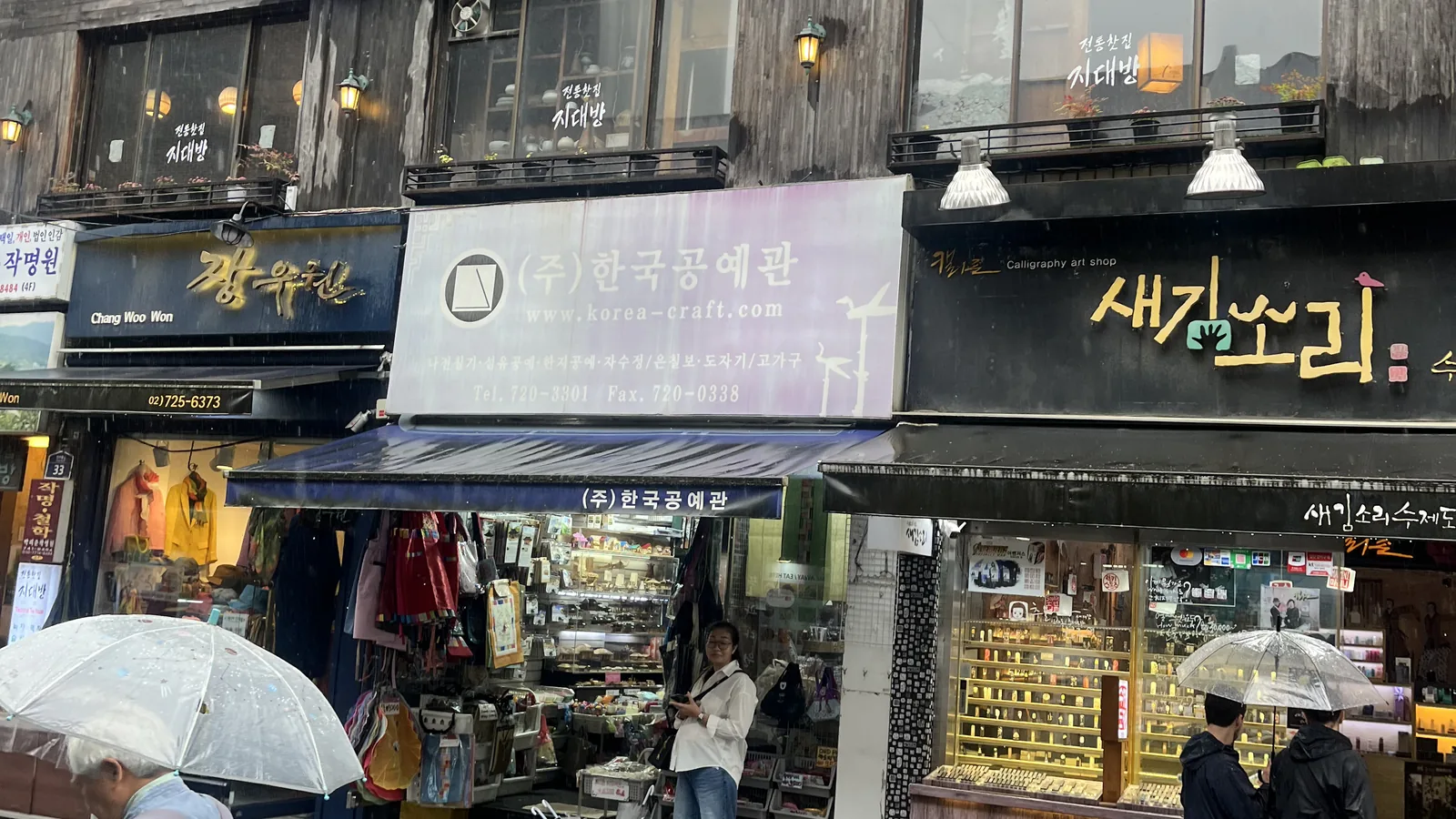
Insadong is the part of central Seoul that held onto its past while the rest of the city raced into the future. The main street, Insadong-gil, runs through a knot of narrow alleys that have sold antiques, calligraphy brushes, and hanji paper for generations. Even the Starbucks here is forced to write its sign in Korean script, which tells you how seriously the area protects its character.
What makes it matter is not just the shops. It is the concentration of traditional culture in one walkable pocket. You have art galleries, antique dealers, teahouses older than I am, and craft studios where someone is genuinely making the thing they sell. In a city that rebuilds itself every few years, that continuity is rare and worth protecting.
There is also the contrast with everywhere else. Spend a morning in glassy, fast-moving Gangnam and an afternoon in Insadong, and you feel like you crossed a century. In Sydney terms, it is the difference between Barangaroo and an old Rocks laneway, except Insadong does it with calligraphy ink and ginseng tea instead of sandstone pubs. That gap is exactly why I send people here.
If you are pairing this with the busier shopping districts, my Myeongdong travel guide covers the neon-and-street-food side of the same trip, so the two posts together give you a balanced day in central Seoul.
My Slow Afternoon in Insadong
On my last visit I deliberately gave myself no schedule. I came up from Anguk Station around 1pm on a Wednesday, with nothing booked and no list, which is the only way I think you should do Insadong. By the time I left at dusk I had drunk two pots of tea, bought a sheet of hanji paper I did not need, and watched an old man hand-carve a name stamp.
The first thing I always do is walk the full length of Insadong-gil before I buy anything. It is maybe seven hundred metres, gently curving, and lined with stalls selling everything from ₩2,000 painted fans to serious antique celadon. Walking it end to end first stops me from spending my whole budget at the first pretty stall, which I have absolutely done before.
Here is my honest Korea-versus-Australia moment. In Sydney, finding a proper traditional tea ceremony means booking ahead, driving across town, and paying maybe AUD 45 for the experience. In Insadong I climbed a creaky wooden staircase into a teahouse, paid around ₩9,000 for a pot of omija tea, and sat by a window watching the alley for an hour. The access here is the luxury. Nobody rushed me, and nobody minded that I stayed long after the pot was empty.
By late afternoon my feet were fine because Insadong is small, but my bag was heavier and my pace had completely changed. That is the real effect of the place. You arrive at city speed and leave at teahouse speed, and that shift is the whole point of coming.
What to See in This Insadong Guide
These are the three layers of Insadong I steer every visitor through, in the order that makes a relaxed afternoon flow naturally from one to the next. I have done each of these more times than I can count, so this is what actually holds up rather than what the brochures push.
The craft and antique shops
The craft shops are the soul of Insadong, and they reward slow browsing. The lanes are full of hanji paper studios, brush and ink dealers, ceramic stalls, and antique shops where the owner has been sitting behind the same counter for thirty years. I always buy hanji here because it is genuinely beautiful and packs flat in a suitcase, unlike the celadon I keep being tempted by and keep talking myself out of. Watch for the small studios where someone is carving a personal name stamp, called a dojang, by hand — it is the most useful souvenir I have ever brought back to Australia. Prices range from a few thousand won for a paper fan to serious money for real antiques, so browse first and buy on the second pass.
Teahouses and traditional food
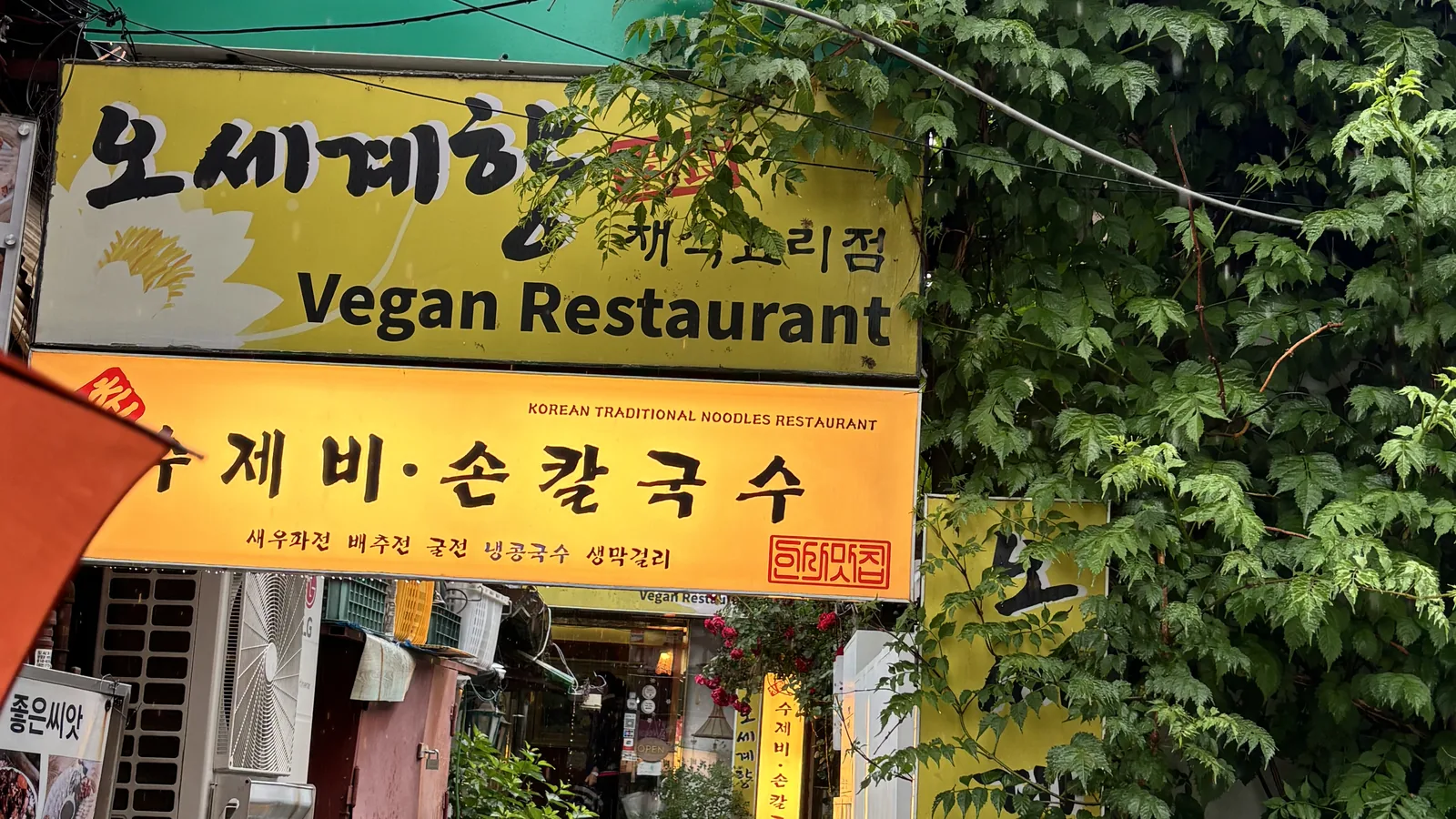
The teahouses are where Insadong slows you down, and missing them is the single biggest mistake first-timers make. Tucked up wooden staircases and down hidden courtyards, these places serve traditional teas like omija, jujube, and citron, usually with a small sweet, for around ₩8,000 to ₩12,000 a pot. The food here leans traditional too, including excellent Buddhist temple-style vegan cuisine that uses no meat, garlic, or onion, which surprises people with how rich it tastes. If you want to understand the cooking behind it, a traditional Korean cooking class and hidden-alley tour walks you through both the dishes and the back lanes most visitors never find.
Ssamziegil and art
Ssamziegil is the modern heart of the old district, and it is more fun than its mall-like description sounds. It is a four-storey complex built as one continuous sloping ramp that spirals upward around an open courtyard, lined with small independent designers, craft makers, and quirky studios. I like it because it gives younger makers a home inside a traditional area, so you get hand-printed stationery and ceramic jewellery rather than mass-produced keyrings. Climb all the way to the rooftop for the famous wall of padlocks and a quiet view over the tiled roofs. It is the one stop in Insadong where the energy turns playful, and it pairs perfectly with the slower teahouses below.
Getting There From Myeongdong
Insadong is genuinely close to Myeongdong, which is what makes the two such a natural pairing for one day in Seoul. The easiest route is the subway, tapping in with a T-money card for ₩1,400, and you are there in well under fifteen minutes door to door. There is no excuse to treat them as separate trips.
From Myeongdong Station on Line 4, you ride two stops north to Chungmuro, change to Line 3, and get off at Anguk Station, Exit 6, which drops you a two-minute walk from the top of Insadong-gil. If you would rather walk, it is around twenty-five minutes on foot through Euljiro, which is a pleasant stroll past old printing shops if the weather is kind.
I usually tell people to do Insadong in the afternoon and Myeongdong in the evening, because Insadong wakes up slowly and Myeongdong only really switches on after dark. That sequencing lets the day build from quiet tea to loud street food. For the food-stall half of that plan, my Seongsu-dong Seoul travel guide also shows how a third district can slot in if you have the energy for a full Seoul loop.
Insadong at a Glance
| What You Want | Where to Go in Insadong | Rough Cost | Best Time |
|---|---|---|---|
| Traditional crafts & gifts | Insadong-gil stalls & antique shops | ₩2,000 fan to serious antique prices | Afternoon, on a second browse |
| Tea & quiet | Hidden teahouses up the alleys | ₩8,000–12,000 a pot | Mid-afternoon lull |
| Temple-style vegan food | Traditional restaurants off the main lane | ₩12,000–20,000 a set | Lunch or early dinner |
| Modern crafts & views | Ssamziegil spiral complex | Free to browse | Anytime, rooftop at golden hour |
Tips for Visiting Insadong
After enough visits, a handful of small habits make the difference between a charming afternoon and a tourist-trap one. These are the things I actually tell friends before they go.
- Walk the whole street first: Insadong-gil is short, so do a full pass before buying. The same fan is often cheaper thirty metres along.
- Look up, not just ahead: The best teahouses and galleries are on second floors and down side courtyards, easy to miss at eye level.
- Go on a weekday: Weekends turn the main lane into a slow-moving crowd, and the teahouses fill up. A Tuesday or Wednesday is calm and unhurried.
- Carry some cash: Many small craft stalls and older teahouses prefer cash, even though card is common everywhere else in Seoul.
- Buy hanji and dojang stamps: They are light, genuinely Korean, and survive a flight home far better than ceramics.
- Book a food experience if you want depth: A Gwangjang Market vegan food tour is a short hop away and pairs beautifully with Insadong’s traditional-food theme.
Pairing Insadong With a Myeongdong Day
The smartest way to use Insadong is as the calm half of a fuller Seoul day. It is too small to fill a whole day on its own, but it is the perfect counterweight to a louder district, and the short subway hop makes the pairing effortless.
My standard plan looks like this. Start with a slow Insadong afternoon — tea, crafts, Ssamziegil — then ride two stops over to Myeongdong as the sun drops and the food stalls fire up. You go from omija tea to tornado potato in under fifteen minutes, and the whiplash is part of the charm. If you want to keep the cultural thread going, a things to do in Seongsu-dong on a weekend itinerary shows how to add a third, more design-led neighbourhood without overloading the day.
For planning the timing and any seasonal events, it is always worth checking the official sources before you go. Visit Seoul keeps a running calendar of cultural happenings in the Insadong area, and Visit Korea has solid background on the district’s craft heritage and traditional-food scene.
FAQ
What is Insadong known for?
Insadong is known as the traditional cultural heart of central Seoul. It is famous for antique shops, hanji paper and calligraphy studios, traditional teahouses, art galleries, and temple-style vegan food. The main street, Insadong-gil, packs all of this into a short, walkable stretch that has kept its old character even as the rest of Seoul modernised.
How do I get to Insadong from Myeongdong?
Take Line 4 from Myeongdong Station two stops to Chungmuro, change to Line 3, and get off at Anguk Station, Exit 6, which puts you at the top of Insadong-gil. The whole trip is under fifteen minutes and costs ₩1,400 with a T-money card. You can also walk it in about twenty-five minutes through the old Euljiro printing district.
Is Insadong good for vegetarians and vegans?
Yes, Insadong is one of the best areas in Seoul for plant-based eating. Several restaurants serve Buddhist temple-style cuisine, which traditionally uses no meat, garlic, or onion, and the flavours are surprisingly rich. You will also find vegan-friendly teahouses serving traditional teas with small sweets, making it an easy district for non-meat-eaters to enjoy.
How long should I spend in Insadong?
Two to three hours is enough to enjoy Insadong properly without rushing. That gives you time to walk the full main street, browse the craft and antique shops, sit down for a pot of traditional tea, and climb the Ssamziegil spiral. Because it is small, Insadong works best as the calm half of a day paired with a busier district like Myeongdong.
What should I buy in Insadong?
The best Insadong buys are light, traditional, and genuinely Korean. Hanji paper, hand-painted fans, calligraphy brushes, ceramic jewellery from Ssamziegil, and a hand-carved name stamp called a dojang all travel home well. I avoid heavy celadon ceramics unless I am willing to carry them carefully, since they are fragile and harder to pack.
My Thoughts
Insadong is the district I use to remind visitors, and myself, that Seoul is not only neon and speed. It is the one place in the centre where the old craft culture still has a street to live on, and that makes it precious in a way the shopping districts are not. I never leave without a pot of tea and at least one thing made by hand.
My honest advice is to come with no agenda and a little cash, and let the alleys do the planning. Walk slowly, climb the staircases, and accept the second pot of tea. The visitors who try to “tick off” Insadong in twenty minutes always miss it entirely, because the whole value of the place is the pace it forces on you.
And remember the geography: Insadong and Myeongdong are practically neighbours, so there is no reason to choose between old Seoul and new Seoul when you can have both in a single afternoon.
Planning Your Insadong Day?
If you want more than browsing, build your visit around the food. A traditional Korean cooking class and hidden-alley tour teaches you the dishes behind Insadong’s traditional restaurants and shows you the back lanes most visitors walk straight past.
☕ Insadong on any budget — here’s what to expect
From free temple strolls to teahouse splurges, Insadong suits almost every budget. See how much a half-day here typically costs, and how it fits into your overall Seoul trip.
Plan your Seoul budget by neighbourhood →