Disclosure: This post contains affiliate links. If you purchase through these links, I may earn a commission at no extra cost to you.
The food at Gwangjang is the easy part; knowing how to actually navigate the place is what trips visitors up. So here is exactly how to visit Gwangjang Market without the rookie stumbles: getting there, when to go, how to order and pay, and what to do when it is packed. I grew up in Seoul, have lived in Sydney for twenty years, and I have shepherded a lot of nervous first-timers through these alleys. Consider this the practical companion to all the eating.
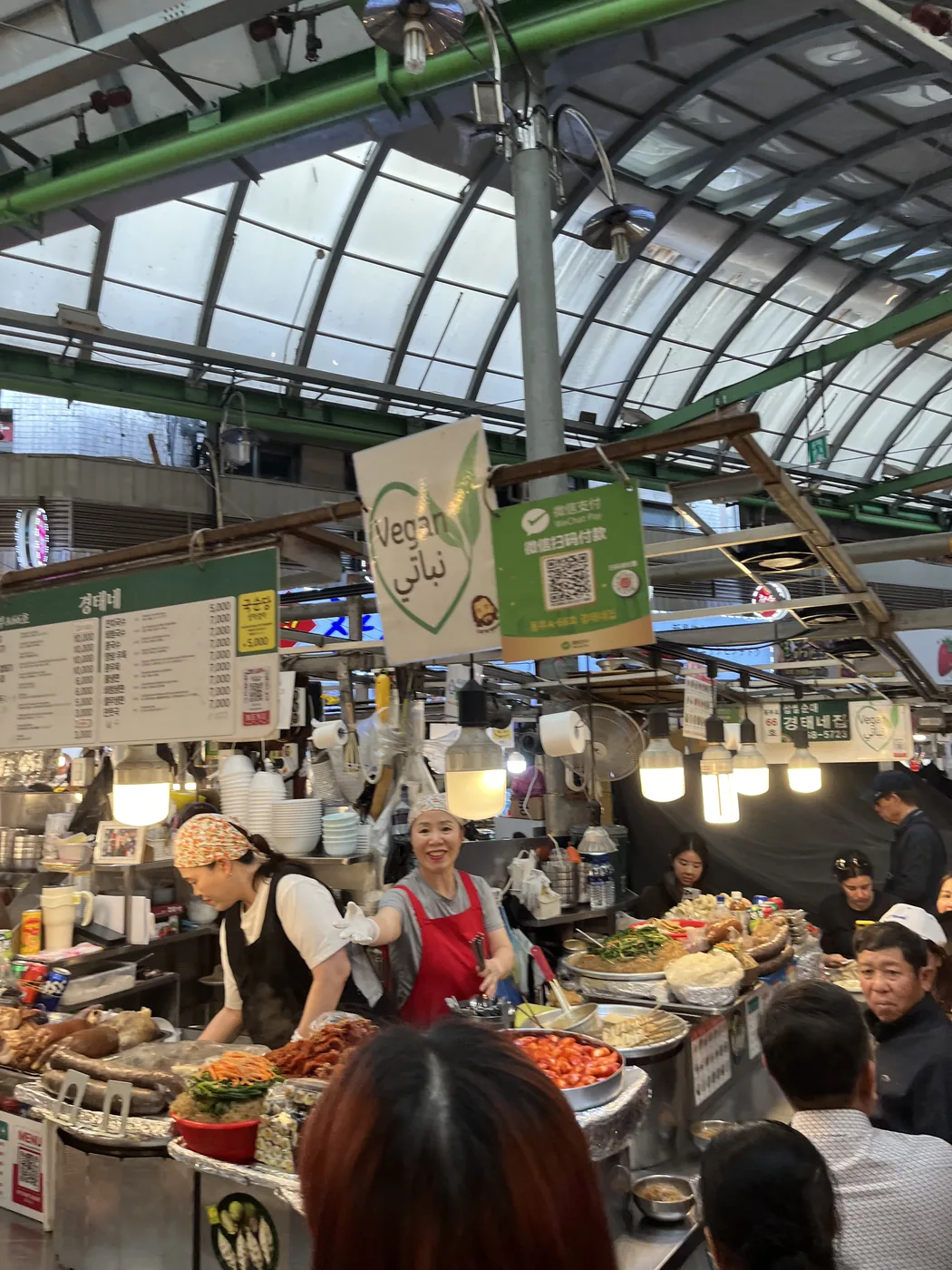
How to Visit Gwangjang Market: The Quick Version
If you only skim one section, here it is. Gwangjang sits in Jongno in central Seoul, it is busiest at lunch and dinner, most stalls take cards now, and the food alleys run down the middle of a covered grid. Go a little off-peak, do one slow lap before you buy, and share your dishes.
You do not need a reservation, a tour, or any Korean to enjoy it. The whole thing is walk-in, point-and-eat, and forgiving of first-timers. The only real planning is timing your visit to dodge the worst crowds and arriving hungry enough to graze widely.
It helps to set your expectations before you walk in, too. This is not a polished food hall with tables and table service; it is a tight, steamy, century-old working market where you eat on low stools or standing, shoulder to shoulder with strangers. If you go in expecting that energy rather than fighting it, the whole visit clicks into place. The slight chaos is the charm, not a flaw to be managed.
For the eating side of the trip, I keep separate guides: the full overview in my Gwangjang Market food guide and the ranked dishes in my what to eat at Gwangjang Market list. This post is purely the logistics so the food guides can stay about food.
Getting There
Gwangjang is genuinely easy to reach by subway, which is how I always go. The closest stop is Jongno 5-ga on Line 1, whose exits put you within a minute or two of a market entrance. Euljiro 4-ga on Lines 2 and 5 is also a short walk from the other side, so several routes work depending on where you are staying.
Use a transit card and just tap in and out at the gates. This is where my Sydney brain always does a little happy calculation: a Seoul subway ride is around ₩1,400, roughly half what an equivalent Opal trip costs me back home, and the trains are faster and more frequent. Getting across the city to the market costs almost nothing, which is part of why a market lunch feels like such good value.
One small navigation tip: Gwangjang has several entrances around its perimeter, and they do not all lead straight to the famous food alley. If you surface from the subway and find yourself among fabric and bedding stalls rather than food, do not panic; just keep walking inward toward the noise and steam and you will hit the food lanes within a minute. The market is a grid, so you genuinely cannot get lost for long.
If you would rather not navigate the subway, a taxi is cheap and easy too, and drivers will know Gwangjang Market by name. For working the market into a wider downtown plan, my Myeongdong travel guide shows how the central neighbourhoods connect, and the official Visit Seoul site has current access details.
Opening Hours and Best Times
Gwangjang keeps long daytime hours, with the food alleys generally busy from mid-morning until evening, though individual stalls set their own times. Some wind down earlier than you would expect, so the safest plan is to treat late morning to mid-afternoon as your reliable window. Sunday sees some sections quieter, and the textile parts keep more traditional shop hours than the food stalls.
For atmosphere with breathing room, I aim for around 11am or 3pm. The stalls are fully cooking, the food is fresh, and you can actually move and grab a stool. Lunchtime brings the local office crowd and evenings bring the after-work and tourist rush, both lively but harder if you want space to graze.
Weekends roughly double the crowd and the famous stalls grow real queues, so go on a weekday if your schedule allows. Always check current hours before a special trip, since they shift with seasons and holidays. The Korea Tourism Organization site is a reliable place to confirm before you go.
Season matters more than people expect, too. In summer the covered alleys trap heat and the cooking stalls make it genuinely warm, so go earlier in the day and keep water handy. In the colder months the market is one of the cosiest places in the city, all steam and hot broth, and a bowl of noodles or a fresh pancake feels twice as good. There is no bad season to come; there is just a smarter time of day for each one.
How to Order and Pay
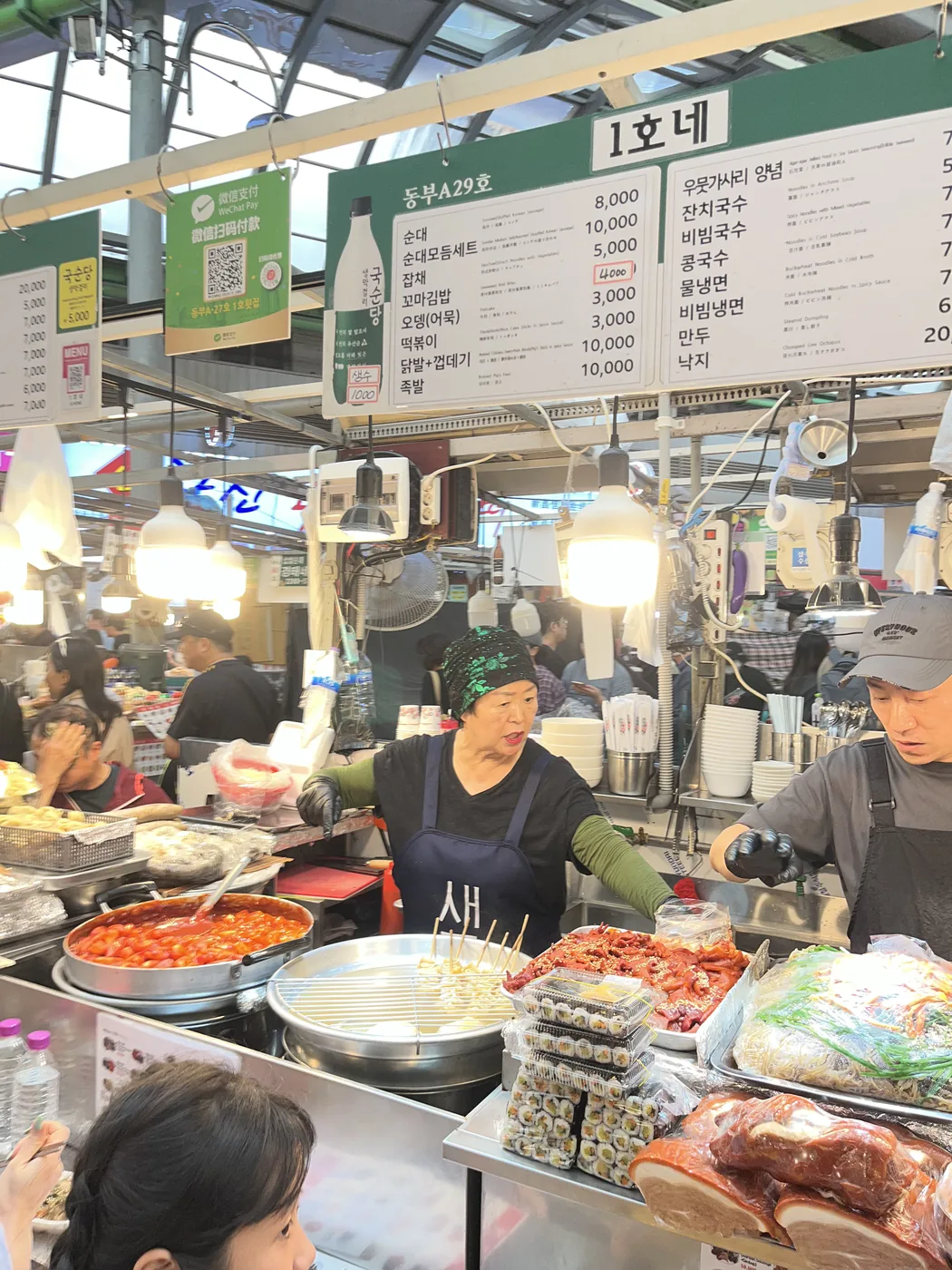
Ordering is simpler than the noise suggests, and a little confidence is all you need. Most stalls display the food or have photo menus, so you can point at what you want and hold up how many. Vendors are used to visitors and will show the price on a calculator or with their fingers if there is a language gap.
Payment has modernised, and most food stalls now accept cards, including foreign ones. Even so, a few smaller or older vendors still prefer cash, so carry ₩20,000 to ₩30,000 in small notes as a backup. You usually pay when you order, there is no tipping, and the price shown is the price you pay.
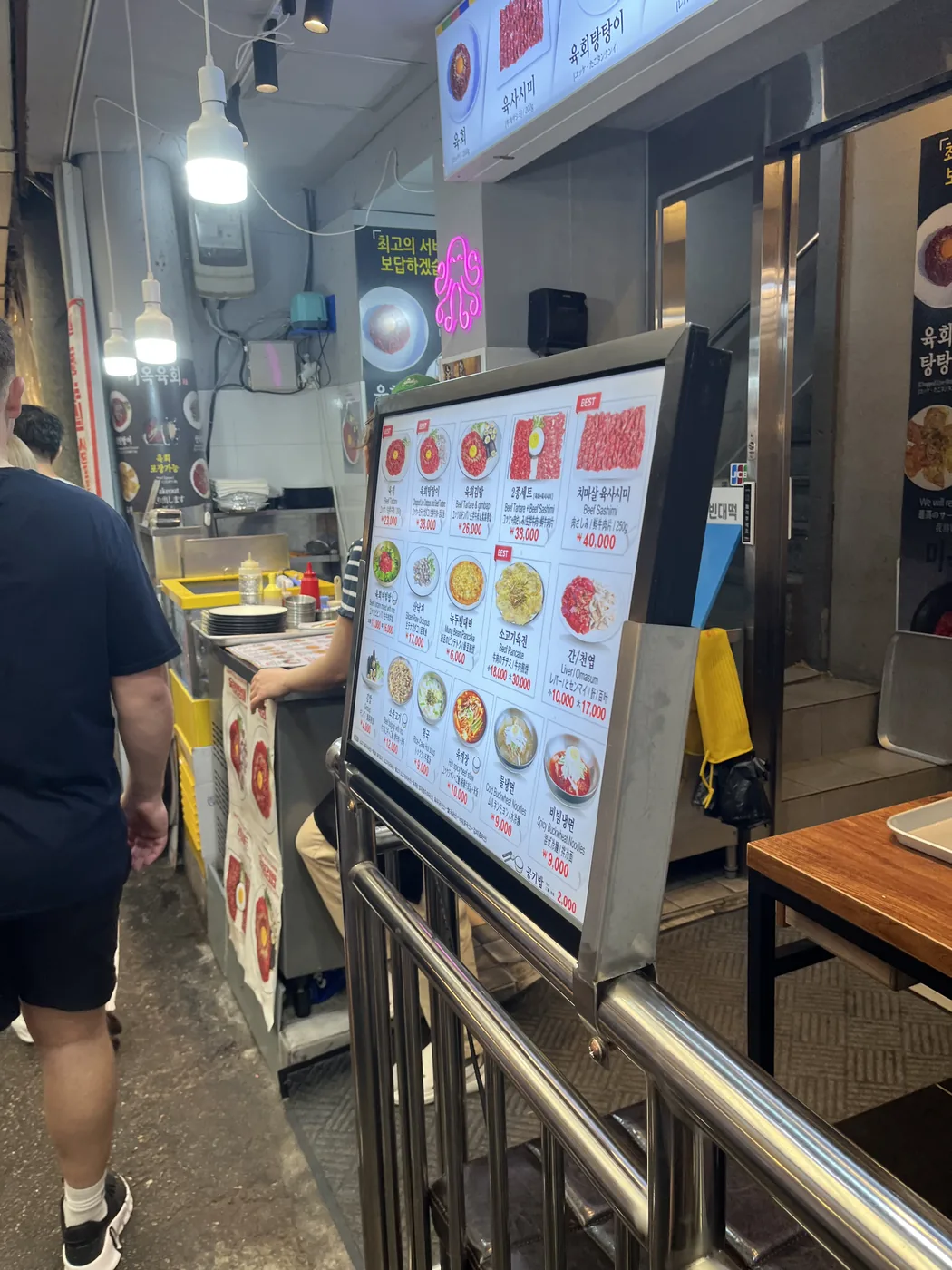
Seating is the last piece. The popular stalls have a row of low stools, and at busy times you hover until one opens up, sharing the counter with strangers. If you would rather keep moving, plenty of items travel fine in a paper tray, so you can eat as you wander. Watch what the locals around you do and follow suit.
How to Visit Gwangjang Market at a Glance
Here is the logistics summary for quick planning. Treat costs and times as rough 2026 guidance.
| Detail | What to Expect |
|---|---|
| Nearest station | Jongno 5-ga (Line 1); Euljiro 4-ga (Lines 2, 5) |
| Subway fare | ~₩1,400 with a transit card |
| Best time | Late morning or mid-afternoon, weekdays |
| Payment | Card widely accepted, carry some cash |
| Reservations | None needed, all walk-in |
| Time to budget | 1 to 2 hours for a proper graze |
Tips for First-Timers
A few simple habits make a Gwangjang visit far smoother, especially if crowds make you anxious. None of these are complicated, but together they turn a daunting wall of stalls into an easy, enjoyable couple of hours.
Do one slow lap before buying anything, so you can see where the famous stalls are and where the seating is. Come hungry but not starving, so you have appetite to graze without panic-buying at the first stall. Carry small cash, bring hand wipes since you will eat with your fingers, and keep your bag in front of you in the tight crowds. Above all, share dishes so two of you can taste widely.
One more thing: do not stress about choosing the single best stall. Freshness and turnover matter more than fame, so follow the queues of locals. If a stool is hard to find at peak time, get your food to go and eat standing, which is completely normal here.
A few comfort details go a long way in the heat and crush. Wear shoes you do not mind getting a little greasy, dress for warmth since the cooking stalls make the covered alleys steamy, and travel light so you are not wrestling a big bag through narrow gaps. If you are sensitive to crowds or strong smells, the late-morning lull is genuinely calmer than the lunch and evening peaks. None of this is essential, but it is the difference between enduring the market and enjoying it.
And give yourself permission to leave and come back. Because Gwangjang is so central and the subway is right there, plenty of visitors do a first graze, wander the old town, then loop back for a second round when their appetite returns. Treating it as a place you can dip in and out of, rather than a one-shot meal, takes all the pressure off and usually means you eat better.
What Is Nearby
Gwangjang sits in the historic Jongno core, which makes it easy to build a fuller day around your market meal. The old palaces, Insadong’s craft streets, and the Cheonggyecheon stream are all within easy reach on foot or a short hop, so a market lunch slots naturally into a day of old-Seoul sightseeing.
If you are pairing food with a view, the market also works as a daytime anchor before heading toward central landmarks later. My Namsan Seoul Tower guide covers the obvious afternoon-into-evening option, and the broader market scene across the city is in my Seoul food markets guide. Think of Gwangjang as the anchor and the old town as the rest of your day.
Because everything is so central, you can keep your plans loose. Eat first, then wander wherever the afternoon takes you, confident that a subway station is always a few minutes away. That flexibility is one of the quiet joys of staying central in Seoul.
FAQ
How do I get to Gwangjang Market?
Take subway Line 1 to Jongno 5-ga Station, whose exits put you a minute or two from a market entrance, or use Euljiro 4-ga on Lines 2 and 5 from the other side. Tap a transit card in and out for around ₩1,400. A taxi is also cheap and drivers know the market by name.
What are Gwangjang Market’s opening hours?
The food alleys are generally busy from mid-morning until evening, though individual stalls set their own hours and some wind down earlier than expected. Late morning to mid-afternoon is the most reliable window. Always confirm current hours before a special trip, as they shift with seasons and holidays.
Do I need cash at Gwangjang Market?
Most food stalls now accept cards, including foreign ones, so you can get by largely on card. That said, a few smaller or older vendors still prefer cash, so carry ₩20,000 to ₩30,000 in small notes as a backup. You pay when you order, and there is no tipping.
How long should I spend at Gwangjang Market?
One to two hours is plenty for a proper graze. That gives you time to do a slow lap, taste several dishes by sharing, and soak up the atmosphere without rushing. If you are pairing it with nearby sights like the palaces or Insadong, anchor the market as your lunch and build the day around it.
Is Gwangjang Market good for first-time visitors?
Yes, it is one of the most beginner-friendly markets in Seoul. It is walk-in, point-and-eat, central, and the vendors are used to visitors. Do one slow lap first, share dishes, carry a little cash, and go slightly off-peak, and a first-timer will have an easy, memorable time.
My Thoughts
For all its fame and crowds, Gwangjang is genuinely easy to visit, and I never want the logistics to scare anyone off. The hardest part is choosing what to eat, and that is the fun kind of hard. Everything else is just turning up hungry and following the steam.
My real advice on how to visit Gwangjang Market is to keep it simple: go off-peak, do a lap, share everything, and carry small cash. Get those four things right and the market opens up to you, crowds and all. It rewards the relaxed visitor far more than the over-planner.
And let yourself linger. Some of my favourite moments here have been nothing more than sitting on a low stool, watching a grandmother flip pancakes, eating something hot in the noise and steam. That is the visit worth planning for.
If it is your first traditional market in Korea, be patient with yourself, too. The noise and the crowds can feel like a lot in the first five minutes, and then something clicks and you settle into the rhythm of it. Give it that five minutes, do your slow lap, and let the place win you over. It nearly always does.
Ready to Visit Gwangjang?
Keep the plan simple: take Line 1 to Jongno 5-ga, arrive late morning on a weekday, carry a little cash, and do one slow lap before you buy. Budget an hour or two, share every dish, and pair it with the nearby palaces or Insadong for a full old-Seoul day. Read this with the rest of the Gwangjang series and you will walk in like you have done it before.
🍜 Make a full day of it: Gyeongbokgung Palace, Hanok Village & Gwangjang Market Tour (affiliate link)