Disclosure: This post contains affiliate links. If you purchase through these links, I may earn a commission at no extra cost to you.
Walk into Gwangjang hungry and undecided and you will waste your appetite on the wrong stalls. So here is exactly what to eat at Gwangjang Market, ranked the way a local actually prioritises it, with the must-eats first and the happy extras after. I grew up in Seoul, have lived in Sydney for twenty years, and I come home once a year, so I know which dishes earn their hype and which are just photogenic. Share everything, pace yourself, and use this as your hit list.
What to Eat at Gwangjang Market: The Short Answer
If you remember nothing else, eat bindaetteok and mayak gimbap. Those two are the reason Gwangjang is famous, and skipping them is the one real mistake you can make here. Everything after that is about how much room you have left and how adventurous you feel.
My rough order of priority is bindaetteok first while you are hungriest, then mayak gimbap to share, then a noodle or mandu to fill out the meal, then tteokbokki or a fried snack if you still have space. The raw dishes, yukhoe and sannakji, are for the curious and the brave, and I treat them as a bonus rather than a must. The wider market context lives in my Seoul food markets guide.
The trick that makes all of this work is sharing. Order one of a thing between two people, taste it, move on. That way you can hit five or six items instead of filling up on a single full portion at the first stall you see.
It also helps to think in contrasts as you go, alternating rich and light so your palate never gets tired. A heavy fried pancake followed by the sharp little rolls, then a clean noodle broth, keeps every bite interesting in a way that three fried things in a row never would. This is exactly how locals graze, even if they would never put it into words. For seasonal events and current market notes before you plan your eating, the Visit Seoul site is worth a quick look.
Bindaetteok, the Mung Bean Pancake
Bindaetteok is the dish Gwangjang is built around, and it has to be your first stop. Ground mung beans are fried into a thick, savoury pancake in shallow pans of bubbling oil, and the frying stalls down the central alley are the visual heart of the whole market. You want one straight off the pan, crisp at the edges and soft in the middle.
Eat it with the raw onion and soy-vinegar dip the stall gives you, which cuts the richness perfectly. A pancake is enough to share between two as a starter, and it is cheap, filling, and exactly what the market does best. It is so central to Gwangjang that I gave it its own deep dive in my Gwangjang Market bindaetteok guide.
Here is a quiet Korea-versus-Australia thought. In Sydney, the closest thing I get is a fancy brunch fritter for fifteen dollars, plated and photogenic but somehow less satisfying. A Gwangjang bindaetteok, fried by someone who has made thousands, eaten standing in the steam, beats it for a fraction of the price. Some food just tastes better where it belongs.
Mayak Gimbap, the Addictive Rolls
Mayak gimbap is the market’s other icon, and the name literally means “narcotic” rolls because they are so moreish. They are bite-sized seaweed-and-rice rolls, smaller than a normal gimbap, served with a sharp mustard-soy dip that makes them weirdly impossible to stop eating. A plate vanishes faster than you expect.
They are light, cheap, and perfect to share alongside something heavier like the pancake. I always order a plate to balance the richer fried things, and they travel well if you want to keep wandering while you eat. This is the dish visitors message me about afterwards, asking why they cannot stop thinking about little rice rolls.
Do not overthink the dip. A quick swipe through the mustard-soy is all they need, and the contrast of the cool roll with the sharp sauce is the whole point. Order more than you think you want, because one plate between two is never enough.
Part of the charm is watching them being made, the vendor rolling and slicing dozens at a speed that feels impossible, the little rolls lined up in neat rows. They are also the most portable thing in the market, so I often grab a plate to nibble while I keep walking and deciding what to eat next. If you are bringing fussy eaters or kids, mayak gimbap is the gentle, familiar gateway that wins everyone over before you push them toward the bolder stalls.
Noodles and Mandu
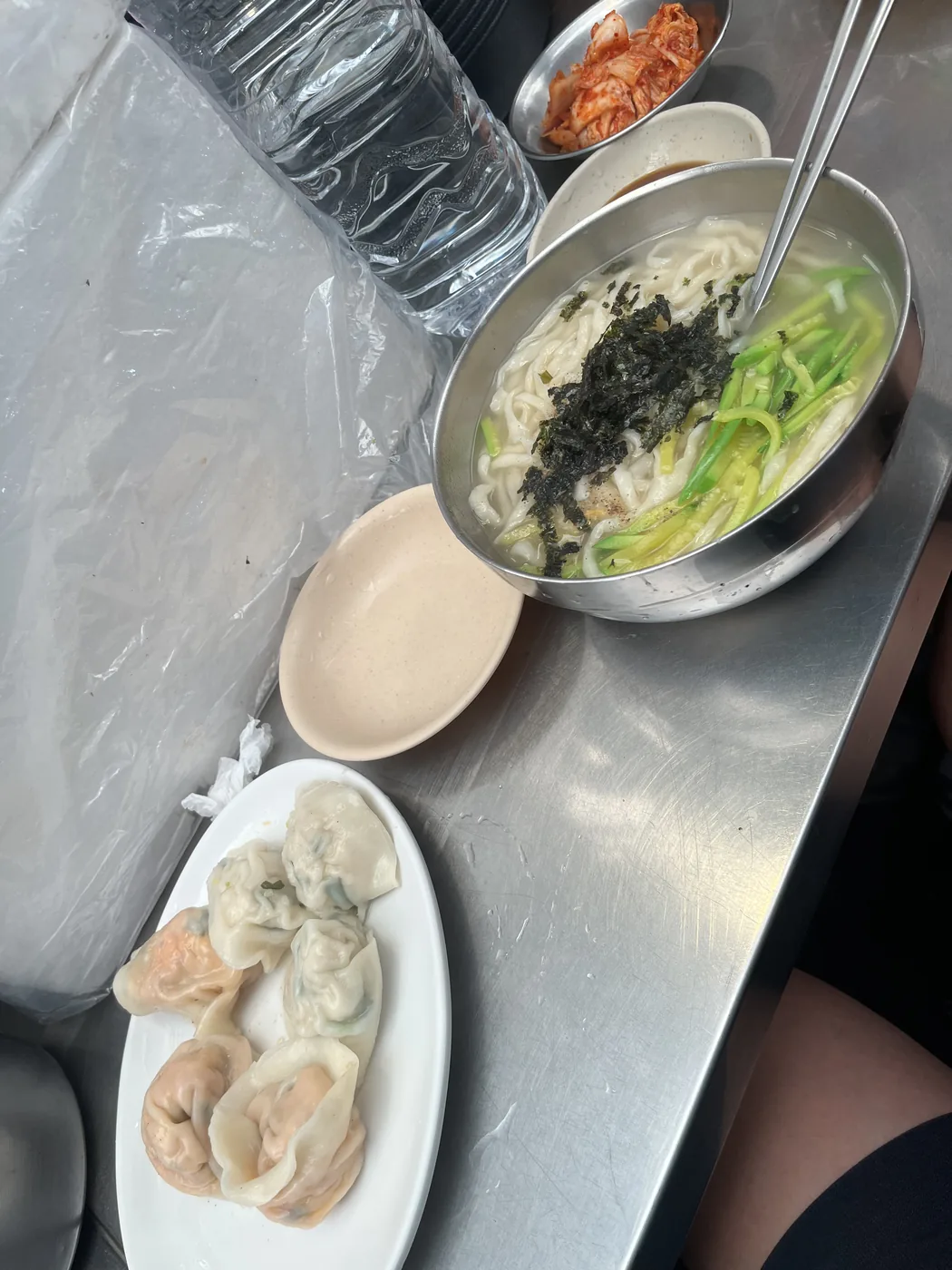
Once you have hit the two icons, the noodle and dumpling stalls are where you turn a snack crawl into a proper meal. Gwangjang does kalguksu, hand-cut wheat noodles in a clear broth, and janchi guksu, a lighter banquet noodle, both warming and cheap. On a cold or rainy day, a bowl of either is exactly the reset you want between richer bites.
The mandu, Korean dumplings, are the other reliable filler, either steamed or fried, plump with pork and vegetables or kimchi. A plate shared across the table rounds out the meal without blowing your budget or your stomach. These are the dishes locals quietly come for at lunch, not just the camera-friendly stars.
If you are mapping a wider street-food trail across the city, the noodle-and-snack energy here pairs well with what I cover in my Hongdae street food guide. Gwangjang is the traditional, daytime end of that spectrum, hand-cut and unpretentious.
Tteokbokki and Fried Snacks
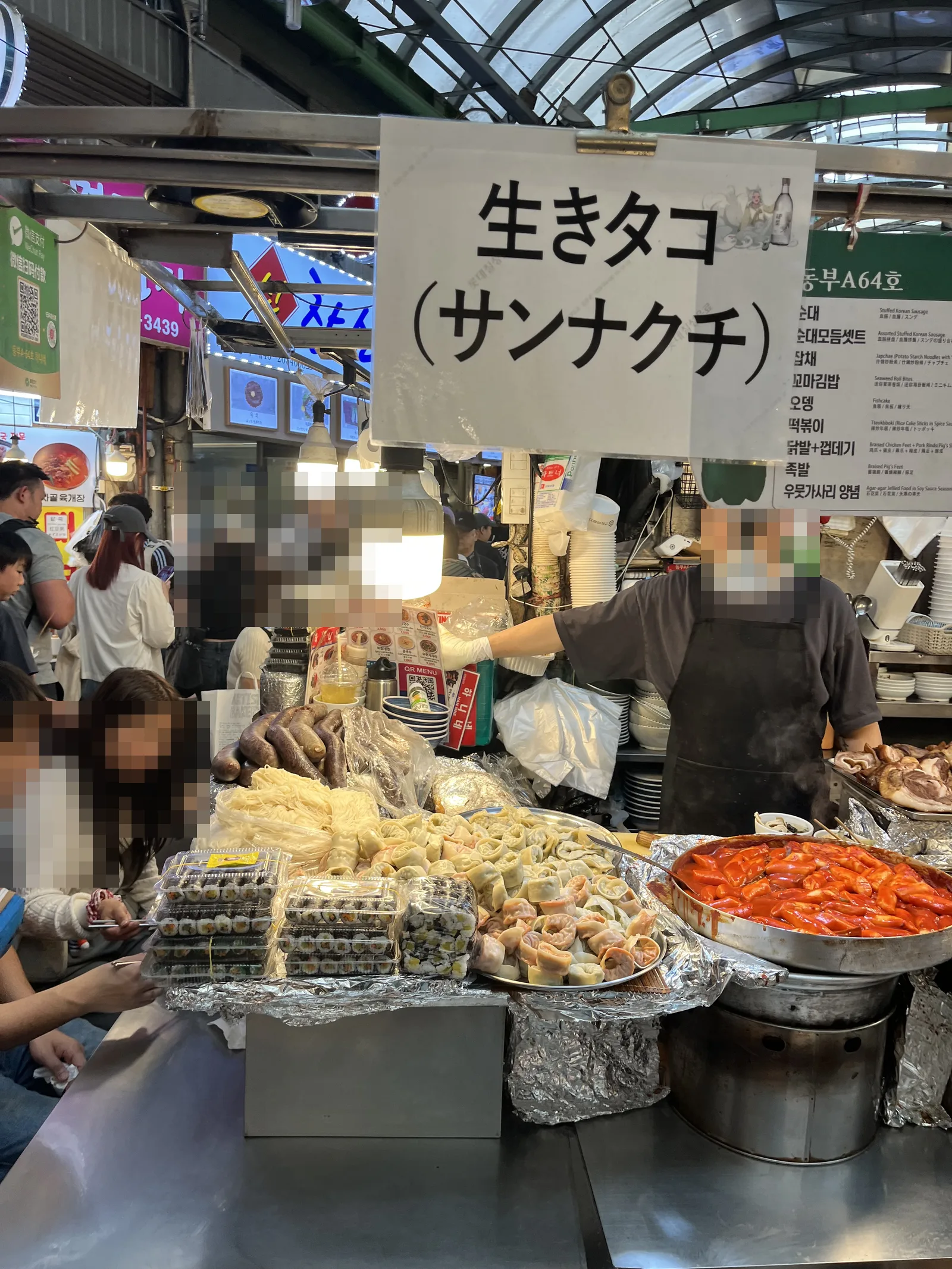
For the spicy-and-fried corner, Gwangjang delivers exactly what you would hope. Tteokbokki, chewy rice cakes in a sweet-spicy gochujang sauce, simmers in wide red pans and is the comfort snack the whole country grew up on. It is cheap, warming, and a good shared side rather than a main event.
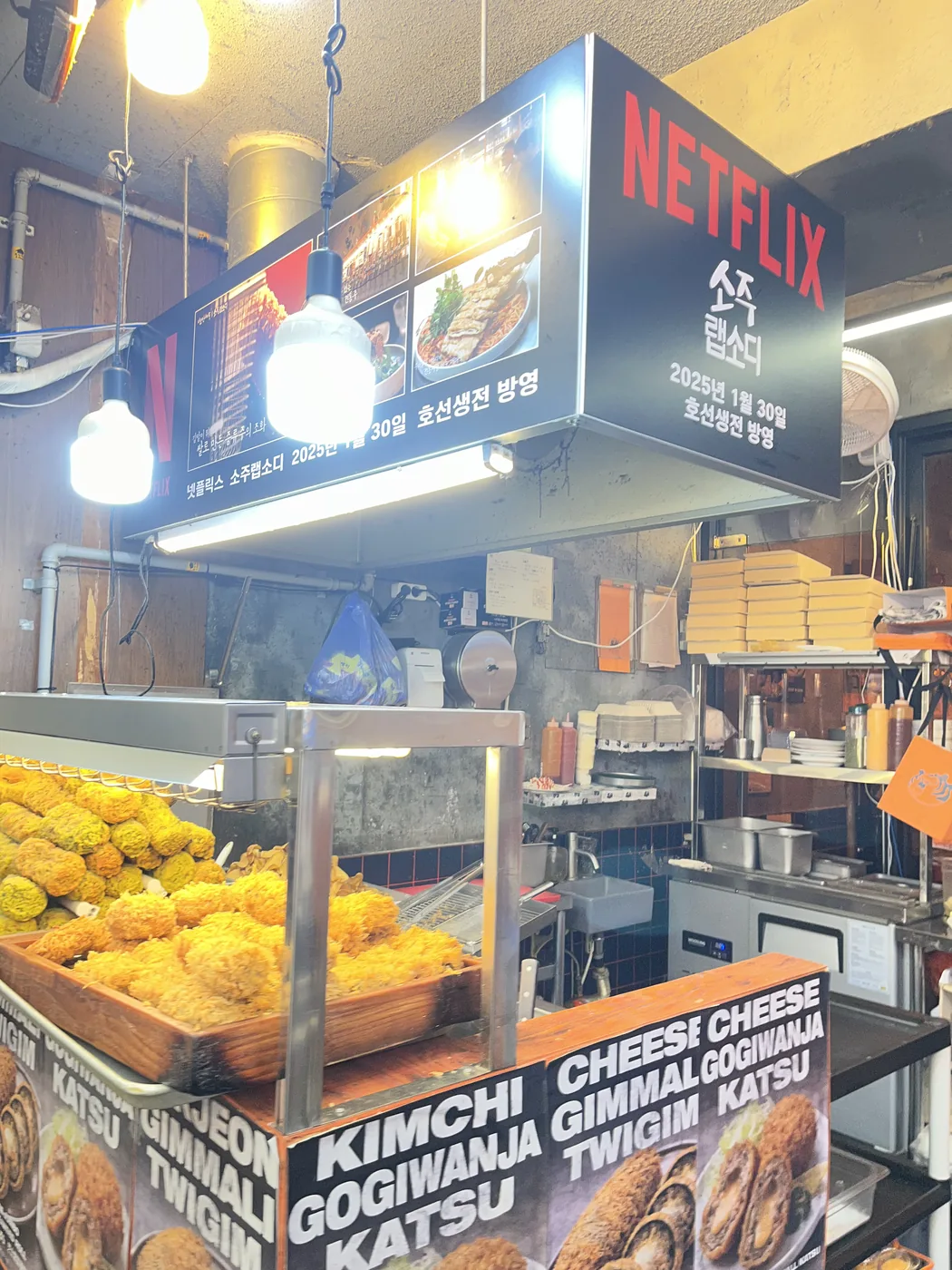
Around it you will find twigim, assorted fritters, from battered vegetables to seaweed rolls and stuffed peppers, piled in golden heaps and fried to order. Dunk them in the tteokbokki sauce if the stall lets you, which is the proper way to eat them. This is the most kid-friendly and least intimidating corner of the market, so it is a good place to start if you are easing a nervous eater in.
Gwangjang also does a few sweet and seasonal odds and ends worth a look if you have a sweet tooth, from chewy rice-cake snacks to fruit and the occasional hotteok-style treat near the edges of the market. These are not the headline reasons to come, but they make a nice full stop on a savoury crawl, and they are easy to share as you head for the exit. Keep a few thousand won spare for whatever catches your eye on the way out.
Be a little strategic here, because fried snacks fill you up fast and it is easy to blow your appetite on a paper tray of fritters. Share a small portion, enjoy the crunch, and save room for the dishes you actually came for. The street-food rhythm here is similar to the night carts I describe in my Myeongdong street food guide, just earlier in the day and a touch more traditional.
Sannakji and the Raw Stuff
For the adventurous, Gwangjang has a row of stalls serving raw dishes that are not for everyone but are a genuine local experience. Yukhoe is Korean-style seasoned raw beef, silky and often topped with a raw egg yolk and pear, and it is more approachable than nervous visitors expect. It is rich, clean-tasting, and a real treat if you like steak tartare.
Then there is sannakji, freshly cut octopus that arrives still moving on the plate, dressed with sesame oil and seeds. I will be honest with you: it is a texture-and-bravado dish as much as a flavour one, and it is completely fine to watch rather than eat. If you do try it, chew thoroughly and take it slowly.
Neither of these is a must, and there is no shame in skipping them. I include them because they are part of what makes Gwangjang Gwangjang, and because the curious traveller should at least know they are there. Treat them as the bold finale, not the centrepiece.
If you do want to try the raw dishes, do it earlier rather than at the very end of a long, hot afternoon, and choose a stall with brisk turnover so everything is as fresh as possible. Sit down for these rather than eating on the move, since they deserve a moment and a steady hand. For general food-safety guidance and what to expect from Korean markets, the Korea Tourism Organization is a sensible reference. Above all, listen to your own comfort level; a brilliant Gwangjang meal does not require a single bite of moving octopus.
What to Eat at Gwangjang Market at a Glance
Here is the whole hit list ranked for quick reference, so you can plan your appetite before you arrive. Prices are rough 2026 guidance and vary by stall.
| Dish | Priority | Rough Cost |
|---|---|---|
| Bindaetteok | Must-eat, go first | ~₩5,000 |
| Mayak gimbap | Must-eat, share | ~₩4,000 a plate |
| Kalguksu / janchi guksu | Great filler | ~₩6,000–₩8,000 |
| Mandu | Reliable side | ~₩5,000 |
| Tteokbokki and twigim | If you have room | ~₩4,000–₩6,000 |
| Yukhoe / sannakji | For the brave | ₩12,000+ |
FAQ
What is the must-eat food at Gwangjang Market?
Bindaetteok, the fried mung bean pancake, and mayak gimbap, the small addictive seaweed rolls, are the two non-negotiables. Eat the pancake first while you are hungriest, then share a plate of the rolls. Everything else, from noodles to tteokbokki, is a happy extra around those two icons.
What should I eat first at Gwangjang Market?
Start with a hot bindaetteok straight off the pan while your appetite is fresh, since it is the market’s signature and best eaten piping hot. Then move to mayak gimbap to share, and fill out the meal with noodles or mandu. Save fried snacks for last, as they fill you up quickly.
Is the raw octopus at Gwangjang Market safe to eat?
Sannakji is a genuine local dish and is generally fine when eaten at busy, reputable stalls, but the moving pieces are a choking risk if you do not chew thoroughly. Take small bites, chew well, and go slowly. If it is not for you, there is absolutely no need to try it to enjoy Gwangjang.
How many dishes can two people try at Gwangjang Market?
By sharing one of each item, two people can comfortably taste five or six dishes without overeating or overspending. Order a single portion, split it, and move on rather than committing to a full serving at one stall. This grazing approach is the whole point of a market crawl.
Is Gwangjang Market food expensive?
No, it is very affordable, with most dishes between around ₩4,000 and ₩12,000. Two people sharing several items can eat well for a modest total. The raw dishes like yukhoe and sannakji are the pricier exceptions, so budget a little more if you want to try those.
My Thoughts
The dishes at Gwangjang are not fancy, and that is exactly why I love them. This is honest, generations-old food cooked by people who have perfected one or two things, and eating it in the steam and noise of the market is half the flavour. No tasting menu has ever moved me the way a fresh pancake on a low stool does.
My real advice on what to eat at Gwangjang Market is to lead with the two icons, share relentlessly, and let curiosity carry you the rest of the way. Do not try to eat everything; eat the right things well, and leave a little hungry so you remember it fondly.
And if the raw octopus is a step too far, skip it with a clear conscience. The pancakes and the little rolls are the soul of this place, and they are all the reason you need to come back year after year, as I do.
Building Your Gwangjang Hit List?
Lock in bindaetteok and mayak gimbap as non-negotiables, then share your way through a noodle, some mandu, and whatever else tempts you. Go hungry, split every dish between two, and save the fried snacks for last so you do not fill up early. Read this with the rest of the series before you go, and you will eat the best of Gwangjang without wasting a single bite of appetite.
🍜 Taste it all in one evening: Seoul Night Tour: Han River Cruise & Gwangjang Market (affiliate link)