Disclosure: This post contains affiliate links. If you purchase through these links, I may earn a small commission at no extra cost to you. I only recommend products I personally use and trust.
The fastest way to fall for Korea’s biggest market is to eat your way through it. This guide to Namdaemun Market street food is my honest hit list: the snacks worth queuing for, the ones to grab on the move, and how to graze the alleys without filling up too fast. I grew up in Seoul, have lived in Sydney for twenty years, and the food alleys are the first place I head every time I am home. Come hungry, share everything, and let me point you at the good stuff.
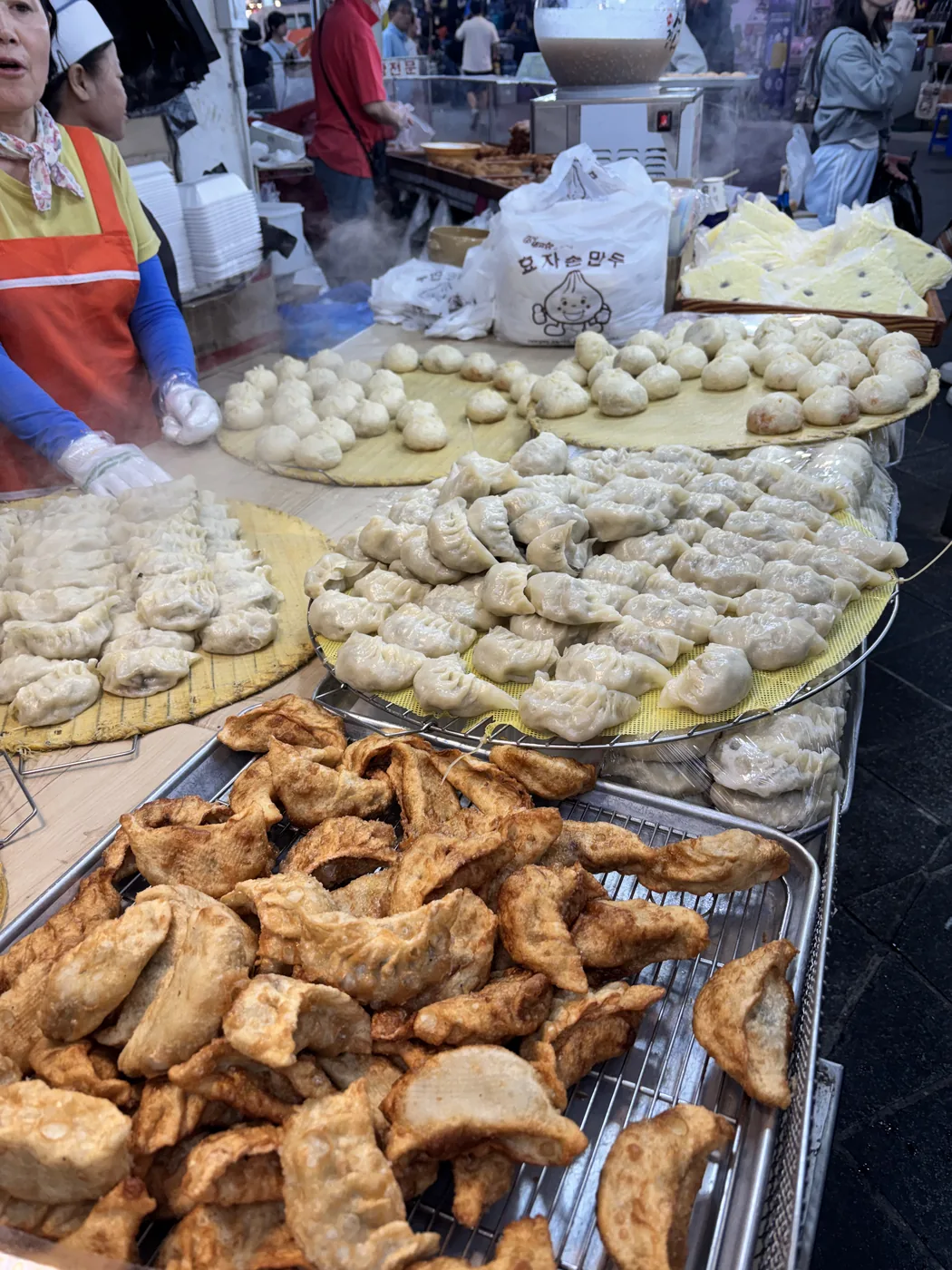
Namdaemun Market Street Food: The Short Answer
If you only remember a few things, eat a hot hotteok, a fresh kkwabaegi, and a cup of tteokbokki, and you will have tasted the soul of the place. Those three are cheap, everywhere, and exactly what the market does best. Everything else is a happy bonus on top.
My grazing order is simple: start with something fried and hot while you are hungriest, move to a sweet or a twisted donut, then finish with the spicy and the hearty if you still have room. Share each item between two so you can taste widely without overeating. The fuller picture of the whole market lives in my Seoul food markets guide, and the practical logistics sit in the main market overview.
The food alleys cluster near the main entrances, so you will smell them before you see them. Follow the steam and the queues of locals, and you cannot go far wrong. The rest of this list walks through each thing worth your appetite.
One thing that makes Namdaemun’s food special is how it sits inside a working shopping market rather than a dedicated food street. You are eating among people running errands, hauling wholesale boxes, and bargaining for goods, which gives the snacking a lively, unselfconscious energy. Nobody is performing for tourists; the carts are feeding the market itself, and you just happen to get to join in. That backdrop is part of why the food tastes better here than the same snack would in a tidier setting.
Hotteok and Fried Sweets
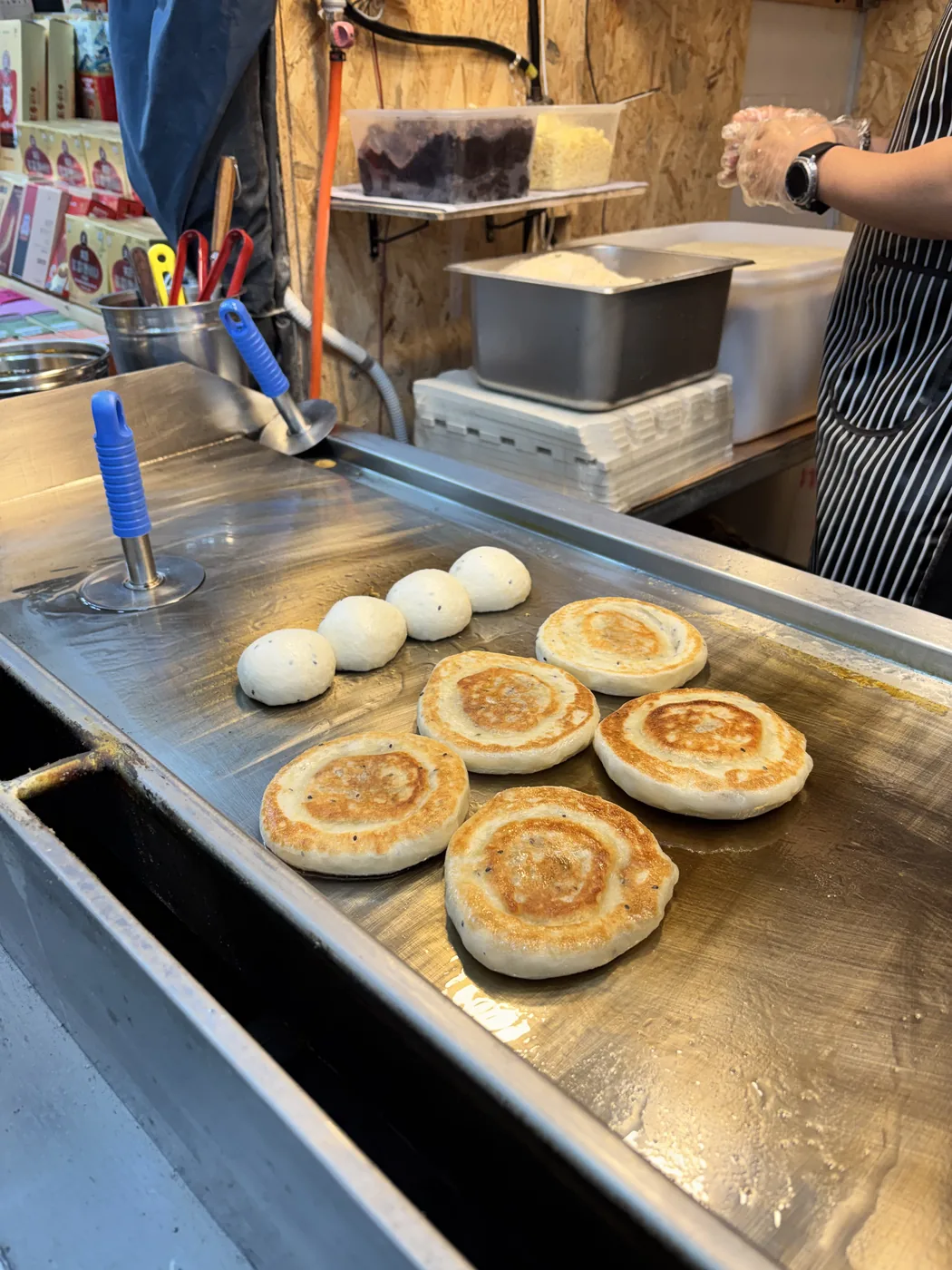
Hotteok is the one I would not let you skip. It is a chewy pancake fried on a griddle and stuffed with melted brown sugar, cinnamon, and nuts, served scaldingly hot in a little paper cup. The first bite is a hazard and a joy in equal measure, so let it cool for a few seconds before you commit.
At Namdaemun the hotteok stalls are easy to spot by the round griddles and the small crowds waiting beside them. Some versions go savoury, packed with japchae noodles instead of sugar, which is a brilliant lunch in a single handheld parcel. Either way, eat it fresh off the griddle, because a hotteok that has sat around loses everything that makes it special.
Here is a small Korea-versus-Australia thought. Back in Sydney I can find hotteok at a festival stall now and then, usually for triple the price and half the heat. At Namdaemun it is cheap, constant, and cooked to order in front of you, and eating one in the steam of the market on a cold or rainy day is a genuinely happy ritual I look forward to all year.
Kkwabaegi, the Twisted Donut
Kkwabaegi is the twisted doughnut you will see piled in glossy golden rows, rolled in sugar and impossible to walk past. It is chewier and less sweet than a Western donut, with a satisfying density that makes one feel like a proper snack rather than a sugar hit. They are usually sold cheaply by the piece or the bag.
Namdaemun does these especially well, and a fresh-fried one still slightly warm is a different thing entirely from the cold ones at a convenience store. Grab a couple to share and eat them as you walk, since they travel perfectly and need no plate or sauce. They are the ideal market pocket-snack.
If you have a sweet tooth, this is your corner, and it pairs beautifully with a hot drink on a chilly day. Do not overdo it, though, because the sugar adds up fast and you want room for the savoury stalls. One or two between two people is the sweet spot, literally.
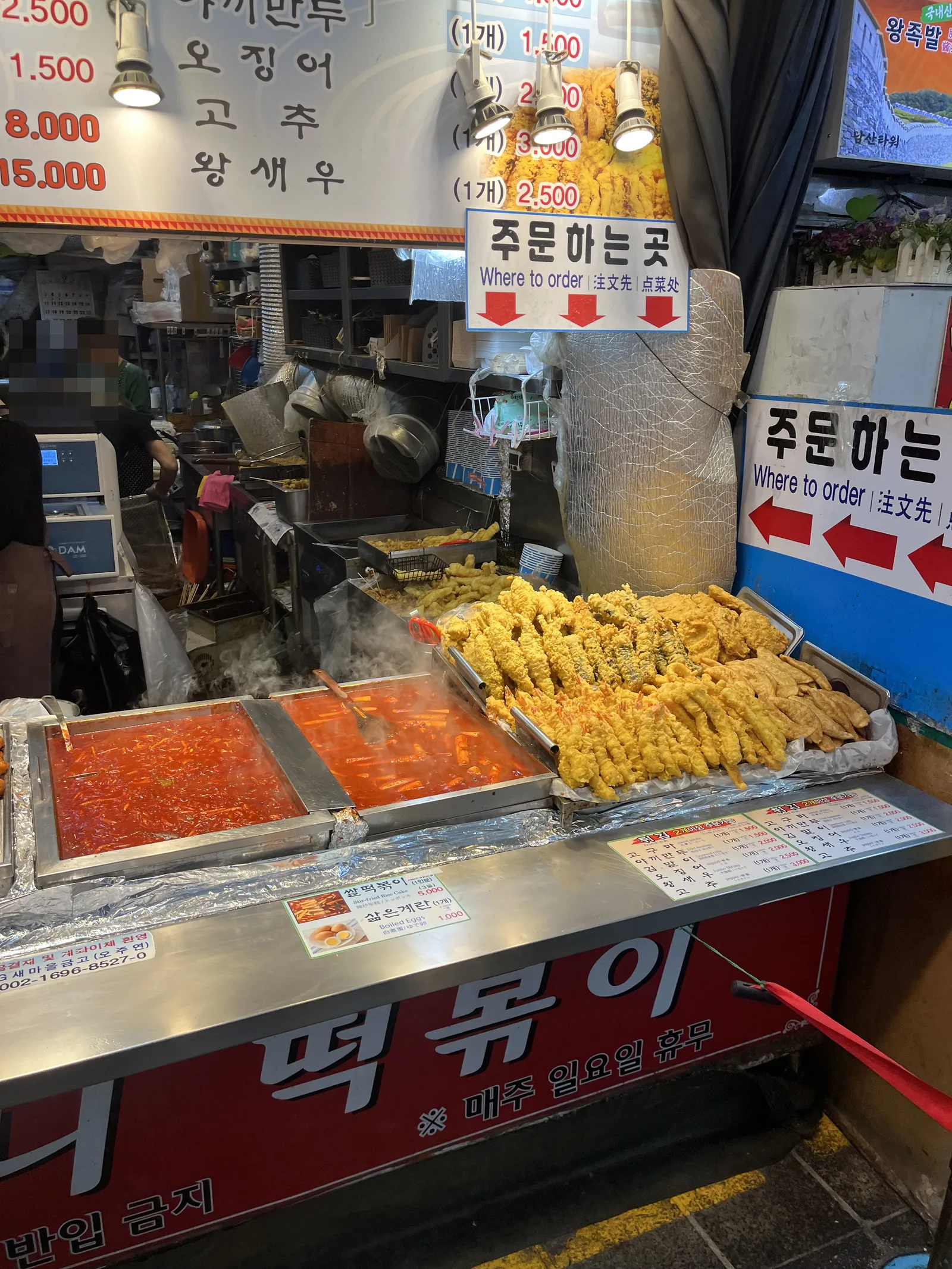
Tteokbokki and Fried Snacks
For the spicy-and-savoury corner, Namdaemun delivers exactly what you want. Tteokbokki, chewy rice cakes simmered in a sweet-spicy gochujang sauce, bubbles away in wide red pans and is the comfort snack the whole country grew up on. It is cheap, warming, and the perfect shared cup to balance all the sweet stuff.
Right beside it you will find twigim, assorted fritters from battered vegetables to seaweed rolls and stuffed peppers, fried golden and best dunked in the tteokbokki sauce. Many stalls also do fish-cake skewers in hot broth, the eomuk that locals sip on a cold day, and grabbing one with a paper cup of the broth is pure market comfort. This corner is the least intimidating, so it is a good place to ease in a nervous eater.
The fish-cake skewers deserve a special mention on a cold or wet day. You take a skewer from the simmering pan, then ladle yourself a paper cup of the hot, savoury broth it sits in, usually for free, and sip it as you eat. It is one of the cheapest, most warming things in the entire market, and on my last rainy visit it was the snack I kept coming back to. Few things beat a hot cup of eomuk broth with the rain drumming on the market roof.
Be a little strategic, because fried snacks fill you up fast and it is easy to blow your appetite on a tray of fritters. Share a small portion, enjoy the crunch and the heat, and keep moving. The rhythm here echoes the night-cart scenes I cover in my Myeongdong street food guide, just in a denser, more workaday setting.
The Hearty Stalls and Galchi-jorim Alley
When snacks are not enough, Namdaemun has proper sit-down comfort food tucked into its alleys. The most famous is the galchi-jorim alley, a narrow lane of stalls serving braised cutlassfish in a spicy, deeply savoury sauce with rice, a beloved local lunch that fills you for very little money. It is hearty, homely, and exactly the kind of thing tourists walk straight past without realising.
You will also find kalguksu noodle stalls, rice-and-soup spots, and dumpling counters scattered through the market, any of which makes a satisfying break from grazing. These are where the vendors and regulars actually eat lunch, so following them is the surest way to a good, honest meal. Pull up a stool, point at what the next person is having, and you will rarely be disappointed.
These hearty stalls are also where Namdaemun shows its value most clearly: a full, warming meal for a handful of coins. If you are building a wider street-eating trail across the city, the younger, night-time end of it lives in my Hongdae street food guide, while Namdaemun is the old-school, daytime counterpart.
If you want to eat where the market itself eats, look for the lanes packed with vendors on their lunch break rather than the stalls with the most tourist signage. A counter crowded with aproned shopkeepers wolfing down rice and stew is the surest sign of honest, good-value food. I have had some of my most satisfying, cheapest Seoul meals at exactly these unglamorous spots, elbow to elbow with people who would never call it street food; to them it is just lunch.
Namdaemun Market Street Food at a Glance
Here is the hit list ranked for quick reference, so you can plan your appetite before you arrive. Prices are rough 2026 guidance and vary by stall.
| Food | What It Is | Rough Cost |
|---|---|---|
| Hotteok | Hot sugar-stuffed griddle pancake | ~₩2,000 |
| Kkwabaegi | Sugared twisted donut | ~₩1,500–₩3,000 |
| Tteokbokki | Spicy chewy rice cakes | ~₩3,000–₩5,000 |
| Twigim / eomuk | Fritters and fish-cake skewers | ~₩1,000 each |
| Galchi-jorim | Braised cutlassfish with rice | ~₩8,000–₩12,000 |
Tips for Grazing the Alleys
A few simple habits make a Namdaemun food crawl smoother and tastier. None are complicated, but together they keep you eating well without the usual first-timer stumbles.
Come hungry but pace yourself, sharing one of each item between two so you can taste five or six things. Carry small cash, since the busiest snack stalls move fast and a few still prefer it, and bring tissues because you will eat with your fingers. Follow the queues of locals rather than the loudest signage, and eat hot things the moment they are handed over.
One more thing: do not eat your first snack standing in the narrowest lane. Step to the side or find a quieter spot so you are not blocking the flow, which gets tight at peak times. For current market hours and any seasonal notes before you plan, the Visit Seoul and Korea Tourism Organization sites are reliable references.
FAQ
What street food is Namdaemun Market famous for?
Namdaemun is famous for hotteok sugar-stuffed pancakes, kkwabaegi twisted donuts, tteokbokki, fried twigim, and fish-cake skewers, plus the hearty galchi-jorim braised cutlassfish alley. The food alleys near the main entrances are the easiest place to start. Most snacks are very cheap, so you can taste widely for little money.
How much does street food cost at Namdaemun Market?
Snacks are very affordable, with most between around ₩1,000 and ₩5,000, and hearty meals like galchi-jorim around ₩8,000 to ₩12,000. Two people sharing several items can eat well for a modest total. Prices vary by stall and nudge up over time, so treat these as 2026 guidance.
What should I eat first at Namdaemun Market?
Start with a hot hotteok straight off the griddle while you are hungriest, then a fresh kkwabaegi, then a shared cup of tteokbokki. Save the hearty sit-down stalls like galchi-jorim for when snacks are not enough. Sharing each item lets you taste more without filling up too quickly.
Is Namdaemun street food good in the rain?
Yes, arguably even better. Much of the market is covered, the crowds thin out, and a hot hotteok or a cup of fish-cake broth is exactly what you want on a wet day. I last grazed Namdaemun in light rain and the steamy, cosy alleys were a highlight rather than a hassle.
Do I need cash for Namdaemun street food?
It helps. Many snack stalls now take cards, but the busiest ones move fast and some still prefer cash, so carry ₩10,000 to ₩20,000 in small notes. You pay when you order, there is no tipping, and the price shown is what you pay. Keeping small change handy keeps the queue moving.
My Thoughts
Namdaemun’s food alleys are where the market feels most alive to me, all steam and sizzle and the smell of sugar and oil. It is not refined, and it is not trying to be; it is honest, cheap, generous food cooked by people who have made it for years. That is exactly why I love it.
My real advice on Namdaemun Market street food is to graze widely and lead with the classics. A hot hotteok, a twisted donut, a cup of tteokbokki, and a hearty bowl if you still have room will give you the whole story for the price of a single Sydney lunch. Share everything and keep moving.
And do not let crowds or weather put you off. Some of my happiest market memories are nothing more than a hot snack eaten under cover while the rain comes down outside. That is Namdaemun doing what it does best.
If you are nervous about ordering, let me reassure you: the food stalls are the friendliest, lowest-stakes way to dip into a Korean market. You point, you pay, you eat, and nobody minds if you do not speak a word of Korean. Start with the sweet, familiar things like hotteok and kkwabaegi to build your confidence, and within twenty minutes you will be happily pointing at spicier, stranger, better things. The market meets you exactly where you are, which is why I send even the most cautious eaters here first. By the end of a single graze, most people who arrived nervous are the ones suggesting just one more stall.
Hungry for Namdaemun?
Come with an empty stomach and a plan to share. Lead with a hot hotteok, add a kkwabaegi and a cup of tteokbokki, and save a hearty galchi-jorim for when snacks are not enough. Carry small cash, follow the local queues, and read the rest of the Namdaemun series before you go. Graze widely, eat everything hot, and you will taste the best of the market in one happy hour.
🍜 Taste the best stalls with a local guide: Seoul Namdaemun Market Half-Day Guided Food Tour (affiliate link)