Most visitors ride the cable car up to N Seoul Tower without realising there is a quieter, free, and frankly lovelier way to arrive. The Namsan hiking trail is a network of forest paths, stairs, and an old city-wall route that carries you from the streets right up to the tower on foot. This is my honest guide to walking it, drawn from a recent climb in soft grey drizzle. I grew up in Seoul, have lived in Sydney for twenty years, and I think the walk is one of the most underrated things in the city.
What the Namsan Hiking Trail Is
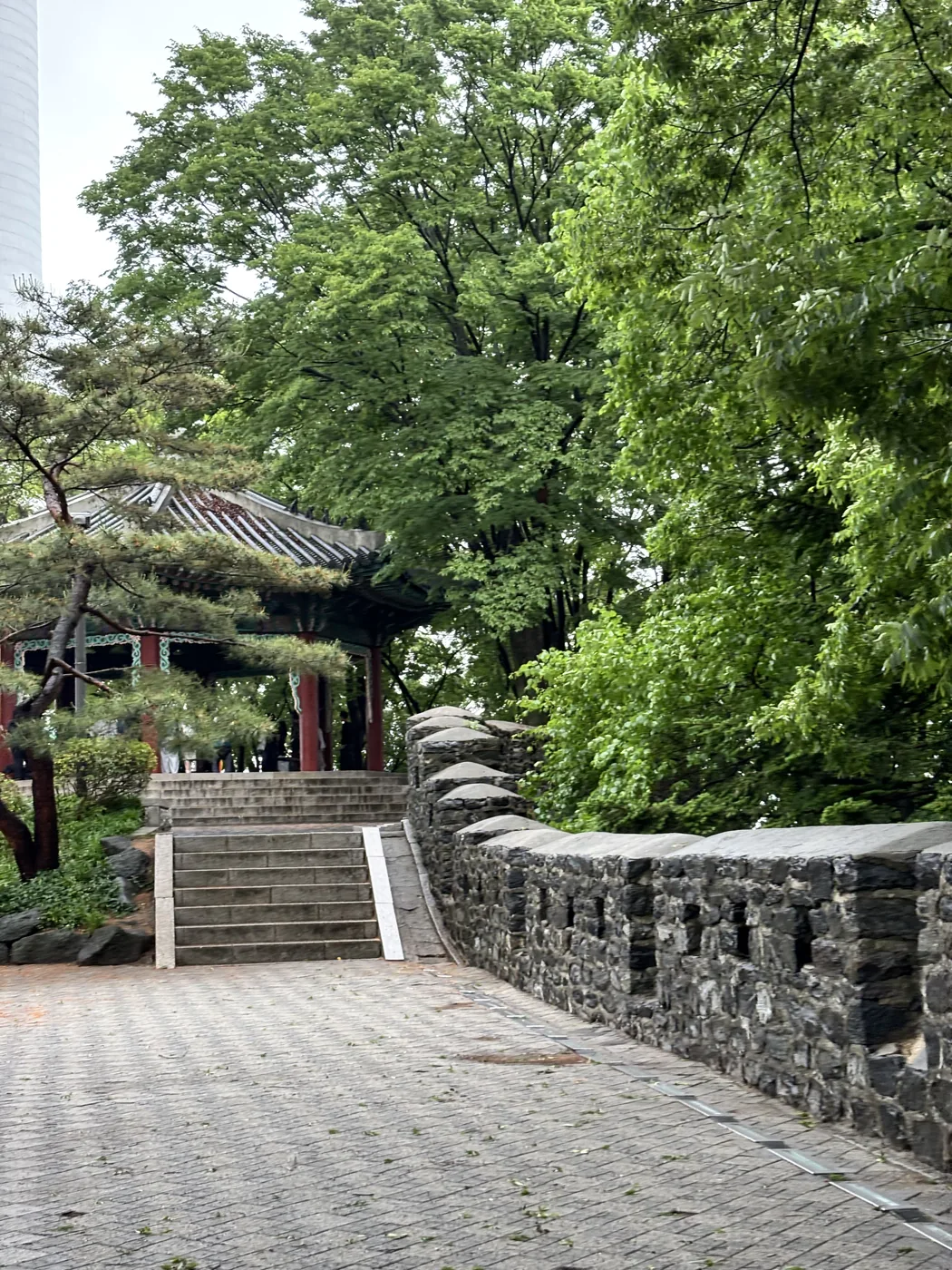
The Namsan hiking trail is not a single path but a web of routes that all lead up the mountain to the tower plaza. Some follow wooden stairs and boardwalks through dense forest, others trace the line of the old Seoul city wall, and one simply follows the quiet vehicle road up. Together they turn the climb into a proper little hike in the middle of the capital.
What makes it special is the setting. You are walking through real forest, with birdsong, shade, and the smell of wet leaves, yet you started from a downtown street only minutes earlier. The paths are well maintained, clearly signed, and busy enough to feel safe but quiet enough to feel like a genuine escape from the city below.
Here is the contrast that still amazes me after two decades in Australia. In Sydney, a proper bushwalk usually means driving out to a national park and planning half a day around it. In Seoul, I can step off a downtown pavement and be climbing a forested mountain within five minutes, for free, with the city skyline peeking between the trees. That accessibility is a quiet luxury locals take for granted.
It also changes how you think about exercise on a trip. In Sydney I have to schedule a bushwalk like an event, pack for it, and commit a chunk of the day. On Namsan, the walk is just woven into sightseeing, so you get the hike and the landmark in one go without setting aside a separate morning. For a traveller with limited days, that two-for-one is genuinely valuable, and it is why I nudge even non-hikers to walk at least one direction. You barely notice you are exercising because you are too busy looking around.
Where the Trails Start
The trailheads are dotted around the base of Namsan, so the right starting point depends on where you are coming from. The most popular access points sit on the downtown side near Myeongdong and the cable car base station, with others scattered around the mountain’s edge.
From the Myeongdong side, you can pick up paths near the cable car lower station and climb from there, which is handy if you are already exploring downtown. There are also entrances near Namsan’s botanical areas and the city-wall sections, each clearly marked with maps and distances. You genuinely cannot get badly lost, because all paths funnel upward to the same plaza.
If you are weaving this into a wider day, my Namsan Seoul Tower Guide will show how the walk fits the whole visit, and my Namsan Cable Car Guide covers the motorised alternative if your legs give out. Since most trailheads begin near downtown, my Myeongdong travel guide helps you find your way to the base of the mountain. Many people do a smart hybrid, which I will come back to, riding one way and walking the other.
The Main Routes Up
There are three honest flavours of route up Namsan, and choosing well makes the climb far more enjoyable. They differ in surface, scenery, and steepness, so match one to your mood and fitness.
The forest-stair route is the leafiest, a series of wooden boardwalks and steps that zigzag up through dense trees. It is shaded, scenic, and the most hike-like, though the stairs are a steady workout. The city-wall route traces the historic fortress wall, mixing stone paths with sweeping views and a real sense of Seoul’s history under your feet. The road route is the gentlest, following the paved vehicle road, and it is the easiest on the knees and the best in bad weather.
Most fit walkers reach the plaza in twenty to forty minutes depending on the route and pace. None of them require special gear beyond decent shoes, and all are well signed. My favourite is the city-wall path for the views and the history, but on my last wet visit I leaned on the gentler stretches to keep my footing on the slick stone.
If you cannot decide, do not overthink it, because the routes braid together as you climb and you can switch between them at the junctions. I often start on the city wall for the views, then drop onto the forest stairs when I want shade, then finish on the road if my knees are grumbling. Treat the map at each trailhead as a suggestion rather than a rule, and let your energy and the weather steer you. Half the fun is choosing your own way up the mountain.
What the Walk Is Actually Like
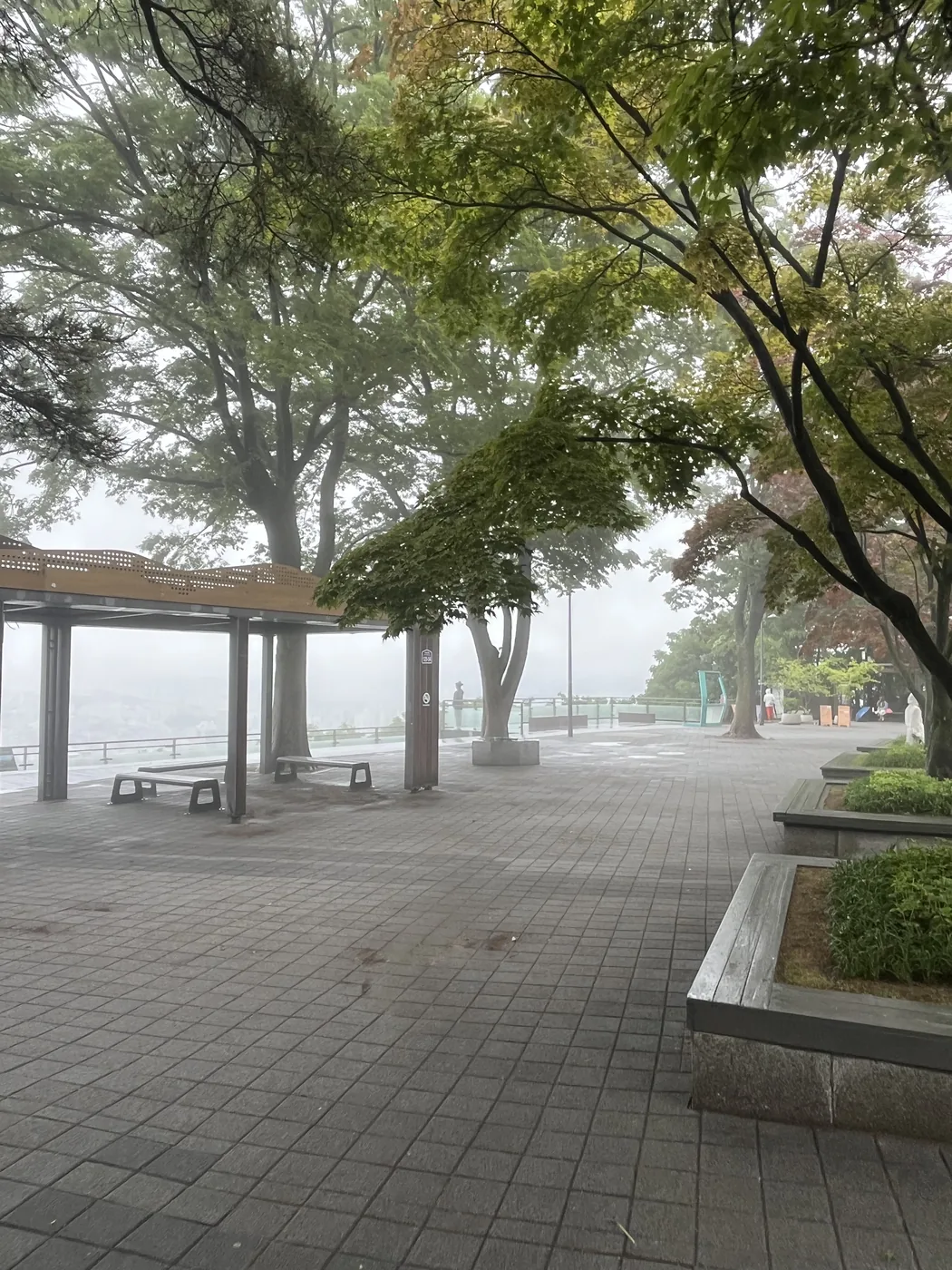
Let me describe the climb honestly, because the reality is gentler than the word “hiking” suggests. This is not a wilderness trek; it is a steady uphill walk on good paths, with benches, water points, and clear signs the whole way. Anyone in reasonable health can manage it at their own pace.
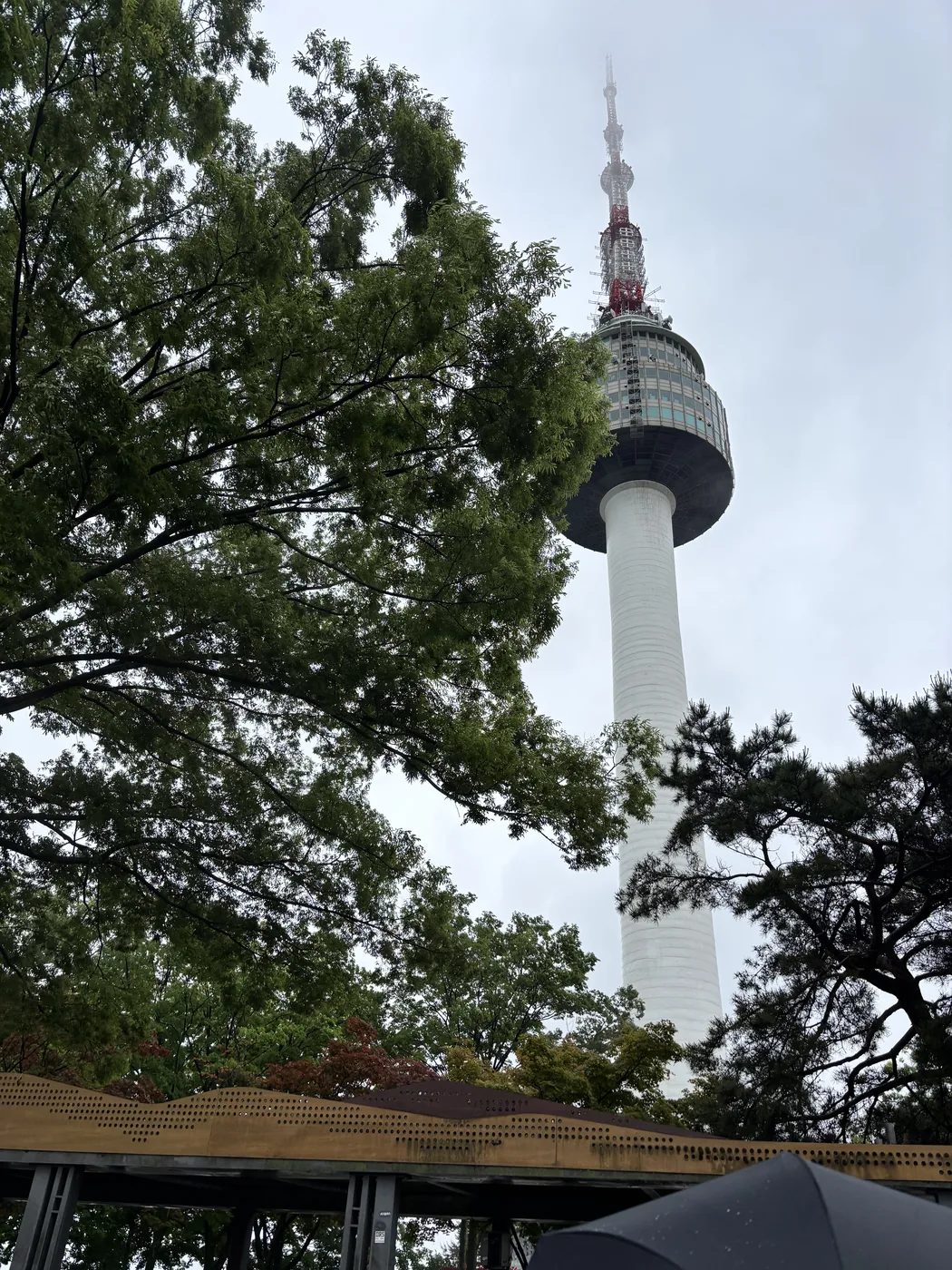
On my recent climb the mountain was wrapped in drizzle and low cloud, and honestly that made it magical rather than miserable. The forest dripped, the stone paths darkened, and the upper stretches faded into fog so thick the trees ahead turned to silhouettes. I had whole sections of trail entirely to myself, which never happens on a sunny weekend.
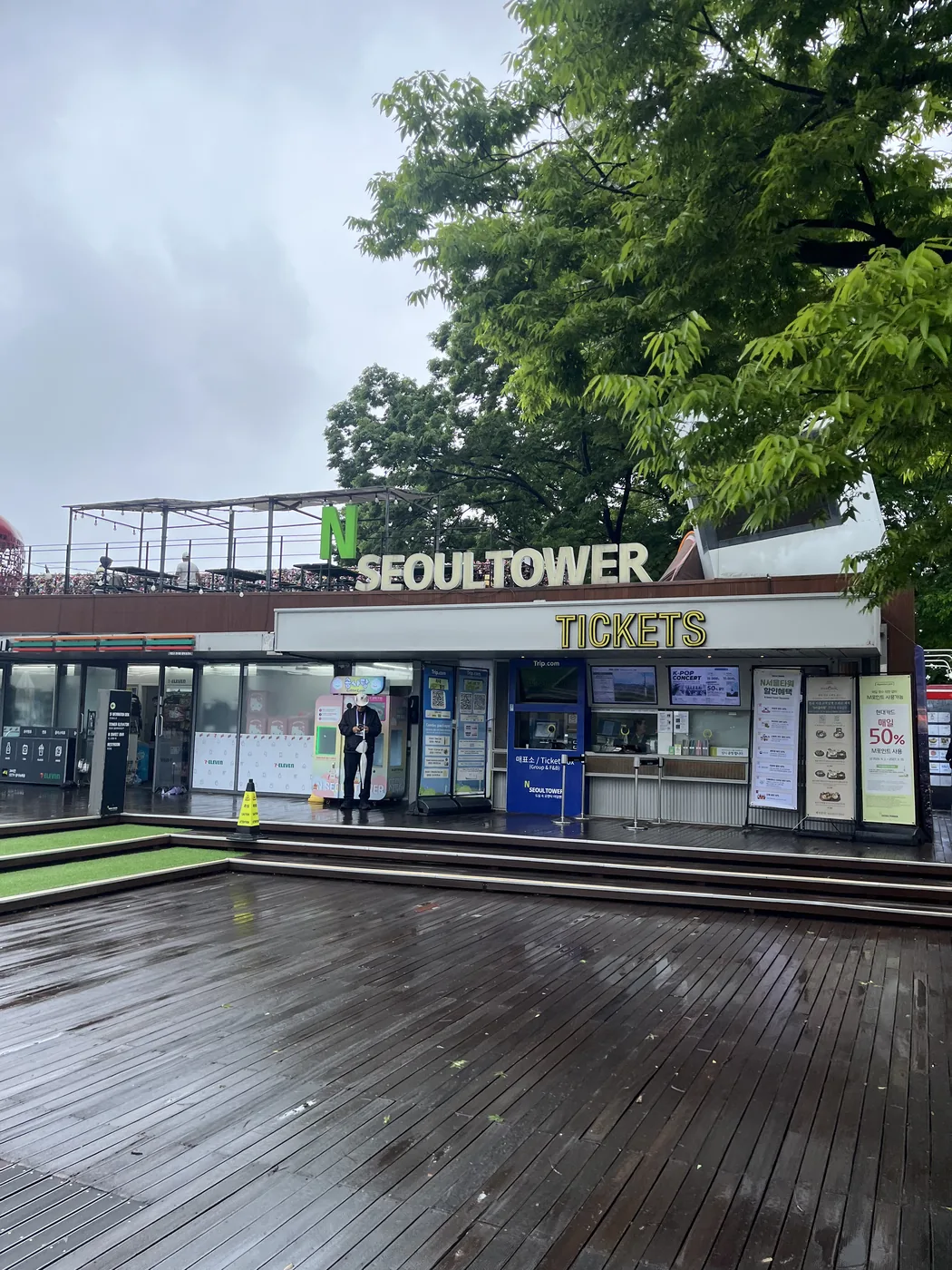
The reward at the top is the same plaza everyone else paid the cable car to reach, except you arrive having earned it and seen the mountain properly. You step out near the tower base, the SEOUL TOWER sign, and the terraces, ready for the views, the locks, and a well-deserved coffee. There is real satisfaction in walking up to a landmark instead of being delivered to it.
There is also a small social pleasure to the climb that surprised me. On the way up I passed older Korean hikers in full gear, couples taking it slowly, and the occasional jogger treating the mountain as a gym. Namsan is a genuine part of local life, not just a tourist box to tick, and walking it puts you among the people who use it every week rather than the crowds who are bussed to the top. That alone made the slightly damp, slightly breathless climb feel worth it.
Namsan Hiking Trail at a Glance
Here is the walk summarised for quick planning. Times are rough and depend heavily on your pace and chosen route.
| Detail | What to Expect |
|---|---|
| Cost | Free |
| Time up | 20 to 40 minutes, route-dependent |
| Difficulty | Easy to moderate, steady uphill |
| Surfaces | Wooden stairs, stone wall path, paved road |
| Best route in rain | The gentler paved road sections |
| Bring | Decent shoes, water, a light rain layer |
Walking Up Versus the Cable Car
The walk and the cable car are not rivals so much as two halves of the perfect trip, and the best answer is often to do both. Each has clear strengths, and the weather and your energy decide the mix.
The cable car wins on speed, novelty, and the view from the cabin, and it is the easy choice in bad weather or with tired legs. The walk wins on cost, peace, exercise, and the simple pleasure of moving through forest. It is free, it is good for you, and it shows you a side of the mountain the cable car flies straight over.
My standing recommendation is the hybrid: ride the cable car up if the queue is short or the weather is poor, then walk down through the forest on the way out. Walking down is easier on the lungs, lovely in the late light, and a perfect wind-down after the busy plaza. After the locks and the views, you finish your visit with a quiet forest stroll back to the city. It is the best of both, and it only costs a one-way fare.
Tips and What to Bring
You do not need much to walk up Namsan, but a few small things make it far more comfortable. This is a city hike, so pack light and sensible rather than for a wilderness expedition.
Wear shoes with decent grip, because the stone and wooden sections get slick when wet, as I found on my drizzly climb. Carry a small bottle of water, though there are points to refill, and bring a light rain layer if the sky looks uncertain. A folding umbrella works on the road route but is awkward on the narrow stairs, so a hood is often better.
Time your climb for cooler parts of the day in summer, since the forest is shaded but Seoul humidity is no joke. And if you are building a full day, my Namsan Love Locks guide covers the plaza you will reach at the top, while my guides to things to do in Seongsu-dong on a weekend and the Insadong guide round out the rest of your Seoul days. The Visit Seoul and Korea Tourism Organization sites also list trail notes and any seasonal closures. A little preparation turns a sweaty slog into a genuinely pleasant climb.
FAQ
How long does it take to hike up Namsan?
Most fit walkers reach the tower plaza in twenty to forty minutes, depending on the route and pace. The forest-stair and city-wall routes take a bit more effort, while the paved road is the gentlest. There are benches and water points along the way, so you can take it as slowly as you like.
Is the Namsan hiking trail difficult?
No, it is easy to moderate. It is a steady uphill walk on well-maintained paths, not a wilderness trek, and anyone in reasonable health can manage it at their own pace. The stairs are the most tiring part, so choose the paved road route if you want the gentlest climb.
Is it free to walk up to N Seoul Tower?
Yes, the hiking trails are completely free. You only pay if you choose to ride the cable car or go up the separate observatory deck inside the tower. Walking up and enjoying the free plaza, terraces, and love locks can make for a great visit at no cost at all.
Can I walk up Namsan in the rain?
Yes, and it can be beautiful, with empty paths and atmospheric fog. Stick to the gentler paved road sections, wear shoes with good grip, and bring a light rain layer or hood rather than a big umbrella for the narrow stairs. Take care on the slick stone and wooden surfaces.
Should I walk up or take the cable car?
The best answer is often both: ride the cable car up, especially in poor weather or with tired legs, then walk down through the forest on the way out. Walking down is easier and lovely in the late light, and it only costs a one-way fare. On a dry day, walking both ways is free and rewarding.
My Thoughts
The Namsan hiking trail is the part of the tower visit that locals quietly treasure and most tourists never discover. There is something grounding about walking up a forested mountain in the middle of a megacity, hearing birds instead of traffic, and arriving at the famous plaza on your own two feet.
My honest advice is to walk at least one direction if your legs and the weather allow. Even if you ride the cable car up for the novelty, choose to walk down through the trees, and you will see a side of Namsan the photos never capture. It is free, it is healthy, and it turns a quick attraction into a proper little adventure.
And do not let a grey forecast stop you. My foggy climb, with the path dissolving into mist and the forest dripping around me, is one of my favourite recent Seoul memories. The mountain is generous to anyone willing to get a little wet.
Planning Your Climb?
The smartest move is the hybrid: ride up if the weather is poor or the queue is short, then walk down through the forest on the way out for a one-way fare. Pack decent shoes, a little water, and a light rain layer, and read this alongside the rest of the Namsan series to plan the plaza at the top. The walk is free, so it is the easiest upgrade to your whole visit.