Disclosure: This post contains affiliate links. If you purchase through these links, I may earn a small commission at no extra cost to you. I only recommend products I personally use and trust. As an Amazon Associate, I earn from qualifying purchases.
Most people discover ssamjang at their first Korean BBQ and think that’s the whole story. It’s not. The Korean BBQ dipping sauces I grew up with go far deeper than that.
In Korea, the sauce situation at a Korean BBQ table is more nuanced than most non-Korean food guides acknowledge. Different sauces pair with different meats. Some are for dipping, some are for wrapping, some are for drizzling. Getting the sauces right is what separates a good Korean BBQ experience from a great one.
Table of Contents
- 1. Ssamjang — The Essential Wrap Sauce
- 2. Sesame Oil and Salt — The Purist’s Choice
- 3. Ganjang Sauce — The Delicate Dip
- 4. Gochujang Sauce — The Spicy Option
- 5. Doenjang Dip — The Fermented Depth
- Which Sauce Goes with Which Meat
- Sauce Comparison Table
- FAQ
- My Thoughts
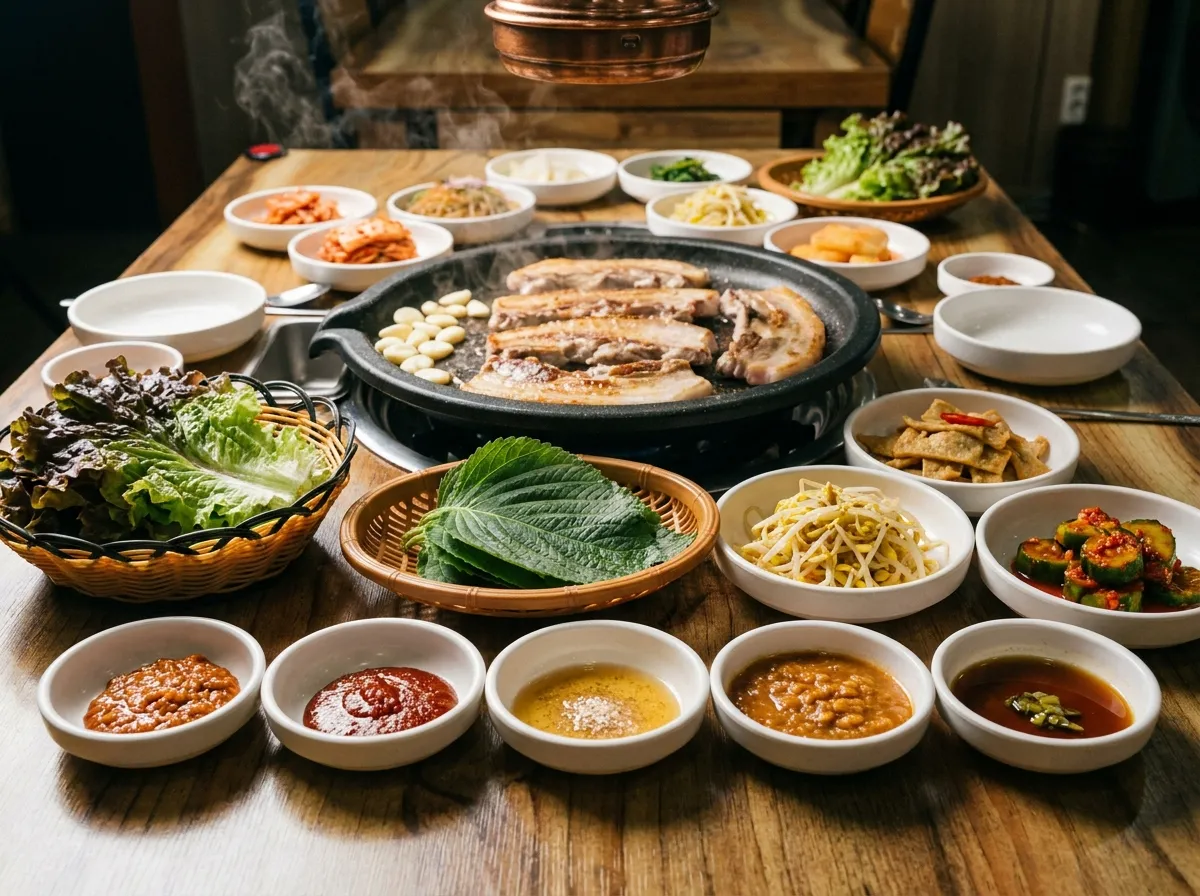
📸 Five Korean BBQ dipping sauces arranged in small ceramic bowls — ssamjang, sesame oil with salt, ganjang, gochujang, and doenjang dip.
1. Ssamjang — The Essential Wrap Sauce
Ssamjang (쌈장) is the sauce most people associate with Korean BBQ, and for good reason. It’s thick, intensely savoury, slightly spicy, and deeply complex — the result of combining two fermented pastes (doenjang and gochujang) with garlic, sesame oil, and a touch of sweetness. If you’re just getting started with Korean BBQ at home, our Korean BBQ at home for beginners guide covers the full picture — meats, equipment, and how sauces like ssamjang fit into the overall spread.
The name literally means “wrap sauce” — it’s designed to be spread on a lettuce or perilla leaf before the meat goes in. A small smear is all you need. Too much and it overwhelms everything else.
How to Make It
- 3 tbsp doenjang (fermented soybean paste)
- 1 tbsp gochujang (Korean chilli paste)
- 1 tbsp sesame oil
- 1 tsp sugar
- 2 cloves garlic, finely minced
- 1 tbsp toasted sesame seeds
- 1 spring onion, finely sliced
Mix everything together. Taste and adjust — more doenjang for depth, more gochujang for heat, more sugar to balance. Ssamjang keeps in the fridge for up to two weeks and actually improves after a day or two as the flavours meld.
Best with: Samgyeopsal, galbi, any meat in a lettuce wrap
2. Sesame Oil and Salt — The Purist’s Choice
This is the sauce my dad always used. No recipe, no preparation — just a small bowl of good sesame oil with a pinch of coarse sea salt and a few drops of black pepper. That’s it.
It sounds too simple to be interesting. It’s not. Good sesame oil has a deep, nutty, almost smoky flavour that complements grilled pork belly in a way that nothing else does. The salt amplifies the meat’s natural flavour without masking it. The pepper adds a faint heat that lingers.
The key word is “good.” Cheap sesame oil tastes flat and slightly rancid. Korean-brand sesame oil — the kind you find at S Mart — has a completely different flavour profile. It’s worth buying the best you can find.
Best with: Samgyeopsal, chadolbaegi (beef brisket), any unmarinated meat
3. Ganjang Sauce — The Delicate Dip
Ganjang (간장) is Korean soy sauce, but in the context of Korean BBQ dipping sauces, it’s usually served as a light dipping sauce rather than straight from the bottle. The classic preparation is soy sauce with a few drops of sesame oil, a pinch of sesame seeds, and finely sliced spring onion. The sauces you make are only as good as the meat they accompany. If you want to get the galbi marinade right first, our recipe for galbi marinade from scratch uses a Busan family recipe that balances sweetness and depth without overpowering the dip.
This sauce is lighter and more delicate than ssamjang. It doesn’t compete with the meat — it enhances it. I use it particularly with galbi, where the marinade already has complex flavour and a heavy sauce would be too much.
Simple Ganjang Dipping Sauce
- 3 tbsp Korean soy sauce
- 1 tsp sesame oil
- 1 tsp sesame seeds
- 1 spring onion, finely sliced
- Optional: a few drops of rice vinegar for brightness
Best with: Galbi, bulgogi, seafood on the grill
4. Gochujang Sauce — The Spicy Option
Pure gochujang straight from the tub is too thick and too intense to use as a dipping sauce. But thinned and balanced, it becomes one of the most versatile sauces on the Korean BBQ table.
Gochujang Dipping Sauce
- 2 tbsp gochujang
- 1 tbsp rice vinegar
- 1 tbsp sugar
- 1 tbsp sesame oil
- 1 clove garlic, minced
- 2 tbsp water (to thin)
The vinegar cuts through the richness of the gochujang and adds brightness. The sugar balances the heat. The result is a sauce that’s spicy, tangy, slightly sweet, and deeply satisfying. For guests who want heat, this is the sauce to put in front of them.
If you want a reliable store-bought option, the CJ Beksul Pork Bulgogi Spicy Sauce has a similar flavour profile and works well as both a marinade and a dipping sauce straight from the bottle.
Best with: Samgyeopsal, pork neck, any fatty cut that can handle the heat
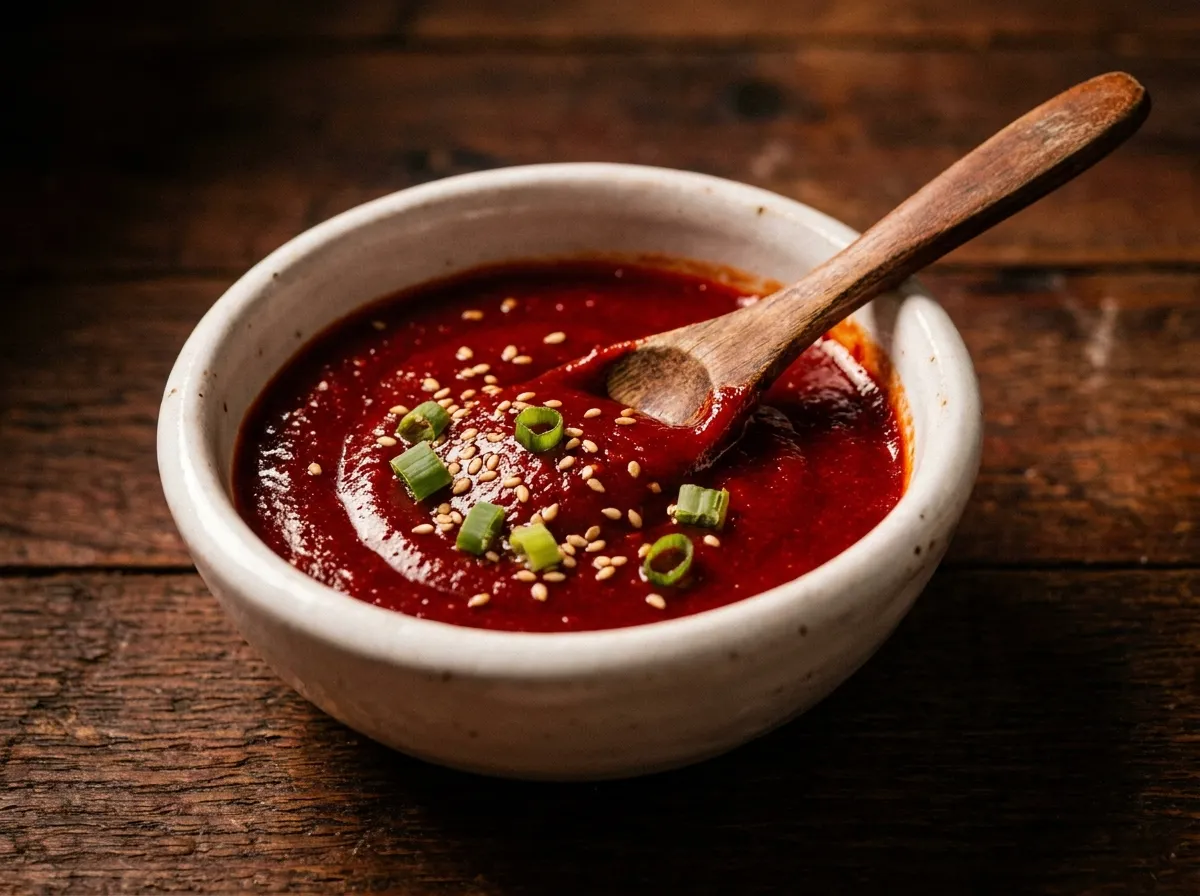
📸 Homemade gochujang dipping sauce in a small ceramic bowl — the spicy option that pairs perfectly with samgyeopsal and pork cuts at Korean BBQ.
5. Doenjang Dip — The Fermented Depth
Doenjang (된장) is Korean fermented soybean paste — similar to Japanese miso but more pungent, more complex, and more intensely flavoured. As a Korean BBQ dipping sauce, it’s an acquired taste that many non-Koreans find challenging at first. Stick with it. Once it clicks, you’ll understand why Koreans consider it one of the most important flavours in their cuisine.
The simplest preparation is doenjang thinned slightly with sesame oil and served with raw garlic and green chilli on the side. The combination of fermented soybean, raw garlic, and fatty grilled pork is one of the foundational flavour combinations of Korean food.
Simple Doenjang Dip
- 2 tbsp doenjang
- 1 tsp sesame oil
- Serve with: raw garlic slices, green chilli, spring onion
Best with: Samgyeopsal, any fatty pork cut, raw vegetables
Which Sauce Goes with Which Meat
This is the guide I wish someone had given me twenty years ago. Sauce pairing in Korean BBQ isn’t arbitrary — there’s a logic to it based on the flavour intensity of the meat and the sauce. Sauce pairing changes completely depending on whether you’re cooking samgyeopsal or galbi. Our breakdown of samgyeopsal vs galbi goes into the flavour differences in detail, which makes sauce decisions a lot more intuitive.
- Samgyeopsal (unmarinated pork belly) — Sesame oil + salt, ssamjang, doenjang dip. The meat has no marinade, so the sauce does the flavour work.
- Galbi (marinated beef short ribs) — Ganjang sauce, sesame oil + salt. The marinade is already complex — use a light sauce that complements rather than competes.
- Bulgogi (marinated beef) — Ganjang sauce. Bulgogi is sweet and savoury — a light soy-based dip is all it needs.
- Spicy pork (dwaeji bulgogi) — Sesame oil + salt. The meat is already spicy — a neutral dip lets the marinade shine.
Sauce Comparison Table
| Sauce | Flavour Profile | Heat Level | Best Meat Pairing | Difficulty |
|---|---|---|---|---|
| Ssamjang | Savoury, complex, slightly spicy | Mild–Medium | Samgyeopsal, galbi | Easy |
| Sesame oil + salt | Nutty, clean, simple | None | Any unmarinated meat | Very easy |
| Ganjang sauce | Light, savoury, delicate | None | Galbi, bulgogi | Easy |
| Gochujang sauce | Spicy, tangy, sweet | Medium–Hot | Samgyeopsal, pork cuts | Easy |
| Doenjang dip | Fermented, pungent, deep | None | Samgyeopsal, fatty pork | Very easy |
FAQ
Can I buy ssamjang ready-made in Sydney?
Yes — S Mart in Eastwood and Komart in North Strathfield both carry ready-made ssamjang in tubs. The CJ brand is widely available and reliable. Homemade ssamjang is better, but store-bought is a perfectly good option for weeknight cooking or when you’re short on time.
What’s the difference between gochujang and gochugaru?
Gochujang is a fermented chilli paste — thick, sticky, and complex with fermented soybean and rice in addition to chilli. Gochugaru is dried Korean chilli flakes — pure chilli, no fermentation. They’re not interchangeable. Gochujang goes into sauces and marinades. Gochugaru goes into kimchi, namul, and dry rubs.
How long do homemade dipping sauces keep?
Ssamjang keeps for up to two weeks in the fridge in an airtight container. Ganjang sauce and gochujang sauce keep for one week. Sesame oil and salt is made fresh each time — it takes 30 seconds and is always better fresh. Doenjang dip keeps for up to a week.
Is there a non-spicy option for guests who can’t handle heat?
Sesame oil and salt is completely heat-free and universally liked. Ganjang sauce is also mild. Both are excellent options for guests who are sensitive to spice. I always put sesame oil and salt on the table regardless of who’s coming — it’s the one sauce everyone reaches for.
My Thoughts
The sauce situation at a Korean BBQ table tells you a lot about the cook. A single bowl of store-bought ssamjang says “I know the basics.” Five small bowls of carefully made sauces says “I’ve been doing this for a while.”
I’m not suggesting you need to make all five every time. On a weeknight, sesame oil and salt plus a bowl of ssamjang is completely sufficient. But when you’re hosting, when you want to show someone what Korean BBQ really is, the sauce spread is where you make your statement.
Start with ssamjang and sesame oil. Add ganjang sauce when you’re comfortable. Work your way through the rest as your confidence grows. By the time you’re making all five from scratch, you’ll understand Korean BBQ in a way that no restaurant experience can teach you.
Stock Your Korean BBQ Sauce Pantry
For a reliable store-bought option that works as both a marinade and a dipping sauce, CJ Beksul Pork Bulgogi Spicy Sauce is the one I keep in my pantry.
And for the complete guide to Korean BBQ technique and sauces, Korean BBQ: Master Your Grill in Seven Sauces is the book that changed how I cook.
Related Links
If you found this article helpful, you might also enjoy these related guides:
- Korean BBQ at Home for Beginners — What I Wish I Knew Sooner — The complete beginner’s guide to home Korean BBQ, including how to use these sauces.
- How to Make Galbi Marinade from Scratch — The marinade that pairs perfectly with ganjang dipping sauce.
- Where to Buy Korean BBQ Ingredients in Sydney — Where to find gochujang, doenjang, and ssamjang in Sydney.
- Samgyeopsal vs Galbi — Which Korean BBQ Cut Should You Start With? — Understanding the meat helps you understand which sauce to pair with it.