Disclosure: This post contains affiliate links. When you make a purchase through these links, I earn a small commission at no extra cost to you. These recommendations are genuine and based on my own experience exploring Hongdae across two decades in Seoul.
I’ve probably spent more weekends in Hongdae than I can count. Back when I first moved to Seoul, it was the neighbourhood where everyone my age wanted to be. Now, even after 20 years and hundreds of weekend visits, I still find something new—or rediscover something old—every time I walk down those narrow alleys.
Here’s the thing about things to do in Hongdae on a weekend: the neighbourhood isn’t just a checklist of attractions. It’s a rhythm. And once you understand that rhythm—the way the cafes fill up on Saturday mornings, how the street food scene peaks at sunset, when the live music venues start humming—you stop visiting Hongdae and you start living a weekend there.
This guide isn’t just about what to do. It’s about when to do it, why it matters, and how to flow through a Hongdae weekend like someone who belongs there.
Quick Navigation
- Why Hongdae on a Weekend Hits Differently Than Weekdays
- Saturday Morning in Hongdae: Cafes, Brunch, and the Slow Start
- Afternoon Activities: Shopping, Photo Booths, and Craft Experiences
- Late Afternoon: Street Food and When Hongdae’s Vibe Peaks
- Evening: Live Music, Busking, and Dinner Options
- Night: Bars, Noraebang, or Calling It Early—Your Choice
- Sunday in Hongdae: Quieter but Just as Good
- One-Day Option: The Condensed Hongdae Weekend
- One Day vs Two Days Comparison
- Frequently Asked Questions
Want the mood first? This quick clip catches Hongdae on a weekend — street food, shopping, and the buskers who show up after dark.
Why Hongdae on a Weekend Hits Differently Than Weekdays
Hongdae transforms on weekends. Weekdays are quieter—students are in classes, office workers are at their desks, the streets have a different energy altogether. But a Saturday morning? That’s when Hongdae becomes Hongdae.
I think it’s because Hongdae was always designed for weekends. The neighbourhood grew up as an artist colony in the 1980s and 90s. Street culture, live music, spontaneous gatherings—these things have always been the heartbeat of Hongdae. During the week, you get glimpses of that soul. On weekends, it’s everywhere.
The cafes get busier (in a good way). The photo booth lines form naturally. People actually have time to stop at a street food stall and eat while they’re walking. The busking musicians come out. The galleries stay open later. Even the vintage shops feel more alive because there are actual browsers, not just people rushing past.
Plus, there’s a kind of permission that comes with a weekend in Hongdae. Nobody’s in a hurry. You can spend three hours at a cafe if you want. You can take fifty photos in a photo booth and not feel self-conscious. You can just walk and see where you end up. Things to do in Hongdae on a weekend aren’t obligations—they’re invitations.
Saturday Morning in Hongdae: Cafes, Brunch, and the Slow Start
Start your Saturday morning early—around 8:30 or 9:00 AM. I know that sounds like you’re not actually on a weekend, but trust me on this. The light is best. The cafes are just filling up. You get a seat by a window. This is the Hongdae moment I love most.
Walk toward the main Hongdae area (near Hongik University) and pick a cafe that calls to you. And I mean actually calls to you—the ones with the tall windows, the ones where you can see people already settled in with their laptops or their friends, nursing lattes like they’ve got nowhere else to be. That’s the vibe.
Some of my regulars over the years: Café Onion (always packed, always good), Coffee Smith (near the university, consistent quality), and the dozens of smaller spots tucked into the side streets where locals go. The thing about Hongdae cafes is that they’re often designed to be lived in. High ceilings, good WiFi, the kind of atmosphere that makes you want to stay for hours.
Order your coffee and a pastry or Korean brunch item. This is not the time to rush. Sit by the window. Watch the neighbourhood wake up. Watch how Hongdae on a weekend morning is basically a love letter to slowness.
By 10:30 or 11:00 AM, if you want food, move into proper brunch territory. Hongdae has become a brunch destination over the past decade. Korean-style breakfast places (gukbap, jjim) sit alongside Western-influenced brunch spots. Some of my recommendations: anywhere with Korean egg dishes, places serving kalguksu (handmade noodles) if you’re feeling something warm, or the many cafes offering toast-based brunches with avocado, egg, or honey butter.
The key difference between weekday Hongdae and weekend Hongdae really shows here. On a Saturday morning, the cafes and brunch spots are full of people actually relaxing. You’ll see it in how long people stay, in the conversations that drift between tables, in the way nobody’s checking their watch.
If you want a sense of how Hongdae compares to Seongsu-dong for a weekend, it comes down to this morning energy. Seongsu-dong has that industrial-modern vibe, but Hongdae’s Saturday mornings have a bohemian ease that feels uniquely Seoul-but-not-corporate.
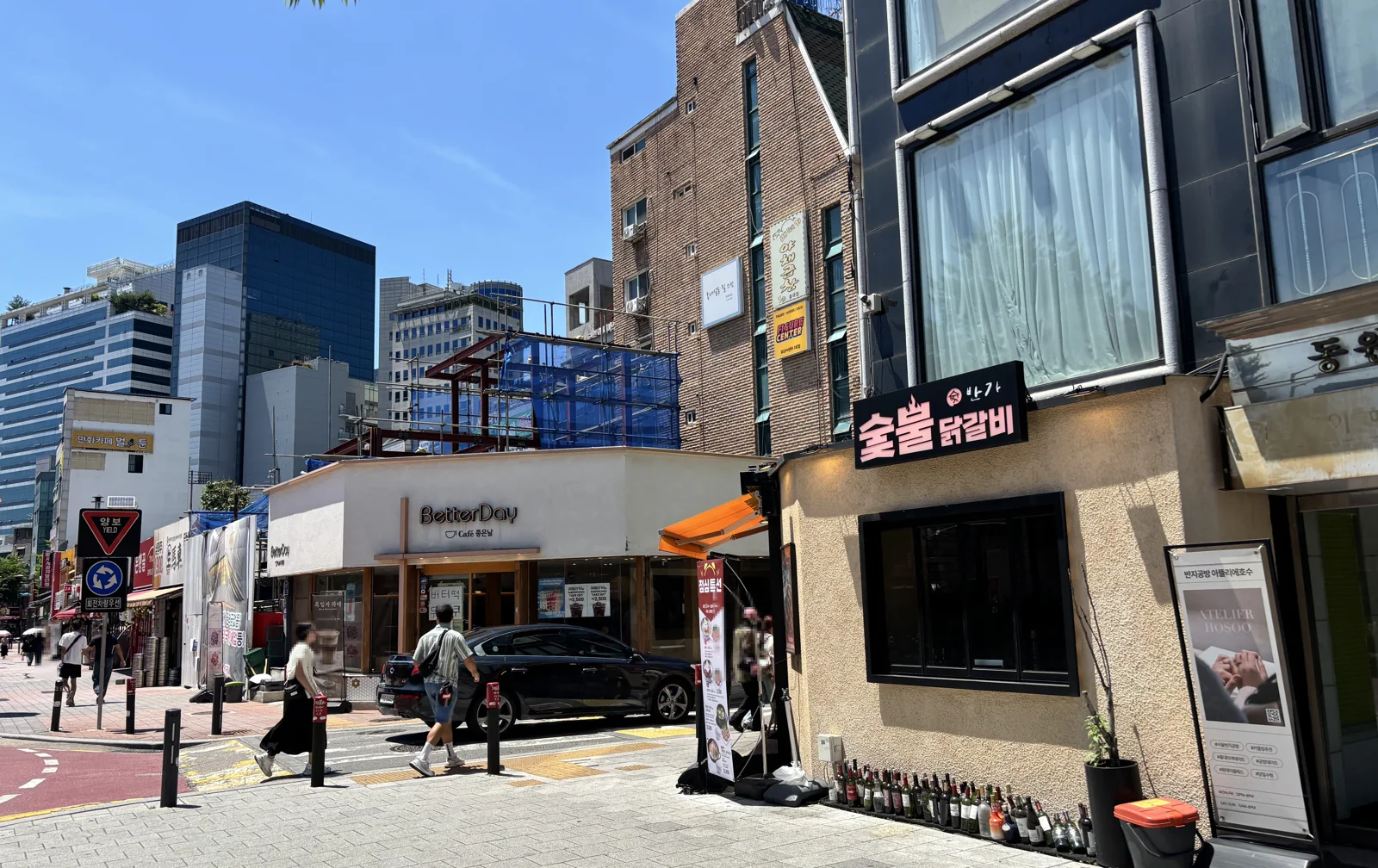
Afternoon Activities: Shopping, Photo Booths, and Craft Experiences
By early afternoon (1:00-3:00 PM), you’re ready to move. This is shopping time, and Hongdae is one of the best neighbourhoods in Seoul for it if you know where to look.
First: vintage shopping. Hongdae has clusters of vintage and secondhand clothing shops, especially around the back alleys near the university. If you’ve never done vintage in Hongdae, you’re missing one of the best weekend experiences in Seoul. The prices are reasonable, the selection is actual treasure (not just picked-over remnants), and you’ll often find independent designers selling their own pieces right alongside the vintage racks.
Second: photo booths. This might sound small, but photo booths in Hongdae are genuinely a thing. Young people, couples, friend groups—everyone goes to photo booths here. The technology is incredible now (they edit your photos, add effects, print them on the spot), and it’s become this unexpected ritual of the weekend. Budget 10-15 minutes and a few thousand won for this. You’ll understand why once you’re in there with your friends and you’re both laughing at how naturally terrible you look in photos.
Third: craft experiences and studios. Hongdae has a strong maker culture. You’ll find painting studios, pottery workshops, jewellery-making classes, and all kinds of hands-on experiences. Some are drop-in, some need booking. If you want something active and memorable, this is where things to do in Hongdae on a weekend get really interesting. You’re not just consuming the neighbourhood—you’re making something.
Fourth: the art galleries and street art. Hongdae has murals and street art literally everywhere. The alleyways are open-air galleries. You can spend an hour just walking and photographing. Some of the official galleries in Hongdae are free or very cheap to enter—it’s worth poking your head in a few.
For something more structured and unique, consider booking a K-Pop Idol experience. Several companies run afternoon workshops where you learn a bit of choreography, get styled, and participate in a mini photoshoot. It’s very Hongdae—a mix of cultural experience and fun weekend spontaneity. These usually run 1-2 hours and are genuinely memorable.
→ Reserve the K-Pop Idol experience in Hongdae on Klook (affiliate link)
→ Take the one-day K-pop dance class with a pro on Klook (affiliate link)
Both run one to two hours, which leaves the street-food window at 4pm untouched.
The afternoon is also when you might check out things to do in Seongsu-dong on a weekend if Hongdae is feeling crowded (which it can on weekend afternoons). But if you stay put, you’re in the sweet spot: the light is still good, the energy is building, and you’re primed for the late afternoon food scene.
Late Afternoon: Street Food and When Hongdae’s Vibe Peaks
Around 4:00-5:00 PM, Hongdae shifts again. The afternoon browsing crowd is still there, but something else is starting: preparation. The street food vendors are setting up. The restaurants are getting ready for dinner. The energy builds.
This is the best time for street food. Hongdae’s street food scene is genuinely excellent—we’re talking tteokbokki (spicy rice cakes), hotteok (sweet pancakes), mozzarella corn, dumplings, grilled meats on skewers, Korean fried chicken, everything. The vendors usually start their proper service around 4:00 PM when the weekend crowd thickens.
My approach: grab a street food item (or three) and eat while you’re walking. This is not wasting time. This is the entire point. You’re moving through Hongdae, the light is getting golden, there’s music drifting from somewhere, you’re eating something delicious, and the neighbourhood feels like it’s built exactly for this moment.
However you slice your weekend, Hongdae’s late afternoon food culture deserves its own unhurried moment — don’t rush this part.
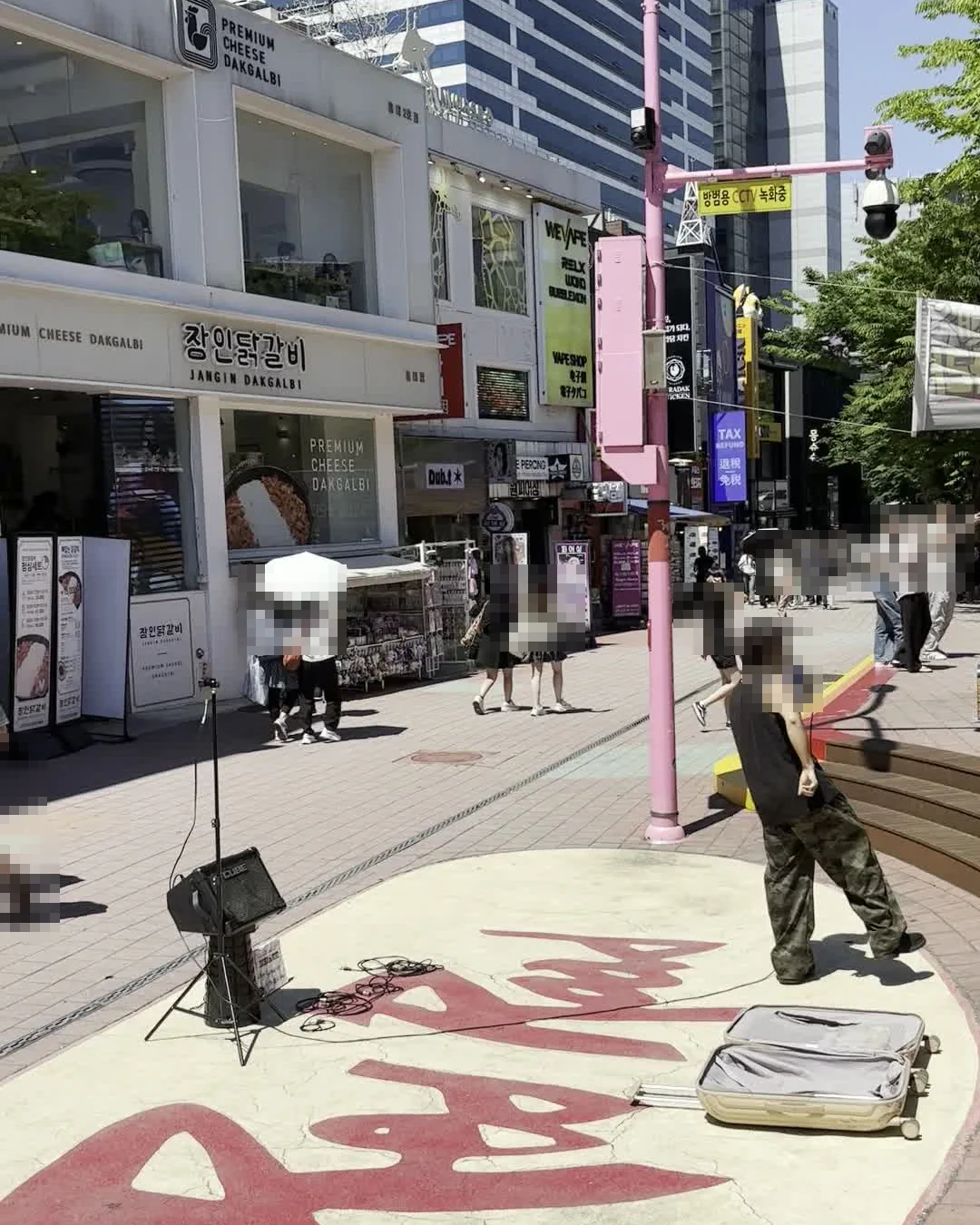
The street food time is also when you’ll notice the busking really picks up. Musicians start appearing on the main streets. Some are incredibly talented. You’ll hear guitars, you’ll hear traditional Korean instruments, you’ll hear people singing covers. The music is part of the whole thing—it’s not incidental, it’s essential to what makes Hongdae feel like Hongdae on a weekend.
Things to do in Hongdae on a weekend at this hour basically write themselves: eat, walk, listen, watch the light change, let the neighbourhood pull you along.
Evening: Live Music, Busking, and Dinner Options
By 6:00-7:00 PM, you’re thinking about dinner. Hongdae has options across every price point and cuisine preference, but the real magic happens at the smaller restaurants and pojangmacha (street tent restaurants) that only really come alive on weekend evenings.
👉 For Saturday evening, the Nanta Show is the perfect bridge between dinner and late-night — it starts at 8pm, runs 90 minutes, and leaves you buzzing for whatever comes next.
If you want to stay casual: eat at a pojangmacha. Pick a spot, sit on a plastic stool, order something simple (tteokbokki, kimbap, gimbap rolls, soups), and watch the street life around you. This is real Seoul. This is how locals do weekends.
If you want sit-down dining: Hongdae has plenty of proper restaurants. Korean, Western, Japanese, fusion—whatever you want. The trick is to choose based on proximity and vibe rather than trying to optimize. You’re in Hongdae on a weekend—let serendipity help.
After dinner (or during, depending on your pace), the live music venues open up properly. Hongdae is known for live music. There are dozens of small clubs and venues scattered throughout the neighbourhood. Some focus on indie rock, some on jazz, some on Korean music, some on experimental. Cover charges are usually 10,000-30,000 won (roughly AUD $12-37), often with a drink minimum.
The busking continues. Walk the main streets around 7:00-8:00 PM and you’ll see more musicians than earlier. Some are professionals, some are students, some are just people who love to play. The crowds gather and disperse naturally around them.
This is when things to do in Hongdae on a weekend really feel infinite. You could sit in a live music venue for hours. You could stand on the street watching buskers. You could go from spot to spot, catching five minutes of this, ten minutes of that. There’s no wrong choice.
Night: Bars, Noraebang, or Calling It Early—Your Choice
By 9:00-10:00 PM, you’ve got options. Hongdae’s nightlife is real, but it doesn’t require you to commit to it. You can be fully into the night scene, or you can be done. Both are valid weekend choices.
👉 If you’re going out properly on Saturday night, I’d seriously consider joining the Absolute Pub Crawl Experience in Hongdae — especially if you’re travelling solo or don’t know the area yet.
If you want proper bars: Hongdae has everything from craft cocktail spots to casual beer bars to wine lounges. Some are sophisticated, some are chaotic and fun. The vibe varies wildly depending on the place. My advice: walk the streets, look inside places, sit somewhere that feels right. You’ll find your spot.
If you want noraebang (Korean karaoke): Hongdae is full of them. Noraebang on a weekend is a genuinely important cultural experience. You get a small private room, you pay by the hour, you pick songs (in English, Korean, Japanese—whatever), and you sing. Terribly, usually. With friends, ideally. This is a core part of a Seoul weekend for many people, and Hongdae has every level from super upscale to backpacker-friendly.
If you want clubs: Hongdae has dance clubs that don’t really get going until 11:00 PM or midnight. Korean club culture is different from Western club culture—it’s often less about anonymity and more about being with your people. Cover charges can be 20,000-50,000 won (AUD $24-60) depending on the place and whether it’s a special night.
If you want to call it at 9:00 PM: that’s fine too. You’ve had a full Hongdae day. You’ve eaten well, you’ve moved around, you’ve absorbed the neighbourhood. A quiet walk back to the subway is a perfectly good ending to a Hongdae weekend.
The point is that on a weekend in Hongdae, things to do exist at every energy level and every hour. You don’t have to do anything you don’t want to do. You’re there to experience the neighbourhood at the pace that feels right.
Sunday in Hongdae: Quieter but Just as Good
Sunday is different. The frenetic energy of Saturday softens. The crowds thin slightly. You get the same Hongdae, but in a different light—literally and figuratively.
Sunday morning follows the same pattern as Saturday: early cafe time, slow coffee, the luxury of pace. But there’s an additional option on Sunday: the Hongdae Free Market. Depending on the time of year and ongoing events, there are outdoor markets where artists and makers sell their work directly. It’s more low-key than Saturday shopping, but more connected to the actual creative community that built Hongdae.
If you want something more active and cultural, consider booking a Traditional Korean cooking class in Seoul. Several operators offer Sunday morning or early afternoon classes that combine hands-on cooking instruction with a walking tour of hidden alleys. It’s the kind of structured experience that works beautifully as part of your Sunday, and Hongdae’s location makes it accessible.
Sunday afternoon is when Hongdae settles into itself. You can explore areas you might have missed on Saturday. The galleries are still open. The cafes are still good. The pace is gentler. If Saturday is about experience and energy, Sunday in Hongdae is about understanding and appreciation.
Sunday evening: many venues close earlier. The nightlife still exists, but it’s less intense. This makes it easier to either extend your weekend night or to wind down naturally and prepare for the week ahead.
One-Day Option: The Condensed Hongdae Weekend
If you only have one day, you can still do Hongdae justice. The key is picking the rhythm that works and committing to it.
Saturday is your best bet for a one-day visit. Start at 9:00 AM with a cafe and brunch. By 11:00 AM, shift into the afternoon activities (shopping, photo booths, galleries). Eat late lunch or early dinner around 4:00-5:00 PM with street food. Spend 6:00-8:00 PM in the heart of the neighbourhood for busking and atmosphere. Finish with one venue (a bar, a live music spot, or noraebang) or a quiet walk back to the subway.
You won’t do everything, and that’s fine. Things to do in Hongdae on a weekend—even compressed into a day—are about selecting the experiences that resonate with you, not checking boxes.
One Day vs Two Days: The Complete Breakdown
| Time Block | One-Day Visit | Two-Day Visit | Budget (1 Day, AUD) | Budget (2 Days, AUD) | Best For |
|---|---|---|---|---|---|
| Morning (8:30 AM – 11:00 AM) | Cafe + brunch | Cafe + brunch both days | $15-25 | $30-50 | Slow waking up |
| Afternoon (12:00 PM – 4:00 PM) | Shopping OR craft experience (choose one) | Shopping one day + craft experience the other | $20-60 | $50-120 | Covering more ground |
| Late Afternoon (4:00 PM – 6:00 PM) | Street food + walk | Street food + walk both days | $10-20 | $20-40 | Vibe absorption |
| Evening (6:00 PM – 9:00 PM) | Dinner + one activity (live music/bar) | Dinner + multiple venues, split across days | $30-50 | $60-100 | Deeper experience |
| Night (9:00 PM+) | One venue or quiet walk home | One evening relaxed, one evening more active | $20-40 | $40-80 | Recovery and choice |
| Total Budget Estimate | N/A | N/A | $95-195 | $200-390 | Does not include transport, accommodation (if visiting), or alcohol |
| Best For | One day works if you’re local or passing through. Two days lets you actually breathe and experience Hongdae at the pace it deserves. | ||||
🎯 A Hongdae weekend — but what’s the damage?
Photo booths, street food, live music, cooking classes — a Hongdae weekend can go from ₩30,000 to ₩300,000 depending on what you pick. See an honest breakdown by travel style.
Calculate your Hongdae weekend budget →
Frequently Asked Questions About Things to Do in Hongdae on a Weekend
What’s the best day to visit Hongdae—Saturday or Sunday?
Saturday is the busier, more energetic day. You’ll encounter more crowds, more buskers, more nightlife. If you want the full sensory experience of Hongdae, Saturday is your day. Sunday is quieter, which means you can actually have conversations with people, find seats at cafes more easily, and explore side streets without constant foot traffic. Both are excellent. Choose Saturday if you want energy, Sunday if you want breathing room.
How much money should I budget for a Hongdae weekend?
If you’re just eating, shopping lightly, and enjoying free activities (walking, busking, street art), you can do Hongdae on AUD $100-150 per day including food and a couple of paid experiences. If you want to add paid activities (photo booths, classes, paid museum entries) and more nightlife, budget AUD $200-300 per day. Alcohol and transport aren’t included in these estimates. Coming to Hongdae isn’t expensive if you’re intentional about your spending.
Is Hongdae safe at night for solo visitors?
Yes. Hongdae is one of the safest neighbourhoods in Seoul, even late at night. I’ve walked around Hongdae solo at midnight countless times. That said, use the same awareness you’d use in any urban area—stick to lit streets, trust your instincts about venues and people. The police presence is visible, the crowds are generally friendly, and locals move around freely at all hours. Solo female travellers do Hongdae weekend nights without issue.
What’s the best way to get around Hongdae?
Walk. Hongdae is built for walking. Everything interesting is within a 15-20 minute walk of the Hongik University subway station (Line 2). Yes, your feet will hurt by the end of the day, but that’s how you actually experience the neighbourhood. Taxis are cheap and easy if you need to move between distant points, but honestly, walking is how you find things you didn’t know you wanted to find.
Can I do things to do in Hongdae on a weekend if I don’t speak Korean?
Absolutely. Hongdae is extremely foreigner-friendly. Menus often have English. Many young people speak English. The cultural experience of busking, street food, and galleries doesn’t require language fluency. That said, learning five Korean phrases (hello, thank you, cheers, delicious, how much) will make your weekend feel significantly warmer and more connected.
What should I wear for a Hongdae weekend?
Comfortable shoes—non-negotiable. Hongdae involves walking, lots of it. Dress for the season and the weather, but lean casual. This is not a formal neighbourhood. Jeans, comfortable tops, a light jacket if it’s cool. Hongdae people dress for themselves, not for anybody else. Wear what makes you feel good.
Are there quiet spots in Hongdae, or is it crowded everywhere?
The main streets around the university are definitely crowded on weekends, especially Saturday afternoons and evenings. But Hongdae is a maze of alleyways, and most of them are relatively quiet. You can find peaceful moments—a small park, a side street, a quiet second floor cafe—without leaving the neighbourhood. Part of the skill of a good Hongdae weekend is knowing when to dive into the energy and when to retreat to the quiet.
My Thoughts on Hongdae Weekends
I’ve been coming to Hongdae on weekends for more than twenty years. I’ve seen it change. I’ve seen cafes open and close. I’ve watched the street art evolve. I’ve experienced the shift from a bohemian artist neighbourhood to a more commercialized young-person destination. And honestly? I still love it.
If you have more time in the city, you can slot Hongdae into my Seoul 2-day itinerary.
There’s something about Hongdae that refuses to be fully polished or optimized. Yes, it’s touristy now. Yes, some of the original character has been gentrified away. But underneath all that, if you know where to look and when to be there, the spirit is still alive. You can still find moments of genuine creativity, authentic street culture, and real Seoul weekend energy.
The reason I’m so specific about timing—the early morning cafes, the late afternoon food, the evening buskers—is because these things are still real. They’re not manufactured for tourists. They happen because Hongdae is still a neighbourhood where people actually want to be on weekends, not just where they’ve been told to go.
Things to do in Hongdae on a weekend matter less than how you do them. Slow down. Pay attention. Stop when something catches your eye. Eat when you’re hungry, not on schedule. Talk to people. Listen to the music. Let yourself get a little bit lost in the alleys. That’s not a tourist experience. That’s actually living a Hongdae weekend.
Ready for Your Hongdae Weekend?
Plan your trip. Pick a Saturday or Sunday. Block out the time. Give yourself permission to move at the rhythm of the neighbourhood, not the rhythm of a checklist. Hongdae doesn’t require elaborate planning—it requires presence.
And if you want to add a cultural dimension to your weekend, consider booking a Traditional Korean cooking class in Seoul. It’ll deepen your understanding of the culture and give you something tangible to take home—both the knowledge and the memories.
Have a wonderful Hongdae weekend. You’ll understand why so many of us keep coming back.
Related Reading
- Hongik University Station Guide — exits and getting in and out of Hongdae by subway.
- Hongdae Shopping Street Guide — a local’s walk down the main shopping strip.
- Hongdae During the Day — what to do before the night crowd arrives.
- Hongdae Seoul travel guide — where to begin in the neighbourhood, from getting there to what not to miss
- best cafes in Hongdae Seoul — my favourite spots to sit when your feet need a break
- Hongdae nightlife guide — what the after-dark scene is really like
- Hongdae photo booth experience — where to grab the four-cut photos everyone posts
- vintage shopping in Hongdae Seoul — where to dig for pre-loved finds in the area