Disclosure: This post contains affiliate links. If you purchase through these links, I may earn a small commission at no extra cost to you. I only recommend products I personally use and trust.
Hongdae. Just saying the name brings back memories of late-night cafe crawls, discovering hidden gem specialty coffee shops tucked behind neon signs, and laughing with friends over impossibly tall bingsu bowls that should not exist in nature. After twenty years in Australia, I still can’t resist a good Hongdae cafe adventure whenever I visit Seoul. The energy here is unmatched—young, creative, constantly evolving, yet somehow warm and welcoming.
The best cafes in Hongdae Seoul aren’t just about the coffee (though many serve exceptional espresso). They’re about the experience, the vibe, the stories the owners tell through their space design, and yes, those Instagram-worthy moments that make your friends back home jealous.
I’ve spent the last few years testing dozens of cafes across Hongdae—from minimalist specialty coffee bars to themed dessert cafes where you queue for thirty minutes without complaining. This guide shares my honest picks, the ones I return to repeatedly, ranked by experience and value.
Table of Contents
- Why Hongdae Cafes Hit Different
- The Best Specialty Coffee Shops in Hongdae
- Instagrammable and Themed Cafes Worth the Queue
- Hidden Gem Cafes Only Locals Know
- Cat Cafes and Animal Cafes in Hongdae
- Best Dessert Cafes in Hongdae (Bingsu, Croffle, and More)
- Quick Comparison: 5 Must-Visit Hongdae Cafes
- Practical Tips: When to Go and How to Find Seating
- My Thoughts
- FAQ
Why Hongdae Cafes Hit Different
Hongdae isn’t just a neighborhood—it’s a creative state of mind. Walking through these streets feels different from other Seoul cafe districts. Sure, Gangnam has luxury cafes and trendy spots, but Hongdae has soul. The cafes here reflect the neighborhood’s personality: artistic, experimental, fiercely independent, and unapologetically young at heart.
The vibe comes from the community itself. Art students, young entrepreneurs, freelancers, and creatives have claimed Hongdae as their territory for decades. Cafe owners here aren’t just serving coffee—they’re building spaces where ideas happen, where art gets discussed, where connections form over a single pour-over that took the barista eight minutes to prepare.
What makes Hongdae special is the blend of specialty coffee culture with Korean dessert innovation. You’ll find meticulous single-origin espresso next to towering bingsu bowls. Hidden alleyways lead to themed cafes decorated like vintage libraries, cozy cottages, or minimalist Scandinavian studios. It’s chaos and order coexisting in the most beautiful way.
Compared to how Hongdae compares to Seongsu-dong for cafe culture, Hongdae feels more bohemian and less corporate. Seongsu-dong cafes are trendy and Instagram-perfect. Hongdae cafes are authentic, experimental, and sometimes delightfully weird in ways that make them memorable. After living in Australia for two decades, I appreciate Hongdae’s casual confidence—the kind of attitude that doesn’t try too hard because it doesn’t need to.
When I visit Hongdae now, I feel like I’m checking in with an old friend who’s evolved brilliantly while staying true to themselves. That’s the magic you can’t replicate elsewhere in Seoul.
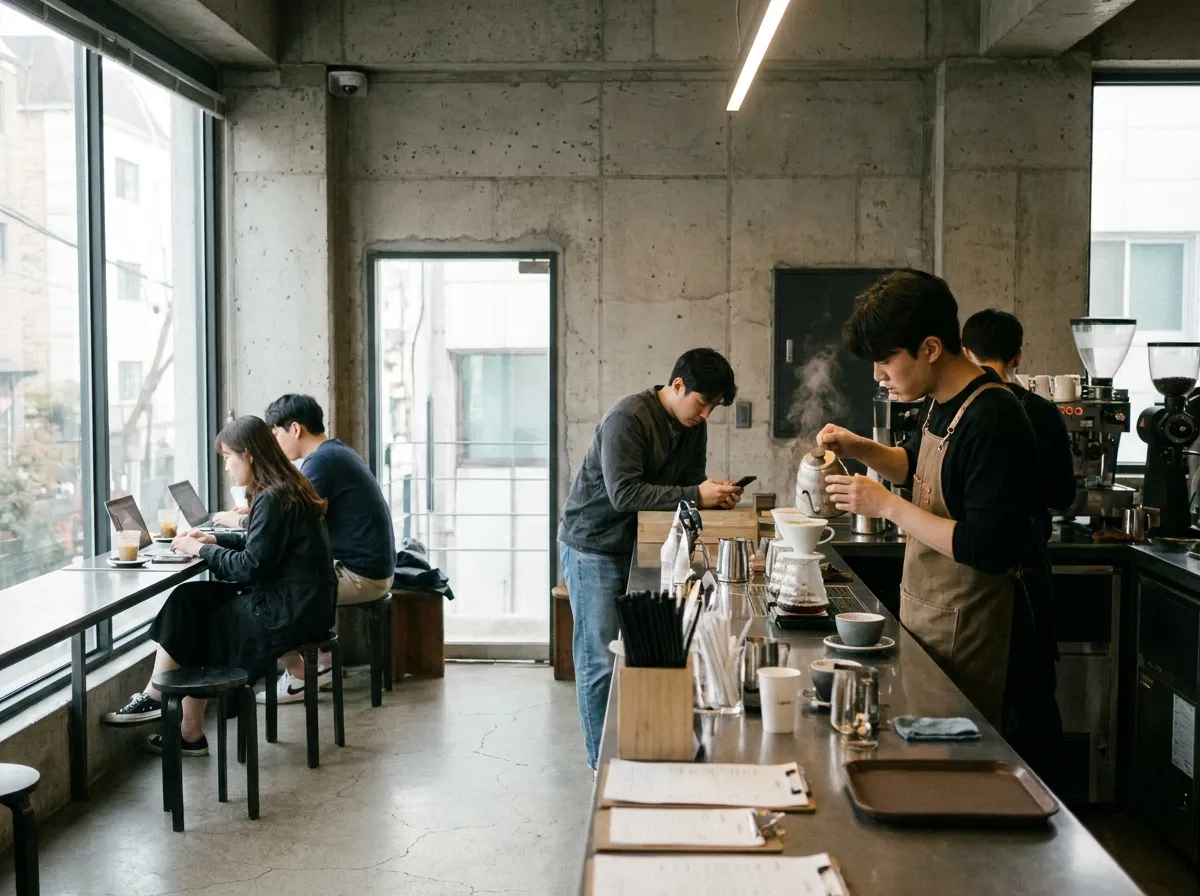
📸 Inside one of Hongdae’s most-loved specialty coffee shops — floor-to-ceiling windows, exposed concrete walls, and a barista mid-pour over a handcrafted flat white.
The Best Specialty Coffee Shops in Hongdae
Let’s talk specialty coffee. If you’re serious about your brew, Hongdae delivers without pretension. These aren’t cafes that make you feel stupid for not knowing the difference between natural and washed processing. The baristas here genuinely love coffee and want to share that passion with you.
Cafe Noir
Cafe Noir sits on a quiet street corner, and honestly, I almost walked past it my first visit. The storefront is intentionally understated—black wood, minimal signage, zero hype. This is deliberate. The owner, Park Jin-su, worked in Melbourne for five years before returning to Seoul to open his dream cafe. You can taste that Australian influence in his espresso pull and milk-steaming technique.
The single-origin pour-overs are exceptional here. I recommend their Ethiopian Yirgacheffe—bright, floral, citrusy, and honestly life-changing. Prices sit around AUD $6-7 for specialty coffee, which feels reasonable given the quality and care involved. Come on a weekday morning if you want a quiet experience; weekends get busy with young professionals.
Craft & Pour
This place is for coffee nerds, and I say that with complete affection. The owner is obsessed with finding the best beans from independent roasters across Asia. The menu rotates weekly based on what they’ve sourced. Seating is limited—six bar stools—which means the experience feels intimate and intentional. You’re not just ordering coffee; you’re joining a conversation about coffee.
Their flat white is masterful, and they do a knockout Vietnamese cold brew with housemade sweetened condensed milk. Budget AUD $7-8 per specialty drink. The vibe is quiet, thoughtful, and sometimes wonderfully awkward if you’re not a coffee enthusiast (which makes it perfect for a first date if both of you are into coffee).
Morning Light Roasters
Morning Light opened just two years ago and immediately became the kind of cafe where locals queue before opening. The roaster is visible from the seating area, which means you watch beans being roasted while you sip your cortado. The roasting happens daily, so everything tastes stunningly fresh and vibrant.
I adore their medium roasts—balanced, approachable, never bitter. The head barista trained in Melbourne and Stockholm, so the coffee culture here draws from global expertise while maintaining Korean hospitality warmth. Prices are AUD $6-8 range. Best time? Early morning before the Instagram crowd arrives (around 8-9 AM on weekdays).
You’ll notice a common thread in Hongdae’s best specialty coffee shops: baristas with international experience. Many trained in Melbourne, London, or Copenhagen before returning to Seoul. This creates a beautiful cross-pollination of techniques and cafe culture values that makes Hongdae special compared to other Korean neighborhoods.
Check out best cafes in Seongsu-dong if you want to compare Hongdae’s specialty coffee scene to another neighborhood. I find Hongdae offers more personality and less flashiness.
Instagrammable and Themed Cafes Worth the Queue
Look, I’m not going to pretend that aesthetics don’t matter. They do, especially in Hongdae. But here’s what I’ve learned: the best themed cafes combine visual appeal with genuine hospitality and decent food. They’re not just pretty for the sake of photos.
Velvet Library Cafe
This cafe feels like wandering into a Victorian-era library mixed with a cozy European home. Floor-to-ceiling bookshelves, velvet armchairs, vintage lamps casting warm amber light, and shelves packed with old books. The Instagram appeal is real, but the experience exceeds the photos.
They serve quality coffee, excellent pastries, and housemade cakes that actually taste good. The tiramisu is legendary—I’ve returned three times just for that. Service is warm and unhurried. You genuinely feel welcomed, not like a photo prop in someone else’s aesthetic. Seating is limited, so arrive before 10 AM on weekends or expect a queue.
Price range: AUD $7-12 for coffee and pastries. Worth every penny if you have time to sit and linger. Pro tip: ask for the book recommendations menu—it’s not on every table.
Cottage Garden Cafe
Imagine a Swedish cottage transplanted to Seoul. White wooden walls, cottage garden prints, dried flowers, cream-colored furniture, and natural light streaming through vintage-style windows. The aesthetic is cohesive without feeling overdone or commercialized.
Food-wise, they excel at sandwiches and quiches. Their seasonal berry cheesecake is worth queuing for. Coffee is reliable and tasty, though not specialty-grade. The real draw here is the atmosphere and the quality of the experience. You feel like you’re visiting a friend’s beautiful cottage rather than a commercial cafe.
Price range: AUD $8-14 for food and drink. Best visited on quieter weekdays when you can actually claim a table. Weekends get very busy with families and friend groups.
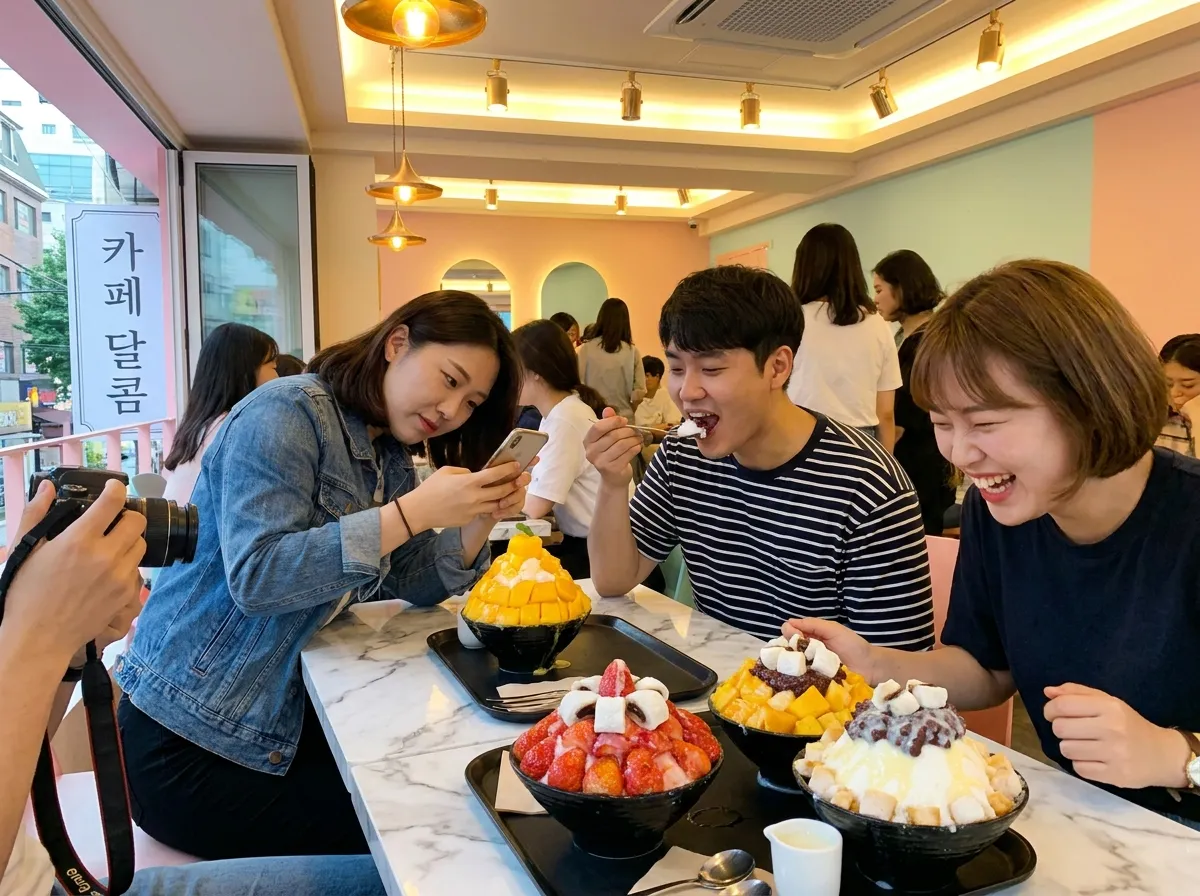
📸 A crowded but cheerful Hongdae dessert cafe — patrons leaning over bingsu bowls mid-spoonful, friends laughing, one person photographing their order.
Hidden Gem Cafes Only Locals Know
These are the places I discovered by accident, wandering random alleys, or through Korean friends’ recommendations. They don’t have significant Instagram followings. They’re not featured in tourist blogs. They’re genuinely special because they prioritize service and product over marketing.
Basement Coffee (지하 커피)
Down a narrow staircase, literally in a basement, you’ll find this intimate space. Concrete walls, exposed lighting, maybe eight seats total. The owner trained as a chemist before becoming obsessed with coffee extraction science. This is where order precision meets genuine passion.
Every coffee here is prepared with remarkable attention. Temperature, grind size, water quality, timing—nothing is left to chance. It’s serious coffee without serious attitude. The owner will explain what they’re doing and why, purely because they love discussing coffee. If you’re nerdy about the technical side of extraction, this is your place.
Price: AUD $6-8. Vibe: quiet, thoughtful, occasionally almost meditative. Best for: morning visits before the neighborhood wakes up.
Rooftop Hideaway Cafe
You could walk past the building entrance a hundred times and miss this. No signage outside, just a staircase. Five flights up, you’ll find a rooftop space with Seoul spread out below you. Maybe six small tables, potted plants everywhere, and a couple of hanging chairs.
The coffee here is solid—third-wave style, well-prepared, approachable. But the magic is the space itself. You feel elevated above the city’s chaos, literally and figuratively. The owner is quiet, kind, and seems genuinely pleased when you appreciate the rooftop view. It’s the kind of place where you might sit for two hours with one cortado and a notebook, writing or thinking or simply existing.
Price: AUD $6-7 for coffee. Worth visiting on a clear afternoon to watch the sun shift across Seoul’s skyline.
Cat Cafes and Animal Cafes in Hongdae
Korea has perfected the art of animal cafes, and Hongdae has some of the best. These aren’t just Instagram fodder—they’re genuinely well-run spaces where animals are treated kindly and visitors are educated on proper interaction.
Whisker House Cat Cafe
This place makes my heart melt every visit. Around fifteen cats, all rescued, with rescue stories displayed on the walls. The coffee is mediocre (honestly, the animal cafes don’t need to excel at coffee), but the cat experience is exceptional. The staff are trained on feline behavior and gently correct customers who are rough or overwhelming with the cats.
Entry is AUD $10-12, includes a drink, and gives you ninety minutes with the cats. They’re playful, well-socialized, and clearly treated with genuine affection by staff. Some customers visit purely to spend time with the cats without buying coffee—the staff seem unbothered by this.
Pro tip: visit on a weekday afternoon when there are fewer visitors and the cats are more interactive. Weekends attract crowds that stress the animals out.
Capybara Chill Cafe
Yes, you can pet capybaras in a Seoul cafe. This space is larger than typical animal cafes, with a pond area where you can observe the capybaras. Feeding is allowed (special pellets provided), and the experience is genuinely delightful. Capybaras are weirdly therapeutic to watch—they project zen energy that transfers to humans.
Entry: AUD $12-15, includes a basic drink. Coffee quality is basic but acceptable. The experience, however, is memorable. The animals appear well-cared-for, and staff are knowledgeable about capybara behavior and needs.
Fair warning: on weekends, this place gets packed, and the animal experience suffers. Come on a weekday if possible. Bring your phone charger because you’ll want to capture content (they even have good natural lighting).
Best Dessert Cafes in Hongdae (Bingsu, Croffle, and More)
Korean dessert culture is a serious undertaking, and Hongdae is ground zero for innovation. These cafes push boundaries with new creations while respecting classic techniques. You’ll queue at most of these—embrace it as part of the experience.
Bingsu Royal
This isn’t fancy, but it’s brilliant. They’ve been making bingsu the same way for eight years, and honestly, they’ve perfected it. Shaved ice that feels like clouds on your tongue (made with special equipment), housemade red bean paste, fresh fruit, condensed milk, and sometimes mochi. The proportions are perfect—not too sweet, well-balanced texture, genuinely refreshing.
Price: AUD $8-10 per bingsu. Queue time: 20-40 minutes depending on time of day. Seating is tight but high-turnover, so you move through relatively quickly. Worth the queue. Absolutely worth it. Come on a hot afternoon and experience bingsu the way it’s meant to be enjoyed.
Croffle Heaven
Croffle is a croissant-waffle hybrid, and this cafe has become obsessed with perfecting the formula. They make croissant dough, laminated with careful technique, pressed into waffle molds, served warm with various toppings. The result is impossibly crispy exterior with buttery flaky layers inside.
Their signature is dark chocolate hazelnut with whipped cream—pure indulgence. They also do savory versions with cheese and herbs. Price: AUD $7-9 per croffle. Best enjoyed immediately, still warm. The queue moves fast because people eat standing up or take them away.
The owner actually developed the recipe by experimenting at home for three years before opening. That kind of dedication shows in every bite. They’ve influenced a dozen other cafes in Seoul, but the original remains the best.
Seasonal Fruit Tart Cafe
Every season brings new fruit to Seoul, and this cafe celebrates that rhythm. Summer means fresh strawberry, peach, and blueberry tarts. Autumn shifts to grapes and figs. Winter features persimmon and citrus. The pastry chef actually sources fruit from local farmers and adjusts the menu accordingly.
The pastry work is sophisticated—proper lamination, balanced flavors, fruit that’s ripe and delicious. A slice costs around AUD $8-10, and it’s absolutely worth it. Coffee is decent, though most customers come for the tarts and pastries. The space is small and simple, decorated in cream and pale wood tones.
Visit on Tuesday or Wednesday mornings when selection is broadest and lines are shortest. Weekends the good stuff sells out by 2 PM.
Quick Comparison: 5 Must-Visit Hongdae Cafes
| Cafe Name | Vibe | Must-Order | Price (AUD) | Best Time to Visit |
|---|---|---|---|---|
| Cafe Noir | Minimalist, intentional, quiet | Ethiopian Yirgacheffe pour-over | $6-7 | Weekday mornings 8-10 AM |
| Velvet Library Cafe | Vintage, cozy, Instagram-worthy | Tiramisu, specialty coffee | $7-12 | Weekdays before 10 AM |
| Bingsu Royal | Casual, quality-focused, buzzy | Classic red bean bingsu | $8-10 | Hot afternoons (3-6 PM) |
| Croffle Heaven | Fast-casual, experimental, trendy | Dark chocolate hazelnut croffle | $7-9 | Any time (fast service) |
| Whisker House Cat Cafe | Relaxed, animal-focused, therapeutic | Time with rescue cats | $10-12 entry | Weekday afternoons |
Practical Tips: When to Go and How to Find Seating
Best Times to Visit Different Cafe Types
Specialty coffee shops: Come between 8-10 AM on weekdays. You’ll get genuine quiet time, full menu selection, and attentive barista conversation. Weekends before 9 AM work too, but social groups fill seats faster.
Themed cafes: Weekday afternoons (2-4 PM) are golden. You avoid morning rush and evening crowds. You get actual seating instead of queuing for twenty minutes. Weekends are chaotic everywhere, so adjust expectations or arrive early (before 10 AM).
Dessert cafes: Hot season means afternoon visits (3-6 PM). Cool season means anytime, though mornings are less crowded. Bingsu is best on genuinely warm days when you crave cold refreshment. Croffle and pastries work any time of day.
Animal cafes: Weekday afternoons (2-5 PM) give you the best animal interaction because fewer visitors mean less stress for the animals. Weekends are overwhelming.
👉 If you want to turn your Hongdae cafe day into a full K-culture experience, pair it with the One Day K-POP Dance Class in Hongdae — book the dance class for the morning, then spend the afternoon cafe-crawling.
Finding Seating in Crowded Cafes
Hongdae cafe culture accepts queuing as normal. You wait. You move. You find your seat. No one’s upset about this because everyone’s doing it. Here’s my strategy: never visit popular cafes during lunch hours (11:30 AM to 1:30 PM) or evening hours (6-8 PM). Come in the gaps.
Utilize the Seongsu-dong Seoul travel guide for comparison if you want recommendations outside Hongdae’s core areas. But honestly, for concentrated cafe excellence, Hongdae delivers.
Download Naver Map and Kakao Map—Seoul’s navigation apps. You’ll find cafe locations, real-time queue wait times (seriously, Koreans post these), reviews in Korean, and hours of operation. This tech saves countless wasted trips.
Seasonal Considerations
Spring (March-May): Cafes have outdoor seating, flowers bloom, perfect weather. Everything feels celebratory. Book seating early on weekends.
Summer (June-August): Brutally hot, extremely humid. Bingsu cafes become pilgrimage sites. Cold brew and iced coffee dominate. Visit early morning or evening to avoid peak heat.
Autumn (September-November): Arguably the best season. Mild weather, lower humidity, beautiful light. Cafes are busy but not overwhelming. Dessert menus shift to seasonal fruit.
Winter (December-February): Cold but dry. Hot beverages shine. Indoor cafes feel extra cozy. Some outdoor seating disappears. Fewer international tourists, more local atmosphere.
Cash and Card Payment
Most Hongdae cafes accept both Korean debit/credit cards and international cards. Increasingly, they accept mobile payment (Samsung Pay, Apple Pay). Some smaller places are cash-only—have Korean won available or ask if they accept cards before ordering.
My Thoughts
After twenty years in Melbourne, I’ve tasted coffee across three continents. Hongdae’s cafe scene doesn’t intimidate or overcomplicate things unnecessarily—it celebrates coffee as a social and creative practice. The baristas here are artists and scientists. The cafe owners are community builders. Everyone seems genuinely invested in creating spaces where people want to linger, think, create, and connect.
What strikes me most is the warmth. Korean hospitality is legendary, and Hongdae cafes channel that sincerity without servitude. You’re not a transaction. You’re someone they’d like to see again.
The dessert innovation is also remarkable. Other cities have good cafes. Seoul has good cafes plus the most creative dessert scene on Earth. Bingsu, croffle, seasonal tarts, matcha creations—Korean cafe culture evolves constantly while respecting tradition.
If you’re visiting Seoul, Hongdae deserves a full day dedicated to cafe exploration. Don’t rush. Queue without resistance. Order what catches your eye. Sit longer than feels necessary. That’s the Hongdae cafe experience.
Every visit reminds me why I love coming home to Korea, even after two decades abroad. The cafes here aren’t trying to be something else. They’re authentically, unapologetically themselves. And that makes all the difference.
Ready to Explore Hongdae’s Cafe Scene?
Bookmark this guide before your Seoul trip. Hongdae awaits. Whether you’re a specialty coffee enthusiast, dessert obsessive, cat lover, or simply someone seeking beautiful spaces and great company, you’ll find something here that makes your heart sing.
Come hungry, curious, and ready to queue. Hongdae’s cafes reward patience with memories that last far longer than your coffee.
Related Links
Explore more of my Seoul guides:
- Hongdae Seoul travel guide — my full Hongdae walkthrough after twenty years of coming back to it
- Hongdae street food guide — the stalls worth your stomach space before you leave
- Things to do in Hongdae on a weekend — a morning-to-midnight plan if you only get one Hongdae day
👉 If you want to turn your Hongdae cafe day into a full K-culture experience, pair it with the One Day K-POP Dance Class in Hongdae — book the dance class for the morning, then spend the afternoon cafe-crawling.
FAQ
What’s the best time of year to visit Hongdae cafes?
Autumn (September-November) offers the best combination of pleasant weather, reasonable crowds on weekdays, and beautiful natural light. Spring runs a close second. Summer gets extremely hot and crowded; winter is quiet but cold. If you’re only visiting Seoul once, aim for spring or autumn.
Do I need to speak Korean to order at Hongdae cafes?
Many Hongdae cafes have English menus or staff who speak basic English, especially those in touristy pockets. However, learning a few key phrases (“아메리카노 하나 주세요” for “one Americano please”) makes interactions smoother and endears you to local staff. Pointing at menu pictures works everywhere if language is a barrier.
Is it rude to photograph your coffee or food before eating in Korean cafes?
Absolutely not. Photo-taking is normal and expected at Korean cafes. Staff often position your order for better lighting. That said, don’t make it feel like the cafe is a photo studio—order, photograph quickly, and eat. Most customers are doing the same thing.
How much should I budget for a cafe day in Hongdae?
Budget AUD $12-20 per cafe visit if you’re ordering drink plus food. If you’re purely coffee-focused without food, AUD $6-8 per cafe. Most visitors spend half a day café hopping—budget AUD $40-60 for the experience. This includes one queue wait at a popular cafe.
Are Hongdae’s themed cafes worth the queues?
Completely depends on your priorities. If aesthetics and atmosphere matter to you, yes. If you’re purely food-focused, you can find better value at hidden gems. If you have limited Seoul time, hit one themed cafe (Velvet Library or Cottage Garden) and three specialty cafes. You’ll experience the full spectrum.
What’s the difference between Korean and international specialty coffee culture?
Korean baristas emphasize precision and science alongside artistry. They’re meticulous about water temperature, grind consistency, and extraction timing. International cafes often prioritize the social experience. Korean cafes like Basement Coffee sit somewhere in between—rigorous technically but warm interpersonally.
Can I work/study from Hongdae cafes for hours?
This varies by cafe. Specialty coffee places (Cafe Noir, Craft & Pour) expect faster turnover because seating is limited. Larger themed cafes (Velvet Library) welcome laptop workers during quiet hours. Cat cafes have fixed time limits. Ask when you arrive if you’re planning to work. Weekday afternoons are the most welcoming for extended stays.
What should I order if I don’t like coffee?
Hongdae has you covered. Tea selection is excellent—proper loose-leaf service, not tea bags. Matcha drinks are sophisticated. Hot chocolate runs from basic to artisanal. Dessert cafes thrive on cold drinks like bingsu and iced beverages. You’ll find something delicious even if coffee isn’t your thing.