Disclosure: This post contains affiliate links. If you purchase through these links, I may earn a small commission at no extra cost to you. I only recommend products I personally use and trust. As an Amazon Associate, I earn from qualifying purchases.
I’ve burned through four grill pans in twenty years. One warped after three months. One lost its coating after a year. One was so heavy I nearly dropped it on my foot. The fourth — the one sitting on my stovetop right now — is still going strong after three years of weekly use.
Finding the best Korean BBQ grill pans stovetop use is harder than it sounds. There are dozens of options online, most of them making the same promises. So I did the testing for you. Here’s what actually works.
Table of Contents
- What to Look for in a Korean BBQ Grill Pan
- My Top Picks (Tested at Home)
- Side-by-Side Comparison
- How to Get the Best Results from Your Grill Pan
- How to Make Your Grill Pan Last
- FAQ
- My Thoughts
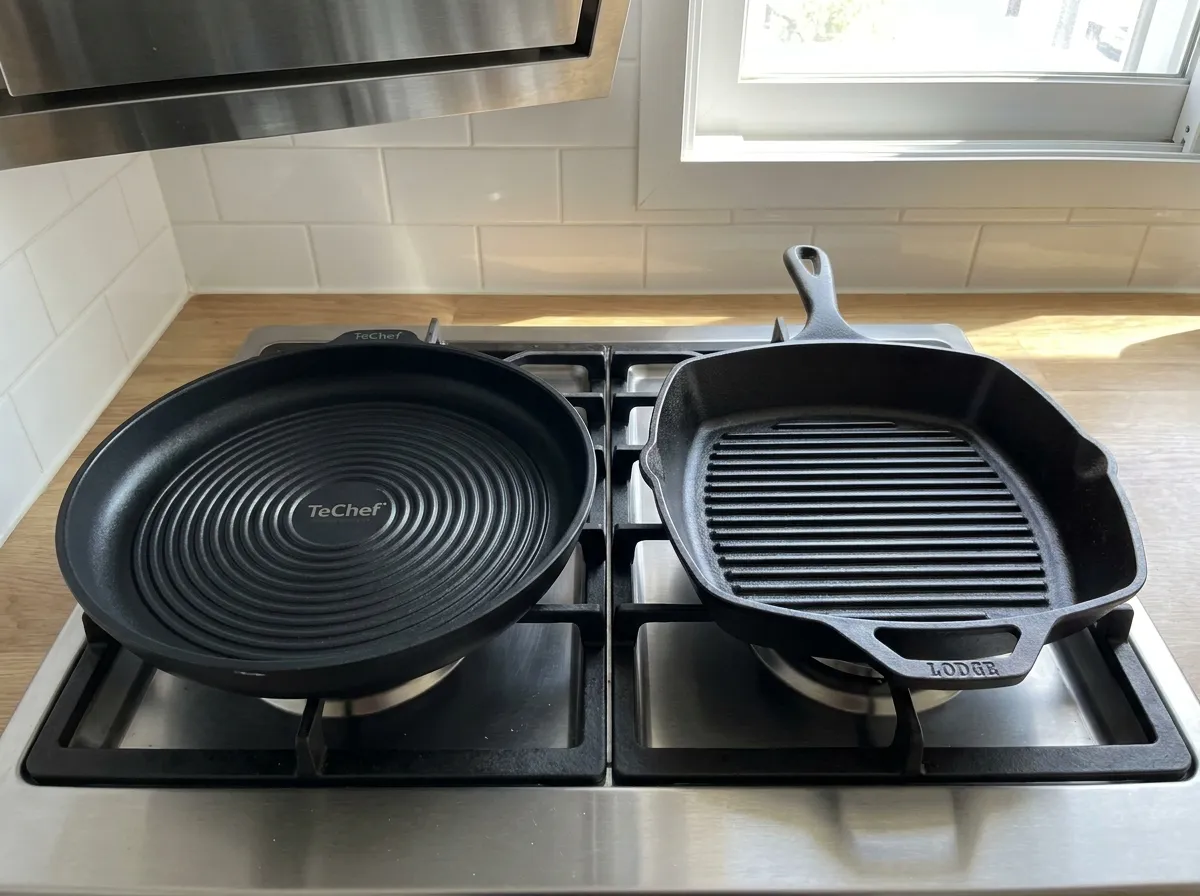
📸 Two Korean BBQ grill pans side by side — the TeChef non-stick and Lodge cast iron — tested on a home stovetop in Sydney.
What to Look for in a Korean BBQ Grill Pan
Before I get into specific products, let me explain what actually matters. Most people focus on the wrong things when buying a grill pan — they look at price first, or they get distracted by marketing claims. Here’s what I actually evaluate. If you’re new to cooking Korean BBQ at home, I’d suggest pairing this guide with our Korean BBQ at home for beginners guide — it covers everything else you’ll need alongside the right pan.
Ridge Height and Design
The ridges are the most important feature. They need to be high enough to keep the meat elevated above the fat that drains off — at least 5–6mm. Shallow ridges mean the meat sits in pooled fat and steams instead of grills. You want those crispy, slightly charred edges. That only happens when the meat is properly elevated.
Heat Distribution
A pan that has hot spots will cook unevenly — some pieces will burn while others are still raw. Cast iron distributes heat most evenly once it’s up to temperature. Good quality aluminium with a thick base is the next best option.
Non-Stick Coating Quality
For Korean BBQ specifically, a reliable non-stick coating matters. Marinated meat — especially bulgogi and galbi — has sugar in the marinade that caramelises and sticks aggressively to uncoated surfaces. PFOA-free coatings are the standard now. Avoid anything that doesn’t specify PFOA-free.
Size
For two people, a 28–30cm pan is sufficient. For four or more, you’ll want 32cm or larger, or consider running two pans simultaneously. Korean BBQ is meant to be cooked in small batches anyway — overcrowding the pan is the most common mistake beginners make.
My Top Picks (Tested at Home)
1. TeChef Stovetop Korean BBQ Non-Stick Grill Pan — Best for Beginners
This is the pan I recommend to everyone who asks me where to start. The TeChef Stovetop Korean BBQ Grill Pan has been my weeknight workhorse for three years. The Teflon Select non-stick coating is genuinely durable — I’ve used metal tongs on it more times than I should admit and it’s still intact. Before you fire up the grill, it’s worth knowing which meat to start with. Our comparison of samgyeopsal vs galbi breaks down the key differences so you can decide before your first session.
What I like most is the ridge design. They’re the right height to drain fat efficiently without making the pan awkward to clean. The pan heats up quickly on a gas stovetop and holds temperature well through multiple batches. Cleanup takes about three minutes.
The one limitation: it’s not induction compatible. If you have an induction cooktop, check the product listing for the induction-compatible version before ordering.
Best for: Beginners, frequent weeknight use, easy cleanup
Not ideal for: Induction cooktops (check compatibility), outdoor use
2. Lodge Cast Iron Square Grill Pan — Best for Serious Home Cooks
The Lodge Cast Iron Square Grill Pan is a completely different experience. It’s heavy, it takes longer to heat up, and it requires more care than a non-stick pan. But when it’s properly seasoned and up to temperature, the sear it produces is in a different league.
Cast iron retains heat better than any other material. When you lay cold meat on it, the temperature barely drops — which means you get a consistent, aggressive sear every time. The caramelised crust on galbi cooked in a properly heated Lodge pan is something I genuinely look forward to.
The trade-off is maintenance. Cast iron needs to be dried immediately after washing and lightly oiled before storage. It sounds like a lot of effort but it becomes second nature after a few uses. And a well-maintained Lodge pan will outlast everything else in your kitchen.
Best for: Serious home cooks, outdoor use, those who want a pan for life
Not ideal for: Beginners, those who want quick cleanup
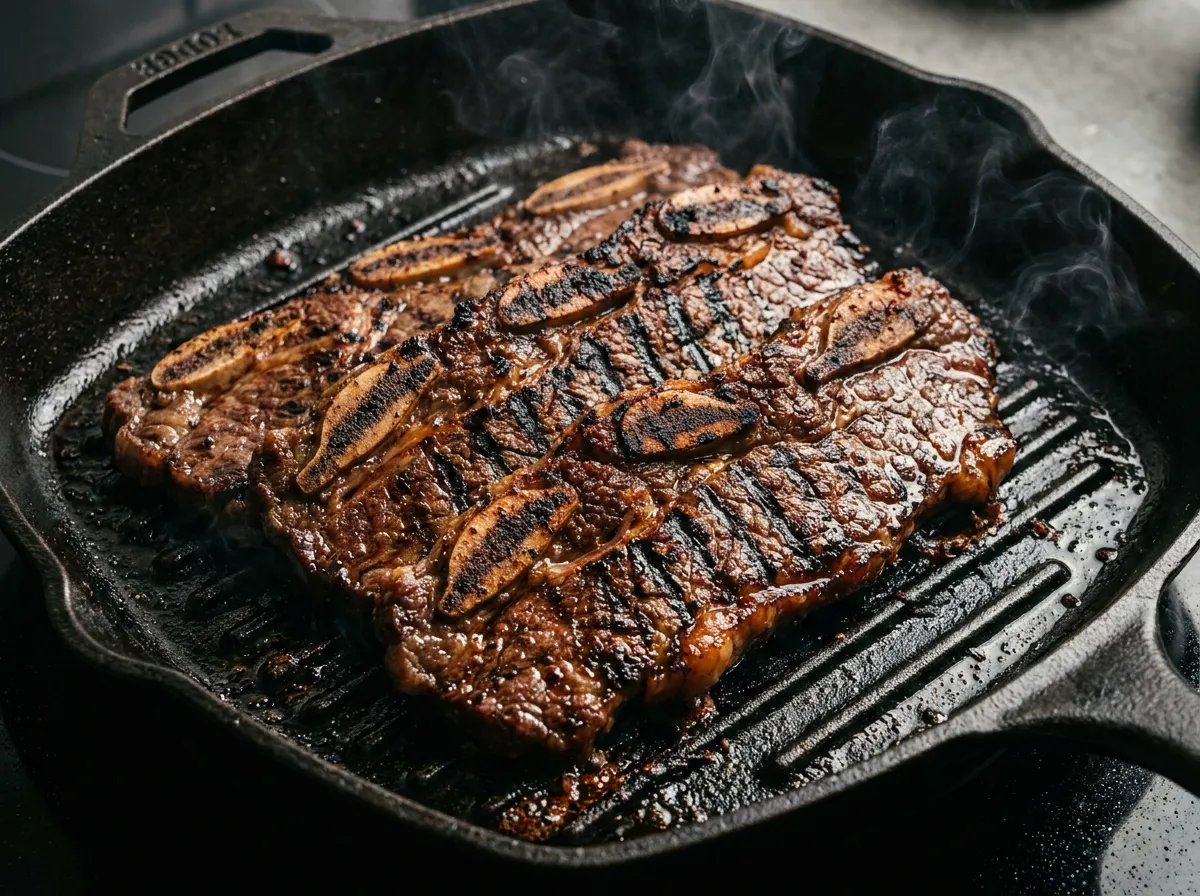
📸 Galbi short ribs searing on a Lodge cast iron grill pan — the deep char marks and caramelised edges are what make cast iron worth the extra effort
Side-by-Side Comparison
Here’s how the two pans stack up across the factors that matter most for home Korean BBQ.
| Feature | TeChef Non-Stick | Lodge Cast Iron |
|---|---|---|
| Material | Aluminium + Teflon Select | Cast iron |
| Weight | Light | Heavy (2.7kg) |
| Preheat time | 2–3 minutes | 5–7 minutes |
| Heat retention | Good | Excellent |
| Sear quality | Very good | Outstanding |
| Non-stick performance | Excellent (out of box) | Good (improves with seasoning) |
| Induction compatible | Check listing | Yes |
| Cleanup | Dishwasher safe | Hand wash + dry + oil |
| Lifespan | 3–5 years | Lifetime |
| Price range | ~$40–60 | ~$30–50 |
| Best for | Beginners, frequent use | Serious cooks, outdoor use |
How to Get the Best Results from Your Grill Pan
The pan is only half the equation. How you use it determines the results. These are the habits that took me years to develop. Cooking technique matters just as much as the pan itself. If you’re grilling indoors, read our guide on how to do Korean BBQ indoors without smoking out your house — it’ll save you a lot of ventilation headaches.
Always preheat properly
This is the single most important thing. Put the pan on medium-high heat and wait until you see a faint wisp of smoke before any meat goes on. For the TeChef, that’s about 2–3 minutes. For the Lodge, give it 5–7 minutes. Cold pan equals steamed meat. Hot pan equals proper sear.
Cook in small batches
Korean BBQ is meant to be cooked and eaten continuously — a few pieces at a time, not a whole plate at once. Overcrowding drops the pan temperature dramatically. Lay down 4–6 pieces, let them cook, eat them, then add the next batch. This is how it’s done in Korea and it makes a huge difference to the texture.
Don’t move the meat too soon
Put the meat down and leave it alone for at least 90 seconds before flipping. Moving it too early tears the surface and prevents proper caramelisation. When it releases easily from the pan, it’s ready to flip.
Use scissors, not a knife
In Korea, everyone uses kitchen scissors to cut cooked meat directly on the grill. It’s faster, more practical, and keeps the meat on the hot surface while you cut. I use a dedicated pair of BBQ scissors that never touch anything else in my kitchen.
How to Make Your Grill Pan Last
A good grill pan is an investment. Here’s how to protect it.
For non-stick pans (TeChef): Never use metal utensils on a cold pan — always heat it first. Avoid thermal shock by letting it cool before washing. Even though it’s dishwasher safe, hand washing extends the coating life significantly.
For cast iron (Lodge): Wash with hot water and a stiff brush — no soap. Dry immediately on the stovetop over low heat. While still warm, rub a thin layer of neutral oil over the entire surface. Store in a dry place. That’s it. Do this every time and the pan will last generations.
FAQ
Can I use a regular frying pan for Korean BBQ?
You can, but the results won’t be the same. A flat frying pan has no ridges, so the meat sits in its own fat and steams rather than grills. You’ll miss the crispy edges and char marks that define good Korean BBQ. A dedicated grill pan makes a noticeable difference from the first use.
Does the TeChef pan work on induction cooktops?
Some versions do and some don’t — check the specific product listing before ordering. The standard TeChef grill pan is designed for gas and electric stovetops. If you have induction, the Lodge cast iron is fully compatible and actually performs beautifully on induction.
How do I season a cast iron grill pan for the first time?
Wash it once with soap and water (the only time you’ll use soap on it), dry it completely, then coat the entire surface with a thin layer of flaxseed or vegetable oil. Place it upside down in an oven at 200°C for one hour. Let it cool in the oven. Repeat this process 2–3 times before first use. After that, regular cooking builds the seasoning naturally.
How often should I replace a non-stick grill pan?
When the coating starts to peel, flake, or scratch visibly, it’s time to replace it. With proper care — no metal utensils, hand washing, avoiding thermal shock — a quality non-stick pan like the TeChef should last 3–5 years of regular use. If you’re cooking Korean BBQ weekly, budget for a replacement every 3–4 years.
My Thoughts
If I had to choose just one pan, I’d choose the TeChef for everyday use. It’s forgiving, easy to clean, and produces great results without requiring any special knowledge or maintenance routine. For someone just getting into home Korean BBQ, it removes all the friction and lets you focus on the cooking.
But I also own the Lodge. On weekends when I have time to preheat it properly and I’m cooking galbi for guests, nothing else comes close. The sear is deeper, the caramelisation is better, and there’s something satisfying about cooking on a pan that will still be in use long after I’m gone.
My honest recommendation: start with the TeChef. Once you’re cooking Korean BBQ regularly and you want to take it to the next level, add the Lodge. You’ll use both.
Get the Right Pan for Your Kitchen
Start with the TeChef Stovetop Korean BBQ Grill Pan — it’s the most beginner-friendly option and produces excellent results from day one. → Check the latest price on Amazon
Ready to go deeper on technique? Korean BBQ: Master Your Grill in Seven Sauces covers everything from equipment to marinades to banchan in detail.
Related Links
If you found this article helpful, you might also enjoy these related guides:
- Korean BBQ at Home for Beginners — What I Wish I Knew Sooner — The complete beginner’s guide to home Korean BBQ, from equipment to marinades to banchan.
- How to Do Korean BBQ Indoors Without Smoking Out Your House — Practical tips for managing smoke and ventilation when cooking Korean BBQ in an apartment.
- Why I Stopped Going to Korean BBQ Restaurants (And Do This Instead) — How switching to home Korean BBQ saved me thousands of dollars a year.