The first time I watched a pot of red, bubbling broth land on the table and someone reach in with scissors, I knew I was home. A spicy rice cake hot pot in Gangnam is one of those meals that turns four polite strangers into a loud, sweating, happy table within ten minutes. I grew up in Seoul, have lived in Sydney for twenty years, and come back once a year, so I have eaten this dish on both sides of jet lag. Let me walk you through what it actually is, how spicy it really gets, and the little fried-rice ritual at the end that nobody warns you about.
What This Hot Pot Actually Is
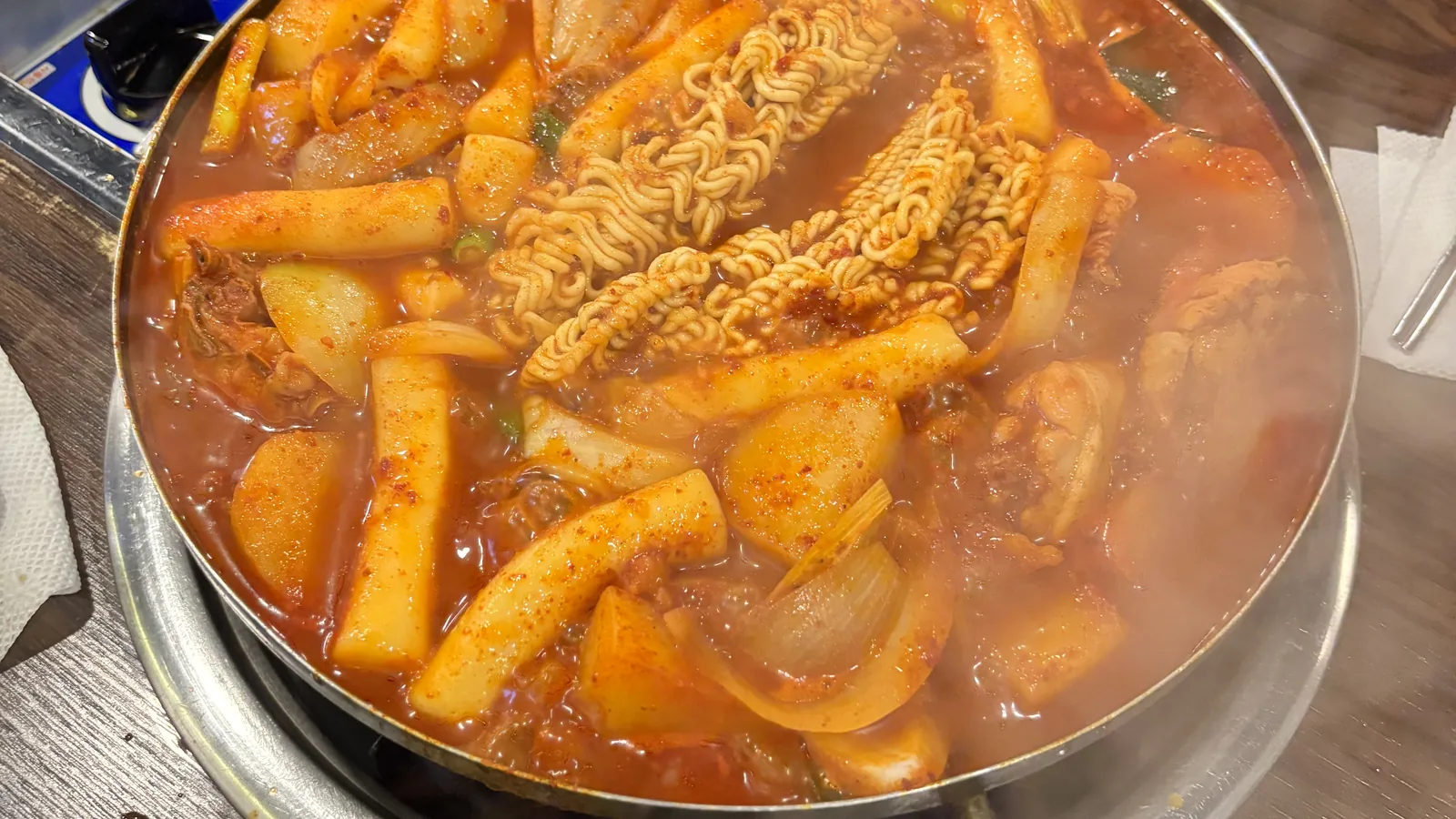
This dish is a bubbling, shared pot of chewy rice cakes and chicken simmered in a deep red gochujang broth, cooked right at your table. Koreans would recognise it as a tteok-dori-tang style dish, which is basically dak-dori-tang, the classic spicy braised chicken stew, loaded up with rice cakes. The bone-in or boneless chicken goes in with thick cylinders of tteok, vegetables, and a chilli-paste sauce, then it all simmers down into something far heartier than a snack.
The broth is the soul of it. Gochujang and gochugaru give it that glossy red colour and a slow-building heat, while garlic, soy, and a touch of sugar round it out so it is savoury rather than just hot. As it reduces, the sauce clings to every rice cake and coats the chicken, and the whole pot goes from soupy to thick and sticky over the meal. You are not meant to rush it.
If you are spending a day in the district anyway, it slots perfectly into an afternoon of shopping and walking. My Gangnam travel guide maps out how the area connects, and a hot pot like this is exactly the kind of sit-down meal that resets you halfway through. Think of it as fuel with a side of theatre.
How It Differs From Tteokbokki
Most visitors arrive in Korea knowing tteokbokki, so the easiest way to understand this dish is by contrast. Tteokbokki is the bright-red street snack of rice cakes in a sweet-spicy sauce, often eaten standing up from a paper cup, sometimes with fish cake and a boiled egg. It is a snack, a comfort food, a thing you grab between errands. This hot pot is a meal you sit down to share.
The big difference is the chicken and the depth. Where tteokbokki is mostly rice cakes in sauce, this pot is a proper protein-forward stew, with the tteok playing a chewy supporting role rather than the lead. The sauce is less candy-sweet and more savoury and layered, built to stand up to meat and a long simmer. You also cook it at the table, so it stays hot and keeps developing as you eat.
If you want the full backstory on the rice cakes themselves, I go deep on the street-snack version in my tteokbokki Korean street food guide. Reading both side by side is the quickest way to see how one humble ingredient stretches from a paper cup on the street to a centrepiece pot in a Gangnam restaurant.
The Spice Level, Honestly
I will be honest with you: this is a properly spicy dish, but it is a warm, building heat rather than a cruel one. The gochujang base gives a rounded chilli flavour first, and the burn creeps up as the sauce reduces and concentrates. By the bottom of the pot, the most intense bites are at the edges where the sauce has caramelised. It is the kind of spice that makes you reach for water and keep eating anyway.
For a rough sense of scale, I would call a standard order medium-hot by Korean standards and firmly hot by the standards of most first-time visitors. If you grew up on mild food, start cautious. Many places let you ask for a milder version, and the rice cakes, rice, and any cheese or egg you add will all soften the heat considerably. A spoon of the starchy broth over plain rice is a built-in cooldown.
Here is my Korea-versus-Australia honesty: the chilli sauces I buy in Sydney are often hotter in raw Scoville terms, but this dish hits differently because the heat is wrapped in so much savoury depth and eaten hot, fast, and shared. It is not heat for its own sake. It is heat doing a job inside a comforting, garlicky stew, and that is a very different experience from a novelty hot sauce.
The Shared-Pot Way of Eating
This is communal food, full stop, and that shapes everything about the meal. One pot lands in the middle of the table and everyone eats from it, reaching in with chopsticks for rice cakes and lifting out chicken with the table scissors that are standard kit in Korean restaurants. There are usually a few small side dishes, banchan, around it, plus a bowl of rice each. Nobody gets their own portion. That is the point.
The social rhythm is half the fun. You stir, you nudge the best rice cakes toward whoever looks hungriest, you wait for the chicken to cook through, and you talk over the bubbling. In Korea, sharing one pot is a sign of comfort and closeness, not a logistics problem to solve. Coming from Sydney, where everyone tends to order their own plate, I still find this style quietly lovely every time I sit down to it.
A few practical notes make the sharing smoother. Most pots serve two to four people, so this is not a solo-diner dish at many places. Let the host or the staff manage the heat dial under the pot, keep an eye on the broth so it does not over-reduce too early, and pace yourself, because the real finale is still coming.
The Fried-Rice Finale Ritual
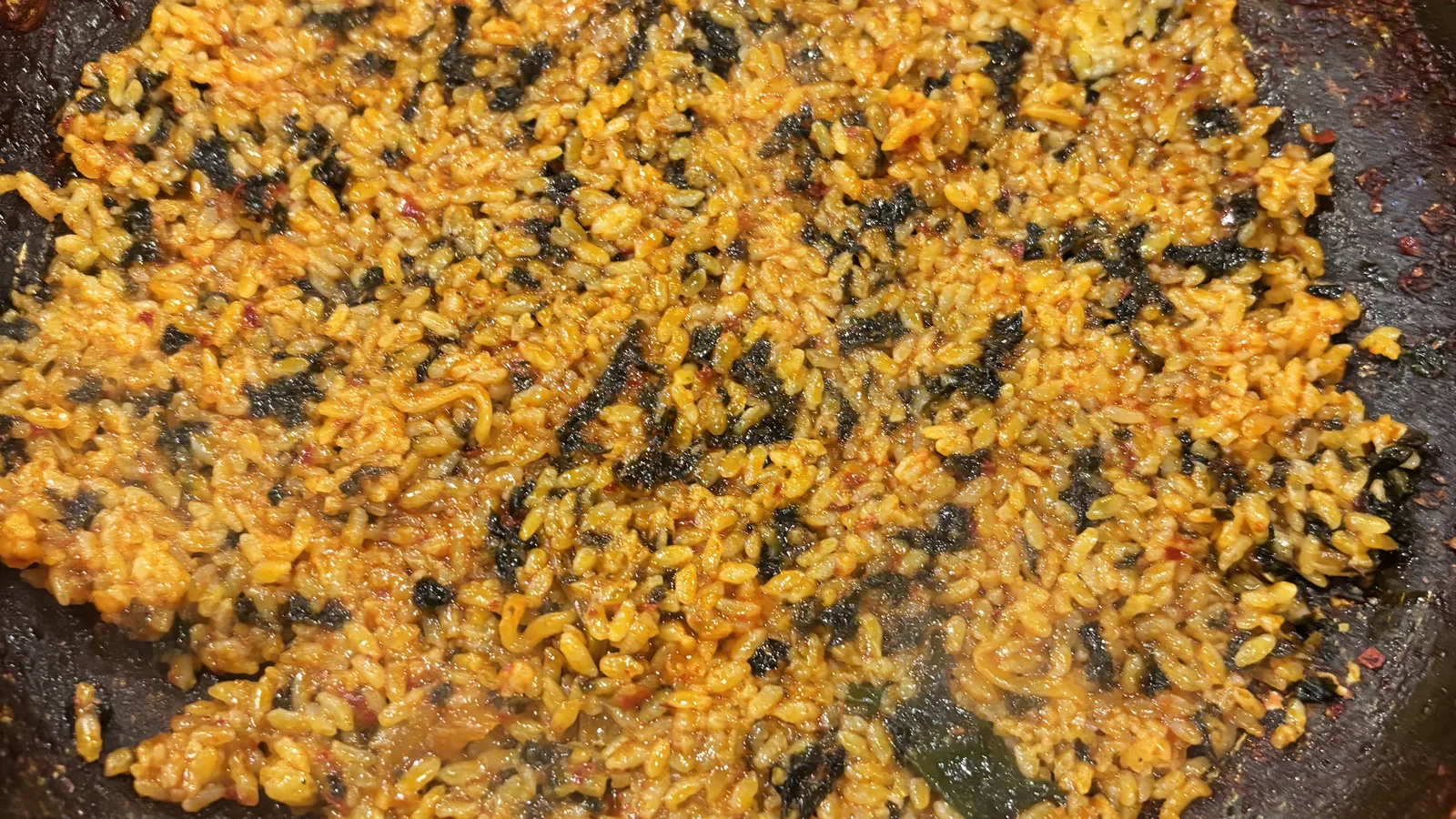
If you remember one thing from this whole post, make it this: do not let them clear the pot. When the rice cakes and chicken are mostly gone and a thick layer of red sauce is left behind, you order bokkeumbap, fried rice, cooked right in that leftover sauce. This is a real, beloved Korean ritual, not a gimmick, and it is the best bite of the entire meal.
The staff, or you, tip cold rice into the pot along with seaweed flakes, sesame oil, sometimes chopped kimchi or vegetables, and often a blanket of melted cheese. Then it gets pressed and fried against the hot pan until the bottom turns crispy and the rice soaks up every bit of concentrated, garlicky, spicy sauce. Nothing is wasted, and the flavour you spent the whole meal building gets one final, glorious encore.
For visitors, the move is to order the fried-rice finish when the pot is about three-quarters empty, before the sauce burns dry. Just say bokkeumbap and point at the pot, and the staff will know exactly what you mean. This little ending is the kind of detail that turns a meal into a memory, and it shows up across Korean cuisine, which I cover more broadly in my Korea food travel guide.
The Dish at a Glance
Here is the whole experience boiled down into one table, so you know roughly what to expect before you sit down. Treat the price as rough guidance, since menus vary and nudge up over time, but it gives you a ballpark.
| Feature | Spicy Rice Cake Hot Pot | Street Tteokbokki |
|---|---|---|
| What it is | Sit-down hot pot of rice cakes and chicken | Snack of rice cakes in sauce |
| Main protein | Chicken simmered in the broth | Usually none, sometimes fish cake |
| Sauce | Savoury, deep, garlicky gochujang | Sweeter, lighter gochujang |
| How you eat it | Shared pot at the table | Solo, often standing |
| The finale | Fried rice in the leftover sauce | None |
| Rough price | Mid-teens of thousands of won (menu board) | A few thousand won a cup |
Why Gangnam Is a Good Place to Try It
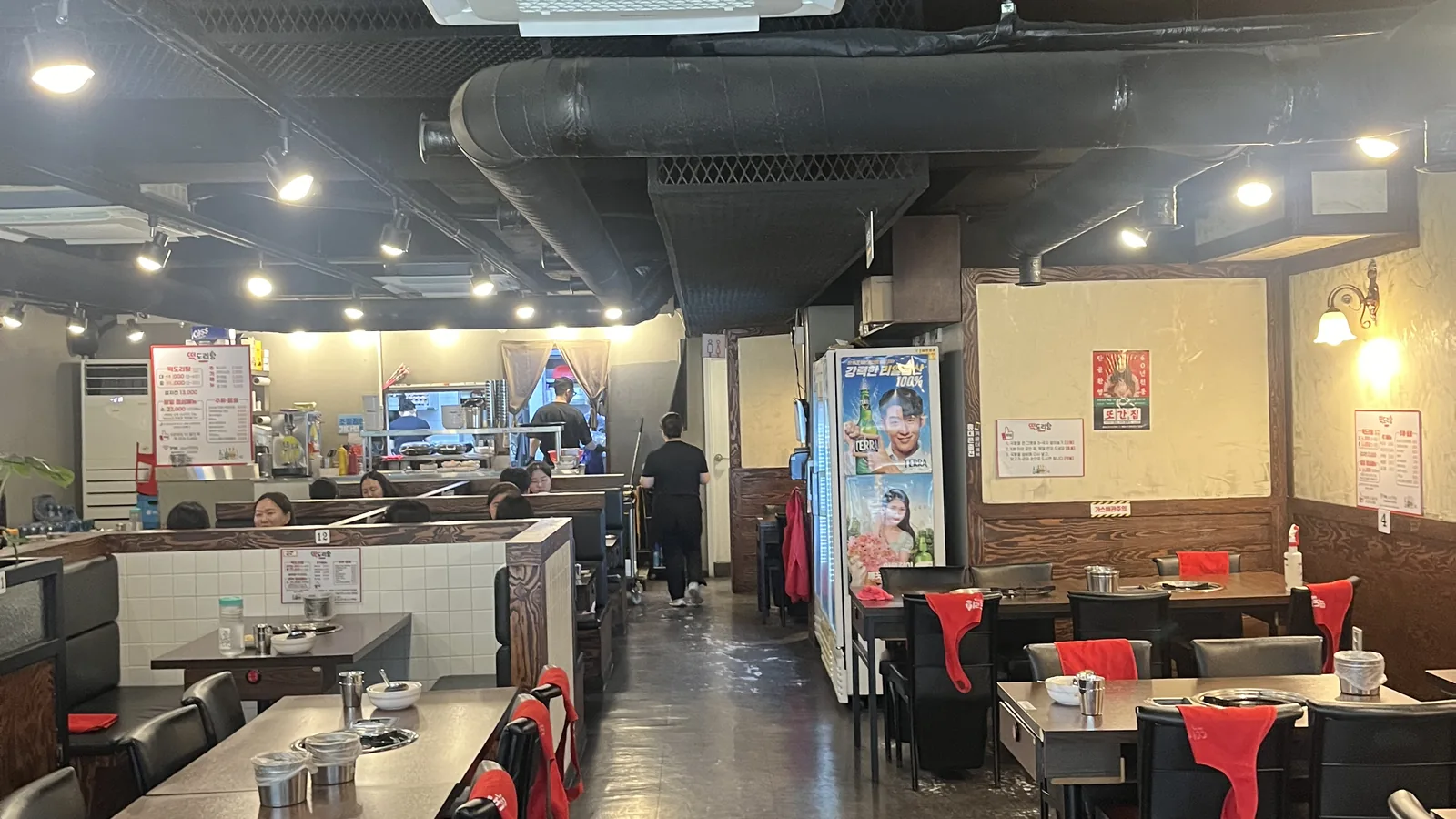
Gangnam is an upscale, fast-moving district south of the river, and that makes it a surprisingly good place to try this dish. It is dense with restaurants catering to office workers, students, and night-out crowds, so you find casual spots that do one thing well and do it all day and late into the evening. The competition keeps quality up and turnover high, which means fresh, well-run kitchens.
The area is also easy for visitors to reach and navigate, with major subway lines and clear signage. You can fold a hot pot meal into a day of shopping, cafe-hopping, or sightseeing without going out of your way. Because Gangnam draws such a mixed crowd, the casual restaurants here are used to all sorts of diners, so you will not feel out of place walking in as a visitor with a translation app open.
One honest caveat: Gangnam can run pricier than scruffier neighbourhoods, and the trendiest streets are busiest at peak times. The hot pot itself stays reasonable, often landing in the mid-teens of thousands of won per the menu board I saw, but expect to queue at popular spots around lunch and dinner rush. Going a little before or after the peak makes the whole thing calmer.
Tips for Visitors Ordering It
A few small things will make your first spicy rice cake hot pot in Gangnam go far more smoothly. Most of this is about pacing, spice, and not missing the best part, and none of it requires fluent Korean. Here is what I tell friends before they go.
- Mind your spice tolerance. Ask if a milder version is possible, and remember rice, cheese, and egg all tame the heat. Start cautious if you are not used to chilli.
- Order the fried-rice finish. When the pot is about three-quarters empty, ask for bokkeumbap so they cook rice in the leftover sauce before it dries out.
- Come with a group. Many pots serve two to four people, so this is a sharing dish best enjoyed with company rather than solo.
- Let the broth reduce. The sauce gets better as it thickens, so do not eat too fast at the start, and let the flavour build.
- Go off-peak. Avoid the lunch and dinner rush at the busiest spots to skip the queue and get a calmer table.
Beyond the tactics, the real tip is to relax into the ritual. Use the scissors, reach into the shared pot, sweat a little, and save room for the fried rice. This is not fussy food, and the more you lean into the messy, communal pace of it, the better the meal feels. Bring a friend who is not afraid of chilli and you are set.
FAQ
What is a spicy rice cake hot pot in Gangnam?
It is a shared, bubbling pot of chewy rice cakes and chicken simmered in a deep red gochujang broth, cooked at your table. Koreans know it as a tteok-dori-tang or dak-dori-tang style dish, meaning spicy braised chicken cooked together with rice cakes. It is heartier than street tteokbokki and traditionally finished by frying rice in the leftover sauce.
How spicy is it, really?
A standard order is medium-hot by Korean standards and firmly hot for most first-time visitors. The heat builds as the sauce reduces, but it is wrapped in savoury, garlicky depth rather than being painful for its own sake. Many places offer a milder version, and rice, cheese, and egg all soften the burn considerably.
What is the fried-rice finale?
When the rice cakes and chicken are mostly gone, you order bokkeumbap, and cold rice is fried in the thick leftover sauce, often with seaweed, sesame oil, and cheese. It is pressed against the hot pan until crispy and soaks up all the concentrated flavour. It is a genuine, beloved Korean ritual and usually the best bite of the meal, so do not skip it.
Is it good for solo travellers?
Not always, since many pots are sized for two to four people and the whole point is sharing from one pot. If you are travelling solo, you may find it tricky to order at some places, though smaller portions exist. It is at its best with a small group of friends who are happy to dig into the same pot and share the fried-rice finish.
Why try it in Gangnam specifically?
Gangnam is dense with busy, well-run casual restaurants that serve all day and late, so quality and freshness stay high. It is easy to reach by subway and used to all kinds of diners, including visitors. It can run a touch pricier than scruffier areas, but the hot pot itself is reasonable, often in the mid-teens of thousands of won.
My Thoughts
This is the meal I crave the moment I land back in Seoul. There is something about a shared pot of spicy rice cakes and chicken that no single plate of food can match, and I say that as someone who has spent two decades eating beautifully plated things in Sydney. It is loud, it is messy, and it pulls a table together in a way that feels distinctly Korean.
My honest advice is to go hungry, go with people you like, and treat the fried-rice finish as non-negotiable. The dish rewards patience, so let the sauce thicken, let the heat build, and let the meal stretch out instead of rushing it. The best version of this is never the fastest one.
And if the spice scares you a little, good. Order it anyway, keep some rice and water close, and lean in. Some of my happiest Seoul memories are red-faced and a bit sweaty, scraping the last crispy bits of fried rice out of a shared pot while everyone groans that they are too full. That is the dish doing exactly what it is meant to do.
Planning Your Gangnam Food Day?
Bookmark this and save the fried-rice tip for when you are at the table. The single best decision you can make is to share a pot with a few people, pace yourself while the sauce thickens, and order the bokkeumbap finish before the pot runs dry. Do that, and a casual hot pot in Gangnam turns into the meal you talk about for the rest of your trip.