If your Seoul trip lands in spring, the Cheonggyecheon lantern festival is the kind of free, unplanned magic I wish every visitor stumbled into. One evening I came up from the subway expecting my usual quiet stream walk and found the whole waterway strung with thousands of glowing paper lanterns. I grew up in Seoul, have lived in Sydney for twenty years, and come home once a year, so I have seen this a few times now. Let me tell you how to catch it properly.
What the Lantern Display Actually Is
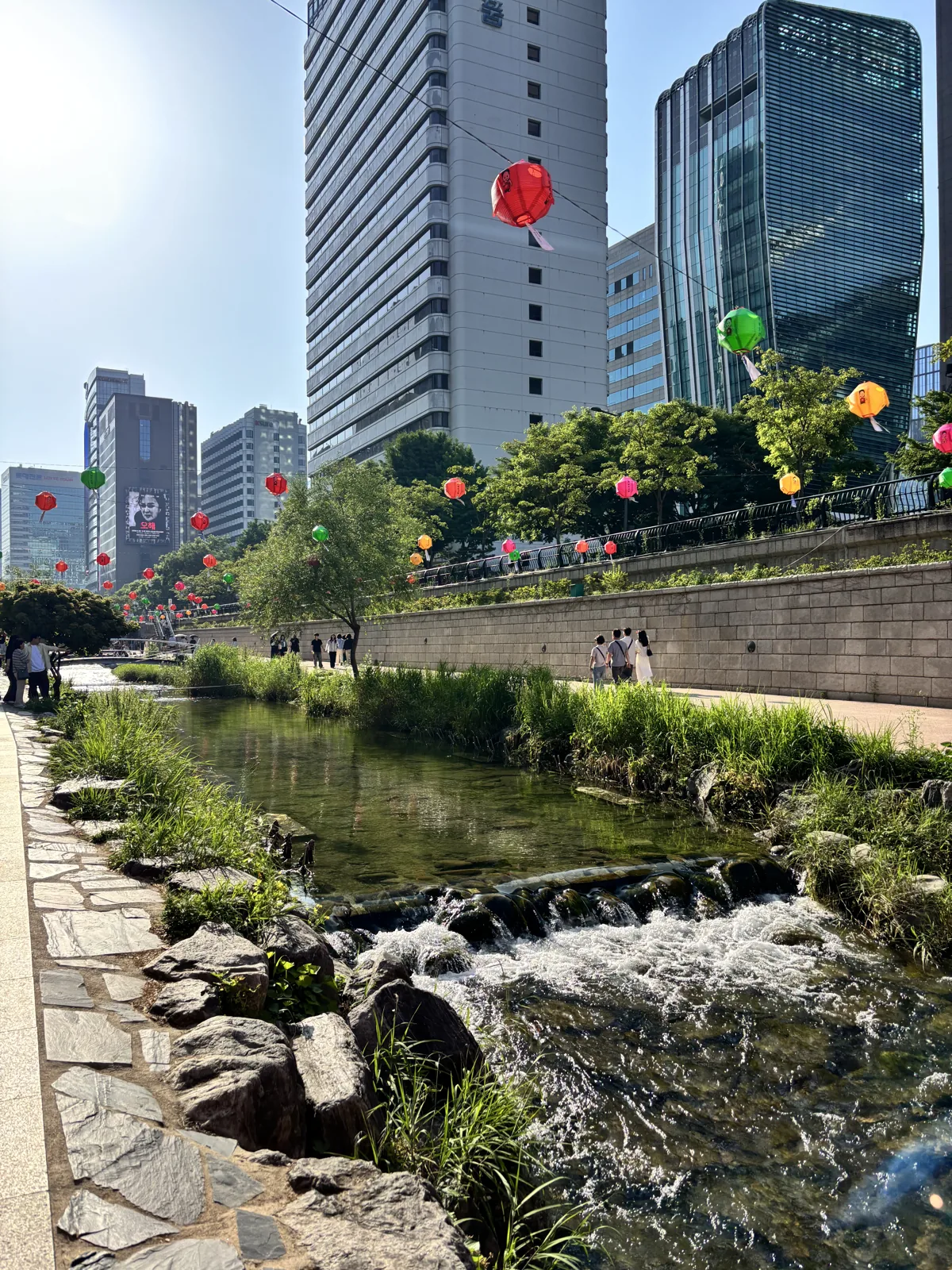
The lanterns you see along Cheonggyecheon are lotus lanterns, the round, ribbed paper lanterns that Korea hangs to mark Buddha’s Birthday each spring. Temples and the city string them up in their thousands, and the stream is one of the most spectacular places they land, because the water doubles every light as a reflection.
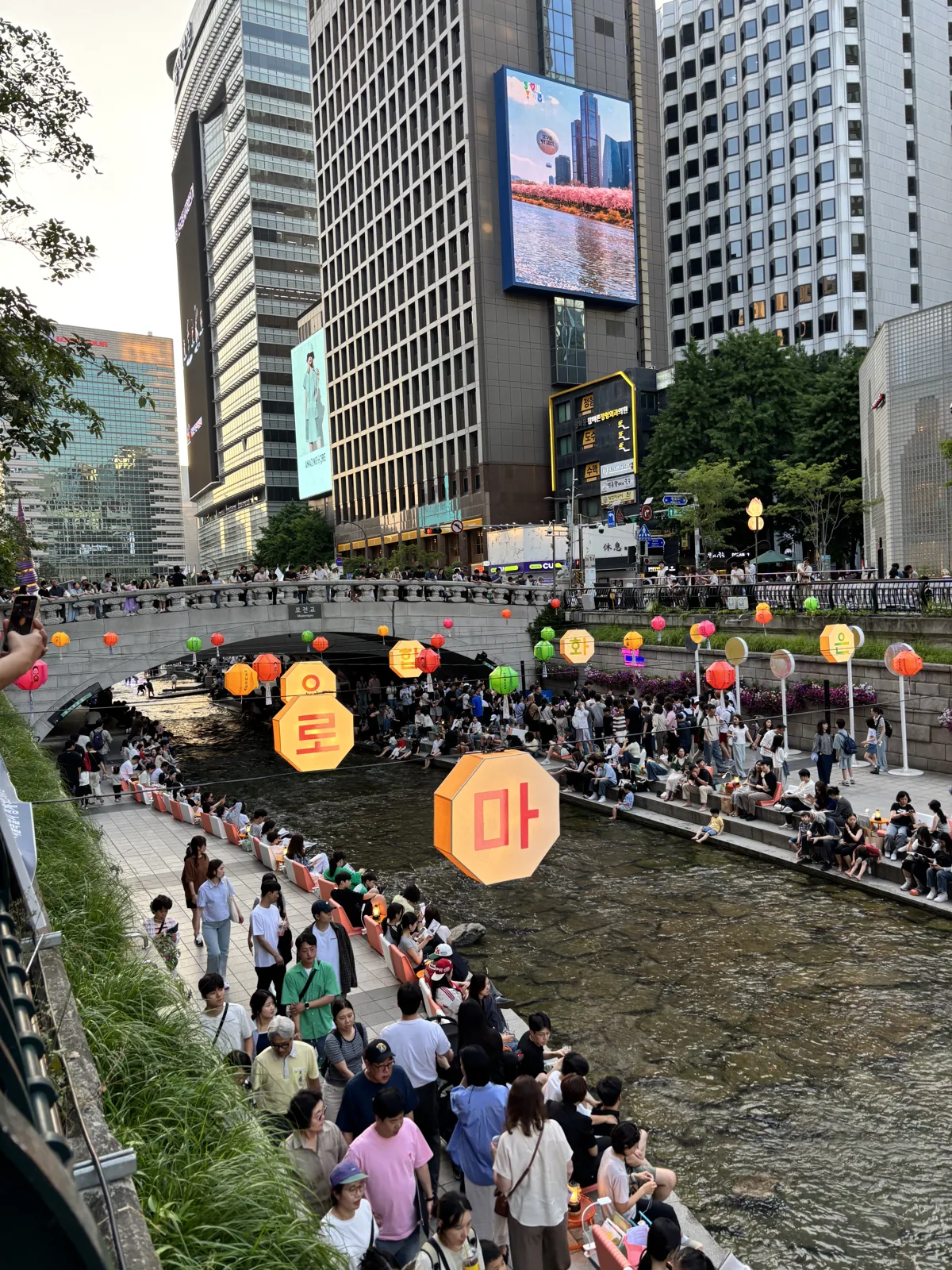
They are not just plain globes either. Among the classic pink and white lotus shapes you will find lanterns in every colour, plus big sculpted character lanterns, animals, and ones that spell out Korean words floating right over the surface of the stream. The effect at dusk, when they switch on and the sky goes deep blue, is genuinely breathtaking.
What makes it special is that it is a living tradition, not a tourist installation. These are the same lotus lanterns carried in the big Buddhist parades elsewhere in the city, part of the Lotus Lantern Festival tradition, so you are seeing a real piece of Korean spring culture, just staged along a downtown stream where anyone can wander up and enjoy it for free. If you want the year-round version of this walk, my Cheonggyecheon stream walk in Seoul guide covers the stream in every season.
The reflections are the part that surprises people most. Because the lanterns hang low over moving water, every light is doubled and gently rippled on the surface, so the whole stream reads as a river of colour rather than a row of hanging globes. On a still evening it is almost mirror-like, and on a breezy one the reflections shimmer and stretch. It is a completely different effect from seeing lanterns strung over a dry street, and it is the reason this particular spot is worth seeking out over the other lantern displays around the city.
When the Cheonggyecheon Lantern Festival Happens
The lanterns go up around Buddha’s Birthday, which falls in spring, usually in May, though the exact date shifts each year because it follows the lunar calendar. The displays typically appear for a couple of weeks around the holiday rather than a single night, so you have a window rather than one fixed evening to catch them.
Because the date moves, the single most useful thing you can do is check before your trip. Look up the year’s Buddha’s Birthday date and aim for the week or two leading up to it, when the lanterns are reliably up. The official Visit Seoul site is the place I send people to confirm current dates and any related lantern events around the city.
Timing within the day matters just as much as the date. The lanterns are pretty in daylight, but they are unforgettable at dusk and after dark, when they glow. Aim to arrive maybe thirty minutes before sunset so you can watch the whole scene shift from afternoon colour to that magical lit-up blue hour, which is when every photo you take will look its best.
Where to Stand for the Best View
The densest, most photogenic stretch is the western end, from Cheonggye Plaza near Gwanghwamun and downstream past the first few bridges. This is where the lanterns are packed tightest over the water and where the big character lanterns usually sit, so if you only have time for one spot, start here.
For the classic view, get down onto the stream-level path rather than staying up on the road. From the banks you are right beside the reflections, and looking back along the water you get that endless tunnel of lanterns receding into the distance. The bridges also make great vantage points for looking straight down the lit corridor.
Be ready for crowds at the very start point, though. The plaza end is the busiest, so if it feels too packed for a photo, simply walk a few minutes downstream and the crush eases while the lanterns keep going. Some of my favourite quieter shots came from the second or third bridge along, not the famous first one.
If you want to combine the lanterns with the source of the stream, start right at the small cascade in Cheonggye Plaza and walk down from there. You get the lit lanterns reflected in the moving water of the falls, the grand decorated first bridges, and then the long lit corridor opening up ahead of you, all in the first ten minutes. It is the most concentrated dose of the whole display, and a natural place to begin before you wander further east into the calmer stretches.
What to Expect on the Night
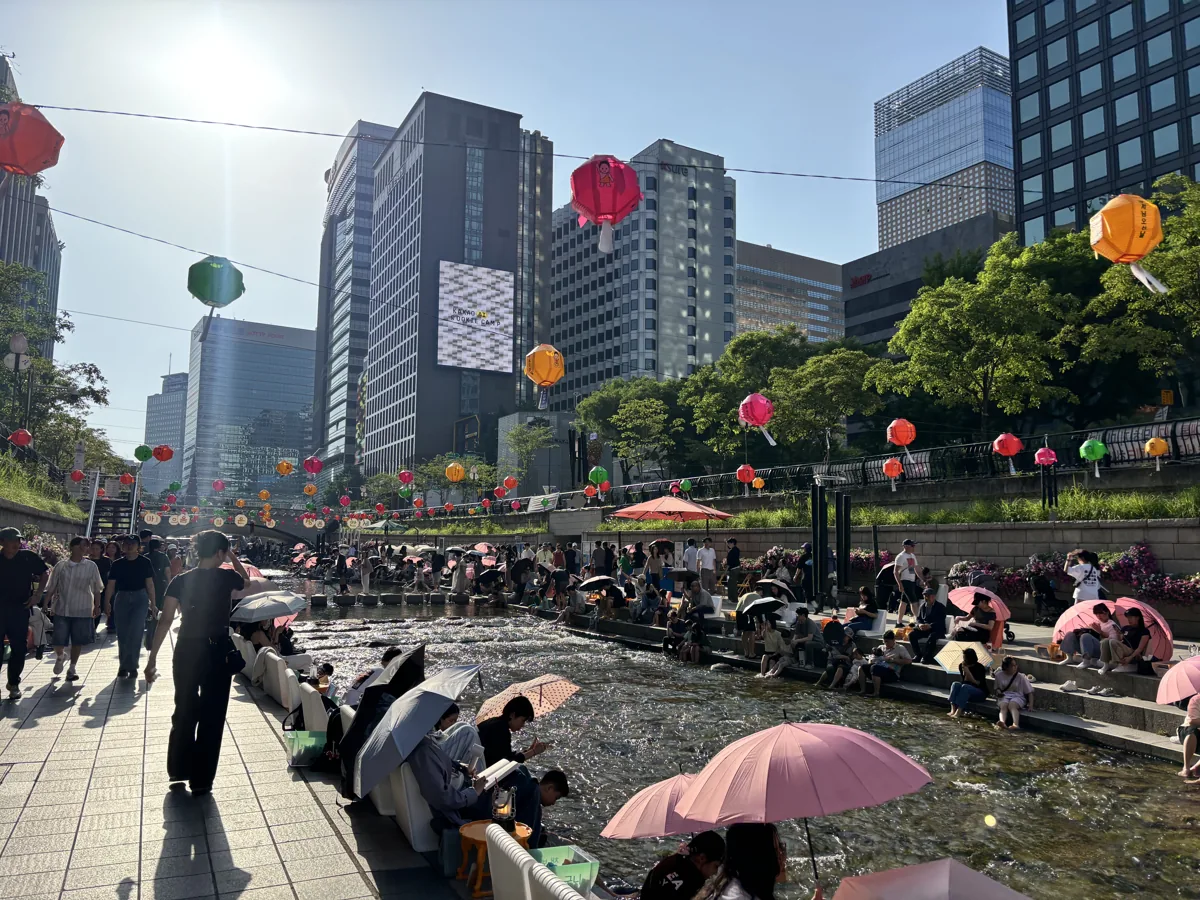
Expect a warm, busy, festival mood rather than a hushed ceremony. The banks fill with families, couples, and visitors strolling slowly, phones up, everyone drifting downstream together. It is lively and friendly, and the pace is gentle, so you are carried along rather than rushed.
Dress for an evening by the water and for being on your feet. Spring nights in Seoul can still turn cool once the sun drops, so a light layer helps, and comfortable shoes matter because you will walk and stand more than you expect. There is little seating down by the stream, so plan to be mobile.
Here is my honest Korea-versus-Australia moment. In Sydney, a free public light spectacle like Vivid is a genuine event: locked dates, ticketed add-ons, packed ferries, the whole city geared up for it. The lanterns here are the opposite kind of wonder. There is no website to buy into and no headline act, just a centuries-old religious tradition quietly turned into something beautiful over a downtown stream, free for anyone who happens to walk past. I love Vivid, but there is something about the unforced, everyday nature of the lanterns that I find even more moving after years away.
It is also genuinely free and open to all, with no ticket and no gate, which is part of why locals treat it so casually. People come straight from work, grab a coffee or a snack from the streets above, and wander down for half an hour. You can dip in and out as you like, which makes it easy to fold into a bigger evening.
For photos, a few small habits make a big difference. Get low and shoot along the water rather than down at it, so the reflections fill the frame, and tap to lower the exposure on your phone a touch, because the lanterns are bright against the dark water and cameras tend to wash them out. Be patient and polite about the crowds on the bridges, where everyone wants the same straight-down-the-corridor shot. And do not spend the whole evening behind a screen; some of my best memories here are of simply standing still and watching the colour move on the water, phone in my pocket.
The Festival at a Glance
Here is the lantern season boiled down so you can plan around it. Treat the timing as a guide, since the exact dates move with the lunar calendar each year.
| Detail | What to Expect |
|---|---|
| When | Around Buddha’s Birthday, usually May (lunar, check yearly) |
| Cost | Free, no ticket, open to all |
| Best time of day | Dusk into evening, when the lanterns glow |
| Best spot | Cheonggye Plaza end and the first few bridges |
| Bring | A light layer, comfy shoes, a charged phone |
| Nearest stations | Gwanghwamun, Jonggak, City Hall |
Honest Tips for Seeing It Well
A few small things turn a decent visit into a great one, and they are the kind of details I only know from getting them slightly wrong before. None of this is essential, but each one helps.
First, go on a weekday if you possibly can. Weekend evenings during lantern season draw big crowds, and the plaza end in particular can get shoulder to shoulder. A Tuesday or Wednesday evening gives you the same lanterns with far more room to breathe and photograph. Second, arrive for blue hour, that short window just after sunset when the sky is still deep blue but the lanterns are lit, because that contrast is what makes the colours pop.
Third, keep walking rather than camping at the first viewpoint. The display runs a long way downstream, and the further you go, the thinner the crowds, so you trade a little distance for a lot of space. And since you are already out for the evening, this is the perfect night to pair the lanterns with dinner nearby, which I cover in my Korean BBQ near Cheonggyecheon (11 November) guide.
How It Fits Your Seoul Evening
The lantern festival works best as the centrepiece of an easy downtown evening rather than a standalone trip. It sits right in the historic Jongno core, so it threads naturally between dinner, a walk, and the bright streets above without you ever needing a taxi between them.
My favourite version is simple: an early dinner in the Jongno grill alleys, then down to the stream as the light fades to walk the lanterns at their glowing best. If the season is wrong and there are no lanterns, the same stretch is lovely in summer for completely different reasons, which I write about in my Cheonggyecheon in summer guide. For the full overview of the stream and its classic night walk, see my Cheonggyecheon Stream Seoul guide. Either way, the stream rewards an unhurried evening.
So do not treat the lanterns as a quick photo stop. Give them a slow hour at dusk, walk further than the first bridge, and let the glowing water be the calm, beautiful heart of one of your Seoul nights. It is the kind of memory that costs nothing and stays with you for years.
FAQ
When is the Cheonggyecheon lantern festival?
The lanterns go up around Buddha’s Birthday, which usually falls in May but moves each year because it follows the lunar calendar. The display typically lasts a couple of weeks around the holiday rather than a single night. Always check the year’s exact date before your trip and aim for the week or two leading up to it.
Is the Cheonggyecheon lantern festival free?
Yes, completely. The lanterns hang over a free public stream with no ticket, no gate, and no opening hours, so you can wander up any evening during the season and enjoy them. There is nothing to book. You only spend money if you grab dinner, a coffee, or a snack from the streets above before or after.
What time should I go to see the lanterns?
Aim for dusk, arriving around thirty minutes before sunset. The lanterns are pretty in daylight but unforgettable once they light up against a deep blue sky. Blue hour, that short window just after sunset, is when the colours pop most and your photos look their best. Weekday evenings are far less crowded than weekends.
Where is the best spot to see the Cheonggyecheon lanterns?
The western end, from Cheonggye Plaza near Gwanghwamun downstream past the first few bridges, is the densest and most photogenic stretch. Get down to the stream-level path for the reflections, and use the bridges to look straight along the lit corridor. If the plaza is too crowded, walk a few minutes downstream for space.
What are the Cheonggyecheon lanterns for?
They are lotus lanterns hung to celebrate Buddha’s Birthday, a major spring holiday in Korea. The same round paper lanterns appear in Buddhist parades across the city, and the stream is one of the prettiest places they are displayed because the water reflects every light. It is a living cultural tradition, not a tourist installation.
My Thoughts
The lantern season is the one time I tell people to deliberately plan their Seoul evening around the stream rather than just stumbling onto it. There is something about all that colour glowing over moving water, in the middle of a roaring city, that gets me every single time I am home for it.
My honest advice is to keep it simple and slow. Check the date before you come, show up at dusk on a weekday, walk past the crowded first bridge, and just drift downstream with the lights. Bring someone you like and let the evening be unhurried; this is not a sight to rush.
It will not cost you a single won, and it might end up being the photo you keep coming back to from your whole trip. Free, beautiful, and deeply local, the lanterns are Seoul at its quiet best, and I never get tired of seeing them.
Planning Your Lantern Evening?
Check the year’s Buddha’s Birthday date before you travel, then aim for a weekday at dusk. Start at the Cheonggye Plaza end, get down to the water for the reflections, and walk past the first bridge for room to breathe. Pair it with an early dinner nearby, and use the guides below to build the whole easy downtown evening around the lights.