Disclosure: This post contains affiliate links. If you purchase through these links, I may earn a small commission at no extra cost to you.
I have walked up to N Seoul Tower in sunshine, in autumn colour, and most recently in a grey, drizzly fog that swallowed the whole skyline. This Namsan Seoul Tower guide is the honest version I wish someone had handed me: how to get up there, what it actually costs, what is worth your time at the top, and what the foggy days are really like. I grew up in Seoul, have lived in Sydney for twenty years, and come home once a year, so I see this hill through two sets of eyes. Let me walk you through it the way I would walk a friend.
What Namsan and N Seoul Tower Actually Are
Namsan is the green mountain that sits right in the middle of Seoul, and N Seoul Tower is the broadcast-and-observation tower planted on top of it. People use the names almost interchangeably, but it helps to keep them straight. Namsan is the 262-metre hill and the park that wraps around it. The tower adds another 236 metres on top, which is why the view from the observatory feels so absurdly high for a city-centre hill.
The tower opened to the public in 1980 and has been Seoul’s postcard ever since. You will recognise it from every K-drama that needed a romantic skyline, and from the wall of love padlocks that has colonised the terraces around its base. It is touristy, yes, but it is touristy for a reason — there is nowhere else this central that lets you see the whole bowl of the city at once.
What surprised me most, even as a Seoulite, is how much of the experience happens before you reach the observatory. The cable car ride, the forest paths, the padlock terraces, and the plaza with its traditional pavilion are all free to wander. You only pay if you want to go up inside the tower itself. So treat this as a half-day on a mountain, not a single ticket attraction.
How I Got There From My Hotel
On my last trip I was staying at the VOKO Seoul, a Hilton Curio hotel near the downtown core, and I made a very lazy, very deliberate choice. It was drizzling, my umbrella was already inside out once, so I just grabbed a taxi straight to the Namsan cable car base station. The fare was small, somewhere around ₩6,000, and it took under ten minutes through the wet streets.
This is where my Korea-versus-Australia brain kicks in. In Sydney, a short taxi hop like that would have cost me three or four times as much, and I would have agonised over whether to just walk in the rain to save money. In Seoul I genuinely did not think twice. Cheap, metered, honest taxis are one of the quiet luxuries of this city, and on a wet day they turn a miserable trudge into a five-minute non-event.
If you would rather not taxi, the cable car base station sits a steep but walkable distance from Myeongdong. Plenty of visitors fold this into a downtown day, and if you are building that kind of itinerary, my Myeongdong travel guide maps out how the whole area connects. From Myeongdong it is roughly a fifteen-minute uphill walk to the lower cable car station, or a short bus ride if your legs are done for the day.
Three Ways Up the Mountain
There are three honest ways to get from street level up to the tower plaza, and the right one depends on your knees, your budget, and the weather. I have done all three over the years, so here is the plain comparison before you commit.
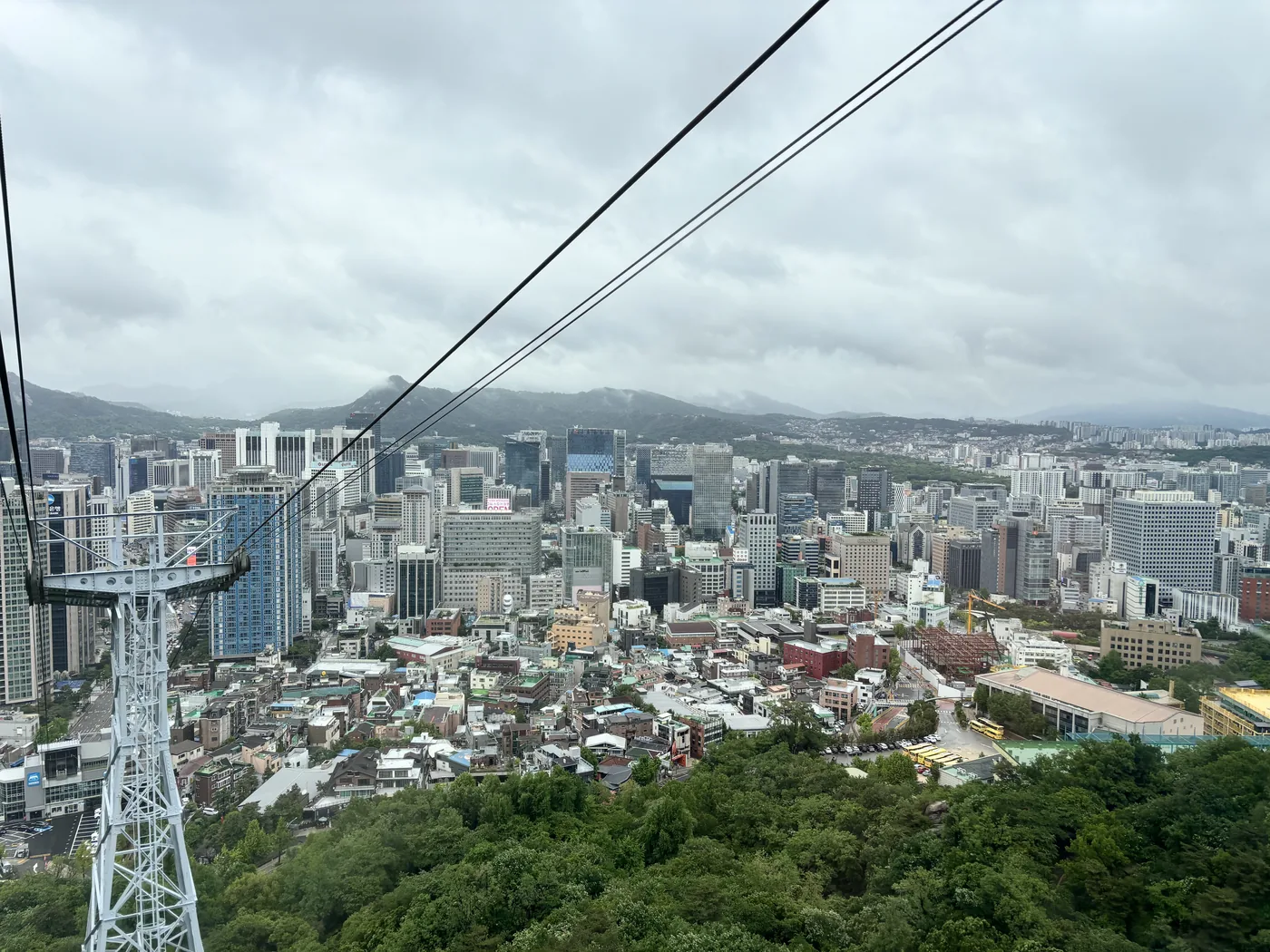
The cable car is the famous one, and the one most visitors picture. It runs from the base station up to a platform just below the tower, and the ride is short but genuinely scenic, even when the city below is half-erased by fog. On my rainy visit the cabin lifted into the cloud and the whole of Seoul dissolved into soft grey, which was strangely beautiful rather than disappointing.
The second option is the Namsan shuttle bus, a small electric bus that loops up the mountain road and drops you near the plaza. It is the cheapest motorised option and a lifesaver in bad weather. The third option is walking, either up the road or along the forest trails and the old city wall. Walking is free, peaceful, and my favourite on a clear day, though it is a proper twenty-to-forty-minute climb depending on your route and pace.
What There Is to Do at the Top
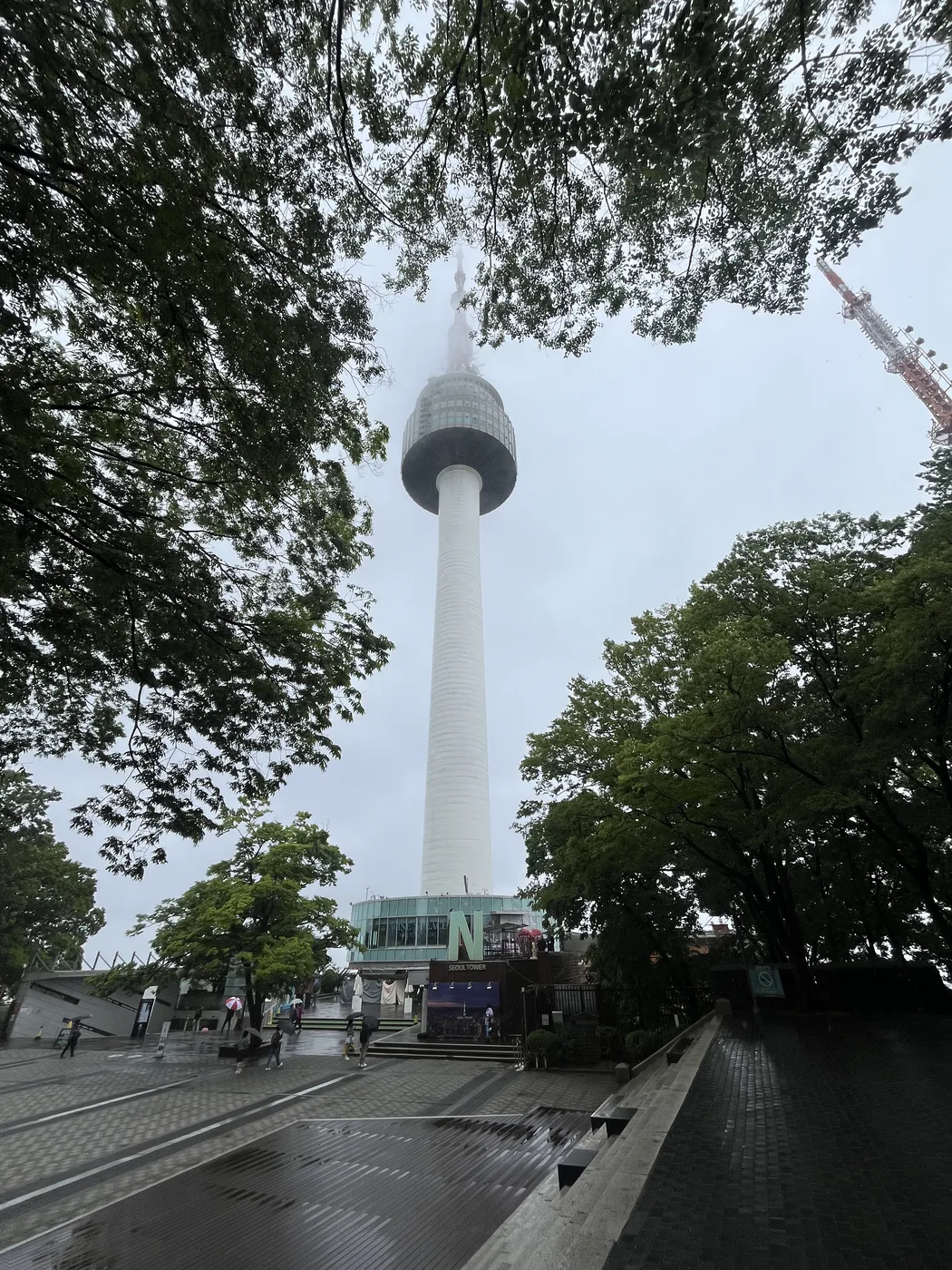
Once you reach the plaza at the base of the tower, you have a surprising amount to do before you even think about buying an observatory ticket. The plaza itself is wide, partly covered, and ringed with terraces, so it works even when it is raining sideways like it was for me.
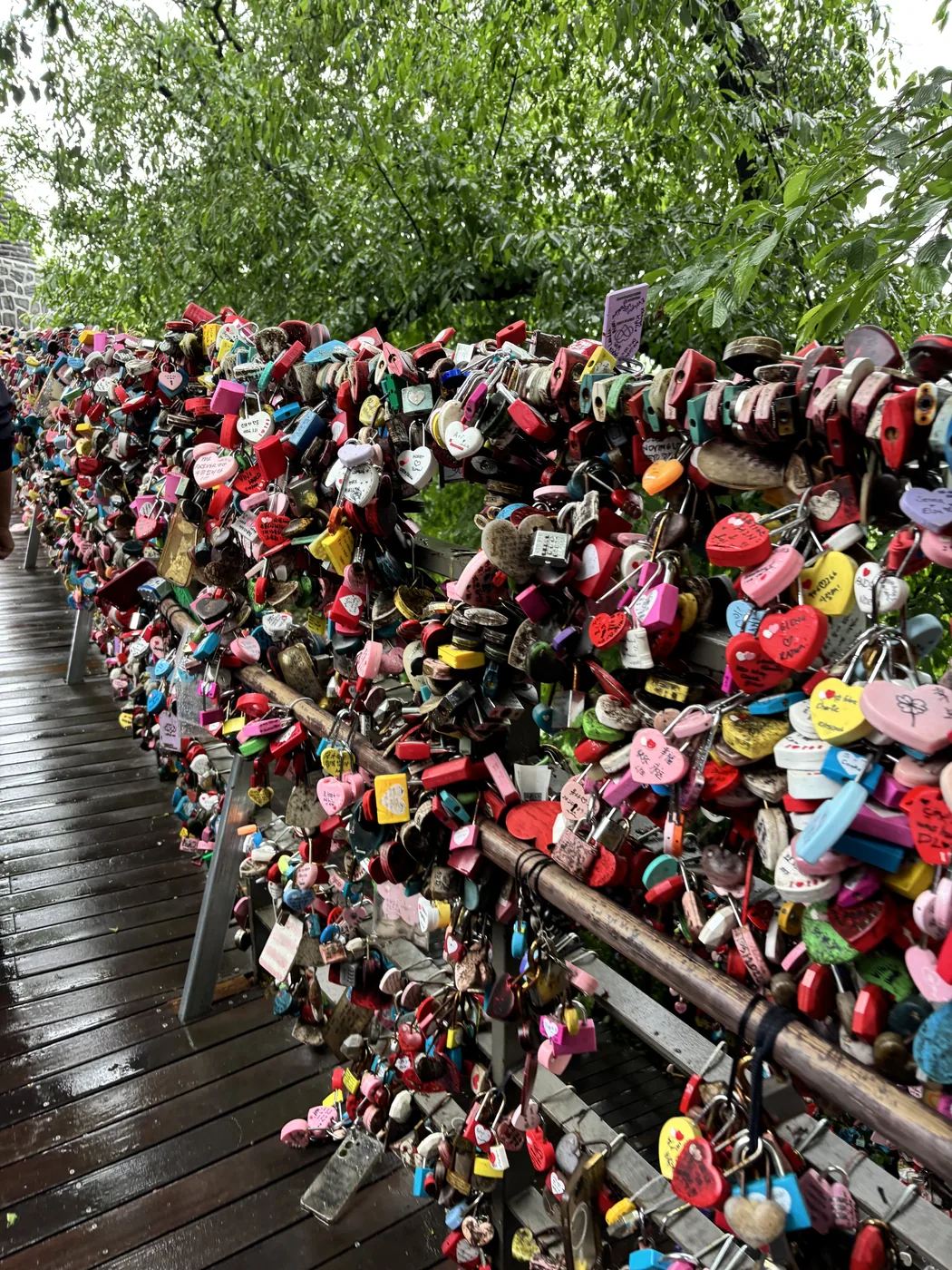
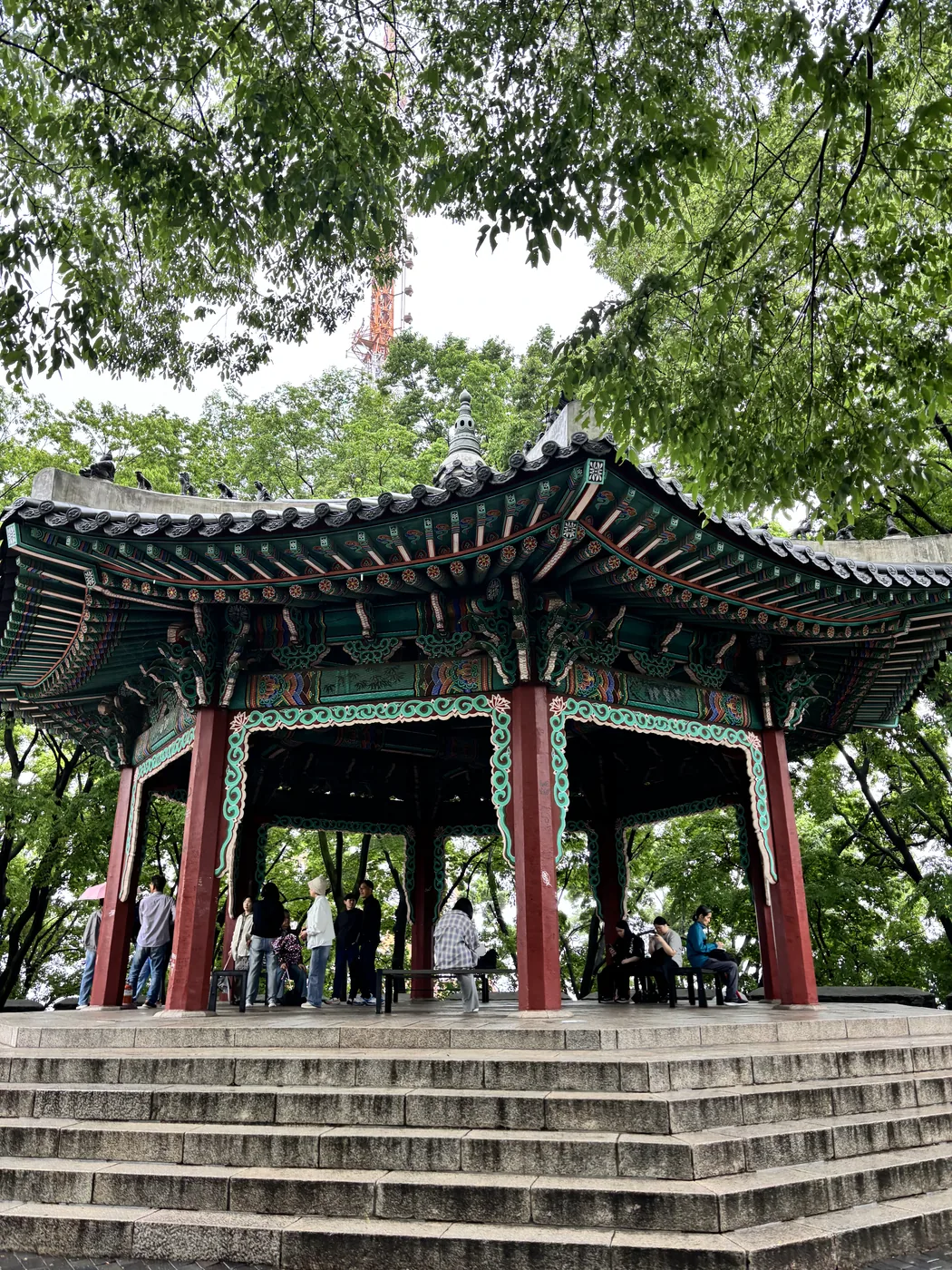
The first thing most people gravitate to is the love-lock terraces. Thousands of padlocks in every colour are clamped onto the railings and lattice frames, left by couples and friends and the occasional solo traveller making a wish. It is kitschy and I love it anyway. The second draw is the traditional octagonal pavilion, Palgakjeong, and the stepped plaza around it, which on my visit was sheltering a dozen people waiting out the rain.
Then there is the observatory inside the tower, which is the only part you pay for. You take a lift up to the enclosed viewing deck and, on a clear day, you can trace the river, the palaces, and the far mountains. On my foggy day the view was a soft white blank, so I will be honest with you here — I lingered in the plaza and the exhibits instead and saved the climb for next time. Knowing when to skip the paid bit is half of visiting smartly.
Namsan at a Glance
Here is the whole visit boiled down into one table, so you can plan your time and money before you go. Treat the costs as rough 2026 guidance rather than exact figures, since ticket prices nudge up over time.
| Part of the Visit | What It Is | Rough Cost | Worth It For |
|---|---|---|---|
| Cable car | Base station up to the tower platform | ~₩14,000 return | The classic scenic ride |
| Shuttle bus | Electric bus up the mountain road | ~₩1,200 a ride | Budget and bad weather |
| Plaza and terraces | Love locks, pavilion, viewpoints | Free | Everyone, rain or shine |
| Observatory | Enclosed viewing deck inside the tower | ~₩21,000 adult | Clear-day skyline views |
| Walking up | Forest trails and city-wall path | Free | Fit visitors on dry days |
Costs, Tickets, and Hours
Money at Namsan is refreshingly simple, with only a couple of things worth knowing in advance. The plaza, the terraces, and the paths cost nothing, so a perfectly good visit can be completely free if you walk up and skip the observatory. The two things you might pay for are the way up and the observatory ticket.
The cable car runs from morning until late, usually around 10am to 11pm, and you buy tickets at the base station or from the machines inside. The observatory keeps similar late hours, which is the whole point of a night-view trip. I always tell first-timers to check the official details before they go, because hours shift with seasons and maintenance. The official N Seoul Tower site lists current opening times and any closures, and it is worth a thirty-second look.
Payment is card-friendly almost everywhere, which is standard for Seoul. You can tap a foreign card for the cable car and the observatory without drama, and the gift shops and cafés up top take cards too. I still keep a little cash for the small things, but you genuinely do not need much. Buy the cable car as a return only if you plan to ride both ways — on a clear day, walking down through the forest is the nicer half of the trip.
The Best Time to Go and a Word on Weather
Timing changes the entire character of a Namsan visit, more than at almost any other Seoul attraction. The view is the product, so the sky you get is the experience you get. I have learned to plan around it rather than hope.
For the cleanest views, go on a crisp, dry day, ideally in autumn or after rain has scrubbed the air. Sunset is the prize slot, when the city switches from day to a carpet of lights, but it is also the busiest, so arrive a good hour early to claim your spot. Spring brings cherry blossom along the lower slopes, and clear winter days give the sharpest long-distance views of the mountains ringing the city. The Korea Tourism Organization site is a good place to check seasonal events before you lock in a date.
Now the honest part, because my last trip was a wet one. Namsan in heavy fog will not give you the postcard skyline, full stop. But it gives you something else — empty terraces, dramatic cloud swallowing the tower, and a quiet that the sunny crowds never feel. If you wake up to grey and it is your only window, go anyway and lean into the mood. For the after-dark version of a city night out nearby, my guide to Myeongdong at night pairs neatly with a tower trip.
How This Namsan Seoul Tower Guide Fits Your Seoul Trip
Namsan works best as a half-day anchor rather than a whole-day plan, and where you slot it changes how good it feels. I usually treat it as an evening cap on a downtown day, because the night view is the strongest version and the tower sits so close to the central neighbourhoods.
A classic pairing is a Myeongdong afternoon followed by a cable car up at dusk, which lets you shop and snack first, then ride into the sunset. If you are the kind of traveller who likes to walk things off, the eastern districts make a good contrasting day, and my guide to things to do in Seongsu-dong on a weekend lays out that side of the city. Insadong and the palaces also sit within easy reach for a culture-heavy morning before an evening tower run.
This guide is really the map, and the close-ups live in the rest of this little series. The cable car deserves its own walkthrough, the observatory is worth a frank is-it-worth-it verdict, the love locks have their own backstory, the walking trails are a post in themselves, and the rainy-day version is its own honest tale. I preview each of those below, so use this as your overview and dive into whichever piece matters most for your trip.
FAQ
Is N Seoul Tower worth visiting?
Yes, especially for a first trip to Seoul and especially at sunset on a clear day. The plaza, love-lock terraces, and forest paths are free and worth it on their own, so even a budget visitor gets a great few hours. Pay for the observatory only when the sky is clear enough to reward the view.
How do I get up to Namsan and N Seoul Tower?
You have three main options: the Namsan cable car from the base station, a small electric shuttle bus up the mountain road, or walking up via the forest trails and city-wall path. On a wet day I taxied straight to the cable car base station, which was cheap and quick. On a dry day, walking down through the forest is a lovely way to finish.
How much does it cost to visit N Seoul Tower?
The plaza and terraces are free. The cable car is around ₩14,000 return, the shuttle bus around ₩1,200 a ride, and the observatory around ₩21,000 for an adult. Prices nudge up over time, so check the official site before you go and budget a little extra.
Is Namsan worth it on a rainy or foggy day?
It depends on what you want. If you need the postcard skyline, heavy fog will hide it and you should reschedule if you can. But the terraces, pavilion, and misty paths are genuinely atmospheric in the wet, the crowds thin out, and the tower looming in cloud is a striking sight. I had a lovely time in the drizzle by skipping the paid observatory and enjoying the free plaza.
When is the best time to go up N Seoul Tower?
Sunset on a clear, dry day is the prize slot, when the city shifts from daylight to a sea of lights. Autumn and clear winter days give the sharpest views, while spring adds blossom on the lower slopes. Arrive at least an hour before sunset to claim a good viewing spot, as that window is the busiest.
My Thoughts
Namsan is the rare Seoul attraction that lives up to its postcard, and I say that as someone who is usually quick to send visitors away from the obvious. There is something honest about a hill in the middle of a giant city that just lets you see the whole thing at once. Even half-hidden in fog, it reset my sense of scale.
My real advice from this whole Namsan Seoul Tower guide is to stop thinking of it as one ticket and start thinking of it as a mountain afternoon. Wander the free terraces, leave a silly padlock, walk a forest path, and only pay to go up when the sky agrees to cooperate. The visit gets cheaper and better the moment you let go of the single-attraction mindset.
And if you draw a grey day like I did, do not write it off. Some of my favourite memories of this city were made under an inside-out umbrella, watching the tower appear and vanish in the cloud while everyone else stayed home. Seoul rewards the people who show up anyway.
Planning Your Namsan Visit?
Bookmark this guide and read it alongside the close-up posts below before you go. The single best decision you can make is to match your trip to the weather: save the paid observatory for a clear evening, and on a grey day, lean into the free terraces and misty paths instead. A little planning is the difference between a foggy disappointment and a quietly magic afternoon on the mountain.
🧭 Rather not plan the logistics? A guided half or full day tour of the palaces and N Seoul Tower → puts the whole route together, transport included — a good fit if Namsan is one stop on a packed first trip.
🗼 Namsan day planned — what about the rest of the trip?
N Seoul Tower is just one day. See what a full Seoul trip costs when you factor in where you stay, how you eat, and what else you do — broken down by travel style.
Estimate your full Seoul trip cost →
🎟️ Paying for both? Buy them together: if you have already decided the sky is worth it, the combined cable car and observatory ticket covers the way up and the view in one purchase, and uses a separate entry lane instead of the main queue. Buy it the morning of your visit, once you have actually seen the sky — there is no reason to commit days ahead when the weather decides everything here.