Disclosure: This post contains affiliate links. If you purchase through these links, I may earn a small commission at no extra cost to you. I only recommend products I personally use and trust.
When does a row of old factories turn into something worth missing your coffee meeting for? For me it happened the first time I really looked up in Seongsu and stood under a black steel tower for ten minutes. That is the strange pull of Seongsu industrial architecture — buildings that were once shoe factories and printing plants now read like a free open-air design exhibition, old industry and new money stitched together on the outside of every block.
Why Seongsu Was Built From Factories
Seongsu spent most of the twentieth century as a working district. It made shoes, printed paper, and welded metal in low brick sheds packed tight along the Han River’s eastern bank. Nobody came here for a nice afternoon. People came here to work.
Those factories left behind something that turned out to be priceless: raw, oversized buildings. High ceilings, thick load-bearing walls, freight doors, and exposed concrete that no developer would pay to build new today. When the manufacturing moved out, the shells stayed, and they were cheap.
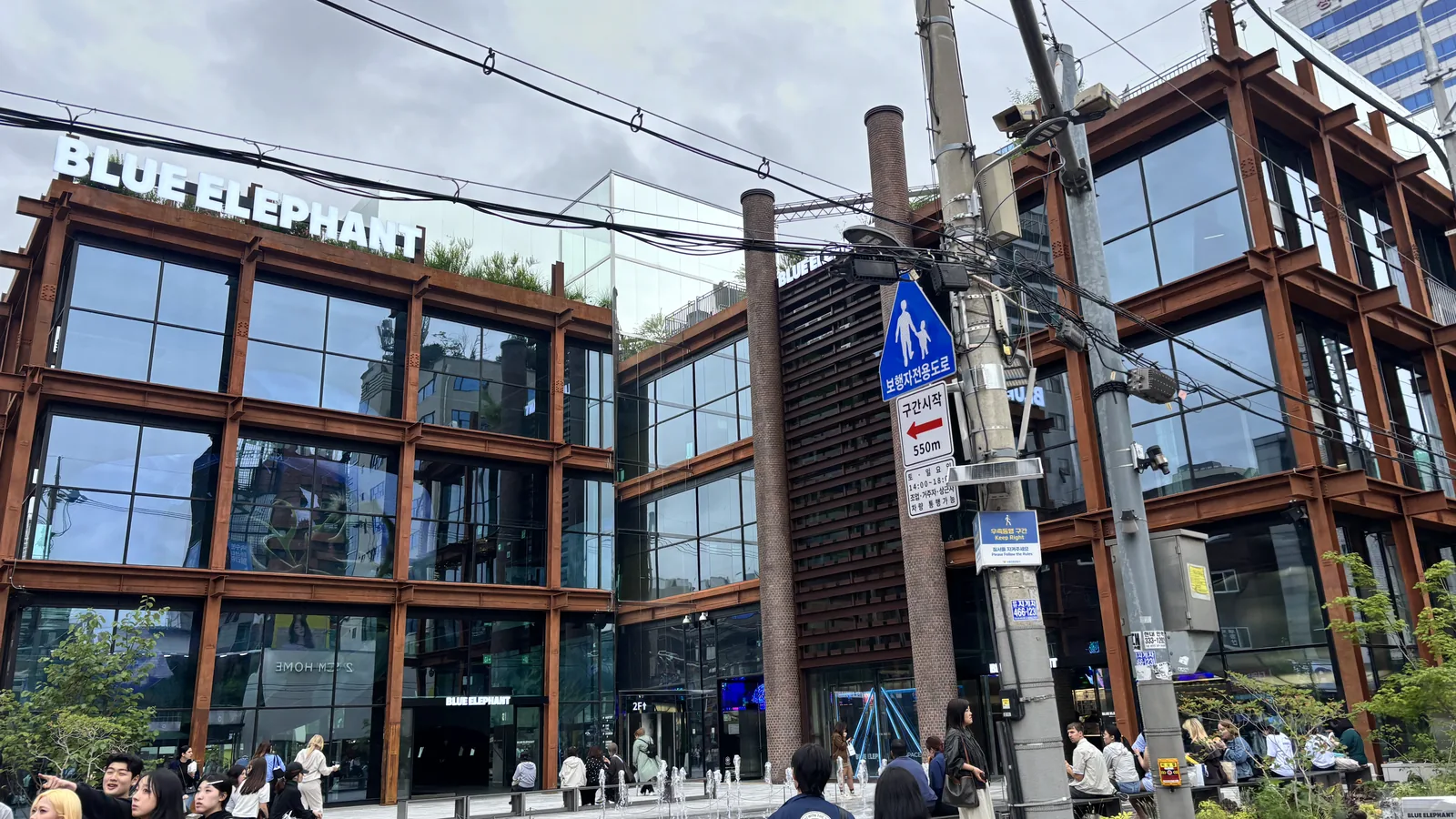
Designers and brands looked at those shells the way I look at a good vintage coat — solid bones, just needs the right tailoring. Instead of demolishing, they kept the brick and the bones, then slipped glass, steel, and light inside. That single decision, to renovate rather than flatten, is why the whole neighbourhood feels coherent. The new icons are literally wearing the old factories.
If you want the wider story of how this district turned into Seoul’s design capital, my Seongsu-dong Seoul travel guide lays out the streets, the stations, and how the factory grid became a walkable map.
My Slow Walk Reading the Buildings
On my last trip I gave myself a whole afternoon with no shopping plan, just a walk to look at buildings. I came out of Seongsu Station exit 4 around 2pm on a Tuesday, coffee in hand, and let the facades decide my route instead of a map.
The thing that surprised me was how much you miss at street level. For years I had walked past these blocks chasing pop-ups and cafes, head down, phone out. This time I kept my eyes up, and the neighbourhood completely changed character. A wall I had ignored a dozen times turned out to be hand-laid brick from the 1970s, propping up a mirror-glass extension from last year.
In Sydney, our best adaptive-reuse buildings sit far apart — a wharf here, a power station there — and you drive between them and pay for parking. In Seongsu I read six striking buildings in ninety minutes, on foot, coffee in hand. Folding that much salvaged architecture into a single walk is the real luxury, and it is the thing I have never been able to recreate back home.
By the time my feet complained, I had filled my phone with facade photos and, more usefully, learned to spot the pattern. Old brick base, new light skin on top. Once you see it once, you see it on every block.
Three Buildings That Define Seongsu Industrial Architecture
These are the three buildings I send every design-minded friend to first. Each one shows a different way of turning factory-district bones into a modern landmark, and together they teach you how to read the rest of the neighbourhood.
The Black Steel-Mesh Tower (the landmark over the plaza)
This is the one that stopped me dead and made me late. A tall, dark high-rise sheathed in black steel mesh rises straight up over the open PLAYX plaza, and the mesh does something clever: it reads as solid from one angle and almost transparent from another, so the whole tower seems to breathe as you walk around it. It is the most overtly contemporary of the three, with no exposed brick at all, but it belongs because it sits over a working public square the way the old factory chimneys once stood over their yards. Stand at the base, look straight up, and you understand why Seongsu now markets itself on its skyline rather than its shoe output.
Blue Elephant (timber meets steel and glass)
Blue Elephant is my personal favourite, and the most honest about the old-meets-new idea. The structure is a steel-and-glass frame, cool and industrial, but it is wrapped in warm timber slats that soften the whole thing and catch the afternoon light. The result feels handmade rather than corporate. Where the black tower shouts, Blue Elephant murmurs. It is the building that taught me the neighbourhood’s real trick is contrast — hard frame, soft skin — and it photographs beautifully around 4pm when the sun rakes across the wood.
Dior Seongsu (an embossed silver facade as architecture)
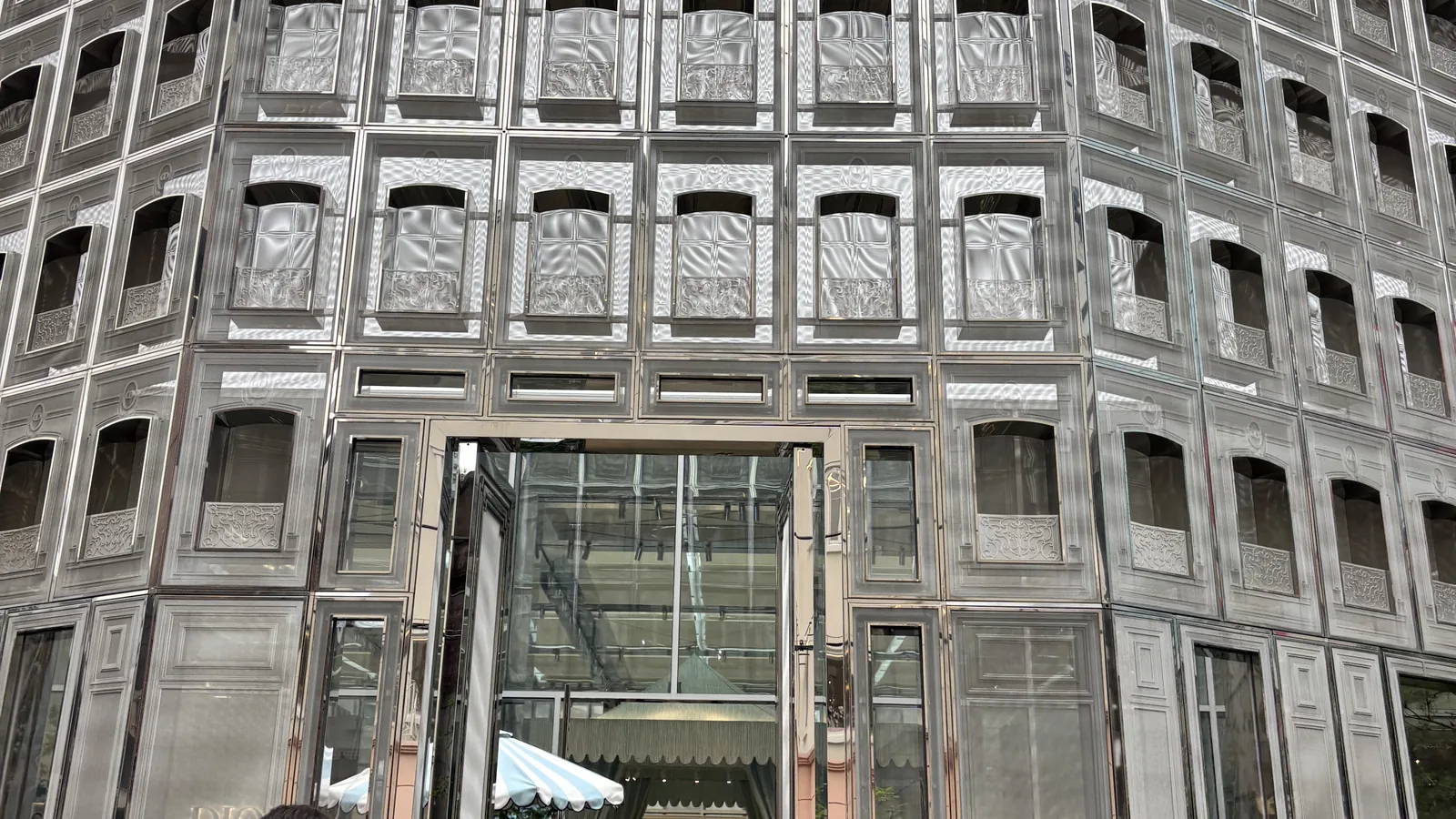
Most people queue at Dior Seongsu for the interior and the boat installation, but I want you to stop outside and read the building itself. The facade is a continuous embossed silver skin, pressed with a soft quilted pattern that turns a plain box into a jewel. It is the clearest example of a luxury brand using a Seongsu lot the way a factory once used it — take the raw space, then wrap it in an unmistakable identity. Treat the queue as optional; the architecture lesson is entirely free from the footpath. If you want the full pop-up context, I cover the interiors and reservations in my weekend guide.
How to Read a Seongsu Building
Once you stop treating these buildings as backdrops and start reading them, a Seongsu walk gets far more interesting. There is a simple grammar to it, and you can learn it in one afternoon.
Start at the base. Almost every renovated building keeps its original ground floor — old brick, a former freight door, a steel lintel left raw on purpose. Then look at what sits on top: glass, mesh, timber, or pressed metal added in the last few years. The gap between those two layers is the whole story of the neighbourhood in one elevation.
The next thing to notice is what the building does with light. The black tower filters it through mesh, Blue Elephant warms it through wood, and Dior bounces it off polished silver. Factories cared about light only for the workers inside; these buildings treat light as the product. That shift, from light as utility to light as branding, is the real change Seongsu represents.
If you would rather have all this pointed out for you on the ground, a guided loop saves a lot of squinting. A Seongdong-gu half-day highlights tour walks you past the main landmarks with the context I had to piece together myself over several trips.
Seongsu Architecture Comparison Table
| Building | Material Signature | What to Read | Best Light | Best For |
|---|---|---|---|---|
| Black Steel-Mesh Tower | Black perforated steel mesh | Solid-to-transparent shift; tower over a public plaza | Midday, looking up | The skyline shot, the wow factor |
| Blue Elephant | Timber slats over steel-and-glass frame | Hard frame softened by warm wood | Late afternoon (4pm) | The old-meets-new contrast |
| Dior Seongsu | Embossed quilted silver skin | Plain box wrapped as a luxury identity | Bright overcast | Architecture as branding |
Tips for an Architecture Walk in Seongsu
After several deliberate walks here, a few habits make the difference between a frustrated wander and a genuinely good architecture afternoon.
- Keep your eyes up: The best material details start above the shopfronts. If you only look at street level you will miss the entire old-meets-new story.
- Go on a weekday: The plaza around the black tower is calm and shootable mid-week. Weekend crowds make it hard to step back far enough to see a whole facade.
- Walk a loose loop, not a list: The landmarks are close together, so let the facades pull you rather than ticking off addresses. You will find better buildings by accident.
- Visit Blue Elephant late afternoon: The timber needs raking light to glow. Around 4pm the wood goes golden and the steel frame recedes.
- Read the base, then the skin: Old brick or freight door at the bottom, new material on top — once you spot that pattern you can read every block.
- Bring real walking shoes: You are covering factory blocks on foot, not strolling a mall. This is not the day for new sandals.
What to Do Between the Landmarks
The gaps between buildings are where Seongsu actually wins you over. The same factory shells that hold the landmarks also hold the cafes, galleries, and shops, so the spaces between your architecture stops fill themselves if you let them.
My favourite habit is to break the walk with a coffee inside one of those converted warehouses, because the best way to understand a renovated factory is to sit inside one. The neighbourhood basically invented Seoul’s industrial-cafe look, and I keep a running list in my best cafes in Seongsu-dong guide for exactly this purpose. A twenty-minute sit-down resets your feet and lets you look at the ceiling beams you just walked under.
If you want something booked and restful between the walking, the area has it. A Seongsu spa session is a quiet way to recover after a long architecture afternoon, and a Seongsu photo studio experience gives you a polished portrait against the same design backdrop you have been photographing all day. For more ways to fill the gaps, my guide to things to do in Seongsu-dong on a weekend maps out what sits between the big landmarks.
For the design context itself, it is worth reading beyond a blog. Visit Seoul keeps a calendar of architecture and design events across the city, and ArchDaily publishes detailed write-ups of the major Seongsu projects if you want the architects’ own drawings and intentions.
FAQ
What is Seongsu industrial architecture?
Seongsu industrial architecture refers to the look that came from renovating the district’s old factories rather than demolishing them. Designers kept the raw brick, concrete, and freight-door bones of former shoe and printing plants, then added new glass, steel, timber, and metal skins on top. The result is a neighbourhood where old industry and new design sit on the same building.
Is the Seongsu architecture walk free?
Yes. Reading the buildings from the street costs nothing, and that is the best part. The black steel-mesh tower, Blue Elephant, and the Dior Seongsu facade are all visible and photographable from the footpath. Your only real costs are the ₩1,400 subway ride, a coffee, and anything you choose to buy or book along the way.
Which buildings best show Seongsu industrial architecture?
The three I always recommend first are the black steel-mesh tower over the PLAYX plaza, the timber-wrapped Blue Elephant building, and the embossed silver Dior Seongsu facade. Each shows a different approach — contemporary, old-meets-new, and architecture-as-branding — so together they teach you how to read the rest of the neighbourhood.
When is the best time for a Seongsu architecture walk?
A weekday afternoon is ideal. The plaza is calm enough to step back and see whole facades, and late afternoon light around 4pm makes the timber of Blue Elephant glow. Weekends bring crowds that make it harder to photograph the buildings without queues and people in the frame.
How long does a Seongsu architecture walk take?
You can read the three main buildings in about ninety minutes on foot, since the landmarks sit close together. Allow a half day if you want to add cafes, browse the converted-warehouse shops, and let the facades pull you off your planned route, which is honestly where the best discoveries happen.
My Thoughts
These renovated factories are the closest thing Seoul has to a museum you can walk through without buying a ticket. That is what keeps me coming back with my head tilted up. The shops inside change every season, but the buildings hold the neighbourhood’s memory, and reading them never gets old.
My honest advice is to give the architecture its own afternoon. Do not try to bolt it onto a shopping day, because you will keep your head down and miss everything above the shopfronts. Walk slowly, read the base and the skin, and let one striking facade lead you to the next.
The best building I ever found in Seongsu was one I had passed a dozen times without seeing — an old brick workshop with a single new glass box balanced on top. Seongsu rewards looking up far more than it rewards a checklist.
Planning Your Seongsu Architecture Day?
Give your walk a guaranteed highlight beyond the facades. A Seongdong-gu half-day highlights tour walks you past the landmarks with proper context, and the Seongsu photo studio experience turns the design backdrop into a portrait you keep — both sell out on weekends.