Disclosure: This post contains affiliate links. If you purchase through these links, I may earn a small commission at no extra cost to you. I only recommend products I personally use and trust.
The first time I tried to see a pop-up in Seongsu, I gave up after twenty minutes because I picked the wrong one. After enough trips, I now know which Seongsu pop-up stores are worth the queue and which ones are just a pretty wall and a long line. Pop-up culture here looks chaotic until someone walks you through the logic, which is exactly what this guide is for.
Why Seongsu Became Seoul’s Pop-Up Capital
Seongsu used to be a district of shoe factories and printing workshops. The rents were cheap and the buildings were raw — high ceilings, exposed concrete, freight doors wide enough to drive a truck through. Brands looked at those empty warehouses and saw the perfect blank canvas for a temporary store.
That is really the whole secret. A pop-up needs a space it can take over for two weeks, gut, theme, and hand back. Seongsu has hundreds of those spaces within a ten-minute walk of the station. On a single street you might find Dior in an old industrial lot, a skincare brand in a former garage, and a phone-case label in a converted machine shop.
The other reason is the crowd. Seongsu pulls exactly the young, trend-led, camera-ready visitors that brands want to reach. A pop-up here gets photographed, posted, and seen by hundreds of thousands of people before it even closes. In Sydney, a brand pays a fortune for that kind of attention. In Seongsu, the neighbourhood delivers it for the price of a two-week lease.
So the pop-ups keep coming, the spaces keep rotating, and the result is a part of Seoul where the shops literally change every fortnight. If you want the bigger picture of how the whole area fits together, my Seongsu-dong Seoul travel guide maps out the streets, the stations, and how to plan a full day.
My Pop-Up Hunting Day in Seongsu
On my last visit I treated it like a proper mission. I arrived at Seongsu Station just before 11am on a Thursday, coffee in hand, with a loose list of four pop-ups I wanted to see. By 4pm I had seen three, skipped one, and walked roughly eight kilometres in a circle without ever feeling like I was retracing my steps.
The thing nobody tells you is how physical it is. Pop-ups are not in a mall. They are scattered across side streets, and half the fun — and the exhaustion — is the walking between them. I queued forty minutes for one, walked straight into another, and stood outside a third doing the maths on whether the line was worth it. It was not, so I moved on.
The contrast with home still gets me. In Sydney, a brand pop-up is a rare event you plan your weekend around, and you still drive thirty minutes and pay for parking. In Seongsu I saw three world-class pop-ups in an afternoon, spent about ₩6,000 on coffee, and tapped in and out of the subway for ₩1,400 a ride. The density is the luxury. You simply cannot do this anywhere in Australia.
By the end my feet hurt and my phone was full of photos, but I understood the rhythm. See one big anchor pop-up, one mid-size brand space, and one quick quirky stop. Three is the sweet spot. Four is greedy, and you start resenting the queues.
The Seongsu Pop-Up Stores Worth Queuing For
These are the spaces I would actually wait in line for. I have been to each one, and I am ranking them by whether the experience inside justified the time I spent outside.
Dior Seongsu (the concept space everyone photographs)
This is the one that stops people mid-step. Dior took an entire lot and built a silvered, embossed pavilion that looks like a giant treasure box, with a wooden boat and a draped sail installed on the lawn out front. It is technically a longer-running concept space rather than a two-week pop-up, but it functions the same way — themed, photographed to death, and constantly refreshed. You queue to go inside, and even from the street it is worth the detour. Go on a weekday morning if you want the facade without a hundred phones in your shot.
PLAYX Studio (the rotating anchor)
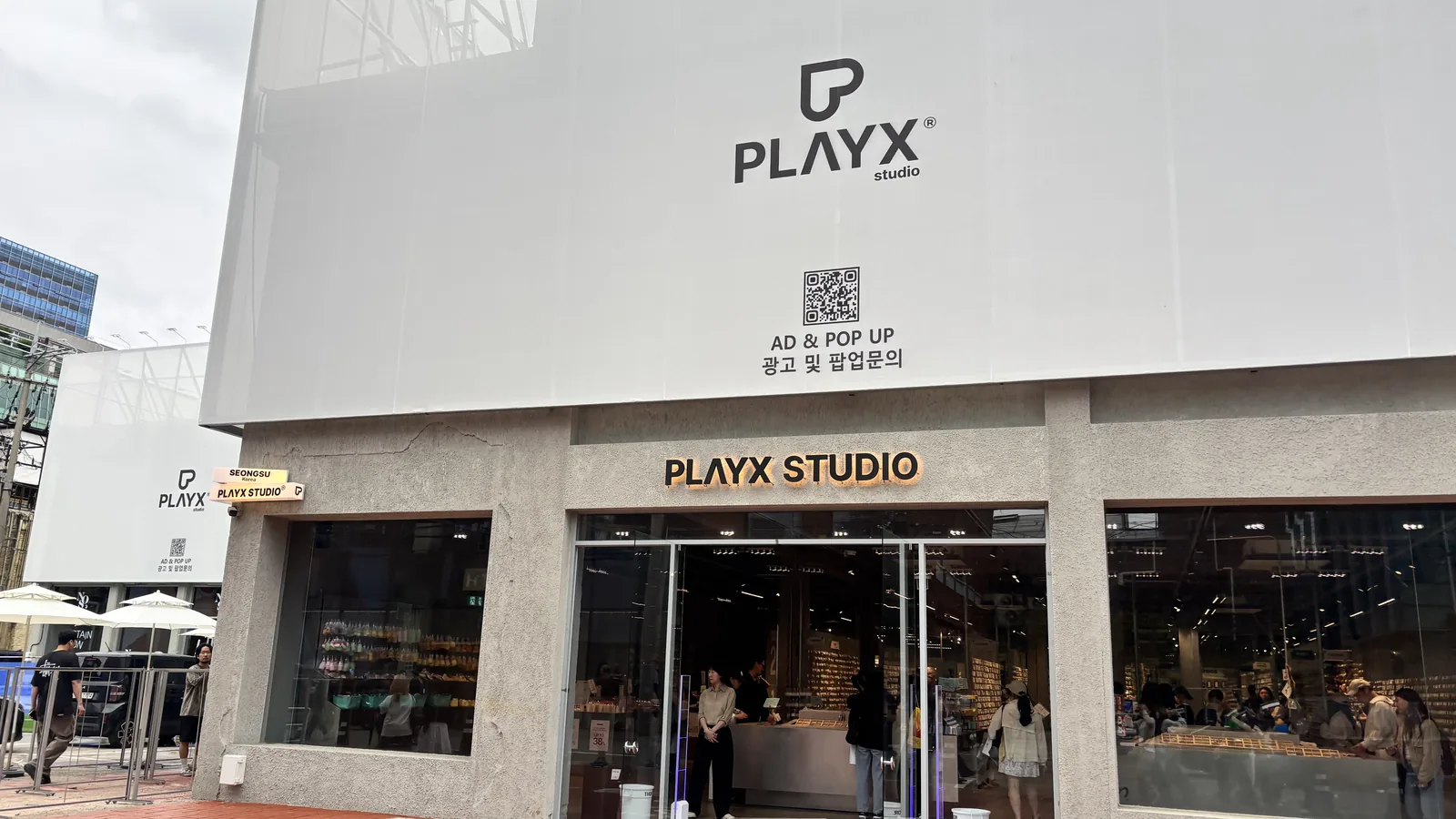
PLAYX is less a single brand and more a machine for hosting pop-ups. The white-wrapped building near the main plaza changes its theme constantly, so what you find inside depends entirely on the week. That unpredictability is exactly why I check it every trip. The ground-floor space is large, the displays are well-made, and because the tenant rotates, it never feels like the same visit twice. If you only have time to check one rotating space, make it this one.
CASETiFY Seongsu (the pink one)
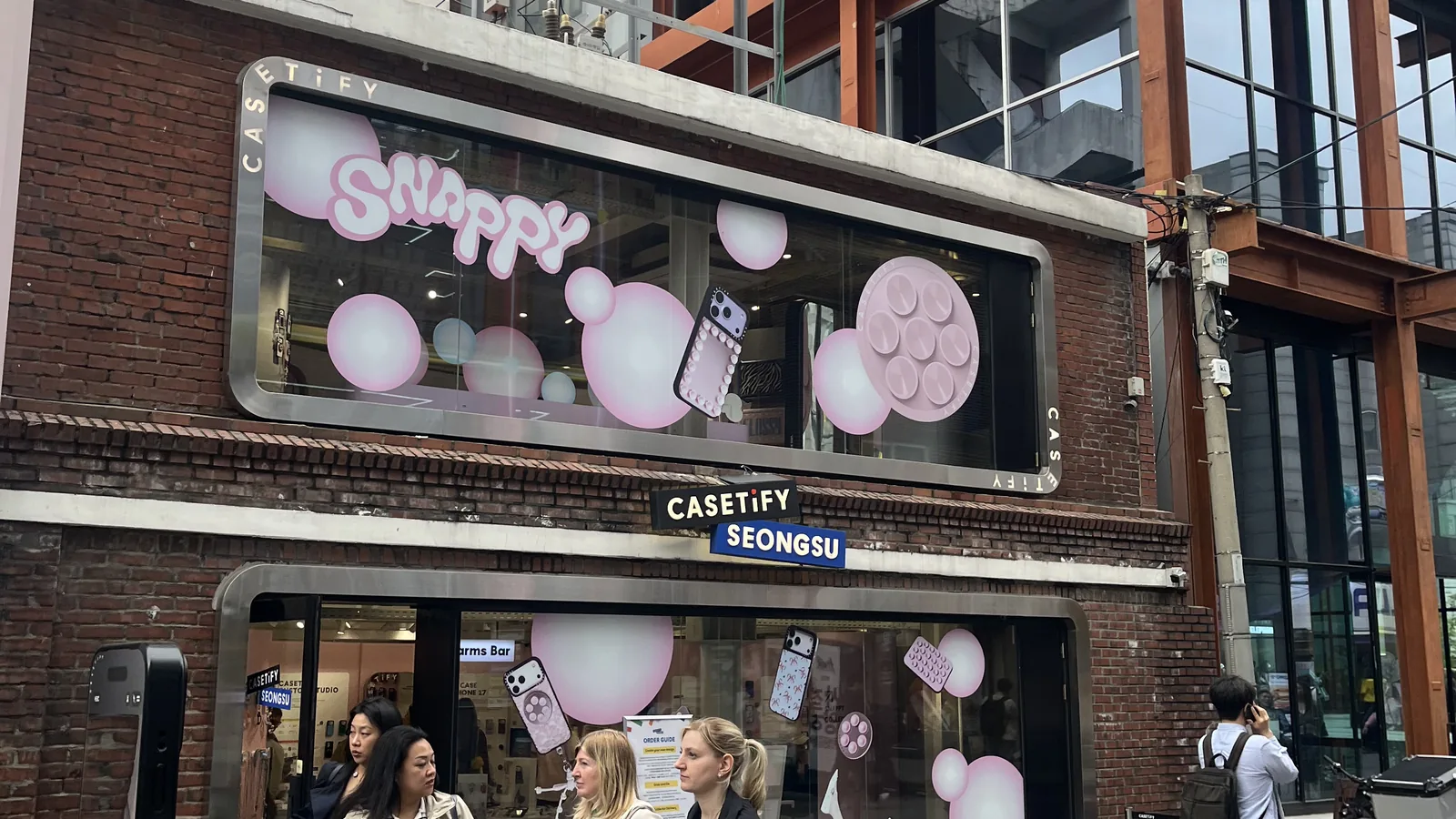
CASETiFY’s Seongsu store is a permanent flagship that behaves like a pop-up, with seasonal window installations — when I visited it was a wall of soft pink balloons spelling out “SNAPPY”. Inside you can customise a phone case on the spot, which is the kind of small, personal souvenir I actually use rather than shove in a drawer. The queue moves quickly because it is a real shop, not a timed-entry experience. It is a good, low-stress stop between the heavier anchor pop-ups.
How Long You Will Actually Queue
Queue length is the single biggest variable in a Seongsu pop-up day, and it is wildly predictable once you know the pattern. Weekday mornings before noon are the calm window. Weekend afternoons between 1pm and 5pm are the storm. The difference is not small — I have seen the same pop-up go from a five-minute wait to a ninety-minute wait between a Wednesday and a Saturday.
The big luxury and beauty pop-ups use timed entry or a holding line, so your wait is mostly outdoors. Bring sunscreen in summer and a layer in spring, because the queues are exposed and Seongsu has very little shade. I learned that the hard way standing in a ₩0 line that cost me a mild sunburn.
My rule is simple. If a line is longer than the experience inside is likely to last, I skip it. A two-week brand pop-up is rarely worth ninety minutes when there are three other spaces within walking distance. The whole point of Seongsu is that you can always move on to the next thing, so do not get anchored to one queue out of stubbornness.
If you want to time your visit around the calmest streets overall, my guide to things to do in Seongsu-dong on a weekend breaks down exactly when the crowds peak and where they thin out.
Seongsu Pop-Up Comparison Table
| Pop-Up Space | Type | What to Expect | Typical Queue | Best For |
|---|---|---|---|---|
| Dior Seongsu | Luxury concept space | Embossed pavilion, boat installation, themed interior | Long on weekends | Photos, the wow factor |
| PLAYX Studio | Rotating pop-up host | Changes every few weeks; large ground-floor space | Moderate | Surprise, repeat visits |
| CASETiFY Seongsu | Flagship + seasonal window | Custom phone cases, photogenic installations | Short, fast-moving | A souvenir you will use |
Tips for Visiting Seongsu Pop-Up Stores
After enough pop-up days, a few habits make the difference between a great afternoon and a frustrated one.
- Go on a weekday morning: The queues are a fraction of the weekend, and the light is better for photos before midday.
- Check Instagram the night before: Pop-ups rotate constantly. A thirty-second check tells you what is actually open this week and whether it needs a reservation.
- Wear shoes you can walk eight kilometres in: You are covering ground between spaces, not strolling a mall. This is not the day for new sandals.
- Cap it at three pop-ups: Three substantial stops is plenty. Beyond that you stop enjoying them and start photographing them out of habit.
- Bring a portable charger: Between maps, photos, and reservation apps, your phone will not survive the day otherwise.
- Have a paid backup activity booked: When the queues are brutal, a reserved slot at something like the Seongsu photo studio experience gives your day a guaranteed highlight that does not depend on a line.
What to Do Between Pop-Ups
The walking between pop-ups is where Seongsu actually wins you over. The side streets are full of cafes, vintage shops, and small galleries, so the gaps in your day fill themselves if you let them.
Plenty of the labels behind these events keep proper homes here as well; I’ve rounded up the Korean fashion brands in Seongsu worth browsing while you wait for an entry slot.
My favourite habit is to break the pop-up circuit with a proper coffee stop. The neighbourhood basically invented Seoul’s industrial-cafe look, and a twenty-minute sit-down resets your feet and your patience. I keep a running list in my best cafes in Seongsu-dong guide for exactly this reason.
If you would rather have something booked and structured between the unpredictable queues, two options work well. A Seongdong-gu half-day highlights tour gives you a guided loop of the area, and the UNIU ring-making workshop is a calm ninety minutes that makes a nice contrast to the chaos outside.
For the brands themselves, it is always worth checking the official source before you go — the Dior site lists its Seoul concept space details, and Visit Seoul keeps a running calendar of major pop-up events across the city.
FAQ
What are Seongsu pop-up stores?
Seongsu pop-up stores are temporary, themed brand spaces that open for a few days to a few weeks in the Seongsu-dong district of Seoul. Brands take over raw warehouse or garage spaces, build an immersive store, and hand it back when the run ends. Because the spaces rotate so quickly, what is open changes almost every fortnight.
How much do Seongsu pop-up stores cost to enter?
Most are free to enter. You queue, walk through the themed space, and browse or buy if you want to. Some larger brand pop-ups use free timed-entry reservations through Naver or Instagram, but you rarely pay just to get in. Your real costs are coffee, the subway, and whatever you decide to buy inside.
Do I need to book a Seongsu pop-up in advance?
It depends on the pop-up. The biggest luxury and beauty ones often use a free reservation system, especially on weekends, so a quick check the night before saves you a wasted trip. Smaller pop-ups and flagship stores like CASETiFY are usually walk-in. When in doubt, check the brand’s Korean Instagram account.
When is the best time to visit Seongsu pop-up stores?
Weekday mornings before noon are by far the calmest. Weekend afternoons between 1pm and 5pm are the most crowded, with queues that can run over an hour at the popular spaces. If you can only visit on a weekend, arrive when they open and do the busiest pop-up first.
How many Seongsu pop-up stores can I see in one day?
Three substantial pop-ups is the comfortable maximum, with cafe and shopping stops in between. The spaces are spread across side streets, so you spend real time walking. Trying to cram in more usually means long queues eat your day and you stop actually enjoying the spaces.
My Thoughts
These rotating brand spaces are the closest thing Seoul has to a living, changing exhibition you can walk into for free. That is what keeps me coming back. The exact shops are different every trip, but the energy — the queues, the cameras, the brands competing to out-design each other — stays constant.
My honest advice is to hold your plans loosely. Pick one anchor pop-up you genuinely want to see, then let the day fill in around it with whatever happens to be open. The best pop-up I ever stumbled into was one I had never heard of, in a converted garage, with no queue at all. Seongsu rewards that kind of wandering more than rigid planning.
And if a queue is testing your patience, remember the neighbourhood’s whole promise: the next thing is always a five-minute walk away.
Planning Your Seongsu Pop-Up Day?
Give your day one guaranteed highlight that does not depend on a queue. The Seongsu photo studio experience and the UNIU ring-making workshop are the two I would book first — both sell out on weekends.