Disclosure: This post contains affiliate links. If you purchase through these links, I may earn a commission at no extra cost to you.
Three appointments, one numbing cream, one picosecond laser and ₩1,700,000. That is what my autumn visit to a dermatology clinic in Korea came to, and I booked it for the dark sun spots that twenty Sydney summers left on my cheeks. This is the version I wish someone had written for me before I rang the clinic: what the money covered, how the KakaoTalk booking works, what a session feels like, and the aftercare rules the doctor made me repeat back to him.
Dermatology Clinic in Korea at a Glance
| Question | My visit |
|---|---|
| Total cost | ₩1,700,000 for three visits, four treatment types, no insurance |
| Booking | Phone call, then everything on the clinic’s KakaoTalk channel |
| Language | Korean only at this neighbourhood clinic; tourist-district clinics differ |
| Session length | About an hour door to door, twenty minutes of it numbing |
| Gap between sessions | Minimum one week for toning |
| Visible downtime | DuoDerm patches: two weeks on spot sites, one week on the mole |
| Aftercare | Brimmed hat, sunscreen every 3–4 hours outdoors, less outdoor time, 3–4 months |
| Payment | ₩1,000,000 by card plus ₩700,000 cash; keep the receipt if you want itemised prices |
Why I Booked a Dermatology Clinic in Korea
I booked because of pigmentation, not wrinkles. The flat brown spots on my cheekbones had stopped responding to anything in a bottle, and a friend in Bundang kept telling me her clinic handled exactly that. Bundang is a suburb south of Seoul, not a tourist district, so this is a neighbourhood clinic story rather than a Gangnam medical-tourism one.
Two things made it easy for me that may not be easy for you. I speak Korean, so every phone call and KakaoTalk message was in Korean. And I had a local friend who had already been treated there, which is still the best referral system in Korea. Where that matters for a visitor, I say so below.
Skincare at home had done its part. My daily routine keeps my skin calm, and if you are starting from zero, the Korean skincare routine for beginners is where I would begin. But sun spots that have been there for years sit deeper than a serum reaches, and I wanted a doctor to look at them before I spent another cent on brightening products.
I am not naming the clinic. It is a small local practice, the staff did not sign up to be in a blog, and the point of this post is the process and the price, which are similar across Korean skin clinics, not one address.
What the Treatments Were and What ₩1,700,000 Covered
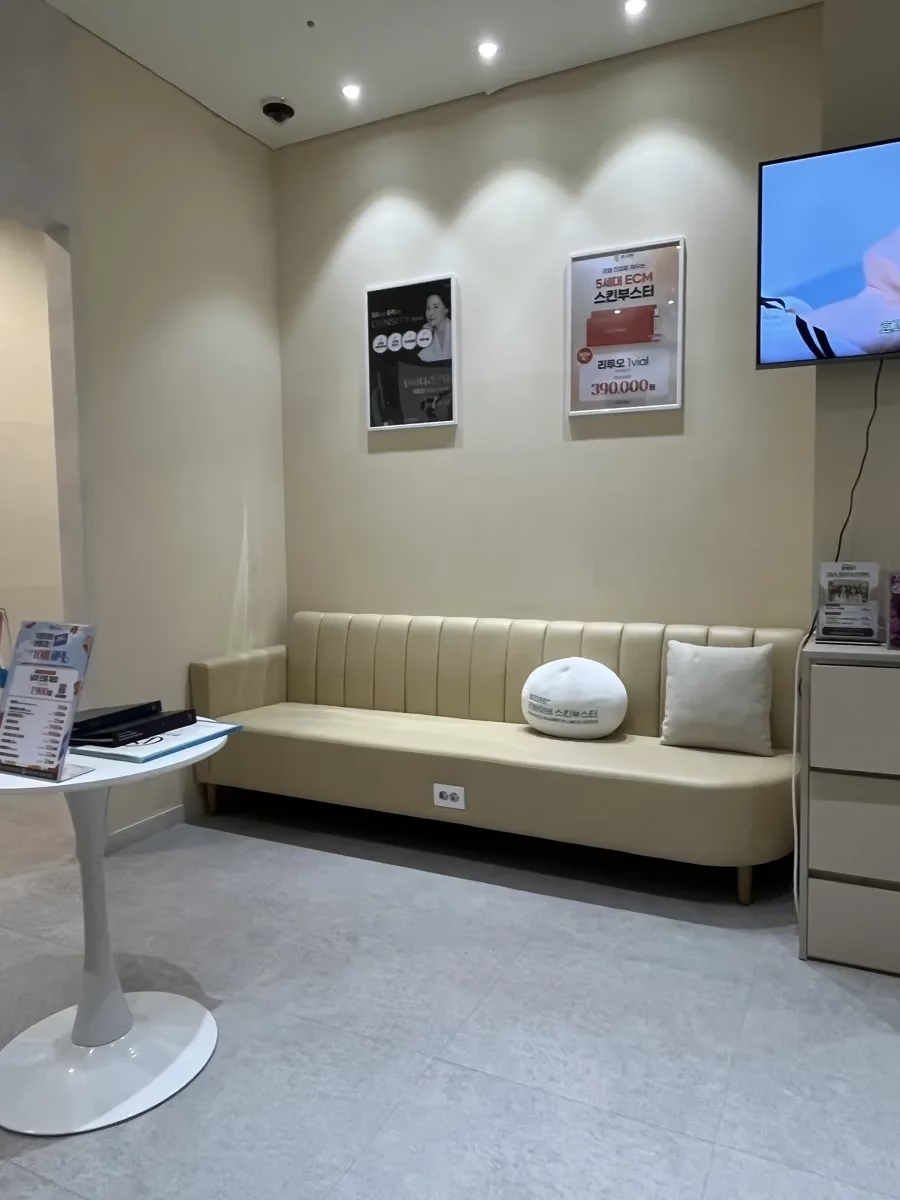
The plan and the price were set at the first visit, but not by the doctor. A staff member first walked me to a face-imaging machine that photographs you three times, front, right and left. Then a counsellor, one of several working out of separate consultation rooms, sat me down with those photos, pointed at what showed up, and explained which treatments she would pair with each problem. The counsellor quoted the package price in that room, before I had met the doctor. I first met the doctor in the treatment room, which matters for the tips further down.
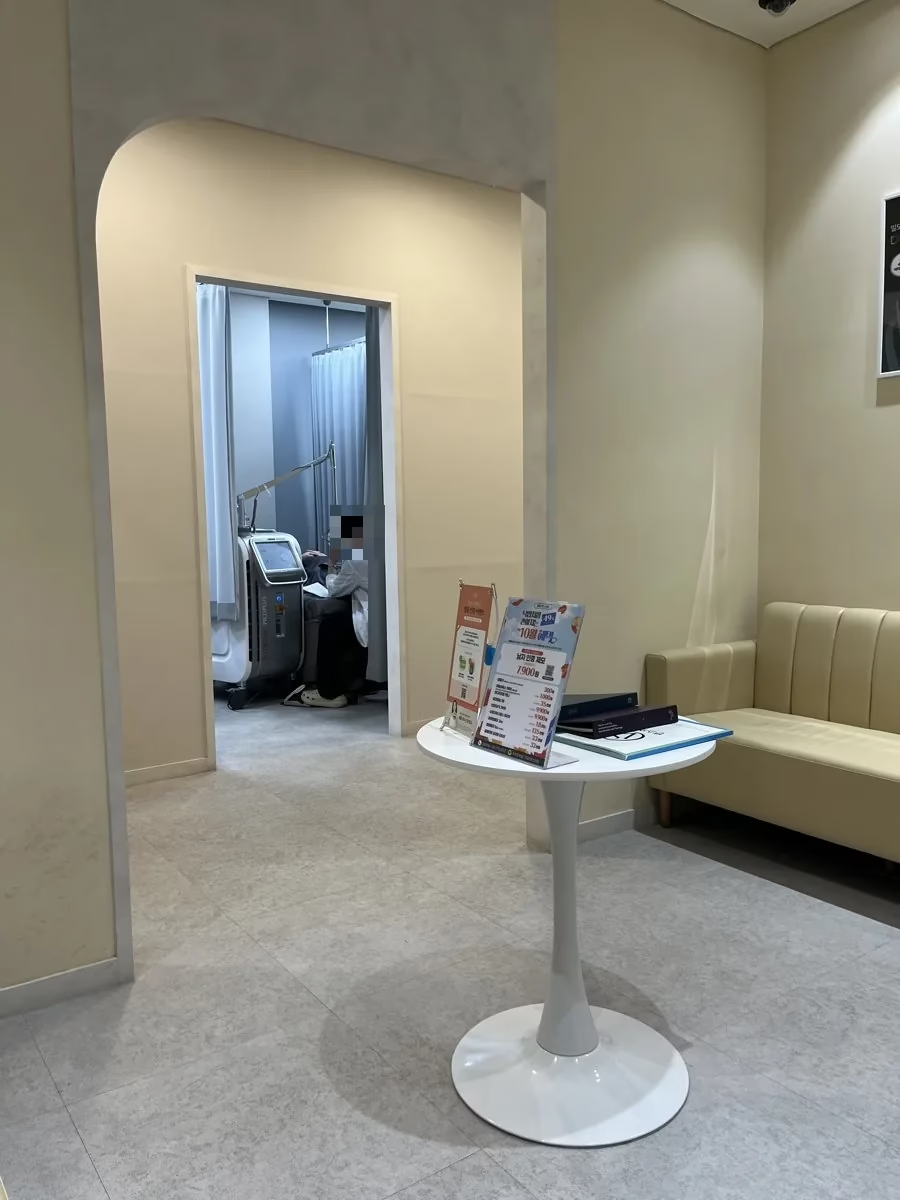
The total for everything over three visits was ₩1,700,000. I paid it all myself with no insurance, which is how a visitor would pay too: ₩1,000,000 on my card and the remaining ₩700,000 in cash, which the clinic accepted without blinking. I did not keep the itemised receipt, so I cannot give you a per-treatment price, only the package and what was in it.
Pico toning, three sessions
This was the base of the plan. A picosecond laser passes over the whole face to break up diffuse pigment, and the clinic spaced the sessions at least a week apart. Each pass took about fifteen minutes once the numbing cream had done its job. The sensation is a quick hot flick, like a rubber band, repeated across the face.
A second laser pass, two sessions
On two of the visits the pico toning was followed by a second laser step that the clinic listed under its own menu name. It was done in the same room, straight after the toning, and here is the uncomfortable truth: I still cannot tell you exactly what it did. It was in the package, I trusted the counsellor, and I did not push for a plain explanation. Do better than I did. If you are quoted a two-step session, ask what each step is for before you pay.
Spot removal for the dark sun spots
This was the treatment I cared about most, and the expensive line on the quote. Each dark sun spot is treated individually and priced by its size. The clinic’s reasoning for the higher price is that this method is meant to lower the chance of the same spot coming back in the same place. I cannot vouch for that claim yet; I can tell you my spots are on the large side, so the number was not small. Those sites are the ones that came home under a DuoDerm patch, and they dictate your downtime.
One mole removed
I added a small mole while I was there. It was quick, it was done in the same session, and it got its own DuoDerm patch for one week. Korean clinics will usually fold a mole or two into a pigmentation visit if you ask at the consultation.
| Treatment | Sessions | What it targets | My note |
|---|---|---|---|
| Pico toning | 3 | Overall pigment and dullness | At least one week between sessions |
| Second laser pass | 2 | Not clearly explained to me | Ask what it does before paying |
| Spot removal | 1 visit | Dark sun spots, priced by size | DuoDerm patch for two weeks |
| Mole removal | 1 | One small mole | DuoDerm patch for one week |
| Total paid | ₩1,700,000, no insurance, paid in full | ||
How Booking Works: Phone First, Then KakaoTalk
I booked the first consultation by phone. Within minutes the clinic had added me to its KakaoTalk channel, and from then on everything ran through chat: treatment notes, the next appointment time, and my questions between visits. If you have used WhatsApp with a hairdresser, it is that, but with the whole clinic on the other end.
Two exchanges from that chat are worth sharing. First, I asked whether the toning would leave scabs and whether I could squeeze the sessions closer together. The answer was a clear minimum of one week between toning sessions, so your trip needs to be long enough to hold the gap.
Second, after the first session I felt some parts of my face had not been treated, so I said so in the chat. The clinic wrote a note for the doctor to check at the pre-treatment consultation on the next visit. Speak up early. You can fix it at the next appointment far more easily than you can argue about it after the last one.
Now the part visitors need. This clinic ran in Korean, and you should not assume English at a neighbourhood practice outside the tourist districts. Clinics in Gangnam, Apgujeong and Myeongdong that market to foreigners usually have English-speaking coordinators and a passport-ready price list.
The Korean government’s Visit Medical Korea portal lists registered clinics that accept foreign patients, which is a safer starting point than an Instagram ad.
What a Session Is Like, Step by Step
Every session followed the same rhythm, and the rhythm is what nobody describes. You spend more time waiting with cream on your face than you do under the laser.
Five seconds of the waiting room you go back to with the cream on.
- Check in and a short check. On the first visit this is the photo machine and the counsellor; on later visits the doctor confirms the plan in the treatment room, and on my second visit went over the spots I had flagged in the chat.
- Numbing cream, about twenty minutes. A nurse spreads a thick white anaesthetic cream over the treatment areas and sends you back to the waiting room. Everyone around you is wearing the same white mask, which is oddly comforting.
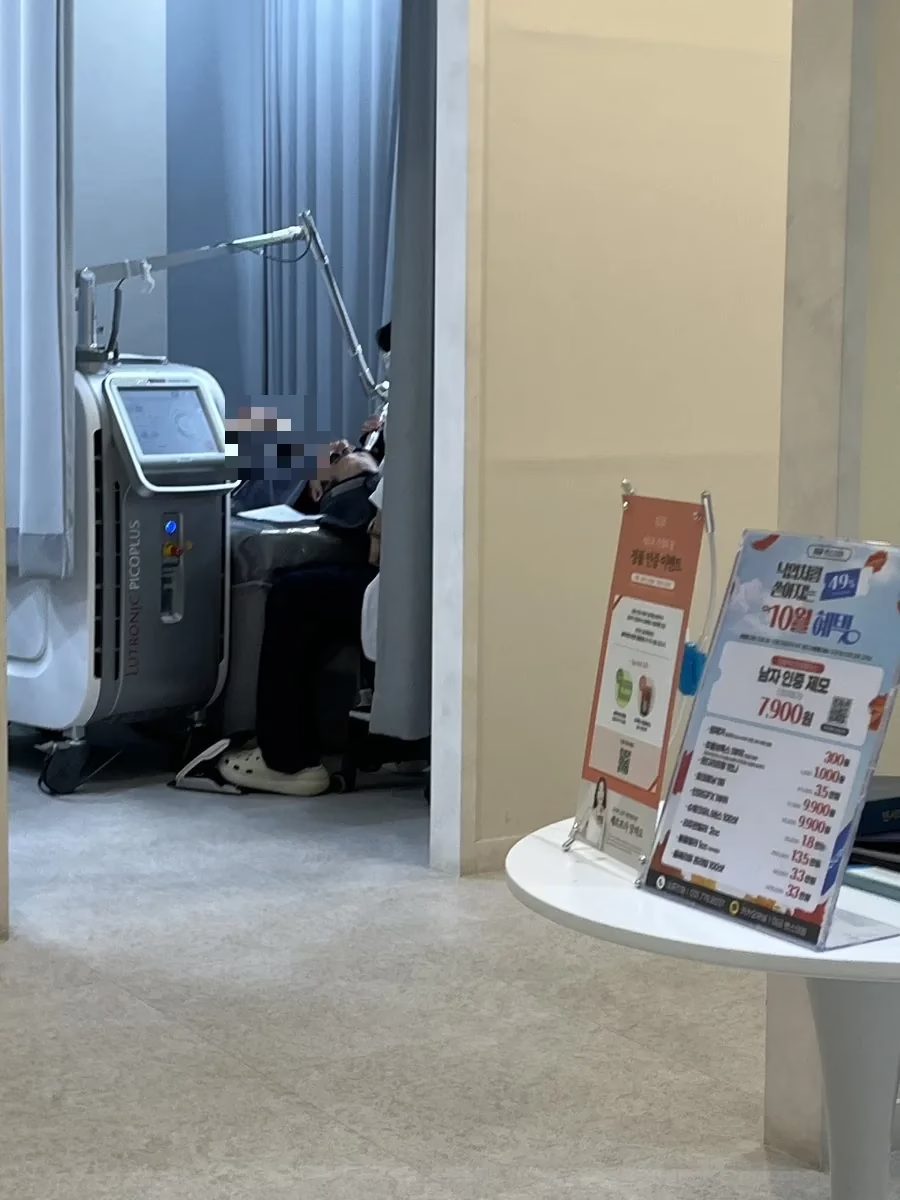
- Into the laser room. Eye shields on, hair tied back, and the handpiece starts moving. Toning first, then the second pass if it was scheduled that day.
- Spot work and DuoDerm. The individual spots and the mole were treated last, then covered with small DuoDerm patches before I left. No bandages, just the thin beige patches.
- Pay and book the next slot. The next time is confirmed again on KakaoTalk later that day.
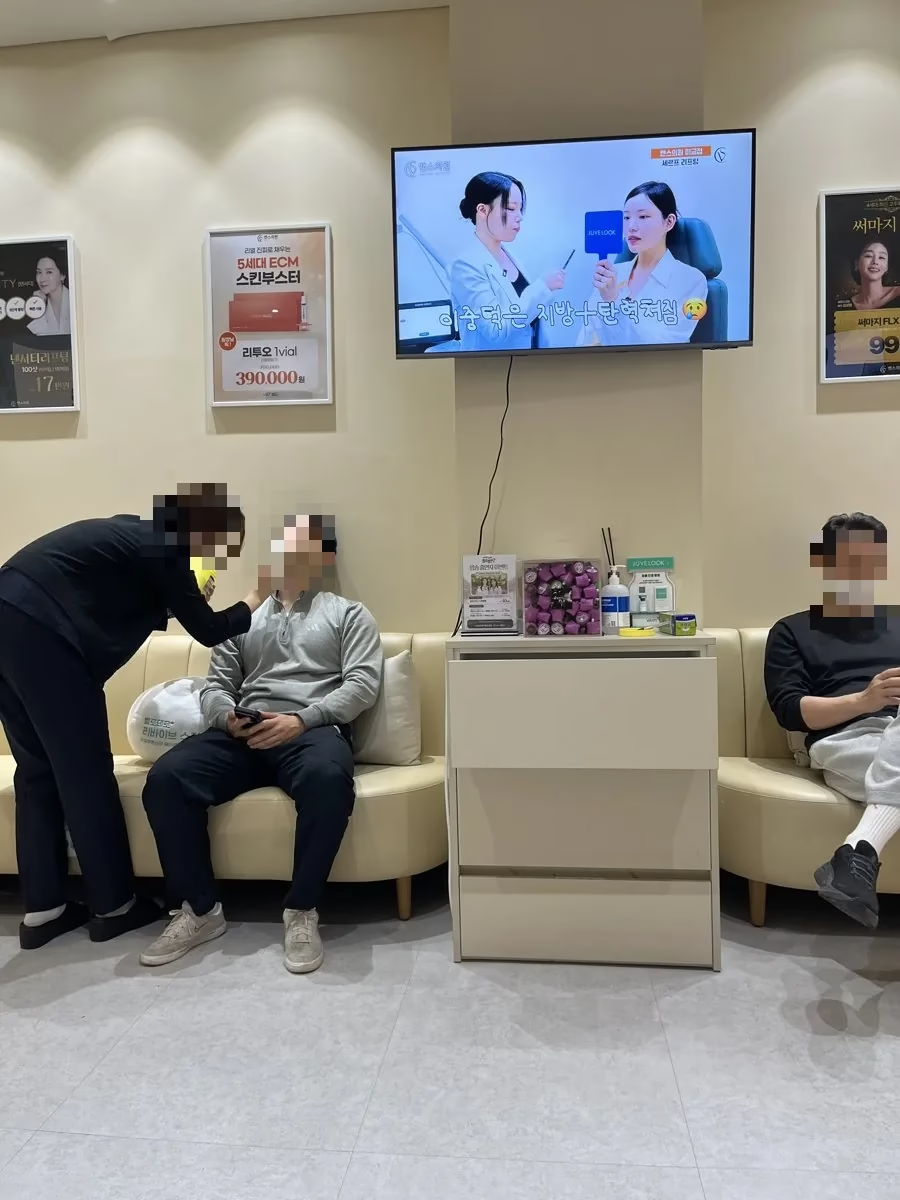
The laser itself is tolerable with the cream. Toning stings in flicks and smells faintly of warm hair. The spot removal is sharper and more localised, and that is where the numbing cream earns its twenty minutes. I did not need painkillers afterwards, but the patched spots felt tender for a day or two.
The DuoDerm schedule
My clinic’s instruction on the DuoDerm patches was precise and not up for negotiation: two weeks on the sun-spot sites, one week on the mole, kept on the whole time. That is a fortnight with small beige dots on your face, so plan your photos, your flights and your social calendar around it. What you may put on the treated areas while the patches are on is a question for your own clinic, not for this post.
The Aftercare Rules My Doctor Gave Me
The doctor knew I live in Australia, and the aftercare talk was aimed squarely at that. He gave me three rules and one warning.
- Wear a brimmed hat whenever you can, not a cap.
- Reapply sunscreen every three to four hours when you are outdoors, and keep that up for three to four months.
- Cut back on outdoor time while the skin settles. He said UV exposure right now is the single worst thing I could do.
- The warning: skip the rules and the pigment can come back.
That matches what the American Academy of Dermatology says about laser-treated age spots: they can return no matter which treatment you choose, and sun protection is what prevents it. The same body recommends reapplying sunscreen about every two hours outdoors, which is stricter than my doctor’s three to four. I follow the stricter one. Lasers cost more than sunscreen.
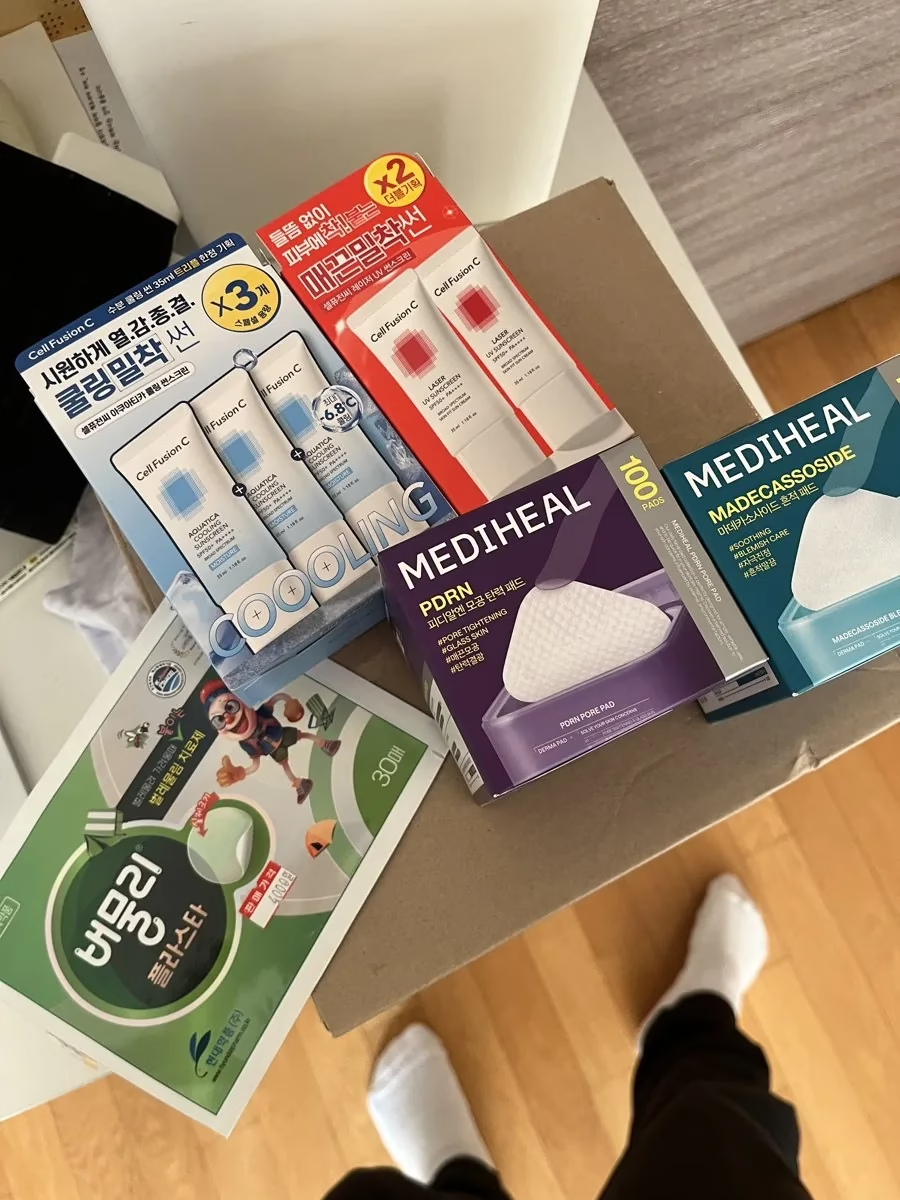
What I bought afterwards is shopping, not a prescription. That same afternoon I walked to the nearest Olive Young and restocked. The basket was two tubes of a sunscreen made for post-laser skin, a three-pack of a cooling sunscreen for the bag, a box of soothing pads and a box of pore pads. It came to about ₩93,000 before the instant tax refund.
My everyday pick at home is still the ROUND LAB Birch Juice Sunscreen (affiliate link), the one I have repurchased for years. If you want the full shortlist, it is in my Korean sunscreens at Olive Young guide. For the first weeks after laser I wanted a formula the shelf label literally called a laser sunscreen, and you will get a verdict on it once I know whether it earns a place on that list.
Tips Before You Book
If I were doing this as a visitor rather than a returning local, these are the things I would get right first.
- Book for the start of your trip. My clinic required at least a week between toning appointments, and the DuoDerm patches stayed on for up to two weeks. Ask about the interval before you book, and count the patch weeks into your dates.
- Get the spots checked before they are lasered. The AAD points out that something that looks like an age spot can be skin cancer. At my clinic the counsellor quoted the plan and the price before I met the doctor, so do not assume an examination comes first. Ask when the doctor will look at the spots, and ask for it before you commit to a package if it is not offered.
- Ask what every line on the quote does. Korean clinics bundle treatments under brand names, and the counsellor, not the doctor, sets the price. If a session has two laser steps, ask what each one is and whether it is priced separately. I did not, and I still cannot tell you what my second step was.
- Expect Korean at local clinics. Choose a Gangnam or Myeongdong clinic with an English coordinator, or a booking service, unless you have a Korean-speaking friend with you. Confirm that an English consultation is available before you book, not at the front desk.
- Know your skin tone’s risk. The AAD notes darker skin is more prone to burns and dark marks after laser. Say so at the consultation and ask how the settings change.
- You can say no to the shelf. Most clinics sell their own skincare line in the lobby, with prices that make Olive Young look like a convenience store. Nobody pushed me, but the display is there.
- Plan the Olive Young run. You will want sunscreen the same day. The Olive Young store guide covers how the stores work and how the instant tax refund is applied at the till.
FAQ
How much does a dermatology clinic in Korea cost for pigmentation?
My package was ₩1,700,000 for three pico toning sessions, two additional laser passes, individual spot removal and one mole, paid without insurance. A single toning session on its own is priced far lower; the package price reflects the spot work and the number of visits. Prices vary by district and clinic, so treat mine as one real data point, not a rate card.
Can a tourist book a Korean dermatology clinic without speaking Korean?
Yes, but choose the clinic for it. Neighbourhood clinics like mine run in Korean on KakaoTalk. Clinics in Gangnam and Myeongdong that serve foreign patients have English coordinators, and the Visit Medical Korea portal lists registered ones. Booking platforms also sell clinic reservations with interpreting, though I have not used them myself.
How far apart are laser toning sessions in Korea?
My clinic required at least one week between pico toning sessions. I asked whether I could compress the schedule because of travel and the answer was no. Build the gap into your trip rather than hoping the clinic will bend it.
Is there visible downtime after spot removal?
Yes. The treated sun spots were covered with small DuoDerm patches for two weeks and the mole for one week, kept on the whole time. Toning on its own left me with a flushed face for an afternoon and nothing a visitor would notice the next day.
What aftercare did the doctor require?
A brimmed hat, sunscreen reapplied every three to four hours when outdoors for three to four months, and less time outside while the skin settles. He was clear that skipping this can bring the pigment back. I follow the American Academy of Dermatology’s stricter two-hour reapplication rule.
My Thoughts
Would I do it again? I would book the consultation again, at a clinic a trusted friend had used, with the first appointment early enough in the trip to fit the schedule. What I would do differently is ask the doctor to explain each step before settling on the package. The ₩1,700,000 bought me a doctor’s eyes on skin I had been guessing about for years, and that was worth more than the laser.
Two smaller things I would change. I would ask for a mirror check before leaving the room after each session, so the untreated areas never need a KakaoTalk message. And I would buy the hat before the first appointment, not after. The results take months to judge, so expect an update, spots and all, once the patches are long gone and the Sydney summer has had its say.