Disclosure: This post contains affiliate links. If you purchase through these links, I may earn a small commission at no extra cost to you. I only recommend products I personally use and trust.
I have tested more sunscreens than I can count, and I still buy half of them off the Olive Young shelf in Seoul. The best Korean sunscreens at Olive Young are the ones I actually finish the tube of, the ones with no white cast that survive a humid Seoul summer and a dry Sydney winter. I grew up in Korea and have lived in Sydney for twenty years, so I have worn sunscreen under both a brutal Australian sun and a sticky Seoul August, and I notice the differences most reviews skip.
Why Korean Sunscreen Is Different
Korean sunscreen earned its reputation for one simple reason. The texture is light, it sinks in fast, and it does not leave you looking like a ghost in photos. In Korea, sunscreen is treated as the final step of a skincare routine, not a chore, so brands obsess over how it feels on the skin.
The other difference is the regulation. Korea allows a wider range of UV filters than Australia or the United States, including newer chemical filters that protect well without the heavy, chalky finish older formulas left behind. That is why a Korean sunscreen can hit high protection numbers and still feel like a moisturiser.
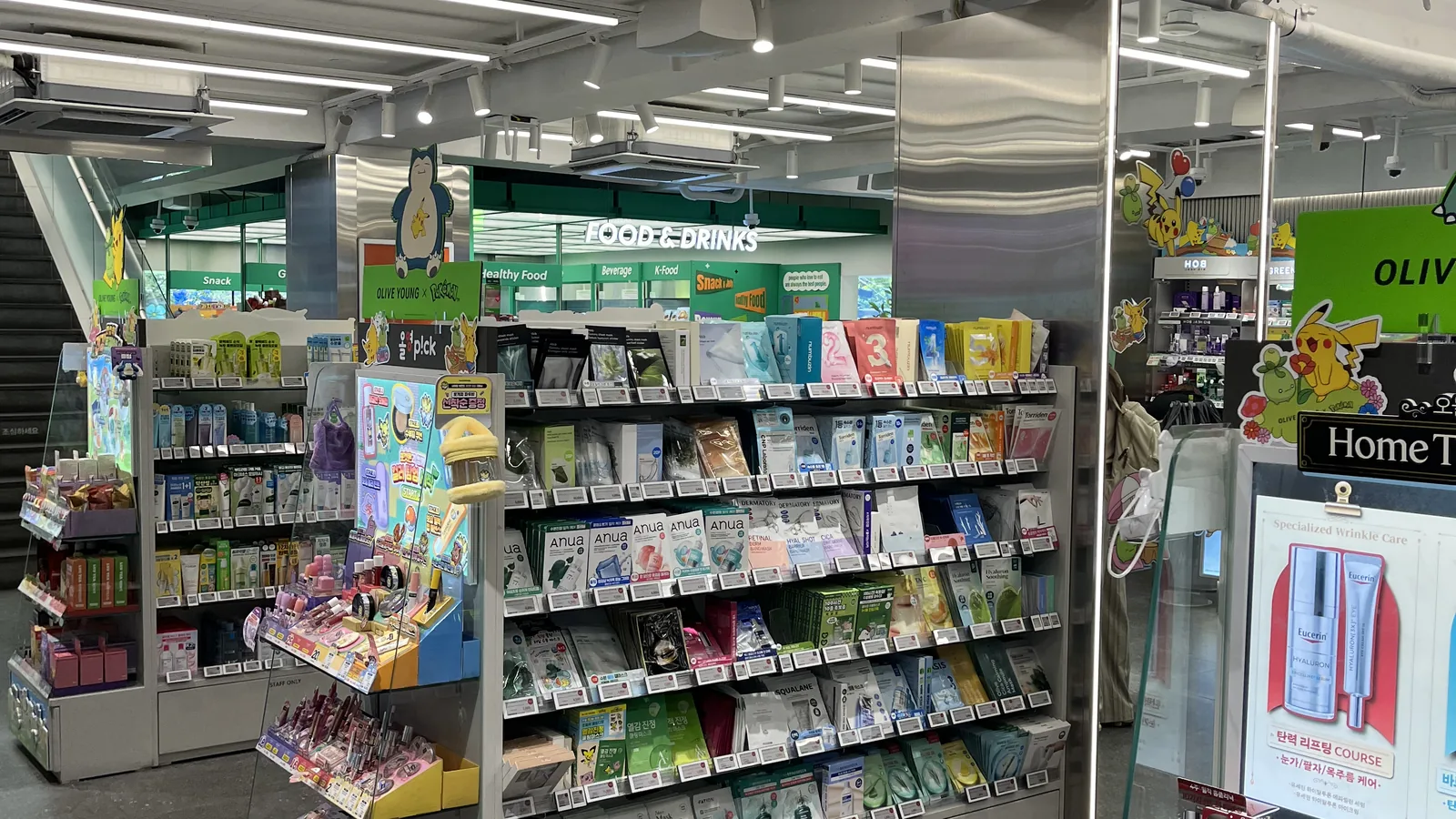
There is also a cultural angle I love. Walk through any Olive Young and the suncare wall is enormous, often a whole aisle of its own. Daily sun protection here is simply normal, the way carrying an umbrella is normal. You see it on commuters, students, and grandmothers alike, and the demand keeps the formulas competitive and cheap.
So when people ask why I keep restocking from Seoul, the honest answer is value. I get a cosmetically elegant, high-protection sunscreen for a fraction of what a comparable Australian one costs. If you want the wider context of shopping the chain itself, my Olive Young store guide Seoul walks through which branches are worth your time.
If you’d rather see the textures than read about them — here’s how I match a Korean sunscreen to a skin type, three tubes swatched on my own hand, in under forty seconds.
How I Tested These on My Own Face
I did not pull these picks from a list of bestsellers. I bought each one, used it for at least two weeks, and judged it the way I judge any sunscreen I have to wear every single day. My skin runs combination, dry on the cheeks and oily through the T-zone, so I notice both a tight dry finish and a greasy slide.
My test is unglamorous but honest. I apply a proper two-finger amount in the morning, wear it under makeup, and check three things by mid-afternoon. Does it sting my eyes when I sweat? Does it pill under foundation? Does it leave a grey flash in my phone camera? A sunscreen that fails any of those gets returned to the shelf in my mind.
Here is my Korea-versus-Australia moment, because it shaped how I rate these. In Sydney I pay around AUD 25 to AUD 35 for a single high-SPF sunscreen that still feels heavy. In Seoul I picked up three of the sunscreens below for roughly ₩45,000 total, about AUD 50, and every one felt lighter than my Australian bottle. The price gap is real and a little maddening once you notice it.
I also tested them across two climates on purpose. A formula that feels perfect in dry Sydney can turn slick in humid Seoul, and the reverse is true too. The picks below are the ones that held up in both, which is exactly why I trust them enough to put my name on this list.
SPF and PA Explained Without the Jargon
Two numbers matter on a Korean sunscreen, and once you understand them the whole shelf gets easier to read. SPF measures protection against UVB, the rays that burn you. PA, with its plus signs, measures protection against UVA, the rays that age you and cause long-term damage.
For daily wear you want SPF50+ and PA++++, which is the highest PA rating and means strong UVA defence. Almost every sunscreen I recommend hits both, so you rarely have to compromise. The difference between a good and a great Korean sunscreen is almost never the numbers, it is the texture and the finish.
One thing tourists get wrong is treating SPF as a measure of how long they can stay out. It is not. SPF is about how much UVB gets filtered, and protection drops fast once you sweat or rub your face. Reapplication matters far more than chasing a higher number, which is why I care so much about a formula being pleasant enough to reapply.
If you are buying these to take home rather than shopping in Seoul, the rules are the same but the logistics differ. My guide on how to shop Olive Young Global from Australia covers shipping, customs, and which sizes are worth the postage.
The Best Korean Sunscreens at Olive Young
These are the three I would put in a basket today, sorted by who they suit best. I have worn each one through a full Seoul day and an Australian one, and I am ranking them by finish, not hype. Each suits a different skin type, so read for yours rather than just grabbing the top one.
The everyday pick
The ROUND LAB Birch Juice Sunscreen is my default, the one I repurchase without thinking. It is SPF50+ PA++++, sinks in within a minute, and leaves a soft natural finish that works under makeup or bare. The birch-sap base means it feels hydrating rather than drying, which is rare at this protection level. I have gone through more tubes of this than any other sunscreen, and it never once flashed white in a photo. At around ₩18,000, it is also the easiest to recommend to a total beginner. If you are buying your first Korean sunscreen, this is still the one I would start with — I have restocked the ROUND LAB Birch Juice Sunscreen from Olive Young Global more than once because it is the one I reach for most often.
→ Start with the ROUND LAB Birch Juice Sunscreen on Olive Young Global (affiliate link)
Currently listed as a three-tube set: one for the bathroom, one for your bag, one spare for when the first runs out mid-trip.
For sensitive skin
Beauty of Joseon Relief Sun is the one I hand to anyone with reactive, easily-stung skin. It is a chemical sunscreen, but the rice and grain extract base makes it unusually gentle, with a dewy finish that flatters dry skin. My sister, who reacts to almost everything, wore it for a full Seoul summer without a single flare-up. It runs around ₩12,000, which makes it one of the best value sunscreens on the entire wall. The slight catch is the dewy finish reads a touch shiny on very oily skin, so it is not my pick for everyone. If reactive, easily-stung skin is your story, this is the one to start with — the Beauty of Joseon Relief Sun on Olive Young Global is the gentlest bet on the whole sunscreen wall.
→ Get Beauty of Joseon Relief Sun from Olive Young Global (affiliate link)
Sold online as a three-tube set, which is how I would buy it if dry or sensitive skin is your everyday.
For oily skin
Isntree Hyaluronic Watery Sun Gel is the one I reach for in a Seoul August, when humidity turns most sunscreens into a slick mess. The gel texture is genuinely watery, dries to a near-matte finish, and somehow still feels hydrating thanks to the hyaluronic acid. It is the only sunscreen I have worn through a humid day that did not migrate into my eyes by lunchtime. At about ₩15,000 it sits in the sweet spot of price and performance for oily and combination skin. If your skin gets greasy by the afternoon, this is the sunscreen I would reach for first — the Isntree Hyaluronic Watery Sun Gel on Olive Young Global is the one I keep recommending when someone wants a lighter finish.
→ Add the Isntree Hyaluronic Watery Sun Gel to your Olive Young Global order (affiliate link)
Pair it with the Round Lab above and you have a humid-day and a dry-day sunscreen covered in one checkout.
Not sure which of these actually fits your skin?
What’s your skin type?
Tap one and my free quiz opens right here — 3 more quick questions, then your top 3 Olive Young matches. No sign-up.
Loading the quiz… it takes a second.
Quiz not showing? Open it in a new tab →
The No White Cast Problem
White cast is the single biggest reason people give up on a sunscreen, and it is the thing I check most ruthlessly. A white cast is the grey or chalky film a sunscreen can leave, especially in photos with flash, and it comes mostly from mineral filters like zinc oxide.
The three picks above are all chemical or hybrid formulas, which is exactly why they disappear into the skin. If you specifically want a mineral sunscreen for sensitivity reasons, you trade some of that invisibility for the gentler filter, and that is a fair trade for some people. For most of us, though, a well-made chemical Korean sunscreen is the path of least regret.
Skin tone matters here too, and I would rather be upfront about it. I have a medium-fair tone, so a faint cast hides easily on me. Deeper skin tones show white cast far more, so if that is you, lean hard toward the watery gel and dewy rice-based formulas rather than anything labelled mineral or sport.
My final test is always the phone camera. I apply, wait ten minutes, and take a flash photo. If I look greyer than I should, the sunscreen goes back. Every pick on this list passed that flash test on my own face, which is the closest thing I have to a guarantee.
If you want to read the filter details straight from the source, the official Beauty of Joseon site lists the full ingredient breakdown for its Relief Sun, and the main Olive Young store shows the current Korean lineup and prices.
Korean Sunscreen Comparison Table
| Sunscreen | Best For | Finish | Approx Price | White Cast |
|---|---|---|---|---|
| ROUND LAB Birch Juice Sunscreen | Everyday, beginners | Natural, hydrating | ₩18,000 / ~AUD 20 | None |
| Beauty of Joseon Relief Sun | Sensitive, dry skin | Dewy | ₩12,000 / ~AUD 13 | None |
| Isntree Hyaluronic Watery Sun Gel | Oily, humid days | Near-matte | ₩15,000 / ~AUD 17 | None |
How to Buy and How Much to Apply
Buying sunscreen at Olive Young is easy once you know the rhythm of the store. The suncare wall is usually near the skincare section, organised loosely by brand, with testers out so you can feel the texture before you commit. I always swatch on the back of my hand and wait a minute to see how it settles.
Application is where most people undershoot, and it quietly ruins their protection. You need about two finger-lengths of product for your face and neck, which feels like more than you expect. Apply too little and an SPF50 effectively drops to something much weaker, no matter how good the formula is.
Reapplication is the other half of the equation. Sunscreen wears off through sweat, oil, and touching your face, so a morning application alone will not carry you through a full day outdoors. I keep a smaller tube in my bag and top up after lunch, especially in summer. This is exactly why I care so much about a pleasant texture, because nobody reapplies something that feels horrible.
If you are building a full routine around these, not just a single product, sunscreen is only the last step of five. My Korean skincare routine for beginners walks through everything that goes on before it. And if you are not sure which formulas suit your skin at all, you can tell the quiz your skin type and discover your best-match Olive Young products before you spend a won.
FAQ
What are the best Korean sunscreens at Olive Young for no white cast?
The best Korean sunscreens at Olive Young for no white cast are chemical or hybrid formulas like ROUND LAB Birch Juice Sunscreen, Beauty of Joseon Relief Sun, and Isntree Hyaluronic Watery Sun Gel. All three sink in clear with no grey flash, even in flash photos. Mineral sunscreens are gentler but tend to leave more of a cast.
Which Korean sunscreen is best for oily skin?
For oily skin I recommend the Isntree Hyaluronic Watery Sun Gel. Its watery texture dries to a near-matte finish and resists turning slick even on humid days. It is the sunscreen I wear through a Seoul August, when most formulas slide off by lunchtime, and it still feels hydrating thanks to the hyaluronic acid.
What does PA++++ mean on Korean sunscreen?
PA++++ is the highest UVA protection rating used in Korea and Japan. The plus signs measure how well a sunscreen blocks UVA rays, which cause ageing and long-term skin damage. SPF only covers UVB, the burning rays, so a good daily sunscreen should be both SPF50+ and PA++++ for full protection.
How much do Korean sunscreens cost at Olive Young?
Most quality Korean sunscreens at Olive Young cost between ₩12,000 and ₩20,000, roughly AUD 13 to AUD 22. That is far cheaper than comparable sunscreens in Australia, which often run AUD 25 to AUD 35 for a heavier formula. The value is one of the main reasons I restock every time I am in Seoul.
Can I buy these Korean sunscreens outside Korea?
Yes. All three of my picks are available through Olive Young Global, which ships internationally including to Australia. The prices are slightly higher than in-store in Seoul once you add shipping, but still good value. Check expiry dates on arrival and store the tubes somewhere cool to keep the filters stable.
My Thoughts
After all the testing, my honest takeaway is that you cannot really go wrong with these three. They cover the everyday wearer, the sensitive type, and the oily-skinned summer survivor, and each one passed my flash-camera test on my own face. The best Korean sunscreens at Olive Young are not the trendiest ones, they are the ones you will actually reapply.
If I had to pick just one to start with, it would be the ROUND LAB Birch Juice Sunscreen, simply because it suits almost everyone and never disappoints. From there you can branch out to the dewy rice formula or the watery gel depending on how your skin behaves through the day.
The bigger lesson I keep relearning is that the best sunscreen is the one you wear consistently. A perfect SPF50 sitting unused in a drawer protects nothing. Find a texture you genuinely enjoy, apply enough of it, and top it up, and your future skin will thank you more than any single fancy serum ever could.
Ready to Restock Your Sunscreen?
Want the full breakdown before you buy? I’ve put a few of these through weeks of real testing — read my in-depth review of the Dr.Jart Every Sun Day Sun Milk. The Round Lab Birch Tone-up Sunscreen (19 October) is the tone-up alternative I reach for on grey days.
If you are only reaching for one, the ROUND LAB Birch Juice Sunscreen up top is the one I keep on repeat — it suits almost every skin type, has zero white cast, and is light enough to reapply without thinking.