Quick Summary
- Korea’s tech may be futuristic—5G, robot cafés, K-pop—but daily payments can still feel surprisingly analog.
- Many taxis, Subway kiosks, and small local shops don’t accept Apple Pay or Google Pay; most require chip insert.
- I learned the hard way that a Wise physical card in Korea isn’t optional—it’s essential for smooth travel.
- Wise lets you hold multiple currencies (AUD, USD, KRW) and convert them instantly with fair exchange rates.
- The physical card works even when your phone, app, or internet fails—perfect for underground Subway rides or rural trips.
- Using Wise daily helped me track my spending and avoid carrying large amounts of cash.
- Whether you’re grabbing street food, taking a taxi, or paying at a late-night BBQ joint, the Wise card just works.
- Bottom line: Don’t rely on your phone alone in Korea. Bring your Wise physical card—it’ll save you time, stress, and embarrassment.
Table of Contents
- Introduction
- The Taxi That Taught Me a Lesson
- When Every Payment Becomes a Small Adventure
- Why Wise Fits Perfectly Into Travel Life
- Where Digital Still Fails in Korea
- Freedom in a Thin Green Card
- Australia vs Korea: Two Different Payment Cultures
- What Wise Quietly Solved for Me
- Questions Friends Keep Asking
- Final Thoughts: Simplicity Over Speed
Introdution
When I boarded the flight to Seoul that summer of 2025, I was smugly proud of how light my backpack was. Having spent most of my adult life in Australia, I’d forgotten what a wallet was for. In Sydney, I could buy coffee, hop on a bus, even order late-night BBQ with nothing but my phone. So I expected Korea—a land of 5G and K-pop—to be even more futuristic. I couldn’t have been more wrong.
🔥 Craving Korean BBQ Already?
If you’re planning your first meal after landing in Seoul, here’s the ultimate guide to where locals actually eat — prices, top cuts, must-order dishes, and late-night spots. 👉 Read: Best Korean BBQ in Seoul (2025 Local Guide)

☝️Wise official logo — the trusted global money platform that simplifies travel payments. (Image Source: Wise.com)
But Korea surprised me in a way I didn’t expect. I learned quickly—almost painfully—that carrying a Wise card is not just convenient. It is absolutely essential.
The Taxi That Taught Me a Lesson
On my second day in Seoul, I grabbed a taxi from Gangnam to Hongdae after a long evening with friends. The neon lights reflected on the windows as I relaxed in the back seat, confident that my digital wallet would handle the fare. My reality check came fast. On my second night in Seoul, I jumped into a Taxi from Gangnam to Hongdae. When we stopped, I double-tapped my phone and smiled, ready to pay. The driver squinted at the reader and shook his head. ‘Card only,’ he said, pointing at the slot. No NFC, no tap. I sat there, stunned, realising my Wise digital card—and all my confidence—meant nothing without the physical one. I tried again, but he pointed firmly to the slot. No NFC, no tap—insert only.
At that moment, panic set in. I didn’t have my Wise physical card in Korea with me, and I barely carried any cash. After an awkward silence, the driver sighed while I scrambled to find an ATM. That ride taught me the hard way that without a Wise physical card in Korea, you may literally get stuck.
👉 Want to avoid payment surprises? Learn everything about taxi fares, apps, receipts, late-night rules, and how to pay smoothly in Seoul — even if your phone fails.
Read the full Seoul Taxi Guide 2025
When Every Payment Becomes a Small Adventure
After that night, the pattern became impossible to ignore. Tiny noodle shops, laundromats, even the kiosk inside the Subway station—all wanted an insert, not a tap. My Australian habits didn’t fit. I’d pull out my phone, wave it hopefully, then end up apologising. People were kind, but I felt strangely old-fashioned in a country that’s supposed to be ahead of the curve. Small family restaurants had card readers older than I’d seen in years. Local markets sometimes rejected digital wallets outright, insisting on a chip insert. Even on the subway, when the signal dropped deep underground, my Wise app would freeze, leaving me unable to confirm payments.
👉 If you’re new to Korea’s metro system, you’ll need more than just Wi-Fi.
Learn how to navigate it easily in A Traveller’s Guide to the Seoul Subway and T-money Card.
It’s funny how fast pride disappears when you’re asking a friend to pay for your ramen. What began as a minor inconvenience soon became a pattern: my digital tools simply weren’t enough. That’s when I realised the physical Wise card wasn’t just a backup item. It was my daily lifeline.
Why Wise Fits Perfectly Into Travel Life
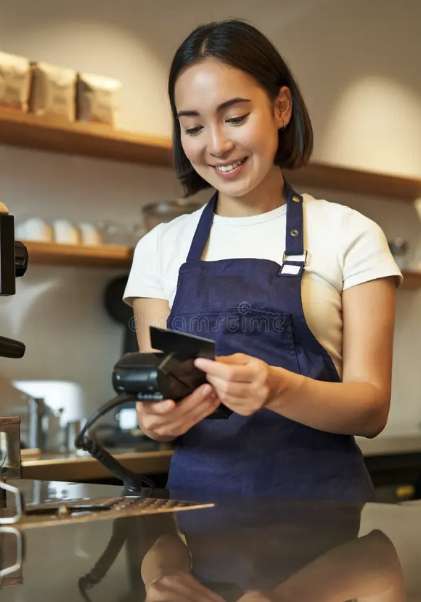
☝️ A café staff member swiping a customer’s card — a familiar scene across Korea’s small shops. (Image Source: Dreamstime.com)
I’d joined Wise years ago in Sydney, back when sending money overseas felt like daylight robbery. Transparent fees and real exchange rates won me over. But in Korea, that little green card became my lifeline. It wasn’t about saving fees anymore—it was about surviving. Without it, I’d have borrowed cash from friends more times than I care to admit. Banks charged steep fees, exchange rates were padded, and even ATM withdrawals left my account bleeding. Wise changed all that. Transparent fees, real exchange rates, and the ability to hold multiple currencies in one place—it became my go-to for travel.
Holding Australian dollars, euros, and Korean won in one account felt empowering. With a few taps, I could convert AUD to KRW instantly, ready to spend in Seoul. The physical card, paired with the app, made it practical. What shocked me in Korea wasn’t Wise itself—it was the fact that I couldn’t always rely on the digital version alone.
Where Digital Still Fails in Korea
Taxis and Public Transport
In Sydney, buses and trains let me tap my phone freely. In Seoul, the T-money system is advanced, but linking foreign wallets isn’t straightforward. Taxis often used terminals that didn’t recognise Apple Pay or Google Pay. Insert only. Period. Without a Wise physical card in Korea, I would have been stranded more than once.
Restaurants and Markets
Big chains like Starbucks or McDonald’s were fine. But the meals I wanted—the steaming jjigae in a family-run shop, or spicy tteokbokki at a local market—came with old card readers. Some didn’t even process contactless physical cards, demanding chip-and-pin. Many travellers assume their phone is enough, but having a Wise physical card in Korea makes dining stress-free.
🍲 Want to Explore Korea’s Local Food Without Payment Stress?
From jjigae shops to night markets, here’s how to eat like a local — what to try, what to expect, and how to pay smoothly even when digital wallets fail.
👉 Read: Local Korean Food & Street Market Guide (2025 Edition)
Connectivity Gaps
In Australia, mobile data rarely fails. In Korea, deep subway tunnels or rural hikes left me without a signal. My Wise app would freeze, unable to load. With a physical card, none of that mattered—I could insert or swipe, no Wi-Fi required. Even offline, a Wise physical card in Korea guarantees your payments won’t fail.
Freedom in a Thin Green Card
The greatest gift of carrying the card wasn’t just functionality. It was peace of mind. Travel already comes with stress—navigation, language, cultural differences. Not worrying about whether my payment would be accepted gave me freedom. Whether it was a midnight taxi, a back-alley eatery, or even an unexpected hospital visit, the Wise card let me pay with confidence.
It also became a budgeting tool. By topping up my KRW balance daily, I knew exactly what I could spend. Each time I inserted the card, I saw my budget shrinking—a gentle reminder not to overspend. Compared to stuffing my wallet with cash, it felt cleaner, safer, and smarter.
Australia vs Korea: Two Different Payment Cultures
In Australia, cash feels like an antique. Even beachside food trucks use tap-and-go. But in Korea, I met a paradox. Here was a land with robot baristas and lightning-fast Wi-Fi, yet a Subway gate would reject my phone if the signal dropped. Locals still rely on T-money, and linking foreign wallets isn’t simple. Technology was everywhere—but payments were fragmented. That’s when my Wise physical card proved its quiet power.”
Australia unified its payment systems quickly, forcing even small businesses to adapt. Korea advanced technologically, but its financial infrastructure remained fragmented. Legacy machines, regulatory hurdles, and reliance on domestic systems created friction for foreign cards.
I remember sitting in a Seoul café where a robot delivered my latte, but the cashier still demanded a chip insert. That paradox sums up Korea: futuristic in some ways, surprisingly analog in others. And unless you carry a Wise physical card in Korea, you’ll feel that paradox where it hurts most—when it’s time to pay.
Practical Benefits of Wise in Korea
- Lower exchange rates than airport booths or banks
- ATM access with clear fees, unlike hidden bank surcharges
- Multi-currency wallet to manage AUD, USD, KRW, and more
- Spending notifications in real time through the app
For updated details on fees, ATM limits, and card delivery, check the official Wise website. The Korea Tourism Organization also provides helpful payment guides for visitors.
FAQ
Q1. Can I survive in Korea using only Apple Pay or Google Pay?
A1. Not reliably. Many taxis and smaller shops still reject NFC. A physical Wise card ensures you always have a backup.
Q2. Can I withdraw Korean won from ATMs with Wise?
A2. Yes. Most ATMs accept it. Fees are transparent, and the exchange rate is fair compared to banks.
Q3. How long does Wise delivery take?
A3. In Australia, mine arrived within a week. For Korea, order early so your Wise physical card in Korea arrives before you travel.
Q4. Do all restaurants in Korea accept foreign cards?
A4. Not all. Family-owned places often use old machines. Having a Wise physical card in Korea makes dining simple and worry-free.
Q5. Is a Wise physical card better than cash exchange?
A5. For me, yes. The rates are better, and I avoid carrying large amounts of cash.
Final Thoughts
Travelling through Korea reminded me that convenience isn’t universal. In Australia, I float through life with nothing but a phone. In Korea, I was forced to remember that old-fashioned plastic still has power. Carrying a Wise physical card in Korea gave me more than a way to pay—it gave me confidence, independence, and peace of mind.
So if you’re packing for Korea, don’t make my mistake. Don’t assume your phone is enough. Slip that little green Wise card into your wallet. When the neon lights of Seoul blur past your taxi window and the driver points to the card slot, you’ll be glad you did.
Korea dazzles you with speed, but convenience isn’t universal. One night it’s a Taxi that won’t accept your phone, another day a Subway turnstile that freezes mid-tap. Even that cosy BBQ joint down the street might ask for a chip insert. Through it all, my Wise physical card kept me moving—quietly, reliably, without stress. If you’re packing for Korea, slip that green card into your wallet. Someday, when your phone refuses to pay, you’ll thank yourself.
Related Travel Guides & Local Spots
If you’re planning to explore more while in Korea and beyond, here are a few stories you might love:
- Hongdae: Where Seoul’s Night Never Sleeps — From neon-lit streets to indie cafés, discover why Hongdae captures the youthful heart of Seoul.
- Seongsu: Seoul’s Creative Quarter — Once full of shoe factories, now reborn with cafés, galleries, and pop-up shops that define modern Seoul.
- Namsan Tower & the Seoul Skyline — Take a sunset walk up Namsan for the city’s best panoramic view—and a reminder that old and new Seoul coexist perfectly.
- Hiking Seoraksan: Korea’s Autumn Paradise — If city life gets too loud, escape north to Seoraksan National Park for crisp air and golden trails.
2 thoughts on “🇰🇷 Wise Physical Card in Korea: Why You Absolutely Need One”