🌎 Table of Contents
- Introduction
- Jeju Island: 3-Day Itinerary for First-Time Visitors
- Jeonju Hanok Village: Tradition and Flavour
- Final Travel Tips for Regional Korea
- Australia vs. Korea: A Traveller’s Perspective
- Related Reads
Introdution
This guide introduces Jeju and Jeonju as must-visit destinations for anyone planning a trip to Regional Korea.
Regional Korea Travel always reminds me why I fell in love with Korea beyond Seoul. Every time I return after years in Australia, I crave two very different sensations — the salt in the air of Jeju Island and the warm wooden scent of Jeonju’s hanok rooftops. These two destinations define the heart of regional Korea: Jeju’s volcanic freedom and Jeonju’s timeless tradition. Korea’s capital may glitter with modern beauty, but it’s these regional cities that truly tell you what the country feels like beneath the surface. Travelling beyond Seoul is like peeling back layers of identity: Jeju whispers stories through its volcanic winds, while Jeonju hums with the echoes of a slower, more traditional rhythm. I’ve taken countless road trips across Australia’s wide landscapes, but nothing compares to the intimacy of Korea’s compact beauty — where a few hours of travel can transport you from rugged cliffs to centuries-old courtyards. This is not just a guide; it’s a reflection of what it means to rediscover Korea through its contrasts — between land and sea, old and new, speed and stillness. And in that duality, Jeju and Jeonju reveal two sides of a nation that’s constantly balancing its future with its past.
As someone who has lived in Australia for as many years as in Korea, but frequently returns to Korea, I see both countries’ travel styles through a unique lens. This guide not only introduces itineraries for Jeju and Jeonju but also compares the Korean travel experience with what I’ve observed in Australia.
Jeju Island: 3-Day Itinerary for First-Time Visitors
Jeju has always felt to me like Korea’s version of freedom — the moment your plane dips below the clouds and the emerald water flashes beneath you, you already feel different. It’s often called the “Hawaii of Korea,” but that nickname never quite fits. Where Hawaii feels open and eternal, Jeju feels personal and full of whispers — the wind carries stories from fishermen, old haenyeo divers, and lovers who once carved names into black lava rock.
Getting there is remarkably easy. Most travellers fly from Seoul’s Gimpo Airport, and the flight takes just about an hour — shorter than most commutes across Sydney. Dozens of domestic flights depart every hour, making Jeju feel as close as a neighbouring city rather than a remote island. The convenience almost feels surreal: you leave the urban sprawl of Seoul, and within sixty minutes, you’re stepping out into subtropical air scented with tangerine and sea salt.
I remember standing at Seongsan Ilchulbong before dawn, my breath visible in the cold air, surrounded by quiet strangers waiting for the first light to break over the sea. In that moment, it wasn’t about sightseeing — it was about belonging to something bigger than the city noise I had left behind. Australia’s coastlines are wild and endless, but Jeju’s are intimate; each turn of the road feels like meeting another small secret waiting to be noticed.
How to Get There
Getting to Jeju Island from Seoul couldn’t be easier — it’s one of the busiest air routes in the world. Most travellers fly from Gimpo Airport (Seoul) to Jeju International Airport, a short flight that takes only about 1 hour. Flights depart almost every 10–15 minutes during the day, operated by both major airlines, such as Korean Air, Asiana Airlines, and low-cost carriers like T’way, Jeju Air, and Jin Air.
Tickets are usually affordable — prices range between ₩30,000–₩70,000 one way depending on the season. During holidays like Chuseok or Lunar New Year, it’s best to book early as seats fill up quickly. Once you land, Jeju International Airport is located just 10 minutes from downtown Jeju City by taxi or local bus, so you can begin exploring almost immediately.
Tip: If you’re already traveling around Korea, you can also reach Gimpo Airport easily via the AREX Airport Express or the Seoul Subway Line 5. Using a T-Money Card makes transfers between subway, bus, and airport lines seamless.
Day 1: Jeju City and Traditional Markets
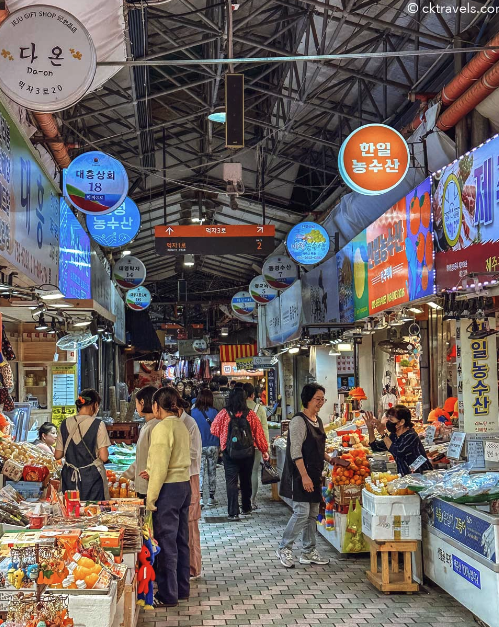
The first thing that hit me at Dongmun Market wasn’t the crowd — it was the smell. Grilled cuttlefish smoke drifted through the air, mingling with the citrus sweetness of Jeju mandarins stacked in bright orange towers. Vendors shouted prices in the melodic rhythm that only Koreans can make sound warm. I stopped for a bowl of heuk-dwaeji guksu — black pork noodles — and found comfort in its salty broth, unlike anything I’d ever had in Australia. Back home, markets feel slow and spacious; in Jeju, they pulse with life, like a heartbeat echoing through every stall. By sunset, I walked along Tapdong Promenade, sea wind in my face, watching the last light fall behind the volcanic rocks. That’s when I realised — Jeju isn’t just beautiful; it’s alive. Jeju’s coastal breeze feels different from Australia’s—gentler, with volcanic rock formations framing the horizon.
Day 2: Eastern Coastal Exploration
I woke up before dawn, long before my body was ready, to climb Seongsan Ilchulbong. The path was silent except for the shuffle of shoes on volcanic rock. When the sun finally cracked through the horizon, it painted the cliffs gold — and for a second, everyone around me gasped in unison. I had seen many sunrises in Australia’s Gold Coast, but none carried the same hush, the same reverence. Later at Seopjikoji, wind whipped through my hair as waves crashed below the cliffs, and I thought of how Jeju balances chaos and calm like no other place. By afternoon, I sat in a café overlooking the ocean, sipping green tea beneath dried tangerine garlands, and felt the world slow to a pace I didn’t know I needed. Unlike Australia’s beach cafés, Jeju’s often emphasise design and atmosphere, making the café itself a destination.
Day 3: Seogwipo and Waterfalls
Seogwipo feels like a different island entirely — quieter, greener, more grounded. I stood before Jeongbang Waterfall, where the water falls straight into the sea, and the mist kissed my face like fine rain. In Australia, waterfalls are tucked inland; here, the ocean greets them like an old friend. At Jusangjeolli Cliffs, I traced my fingers along the hexagonal basalt pillars, marvelling at how fire once met water to create this impossible beauty. My last stop was the O’sulloc Tea Museum, where I ordered matcha ice cream and watched visitors taking photos among tea fields swaying in the wind. It wasn’t a goodbye — more like Jeju’s gentle reminder that beauty doesn’t shout; it lingers.
(Extra tip: If you’re an avid hiker, add a day to conquer Hallasan Mountain, Korea’s highest peak.)
For more updated details on seasonal festivals, driving routes, and local attractions, check the official Jeju Tourism website
👉 Looking for Korea’s most breathtaking mountain views?
If Jeju’s volcanic cliffs stirred your sense of wonder, Seoraksan National Park will awaken your love for Korea’s natural beauty all over again. Located near Sokcho on the east coast, Seoraksan is home to dramatic granite peaks, crystal streams, and fiery autumn forests that look straight out of a painting. Whether you’re hiking Ulsanbawi Rock, riding the cable car to Gwongeumseong Fortress, or simply walking through the serene valleys, it’s a journey that reconnects you to nature’s quiet strength.
From Seoul, it’s easy to reach Seoraksan — take the KTX to Gangneung, then transfer to a local bus or taxi to Sokcho. For step-by-step directions and travel tips, check out our detailed guide below.
Read next: Seoraksan Travel Guide 2025 – Nature Escape via Gangneung
Jeonju Hanok Village: Tradition and Flavour
For regional travel in Korea, focusing on culture and cuisine, Jeonju Hanok Village is a must. If Jeju represents Korea’s natural side, Jeonju embodies its cultural and culinary heritage. Located just two hours from Seoul by KTX train, it’s a perfect day trip or an overnight stop.
What to See in Jeonju
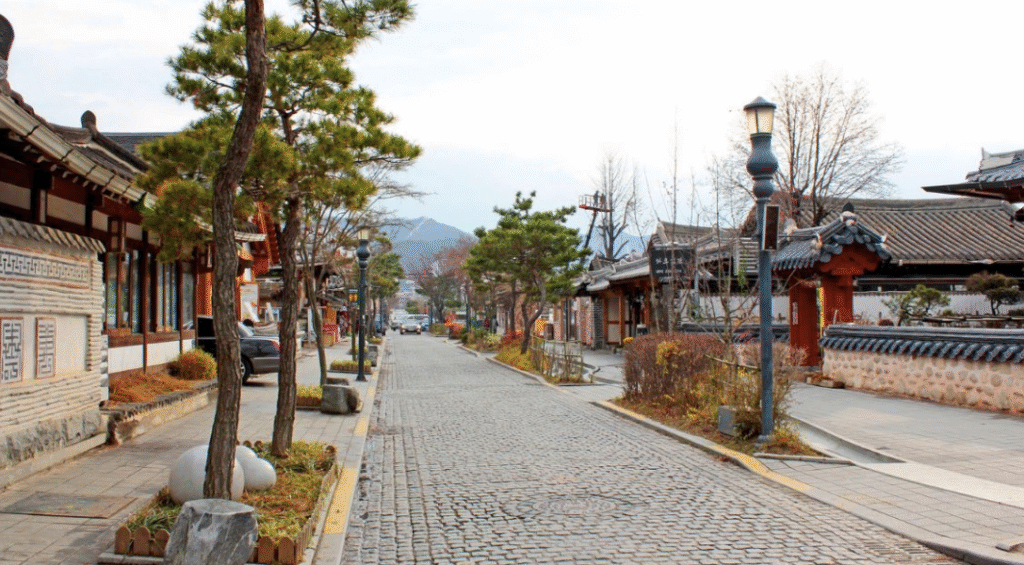
Stepping into Jeonju Hanok Village after Jeju felt like crossing centuries in a single train ride. The scent of pine wood and soy sauce lingered in the air as I walked along narrow stone alleys lined with hanok rooftops glistening after rain. From Omokdae Pavilion, the entire village stretched below like a woven fabric of stories. Inside a small restaurant, I tasted bibimbap the way it was meant to be — warm rice beneath colourful vegetables, sesame oil glistening under the soft glow of paper lanterns. I’ve eaten countless fusion versions abroad, but none carried this quiet dignity. As evening came, street vendors lit small lamps, the sound of sizzling hotteok filled the air, and I felt a sense of belonging I rarely find in big cities.
How to Get There
- By KTX Train:
1 hour 50 minutes (₩35,000) - By Express Bus:
2 hours 30 minutes (₩15,000) - For the best experience, stay overnight to see the village illuminated after dark.
👉 Want to experience more of Korea’s traditional charm?
If Jeonju Hanok Village gave you a taste of Korea’s history, Bukchon Hanok Village in Seoul offers an equally beautiful glimpse — without leaving the capital. Nestled between Gyeongbokgung Palace and Insadong, Bukchon is home to hundreds of preserved hanok houses, artisan workshops, and quiet tea rooms where time seems to slow down. It’s the perfect spot to wander with a camera, sip traditional tea, or simply get lost in old Seoul’s wooden alleys.
👉 Starting or ending your Korea trip in Seoul?
If Jeju and Jeonju showed you Korea’s nature and tradition, Seoul will reveal its modern rhythm and cultural heartbeat. Whether it’s your first visit or a quick weekend escape, our Seoul 2-Day Itinerary 2025 will help you explore the capital’s best — from royal palaces and hanok villages to night markets and rooftop cafés. Discover how much of Seoul you can truly experience in just 48 unforgettable hours.
Final Travel Tips for Regional Korea
- Use Naver Map or KakaoMap instead of Google Maps, as they work better in Korea.
- Book transport ahead through apps like KTX Korail or bus platforms.
- Carry a SIM card or a portable Wi-Fi device to stay connected outside of Seoul.
👉Want to experience more of Korea’s soul beyond the tourist trail?
Dive into Seoul’s most meaningful local spots — from street art in Hongdae to the calm courtyards of Gyeongbokgung.
Start here: Seoul Subway Travel Guide 2025 – How to Ride Like a Local
Your next adventure might be just one subway stop away.
👉 Ready to see Korea’s ocean horizon after Jeonju’s rooftops?
If Jeonju showed you the heart of Korea’s tradition, Busan will show you its soul by the sea. From the calm temples of Haedong Yonggungsa to the bustling lights of Haeundae and Nampo-dong, Busan feels like a living postcard — modern yet warm, energetic yet deeply human. Whether you ride the KTX from Seoul or Jeonju, you’ll arrive at the edge of the country, where the sound of waves blends with the rhythm of city life.
Read next: Busan Travel Guide 2025 – Beaches, Markets & Night Views by the Sea
Australia vs. Korea: A Traveller’s Perspective
Living in Australia taught me to love distance — long drives, empty roads, the silence between towns. But Korea taught me to love closeness. Here, beauty unfolds within reach: a two-hour KTX ride can take you from skyscrapers to hanoks, from city lights to starlight. Australia’s journeys stretch across days; Korea’s transform within hours. When I ride the KTX, sipping coffee as rice fields flash by, I’m reminded how movement in Korea feels like poetry — brief, deliberate, full of rhythm. And while Australia’s vastness gives freedom, Korea’s density gives connection — every stop a new story, every meal a conversation with history.
What moves me most about Korea isn’t just the convenience or the scenery — it’s how deeply human every moment feels. From a fisherman sharing mandarin slices in Jeju to a grandmother offering tea in Jeonju, travel here always becomes personal. In Australia, I often travel to escape; in Korea, I travel to return — to memory, to flavour, to the rhythm of life that feels like home. Both countries shape me, but in different ways: Australia gave me space, Korea gives me meaning. When I think of Jeju’s wind and Jeonju’s warmth, I realise they aren’t opposites at all — they’re reflections of the same truth: that the best journeys don’t take you somewhere new; they bring you closer to who you are.
Related Reads
If you’re planning a longer journey across Korea, these guides help you connect Jeju and Jeonju with the heart of Seoul — from subways and taxis to food and culture.
- Incheon Airport to Seoul Taxi 2025 – The Ultimate Arrival Guide
Start your trip smoothly from the airport. This detailed guide explains how to choose between taxis, shuttles, or private transfers when arriving in Seoul. - T-Money Card Korea 2025 – How to Ride Seamlessly Across Seoul
Learn how to use the T-Money card for buses, subways, and taxis — the easiest way to move around Seoul before heading to regional destinations. - Seoul Subway Travel Guide 2025 – How to Ride Like a Local
A must-read before exploring the capital. Understand the subway system, transfer rules, and how to reach hotspots like Gangnam and Hongdae with ease. - Gangnam Travel Guide 2025 – Glamour, Nightlife & Modern K-Culture
Explore the modern face of Seoul — designer stores, rooftop cafés, and the vibrant rhythm of Korea’s most iconic district. - Seongsu-dong Seoul Guide 2025 – From Industrial Streets to Trendy Cafés
Discover Seongsu, Seoul’s creative neighbourhood where old factories meet art galleries, fashion pop-ups, and local coffee culture. - Gyeongbokgung Palace Guide 2025 – Tradition, Museums & Hanbok Photos
Step into Korea’s royal history at Gyeongbokgung, the perfect cultural stop before heading south to Jeonju’s Hanok Village. - How Korean BBQ Became a Global Comfort
End your regional journey with the warmth of Korean BBQ — a culinary story that connects Seoul’s dining culture with the rest of Korea. - Bukchon Hanok Village Guide 2025 – Seoul’s Living Tradition Between Palaces
- Busan Travel Guide 2025 – Beaches, Markets & Night Views by the Sea
Tip: Begin your journey in Seoul with a T-Money Card, take the subway to explore Gangnam and Seongsu, ride the KTX to Jeonju, and finally fly to Jeju for a full Korean travel experience.
About the Author
UnniesPicking is a Korean-born travel writer and cultural storyteller based between Korea and Australia. After spending many years abroad, she combines a local’s insight with a global traveller’s perspective — capturing the contrasts between Korea’s fast-paced cities and its quiet, soulful corners.
Through KOREA HUNTERS, she shares authentic travel stories, regional discoveries, and everyday cultural details that help visitors experience Korea like a local. Her writing blends practical tips with emotion — because to her, travel isn’t just about movement, it’s about connection.
Follow her journey across Korea and beyond at KOREA HUNTERS.
6 thoughts on “🇰🇷 Regional Korea Travel: Jeju Island and Jeonju Highlights”