Disclosure: This post contains affiliate links. If you purchase through these links, I may earn a commission at no extra cost to you.
This Incheon Airport departure guide is the part of a Seoul trip almost nobody plans for. You obsess over the arrival — the train, the T-money card, the ride into the city — and then treat your last morning like dead time to survive. I did exactly that for years, until a run of rushed, sweaty departures taught me the flight home really starts about three hours before boarding.
I fly back to Sydney once a year, and Incheon is the one departure I no longer dread. It is calm, it is fast if you know the order to do things in, and — this still surprises visiting friends — the departure side is genuinely nice to be in. So this is the walkthrough I give people the night before they leave: when to arrive, how to check in yourself, where the tax refund machines hide, how much time security really eats, and where to have one last decent Korean meal before you go.
Why your last morning needs a plan
Here is the mindset shift that changed my last days in Seoul: the airport is not the end of the trip, it is the last hour of it. Treat it as dead time and you end up eating a sad sandwich at the gate with a numb, over-caffeinated brain. Give it a little structure and you get a slow coffee, a proper meal, your tax money back, and zero adrenaline.
The other reason to plan is that Incheon is enormous and split across two terminals that are a full shuttle ride apart. Turn up at the wrong one and you have just donated an hour you did not have. Everything else about moving around the country is well documented — my complete Korea transport guide covers the trains, buses and cards — but the departure itself has its own rhythm, and that is what trips people up. Get the sequence right (arrive, check in, refund, security, eat, gate) and the whole thing unwinds without a single rushed moment.
One small mercy: Incheon is consistently ranked among the smoothest big airports in the world, and it earns it. Signage is quadrilingual, staff are everywhere, and the self-service machines actually work. The trick is simply knowing which machine to use and in what order, so you are not the person reading every sign twice while a queue builds behind you.
How early should you get to Incheon Airport?
My rule for an international flight out of Incheon is to be inside the terminal three hours before departure. Not two, not “we’ll see” — three. That sounds cautious until you remember the sequence stacks up: bag drop, tax refund, security, immigration, and then a walk to the gate that can genuinely take fifteen minutes. Peak-season mornings, long-haul waves, and the tax refund queue can each swallow twenty minutes on their own.
Terminal matters too. Terminal 2 serves Korean Air, Delta, Air France, KLM and their partners; almost everyone else flies from Terminal 1. Your boarding pass and booking email say which one — check it the night before, because the free inter-terminal shuttle takes about 15–20 minutes and that is not a gap you want to discover at 6am. Here is how I’d budget the morning:
| Step at the airport | Time to allow | Add a buffer if… |
|---|---|---|
| Self check-in and bag drop | 15–25 min | you have oversized or sports luggage, or it’s a peak morning wave |
| Tax refund (kiosk + drop box) | 10–30 min | you shopped a lot, or your refund total needs a customs stamp |
| Security screening | 10–20 min | you didn’t pre-sort liquids and electronics |
| Immigration / departure | 5–15 min | you’re not registered for Smart Pass or the e-gates |
| Walk to a far gate | 10–20 min | you’re in the 200-series gates or need the shuttle train |
Add those up and three hours stops looking generous — it looks about right, with just enough slack for one relaxed coffee. If you are travelling with kids or checking sports gear, round up.
Getting to the airport on departure morning
However smooth the airport is, it only helps if you actually reach it on time, and departure morning is when the wheels tend to come off. The AREX airport train and the limousine buses are cheap and reliable, but both mean wrangling your fully-packed suitcases through a station or a bus stop at exactly the hour your patience is thinnest.
If you’d rather not do that, a fixed-price private transfer is the one splurge I think earns its keep on the way out — a driver meets you at your hotel, your bags go straight in the boot, and you are dropped at your terminal door with no meter anxiety and no stairs. The same logic from my Incheon Airport taxi guide applies in reverse: agree the fare before you get in, and know your terminal.
🚐 Leaving with a mountain of luggage? You can lock in a private hotel-to-Incheon transfer with a fixed price so departure morning is one less thing to think about. (affiliate link)
Whichever way you go, aim to leave central Seoul at least an hour before you want to be standing at check-in. Traffic on the expressway is unpredictable, and a train that comes every 20 minutes is no help if you just watched it leave.
Check-in and bag drop: do it yourself
This is where most first-timers waste time by queuing for a staffed desk out of habit. You almost never need it. Incheon’s self check-in kiosks print your boarding pass in under two minutes, and the self bag-drop belts right beside them take your checked luggage without a human in the loop. Scan your passport, confirm your flight, print the pass and the bag tag, loop the tag through the handle, and set the case on the belt. Done.
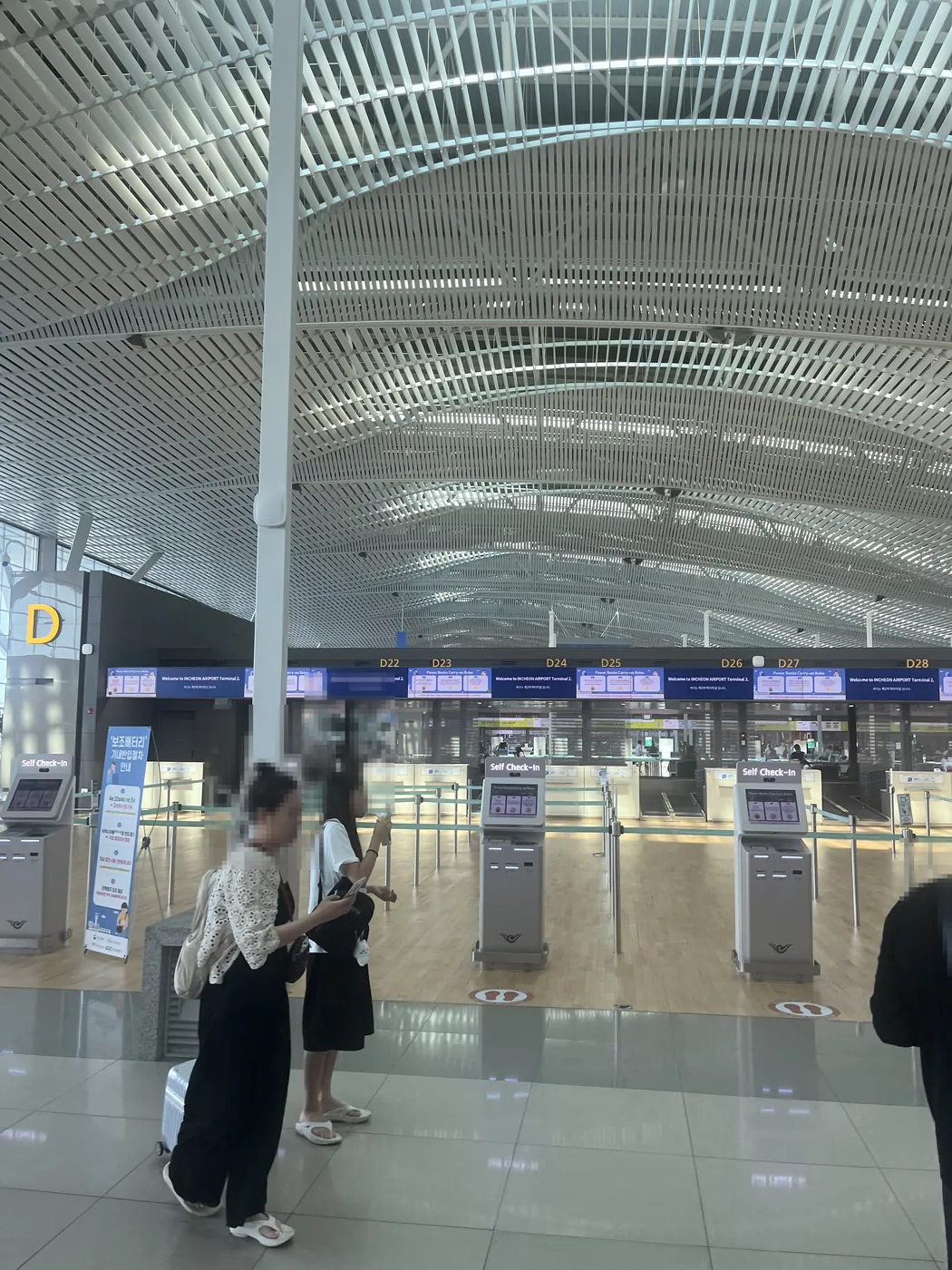
A few things that save grief here. Weigh your carry-on at the hotel, because the belts do flag overweight checked bags and you do not want to be repacking on the floor. If you’re carrying anything lithium-battery — power banks, spare camera batteries — it must go in your cabin bag, never checked, so keep it out. And if your bag drop rejects a case for being oddly shaped, that is what the staffed oversize counter is for; the agents there are quick and used to it. Grab a luggage cart on your way in — they’re free and dotted all over the hall.
Tax refund at the airport, without the panic
If you shopped in Korea and saw “TAX FREE” stickers, some of that VAT is yours to claim back, and Incheon makes it fairly painless — as long as you don’t leave it to the last ten minutes. There are two versions. Small totals can often be refunded instantly at the self-service kiosks; larger totals, or certain stores, need a customs check first. The bright blue “TAX REFUND / 부가세환급” kiosks are your first stop.
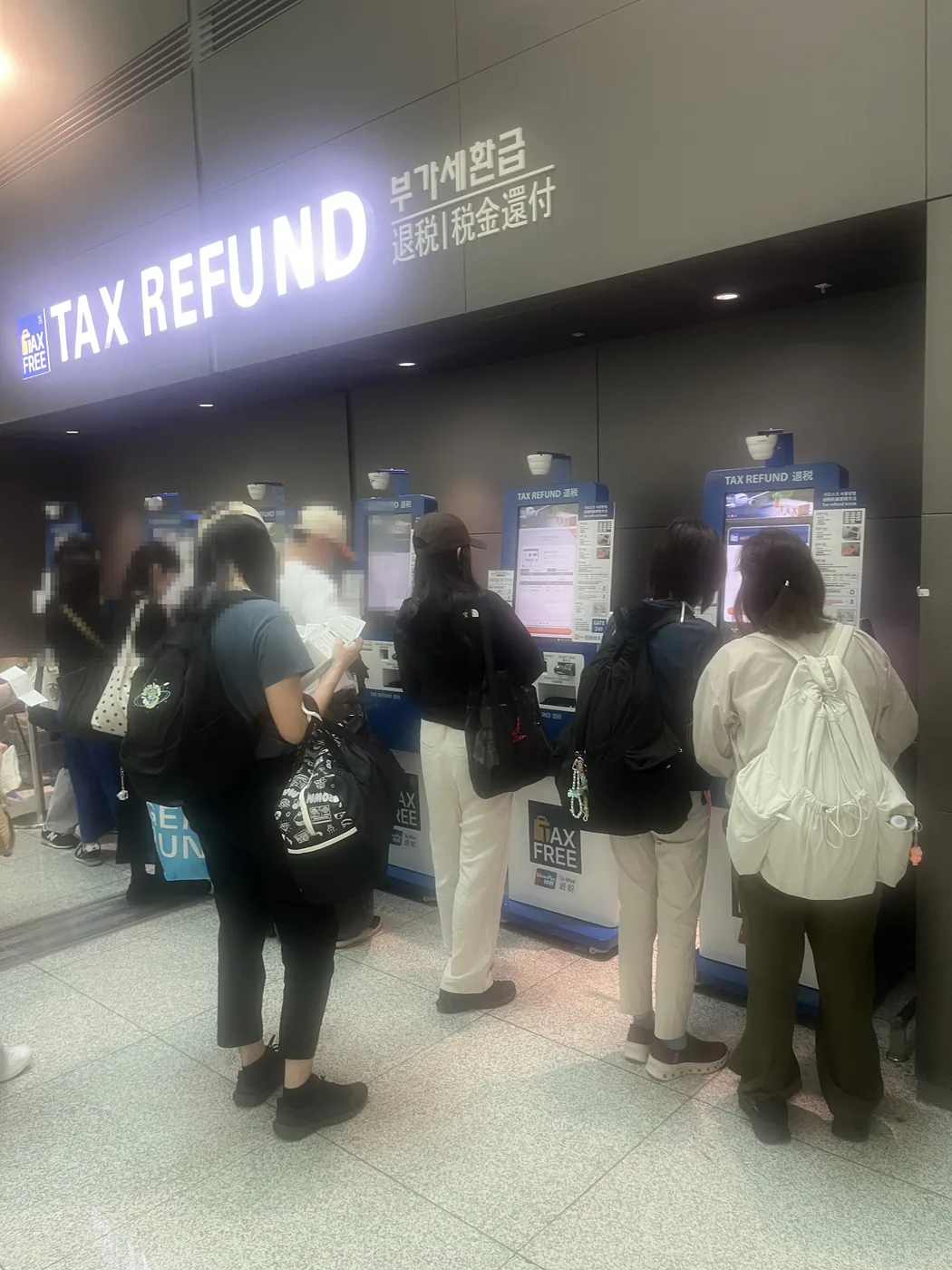
Scan your passport and your refund slips at the kiosk, and it tells you whether you’re cleared for a cash or card refund or whether you need the customs desk to stamp your paperwork first. Keep the actual items accessible in case customs wants to see them — this matters most for big-ticket buys. I won’t re-explain the whole system here because I’ve already written a full walkthrough of how the Korea tax refund works from the shop counter onward; treat that as the deep dive and this as the airport-day reminder. For the official rules on eligibility and limits, Korea’s tourism board keeps a plain-English explainer on the Visit Korea site. The one habit worth building: do the refund before security if your paperwork needs a customs stamp, because the stamp desk lives on the check-in side.
Security and immigration: the part people underestimate
Security and immigration are two separate steps at Incheon, and together they’re the bit people misjudge. Screening is standard — liquids in a clear bag, laptops and large electronics out, jacket and belt off — but you’ll move through far faster if you’ve sorted all that in the queue instead of at the tray. Slip-on shoes and a jacket with zip pockets you can empty in one motion are your friends here.
Immigration for departure is usually quick, and quicker still if you use the automated e-gates. Most passport holders can use them without pre-registration; if the signage points you to Smart Pass, that’s Incheon’s face-recognition lane that lets you skip some document checks at security and boarding — worth registering at a kiosk if you’ve got a spare ten minutes on a busy day. Once you’re through both, you’re airside, and everything from here — food, shopping, your gate — is on the other side of that line. That’s exactly why you don’t want to be doing your tax refund now; it’s too late.
Incheon’s own official airport site publishes live congestion forecasts by hour, which is genuinely useful if your flight leaves during a known morning rush. A two-minute check the night before tells you whether three hours is enough or whether you want three and a half.
Where to eat before your flight
Here’s my favourite part, and the reason I stopped resenting the airport. Once you’re airside with your bags gone and your refund done, you have earned a proper last Korean meal — and Incheon’s food is far better than airport food has any right to be. There are full sit-down Korean restaurants, not just kiosks: bibimbap, kalguksu, gukbap, and the fried-cutlet-and-curry plates I always cave for.
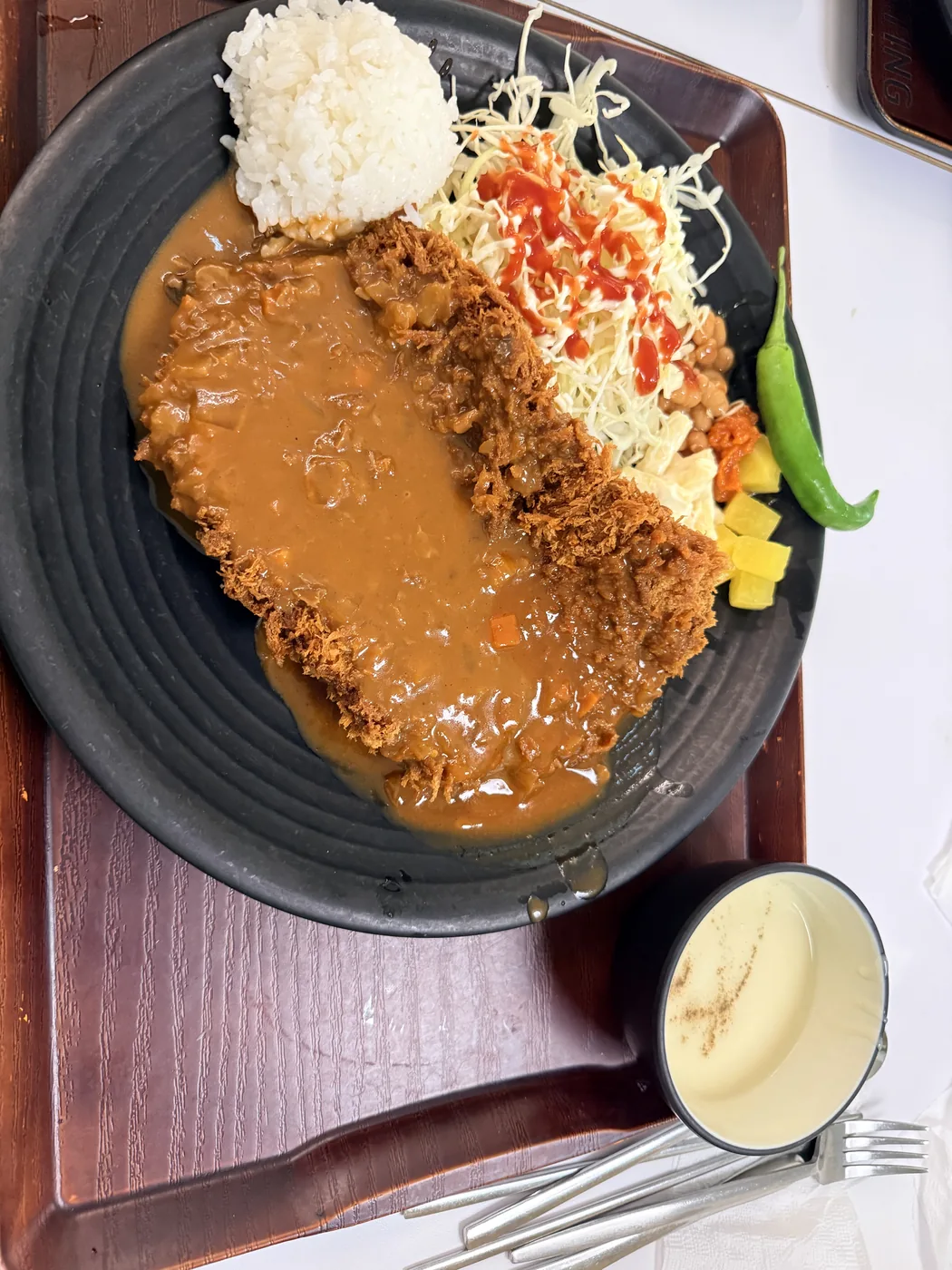
This is the small ritual I look forward to now. Back in Sydney the airport is pure endurance — a queue, a bland flat white, a wait. At Incheon I sit down with a tray of donkatsu and curry, take my time, and let the trip end properly instead of just stopping. It costs a little more than the same dish in the city, sure, but you’re paying for a calm table on your last morning, and that’s a fair trade. Eat before you drift into duty-free, not after — a full stomach makes you a much more sensible shopper.
Duty-free, the art walk, and getting to your gate
Incheon’s duty-free halls are a genuine event — perfume houses, K-beauty counters, the lot — and they deserve more than a paragraph, so I’ve got a dedicated Incheon Airport duty-free perfume and beauty guide for the actual what-to-buy. For departure-day logistics, the only rules that matter: know your liquid allowances for carry-on, keep receipts if you claimed a refund, and don’t lose track of time. The shops are a maze and boarding calls have a way of sneaking up.
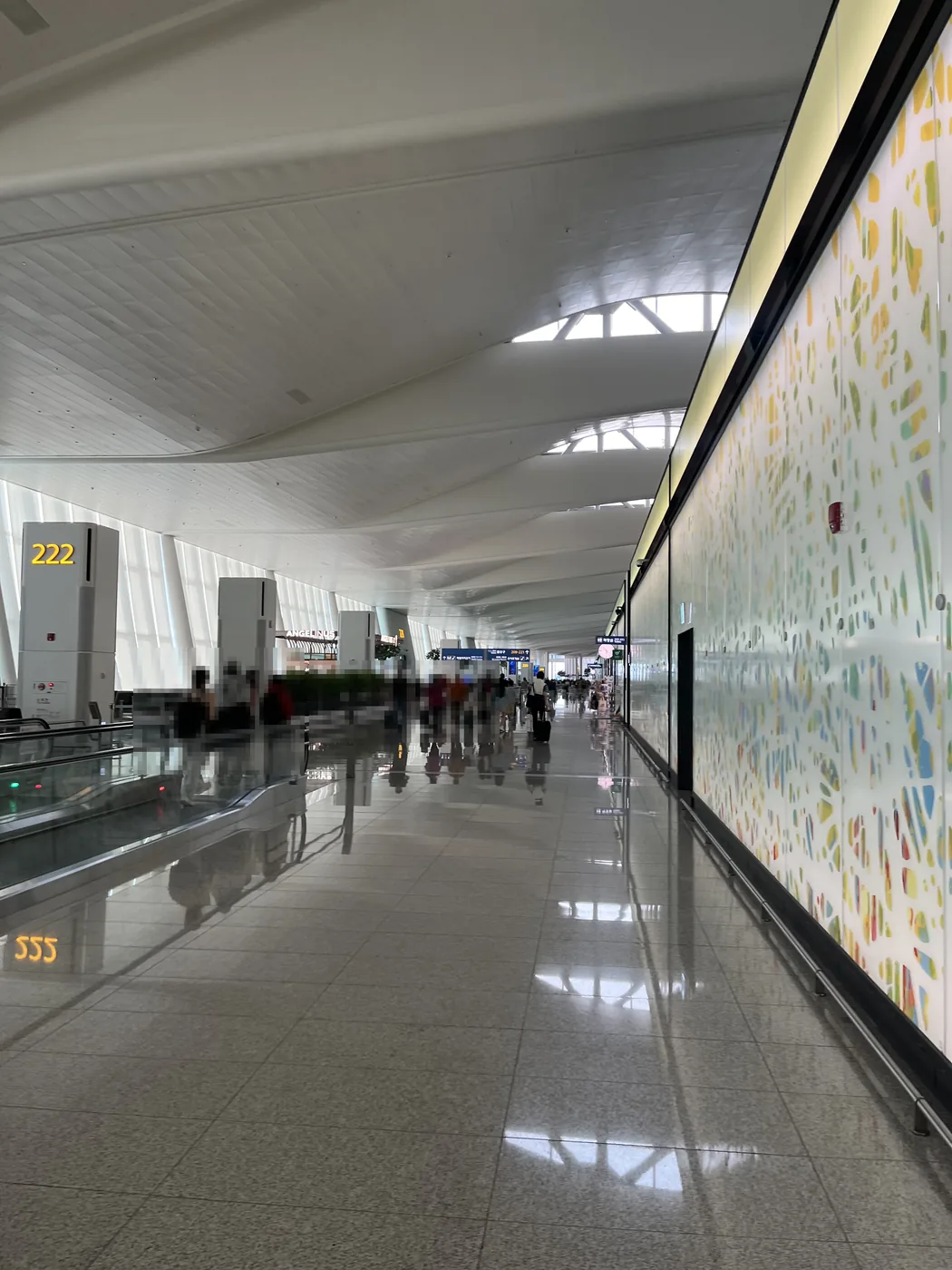
Give yourself a real fifteen minutes to reach the gate, more if it’s a high number. The far concourses are a proper walk, sometimes with a shuttle train in between, and the travelators are lined with light installations and quiet art that are lovely to drift past when you’re not sprinting. Check the departure boards for your gate as soon as you clear security, because they can change, and a gate at the far end plus a bag you set down “just for a second” is how people miss flights at otherwise perfect airports. Get there with time to spare, sit down, and let the last of Korea sink in.
FAQ
How early should I arrive at Incheon Airport for an international flight?
Aim to be inside the terminal three hours before departure. That covers self check-in and bag drop, the tax refund, security, immigration, and a walk to the gate that can take fifteen minutes, with a little slack for a coffee. Round up to three and a half hours during peak season, if you’re checking sports gear, or if the airport’s site shows a congestion warning for your hour.
Where do I get my tax refund at Incheon Airport?
Look for the blue “TAX REFUND / 부가세환급” kiosks near the departure hall on the check-in side. Scan your passport and refund slips; small totals are often refunded on the spot, while larger amounts or certain stores need a customs stamp first, so do this before you clear security. Keep your purchases accessible in case customs asks to see them.
Is my airline in Terminal 1 or Terminal 2?
Terminal 2 handles Korean Air, Delta, Air France, KLM and their partners; most other airlines depart from Terminal 1. Your boarding pass and booking email state the terminal. If you land at the wrong one, a free shuttle connects them in about 15–20 minutes — but budget that time rather than discovering it on the day.
Can I check in and drop my bags myself at Incheon?
Yes, and it’s usually faster than the staffed desk. The self check-in kiosks print your boarding pass and bag tags, and the self bag-drop belts beside them take your checked luggage. Keep power banks and spare lithium batteries in your carry-on, and use the free staffed oversize counter for awkwardly shaped or sports luggage.
What’s the best thing to eat at Incheon before flying?
Skip the idea that airport food has to be grim. Incheon has proper sit-down Korean restaurants airside — bibimbap, kalguksu, gukbap, and fried-cutlet-and-curry plates. Eat before you wander into duty-free rather than after, so you shop on a full stomach and a calmer head.
My Thoughts
For years I saw the airport as the sad bit at the end — the moment Korea was already over. Somewhere along the way that flipped. Now the last morning has a shape I actually like: an early, unhurried arrival, the self check-in I can do half-asleep, the tax refund done and dusted, and then a tray of donkatsu curry eaten slowly while the trip settles.
If you take one thing from this Incheon Airport departure guide, make it the extra hour. Nothing about leaving Seoul needs to be stressful, and the difference between a frantic exit and a fond one is almost entirely the buffer you gave yourself. Arrive early, do things in order, feed yourself properly, and let the goodbye be a good one. You’ll fly home with the trip ending on your terms instead of the clock’s.
Ready for a calm departure?
Give yourself the three hours, sort your terminal the night before, and picture your future self at the gate with a coffee instead of a stitch in their side. If lugging suitcases across the city on your last morning is the part you dread most, locking in a door-to-terminal private transfer takes that one worry off the list. Everything else is just a matter of order.