🌎 Table of Contents
- Introduction
- Everyday Life at the Han River
- Comparing Seoul and Sydney
- Historical and Cultural Significance
- Linking Neighborhoods
- Personal Reflection
- Further Reading (Seoul Tourism, Wikipedia)
📌 Introduction
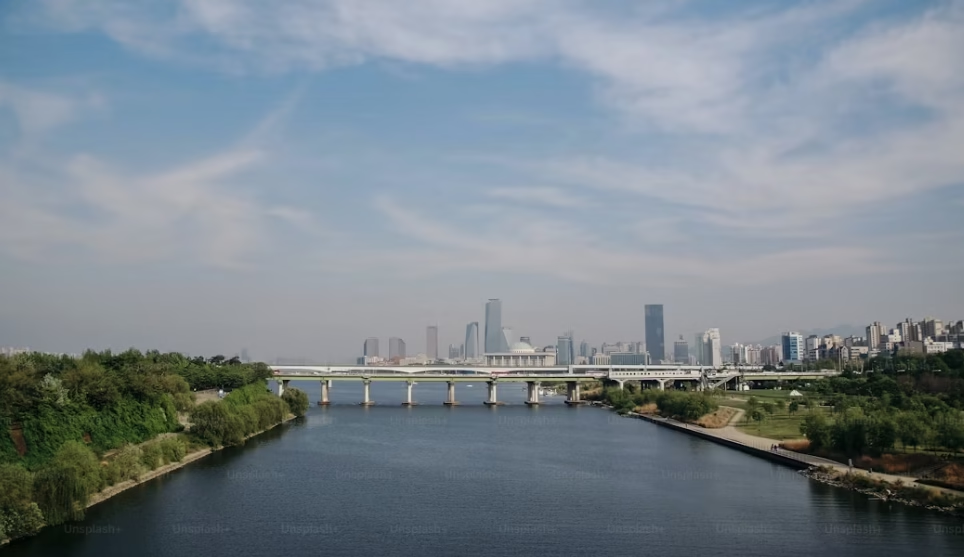
Han River Seoul is more than a river—it is the soul of the city. Flowing majestically across the city, it does not simply divide the north and south; instead, it unites people in countless ways. Having spent years between Seoul and Sydney, I’ve come to see everyday life through two very different rhythms., I see rivers with two different sets of eyes. In Sydney, rivers and harbours like Darling Harbour or Parramatta River are beautiful backdrops for restaurants and weekend strolls. But in Seoul, the Han River is alive every single day, filled with laughter, food, cycling, music, and stories that unfold from dawn until late at night.
Whenever I return to Seoul, one of my first stops is always the Han River. It’s where I reconnect with my past, where I see how the city evolves, and where I can enjoy simple pleasures like instant ramen cooked outdoors or fried chicken delivered straight to a picnic mat. That unique mix of tradition and technology is something that still fascinates me.
📌 Everyday Life at the Han River
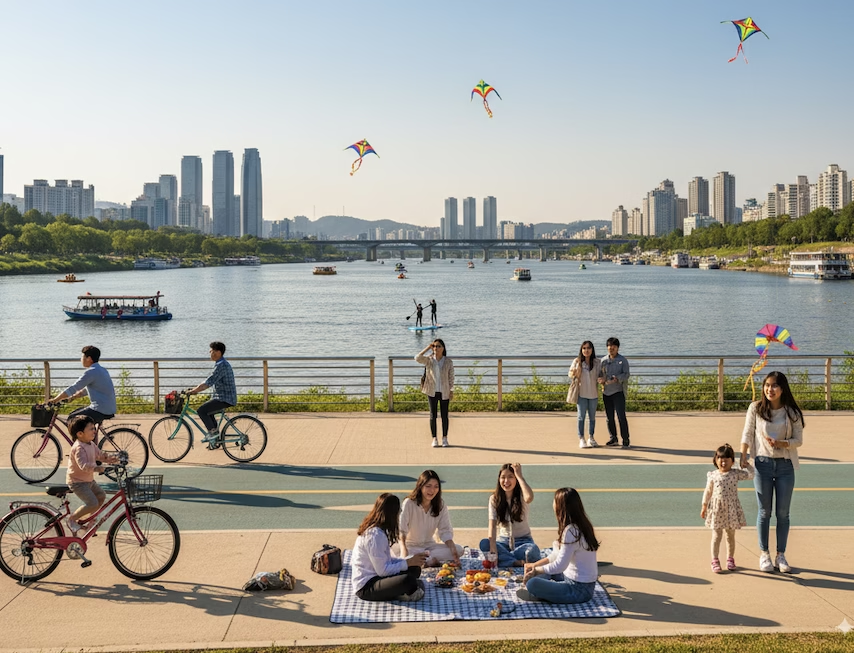
The Han River’s parks stretch across the city, offering open lawns, cycling lanes, jogging paths, basketball courts, and riverside cafés. Yet the most unforgettable experiences here aren’t about organised activities—they’re about the small rituals people have built.
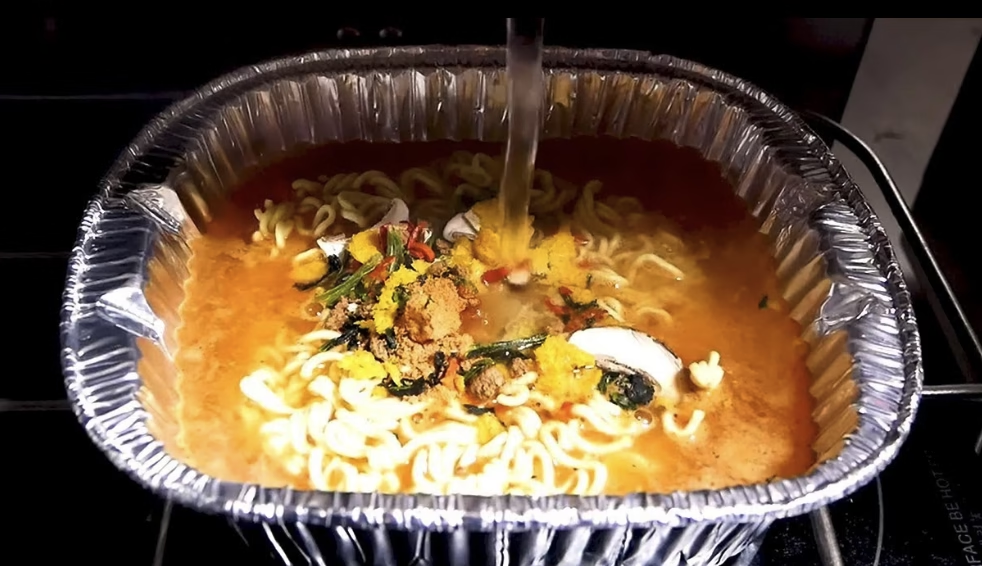
One such ritual is eating ramen by the river. Convenience stores near the river provide outdoor hot water stations where you can cook your own noodles. The moment when you sit on a picnic mat, open the lid of a steaming pot, and take that first bite while watching the city lights dance on the water—it feels like the essence of Seoul condensed into one experience.
But ramen is only the beginning. The Han River is one of the few places in the world where you can order delivery to a park bench. Whether it’s crispy fried chicken with beer, spicy tteokbokki, or even pizza, delivery drivers know exactly how to locate you. I remember one evening in Yeouido Hangang Park with my friends. We ordered chicken, cooked ramen on the side, and laughed as the delivery driver found us under Banpo Bridge. The convenience of enjoying a restaurant-quality meal outdoors, without leaving your picnic mat, is something uniquely Korean. Food delivery at Han River Seoul is something every visitor should try.
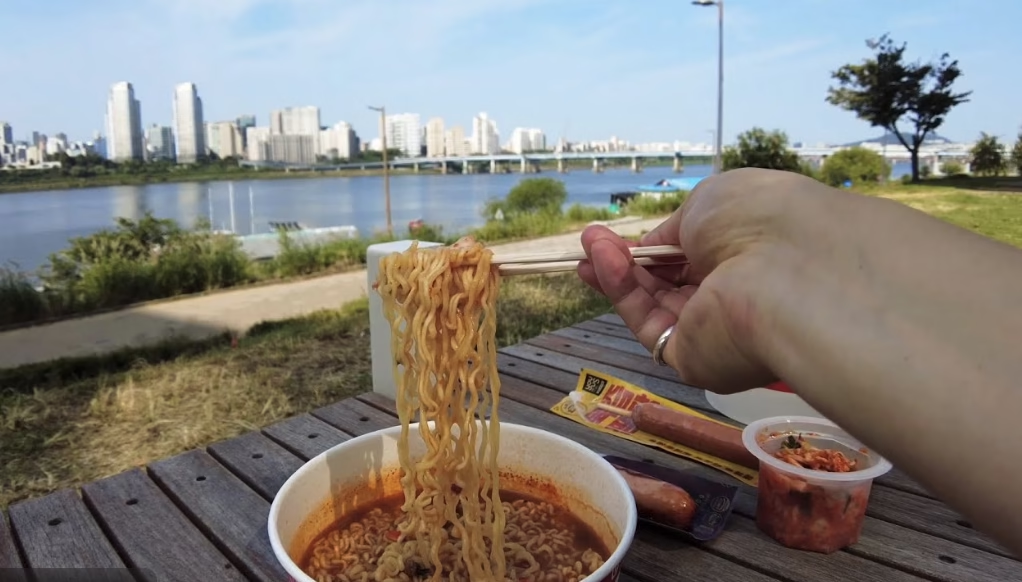
What makes this experience so special is how communal it feels. Families spread out mats, couples sit close together sharing snacks, and students gather to play guitar while waiting for delivery. Even strangers can bond over something as simple as borrowing a lighter or sharing a cup of ramen. This is the Han River at its best: an outdoor living room for an entire city.
In Australia, gatherings by the river often involve barbecues or bringing your own food. Delivery exists, of course, but no one expects it to arrive in the middle of a public park. That difference says so much about Korean culture—how it embraces technology and convenience to enhance even the simplest traditions.
📌 Comparing Seoul and Sydney
Living abroad makes me appreciate the Han River even more. In Sydney, riverside areas are calm and scenic, but they lack the communal energy of the Han River. Unlike Sydney’s rivers, the Han River in Seoul is alive until midnight with families and students. You might see joggers, families with strollers, or groups enjoying wine, but rarely will you find the mix of generations and backgrounds sharing one giant space the way Seoulites do.
The Han River is where students study under bridges, where children ride scooters, and where elderly couples walk hand in hand. This coexistence creates a living mosaic of Seoul. The city’s fast pace softens at the riverside, yet the Han never loses its energy.
When I once took an Australian friend to the Han River, he was astonished by the sight of delivery drivers weaving through the park at midnight. He couldn’t believe people were eating hot fried chicken outdoors so late at night, surrounded by hundreds of others doing the same thing. “In Sydney, the park would be empty after 9 p.m.,” he told me. That reaction made me realise again how unique Seoul’s riverside culture is.
📌 Historical and Cultural Significance
The Han River has been part of Korea’s story for centuries. Once a vital trade and transport artery, it shaped the capital’s growth. While it no longer serves as a commercial route, its role has shifted into something cultural and symbolic. Festivals, fireworks, marathons, and seasonal events all revolve around the Han, making it more than a river—it is Seoul’s central stage.
Morning brings out joggers and cyclists. Afternoons are filled with families setting up tents. Evenings transform the riverside into a social hub with live music, performers, and food lovers. At night, lights from Gangnam’s skyscrapers reflect on the water, contrasting with the relaxed atmosphere at the park. It’s like seeing two Seouls at once: one ambitious and futuristic, the other grounded in community.
📌 Linking Neighbourhoods
One of the Han River’s strengths is how it connects different districts. From the creative energy of Hongdae and Seongsu, to the polished luxury of Gangnam, the river is the thread that unites them. Each neighbourhood brings its own flavour, but when you sit by the Han, they all feel like part of one greater story.
For travellers, this means you can explore these districts during the day and retreat to the river at night for rest and reflection. It’s a rhythm unique to Seoul.
For structured travel guides, you can always check the Seoul Tourism Organization or the Han River Wikipedia page. Yet, these sources cannot replace the experience of watching fireworks burst over Banpo Bridge while sharing ramen with strangers who feel like friends.
📌 Personal Reflection
For me, the Han River has always been more than a backdrop—it’s a place of belonging. I’ve celebrated birthdays there, watched fireworks, had deep conversations with friends, and even spent mornings jogging by the water to clear my mind.
The contrast with Australia remains vivid. In Sydney, the river is a place to admire. In Seoul, the Han River is a place to live. Its accessibility, its culture of outdoor eating and delivery, and its role as a gathering space make it inseparable from the city’s identity.
Whenever I sit by the Han River, I feel connected not only to Seoul but also to the millions of people who share their lives along its banks. That is why, to me, Han River Seoul is not just water—it is the city’s true beating heart
📌 Further Reading
If you enjoyed exploring the Han River’s stories and culture, continue your Seoul journey through these related guides and insider experiences:
- Gwanghwamun Square Seoul Travel Guide 2025 – Discover the history and modern rhythm of Seoul’s symbolic plaza.
- Seoul Korean BBQ Guide 2025: The Ultimate Neighbourhood-by-Neighbourhood BBQ Tour. Seoul Korean BBQ Guide 2025 – From Gangnam to Itaewon, find the best spots to grill and gather.
- Riding Korea Like a Local: How the T-Money Card Became My Travel Companion – Navigate Seoul with ease using Korea’s beloved transport card.
- Seoul Night Markets: Where Culture Meets Street Food – Explore the flavours, lights, and local charm of Seoul after dark.
- Hidden Hanok Villages in Modern Seoul – Step into Seoul’s quieter side where tradition meets the present.
9 thoughts on “🇰🇷 Han River Seoul: The Beating Heart of the City”