Introduction
Gyeongbokgung Palace Guide 2025 helps first-time visitors explore Korea’s royal landmark with tips, information on hanbok rental, and cultural insights.
Where Seoul’s heartbeat meets history
When I walked through Gyeongbokgung again, the contrast between my life in Australia and Korea immediately resurfaced and gave me a clearer view of how the palace blends history with modern city life. In Sydney, the Opera House gleams over the harbour; in Melbourne, Federation Square hums with modern rhythm. But Seoul breathes differently. What impressed me most was not the scale of the palace, but how well it preserves its cultural identity while functioning as an accessible public landmark. What touched me wasn’t grandeur, but the quiet confidence of a place that remembers who it is.
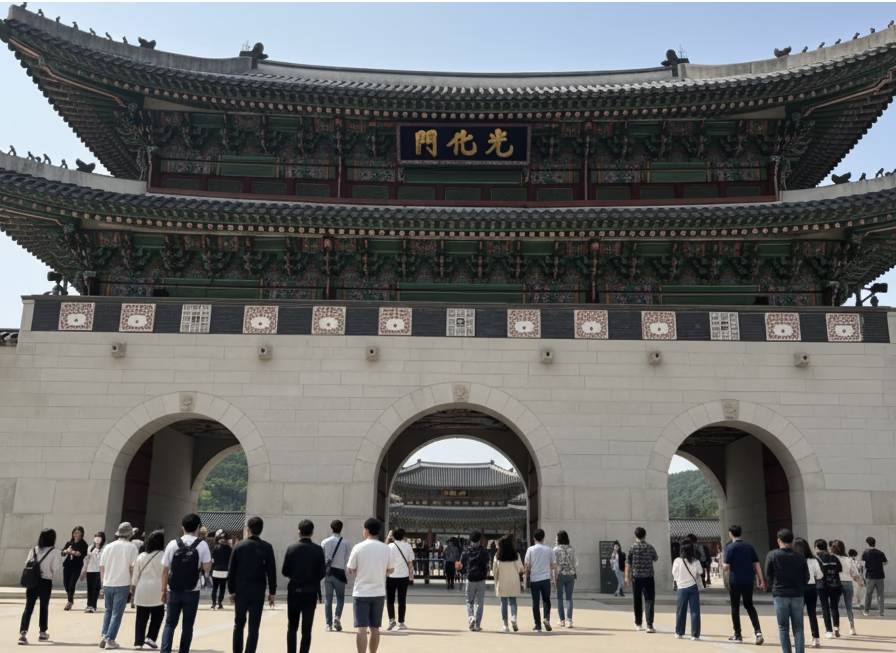
☝️Many tourists are entering Gyeongbokgung Palace — Gyeongbokgung Palace Guide 2025 (Image Source: Original Photo by Unnispicking.com, AI-retouched via Nano Banana)
Table of Contents
- Why the Gyeongbokgung Palace Guide 2025 Matters – A palace that survived and reinvented itself
- My First Hanbok Experience – Wearing tradition and finding belonging
- Getting There Smoothly – Subway and travel routes to Gyeongbokgung
- A Place of Living Rituals – Guard ceremony and timeless pride
- Museums Inside the Palace – Exploring Korea’s everyday heritage
- Day vs. Night Experiences – Two faces of Gyeongbokgung’s beauty
- Best Times to Visit – Seasons that paint the palace
- What Gyeongbokgung Taught Me – Lessons on belonging and identity
- External Source
- FAQs for Visitors – Practical answers before your trip
- Final Reflection – Korea vs. Australia – How history lives differently across cultures
- Related Seoul Travel Guides
Why the Gyeongbokgung Palace Guide 2025 Matters for Visitors
The palace that refused to disappear
Gyeongbokgung has been burned, rebuilt, and reborn. Every courtyard whispers resilience. Standing in front of Geunjeongjeon, I thought of my parents’ generation, who carried the weight of rebuilding, too, just in different ways. The stillness inside contrasts with the rush of city life outside Gwanghwamun Gate. In that silence, I felt what “heritage” truly means: not just beauty preserved, but a spirit that endures.
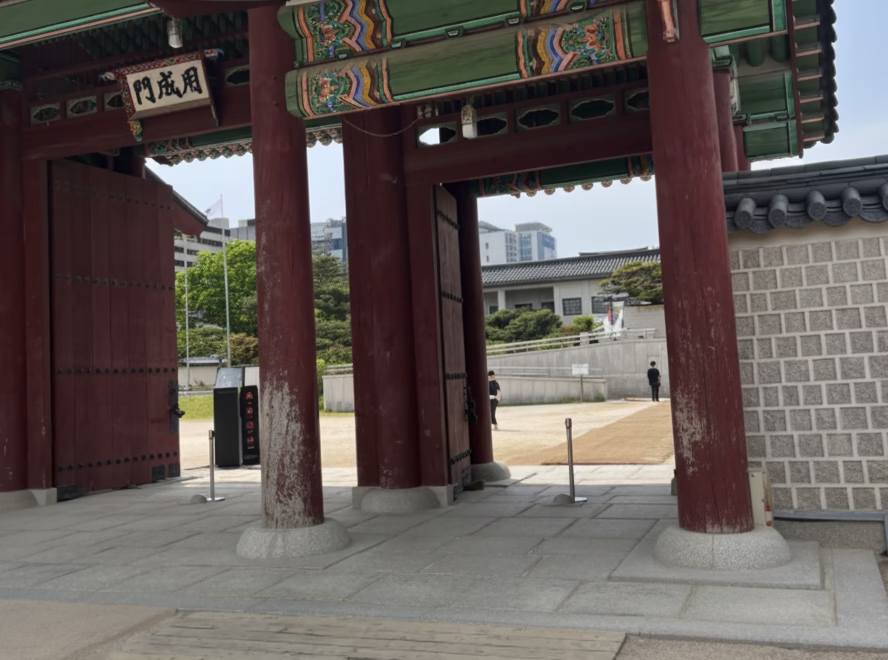
☝️The entrance gate of Heungnyemun Gate at Gyeongbokgung Palace in Seoul. The traditional wooden structure with colourful dancheong patterns stands in contrast with modern city buildings in the background. (Image Source: Original Photo by Unnispicking.com, AI-retouched via Nano Banana)
☝️A short Hanbok experience video (Created by Unniespicking.com)
My First Hanbok Experience
Wearing tradition, not just fabric
The first time I rented a hanbok, I felt unsure because in Australia, traditional clothing is usually worn only during cultural events. But in Seoul, people wore hanbok as if they belonged in the story. Couples laughed, tourists posed, children twirled in silk. I soon forgot my awkwardness. Wearing a hanbok immediately enhanced the experience, allowing the outfit to naturally blend with the palace architecture and giving visitors a more immersive cultural moment.
In Australia, traditional clothes often appear during multicultural festivals or national days, worn briefly before being tucked away again. But at Gyeongbokgung, hanbok isn’t just a costume—it becomes part of the landscape. Beyond the cultural experience, renting a hanbok is also practical if you want great photos, because the colours and patterns naturally match the palace’s architecture. Even tourists who didn’t know each other exchanged smiles, connected by colour and rhythm. I realised that wearing hanbok wasn’t about looking traditional—it was about participating in a shared story that keeps evolving. At that moment, Seoul felt like home again, just in a different century.
👉 Related read: Hanbok at Gyeongbokgung Palace | Ultimate Photo & Rental Guide
👉 Related read: Hanbok in K-Drama 2025
Getting There Smoothly
Reaching Gyeongbokgung is part of the adventure
Take Seoul Metro Line 3 to Gyeongbokgung Station, Exit 5. I still smile thinking about how seamless the subway felt after years in Melbourne, where missing one train could mean a twenty-minute wait. In Seoul, trains arrive every few minutes, announcements are made in multiple languages, and even rush hour feels orderly. The city moves quickly, yes—but it moves together.
👉 Also read: Seoul Taxi Complete Guide 2025 and Seoul Metro Complete Guide 2025
A Place of Living Rituals
When time stands still at the main gate
Near noon, the courtyard stirs. Guards in crimson and blue march to the sound of drums, their expressions solemn, not performative. I expected a show for tourists—what I saw was a ceremony with pride. Children stopped talking; cameras clicked softly. The air felt heavy with history. Watching them, I realised that Gyeongbokgung isn’t only a site of the past—it’s a living stage where identity is reaffirmed each day.
Museums Inside the Palace
A rainy day refuge inside the palace walls
On a drizzling afternoon, I wandered into the National Folk Museum. What I thought would be a short stop became hours of quiet discovery. Exhibits on weddings, farming, and children’s games revealed a side of Korea often overlooked—the rhythm of ordinary lives. History, I realised, doesn’t just belong to kings. It breathes through kitchens, songs, and tools shaped by countless hands.
👉 Visit next: Gyeongbokgung Palace Museums
Day vs. Night Experiences
Two faces of the same soul
During the daytime, visitors can easily explore major halls and take clear photos, while during the special night openings, the palace is illuminated, offering a quieter and more atmospheric experience. Lights bathe the courtyards in soft gold, and every sound—the drumbeats, the shuffling of feet—feels sacred.I missed the first night opening because tickets sold out, but the second time I walked under the moonlit eaves, I finally understood why the night opening is so special: it offers a unique perspective on Korean heritage by combining architecture, lighting, and tradition in one setting.
Night visits offer fewer crowds and a calmer environment, making it ideal for photography and slow-paced exploration. The reflections on the pond mirror every lantern and moonbeam, creating a scene that feels almost unreal. Photographers wait patiently for the perfect frame, while couples stroll quietly, their voices softened by the night air. I remember standing there, listening to the distant drums echo through the courtyards, and feeling that the palace felt deeply connected to the surrounding cityscape. In those moments, I understood why locals and travellers alike return again and again: the night version of Gyeongbokgung feels like discovering a secret Seoul keeps only for those who linger.
Best Times to Visit
The seasons that paint the palace
Spring wraps Gyeongbokgung in blush-pink blossoms; autumn dresses it in fiery gold. Living in Australia, I often laugh at how reversed the seasons are—Sydney warms up just as Seoul cools down. Yet somehow, I feel connected to both. The palace in fall, mirrored against the mountains, always reminds me that beauty has its own timing.
What Gyeongbokgung Taught Me
What Seoul taught me about belonging
In Sydney, heritage sites are usually observed from a distance within curated spaces, whereas in Seoul, many historical locations are integrated into everyday walking routes and public areas. That difference changed how I see both places. Strolling past families in hanbok, students sketching architecture, and travellers discovering history for the first time, I felt gratitude for the country that raised me and the one that shaped me. Gyeongbokgung is not just a preserved site; it remains an active cultural space that demonstrates how Seoul integrates historic identity into everyday life.
👉 Continue your trip: Seoul Two-Day Itinerary 2025
👉 Nearby stroll: Gwanghwamun & Cheonggyecheon Walk Guide
External Resources
FAQs
Q1. Is Gyeongbokgung free with a hanbok?
Yes. Visitors wearing hanbok get free entry, regardless of age.
Q2. What day is the palace closed?
Every Tuesday. Plan accordingly to avoid disappointment.
Q3. Can I visit at night?
Yes, but only during special spring and autumn openings. Tickets must be booked in advance.
Q4. Are English tours available?
Yes. Free English-language tours are offered daily—check the visitor centre for times.
Q5. How long should I spend at Gyeongbokgung?
At least 2–3 hours, more if you plan to visit the museums and rent a hanbok.
Final Reflection – Korea vs. Australia
Walking through Gyeongbokgung, I felt both proud of my heritage and grateful for my years abroad. In Sydney or Melbourne, history often feels curated—framed in museums, separated from modern life. In Seoul, history walks with you. Seeing families in hanbok, students sketching architecture, and tourists marvelling at guard ceremonies made me realise that Gyeongbokgung is not a relic—it is a living bridge between past and present.
For first-time visitors in 2025, the palace is more than just a sightseeing stop. It’s a window into Korean identity and a reminder that history, when lived and celebrated, becomes part of the future.
In Australia, historical landmarks are typically visited intentionally as separate attractions, whereas in Seoul, historic sites like Gyeongbokgung are often located within daily walking routes and city transit patterns. In Seoul, places like Gyeongbokgung exist in dialogue with the present, rather than being isolated from it. Students sketch beside ancient pillars, and office workers cross palace walls during lunch breaks. This contrast between Korea and Australia helped me understand how each country expresses its heritage in different ways. It made me think that Korea’s real strength lies in its ability to renew tradition without losing its essence. For me, that balance between memory and movement is what makes Seoul’s heart beat differently from anywhere else I’ve lived.
Related Seoul Travel Guides
👉 Hanbok in K-Dramas – Discover how traditional fashion styles from hit K-dramas influence modern hanbok trends.
👉 Gyeongbokgung Palace Museum – A closer look at the palace’s hidden galleries and royal artifacts.
👉 Myeongdong Street Guide 2025 – Where tradition meets shopping and street food culture.
👉 Gangnam Local Vibes – Explore the contrast between modern Seoul energy and hidden traditional corners.
👉 Cheonggyecheon Riverside Walk – A peaceful route that connects Gwanghwamun to the heart of the city.
👉 Seongsu Neighbourhood Guide – Seoul’s creative district blending cafés, design shops, and old factories.
3 thoughts on “🇰🇷First-Time Visitors’ Guide to Gyeongbokgung Palace 2025”