Disclosure: This post contains affiliate links. If you purchase through these links, I may earn a commission at no extra cost to you.
The orange panel caught my eye before I’d even found a luggage cart. WOWPASS Korea was the third kiosk along the arrivals hall wall at Incheon, tucked between a phone rental counter and a bank branch with a queue already six people deep. I had ₩0 in cash, a Sydney debit card, and a T-money card from three years ago sitting flat somewhere in my wallet. Twenty minutes later I walked out with both sorted.
What Is WOWPASS, Exactly?
WOWPASS Korea is a kiosk-and-card system built specifically for travellers who land with foreign cash and no local transit card. You feed the machine your currency — Australian dollars, US dollars, most major currencies — and it exchanges it at a rate close to the interbank rate, then loads the balance onto a reloadable WOWPASS card. That same card doubles as a T-money card, so it taps on buses and subway gates from the moment it’s in your hand.
I’d used a normal currency exchange counter on every previous trip. This was the first time I skipped one entirely, and the rate the kiosk quoted was noticeably better than the exchange booth I’d walked past thirty seconds earlier. WOWPASS’s own site lists sixteen accepted currencies and claims over three million users, so this isn’t some obscure machine — it’s become a fairly standard part of arriving in Korea.
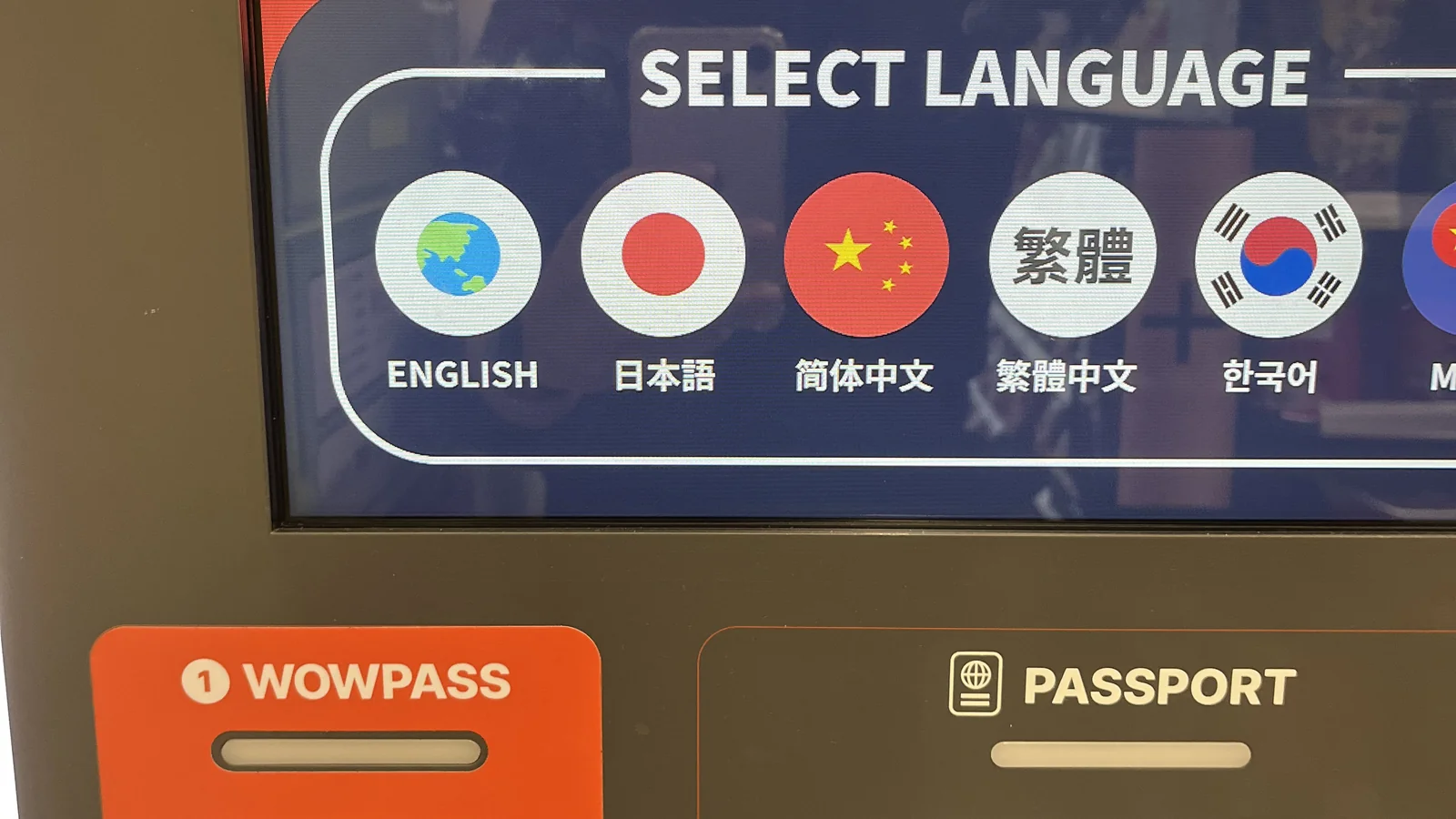
How the WOWPASS Kiosk Works
The screen greets you in six languages before you touch anything. Pick English, and it walks you through four steps: buy or top up a card, insert your passport for identity verification, feed in your foreign banknotes, and confirm the exchange rate before it’s final.
The card itself costs a small deposit, refundable if you return it before leaving Korea. Loading it takes cash only at the kiosk — no foreign card swipes at this stage — so keep whatever banknotes you’re carrying handy rather than buried in checked luggage.
Step one asks you to choose between buying a new card or topping up one you already hold. First-timers pick “new card,” pay the deposit, and the machine dispenses it on the spot — no waiting for anything to print or activate. Step two is the passport scan, which reads the photo page and confirms you’re a real traveller rather than a bot working the machine; this is also the step most likely to need a second attempt if there’s glare on the laminate.
Step three is where you feed in banknotes one at a time through the slot. The screen updates the running total in Korean won as each note is accepted, so you can watch the exchange happen in real time rather than trusting a printed receipt after the fact. Step four asks you to confirm the final rate and balance before the transaction locks in — read this screen properly, since once you tap confirm there’s no undo.
Once loaded, the balance shows on the card and works two ways: as a T-money card for transit, and as a prepaid card for some retail terminals that accept it directly. I used mine on the subway for the rest of the week without topping it up again.
The whole process, start to finish, took me under ten minutes once I was standing at the machine — most of that was the passport-scan step, which paused twice before it read cleanly.
Using WOWPASS Beyond the Airport
The card doesn’t stop working once you leave the arrivals hall. It taps on every subway gate and bus reader exactly like T-money, and WOWPASS kiosks exist in several Seoul neighbourhoods too — Myeongdong and Hongdae both have them — so you can top up again mid-trip without hunting for the airport branch. I topped mine up once more near Myeongdong Station on day four, and the process was identical to the first time.
Before you fly home, any WOWPASS kiosk will refund your remaining balance and card deposit back to cash or, in some cases, back onto a linked card. Do this before security, not after — there’s no kiosk on the other side of immigration.
WOWPASS vs Everything Else You Could Do Instead
In Sydney, I’m used to two options before a trip: order foreign cash from my bank three business days ahead, or land and pay whatever surcharge the airport exchange counter feels like charging that morning. Neither is great. WOWPASS solves both problems in one machine, but it isn’t automatically the best choice for every traveller.
| Method | Speed | Rate | Best for |
|---|---|---|---|
| WOWPASS kiosk | ~10 min at arrivals | Close to interbank | First-timers who need cash + transit card together |
| Bank exchange counter | 10–25 min queue | Weaker, plus service fee | Those who prefer a staffed counter |
| Korean ATM withdrawal | 2–5 min | Decent, minus your home bank’s fee | Travellers with a low-fee debit card already |
| Pre-ordered cash from home | None at airport | Usually the worst rate | Those who want cash in hand before flying |
If you already carry a fee-free debit card, a Korean ATM might beat WOWPASS on convenience alone. But if you want cash, a transit card, and one queue instead of two, WOWPASS is hard to beat on your first morning in the country.
How Much Should You Actually Exchange?
Korea is more card-friendly than it used to be, even at small street stalls, so you don’t need to carry a week’s budget in cash. I exchange roughly ₩150,000–200,000 (about AU$150–200) on arrival, enough for a few days of transit, snacks, and markets where card readers are hit-or-miss. Anything larger, I’d rather leave sitting in my home account earning nothing than carry around Seoul in a money belt.
If you burn through it faster than planned, that’s exactly what the top-up machines and extra WOWPASS kiosks in the city are for — you’re never stuck with a fixed amount for the whole trip.
Loading Your T-money Card at the Same Time
If you’d rather keep a T-money card you already own instead of a fresh WOWPASS card, the airport also has dedicated top-up machines a short walk from the kiosks. These take cash only, no card, and the slot is unmistakable once you’re standing in front of it.
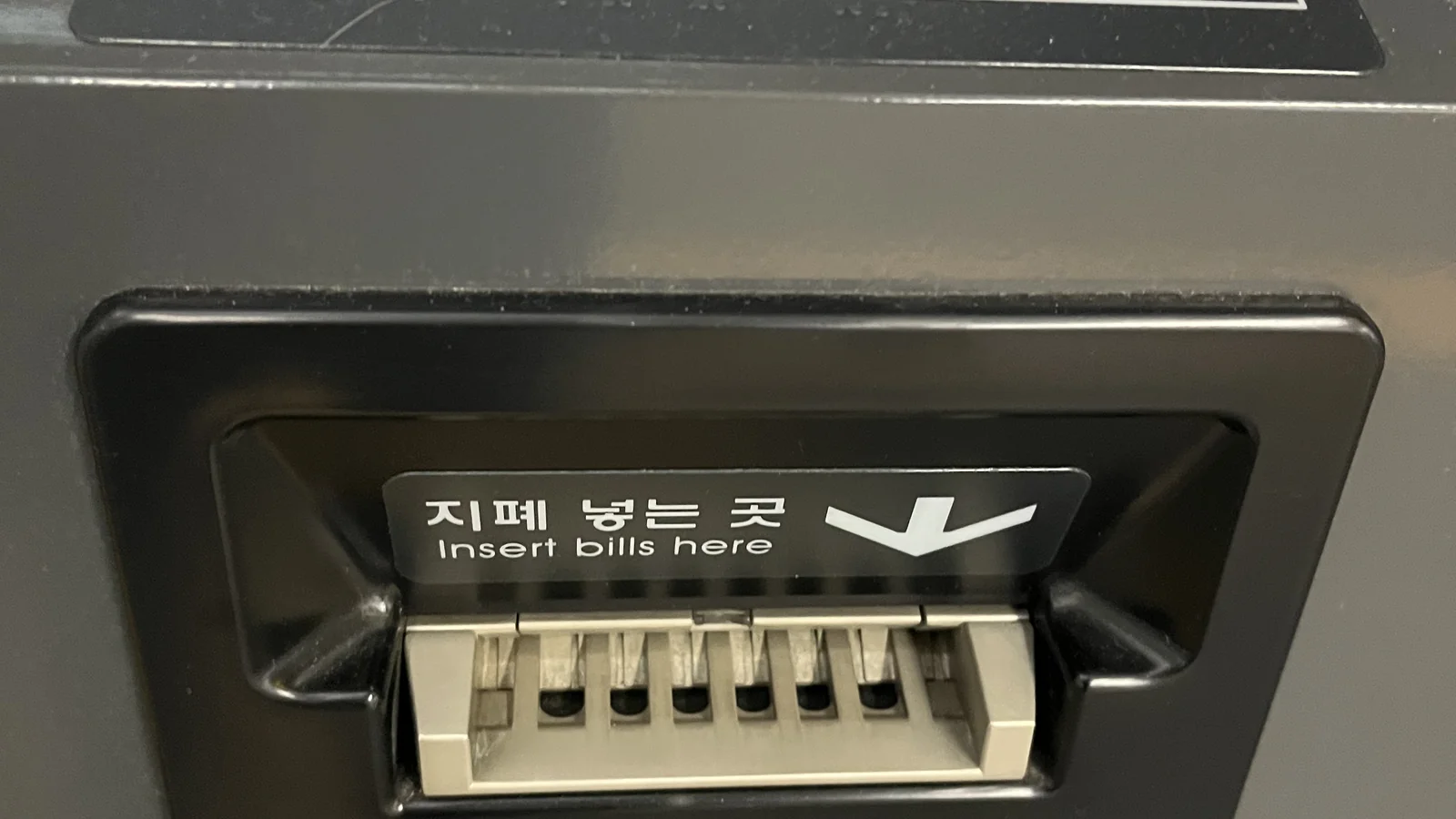
Feed in notes in ₩1,000 increments and the balance updates instantly on the little screen. There’s no minimum top-up and no fee. I keep an old T-money card from a previous trip in my travel wallet specifically so I can skip buying a new one every time — it never expires between visits.
For a deeper walkthrough of using T-money on buses, subway, and even some taxis, I’ve written a full T-money card guide that covers the day-to-day side once you’ve got a balance loaded.
When a Private Transfer Beats Doing This Yourself
None of this is compulsory. If you’re landing exhausted after a 10-hour flight, travelling with kids, or simply don’t want to think about kiosks on day one, a private transfer straight to your hotel removes the decision entirely.
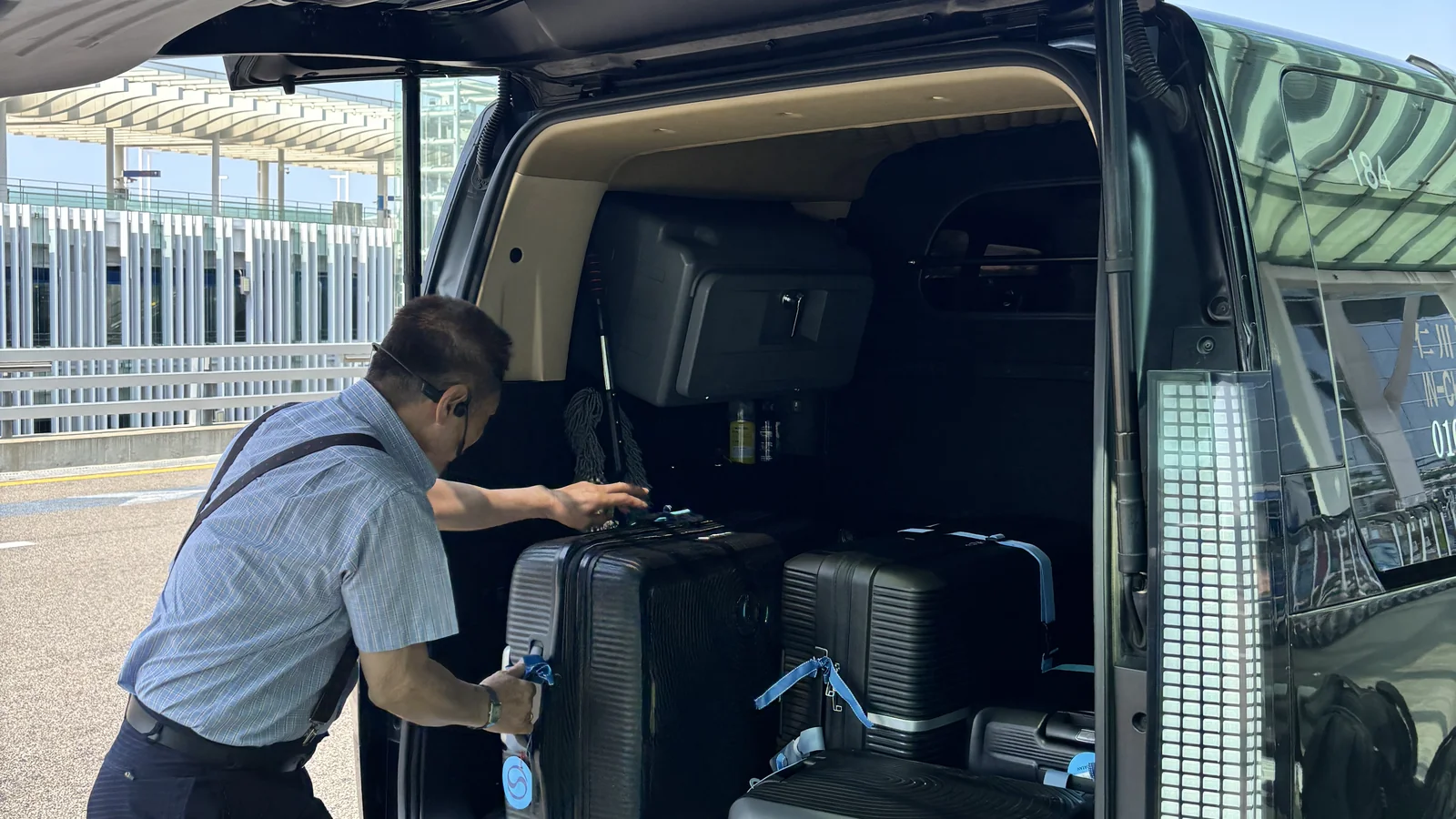
The driver in this photo had our bags stacked and strapped before we’d finished checking the boot was actually empty. Fixed price, no meter, no currency needed until later. You can still get your WOWPASS or T-money sorted the next morning once you’ve slept.
🚗 Skip it entirely: Book a private Incheon Airport transfer on Klook → (affiliate link)
The Other Thing to Sort Before You Land
Cash and transit sorted, the last piece is data. I activate an eSIM before I board so it’s already connecting by the time I’m through immigration — no hunting for airport wifi to look up which exchange kiosk to walk to.
📱 Get connected on arrival: Get a 5G eSIM for South Korea on Klook → (affiliate link)
Once you land, if you’re heading straight into the city, my Incheon Airport to Myeongdong guide covers the AREX train and taxi options in detail. And for everything else about getting around once you’re settled, the full Korea transport guide maps out subway, buses, KTX, and taxis in one place.
Quick Tips
A few things I’d have wanted to know before my first WOWPASS stop:
- Keep your loose foreign banknotes accessible in carry-on — the kiosk won’t accept coins.
- The passport scanner is picky about glare. Remove any plastic passport cover before you scan.
- WOWPASS kiosks are also in parts of Seoul, not just the airport, if you land without exchanging and need one later.
- Check Incheon International Airport’s official arrival procedures page before you fly if it’s your first time — it covers immigration and customs steps that happen before you ever reach a kiosk.
- Bring notes rather than a single large bill — the machine has no problem with several smaller notes, but check your city’s ATM daily withdrawal limits if you’re topping up separately by card.
FAQ
Is WOWPASS Korea safe to use?
Yes. It’s operated by a registered Korean fintech company, and the identity check via passport is a standard anti-fraud step, not a data risk unique to tourists.
Does WOWPASS charge a fee to exchange currency?
There’s a small service fee built into the exchange rate, similar to most kiosks, but it’s generally lower than a staffed airport exchange counter.
Can I get my deposit back if I don’t use the card again?
Yes, the card deposit is refundable at a WOWPASS kiosk before you leave Korea, along with any unused balance.
Do I need a WOWPASS card if I already have T-money?
No. You can skip WOWPASS entirely and just top up your existing T-money card with cash at any subway station or the airport top-up machines.
Which currencies does the WOWPASS kiosk accept?
Major currencies including USD, AUD, EUR, JPY, and CNY are accepted. Less common currencies may need a traditional exchange counter instead.
Can I use a WOWPASS card outside of Seoul?
Yes. As a T-money-linked card, it works on transit and at compatible retailers nationwide, not just within the capital.
What happens if the kiosk is out of order?
Incheon Airport has multiple WOWPASS kiosks across both terminals, so if one is offline or has a long queue, walk to the next one rather than waiting it out.
My Thoughts
I didn’t expect a kiosk to be the thing I’d recommend first out of everything at Incheon, but it genuinely saved me a queue and gave me a better rate than the counter next to it. It won’t replace a private transfer if you land shattered, and it won’t beat a zero-fee debit card if you already have one sitting in your wallet. For most first-time visitors juggling both cash and a transit card on day one, though, it’s the fastest way to walk out of arrivals with both problems solved.
💰 Cash and transit sorted — what about the rest of your trip?
Work out hotels, food, and activities by neighbourhood and travel style, in your own currency.
Try the free Seoul cost calculator →
Related Links
- Incheon Airport to Hongdae Guide — if Hongdae’s your first stop instead of Myeongdong.
- Incheon Airport to Gangnam Guide — the route if you’re staying south of the river.
- Seoul 1-Week Itinerary (27 November) — now that cash and transit are sorted, here’s how to spend the week.