On a hot Seoul day, Cheonggyecheon in summer is the closest thing the city has to free air conditioning, and it is my first stop whenever I am home in the heat. You climb down off the baking pavement, and suddenly you are beside cool running water with your shoes already half off. I grew up in Seoul, have lived in Sydney for twenty years, and come home once a year, usually in the warmer months, so I have spent a lot of summer afternoons right here. Let me show you how to enjoy it.
Why Cheonggyecheon in Summer Is the Best Free Escape
Seoul summers are hot and humid in a way that surprises a lot of visitors, and the city’s concrete holds that heat well into the evening. Cheonggyecheon is the antidote. Sunk below street level with cool water running through it, the corridor genuinely feels several degrees cooler than the road above, and that drop is the whole reason locals flock to it once the temperature climbs.
It is also free, open all hours, and right in the middle of downtown, so there is no planning involved. You do not need to drive anywhere or pay for anything; you just find the nearest set of steps and go down. On a sticky afternoon, that easy access to moving water in the city core is worth more than any air-conditioned cafe.
And it turns into a proper social scene in the heat. The banks fill with office workers on their lunch break, families with kids, and couples sharing the shade under the bridges, everyone there for the same simple reason. For wider context on what is on around the city in the warmer months, the Korea Tourism Organization keeps a handy seasonal overview. There is a relaxed, communal summer mood that you only get in this season, and it makes the stream feel alive. For the full year-round picture, my Cheonggyecheon stream walk in Seoul guide covers every season.
Dipping Your Feet and the Stepping Stones
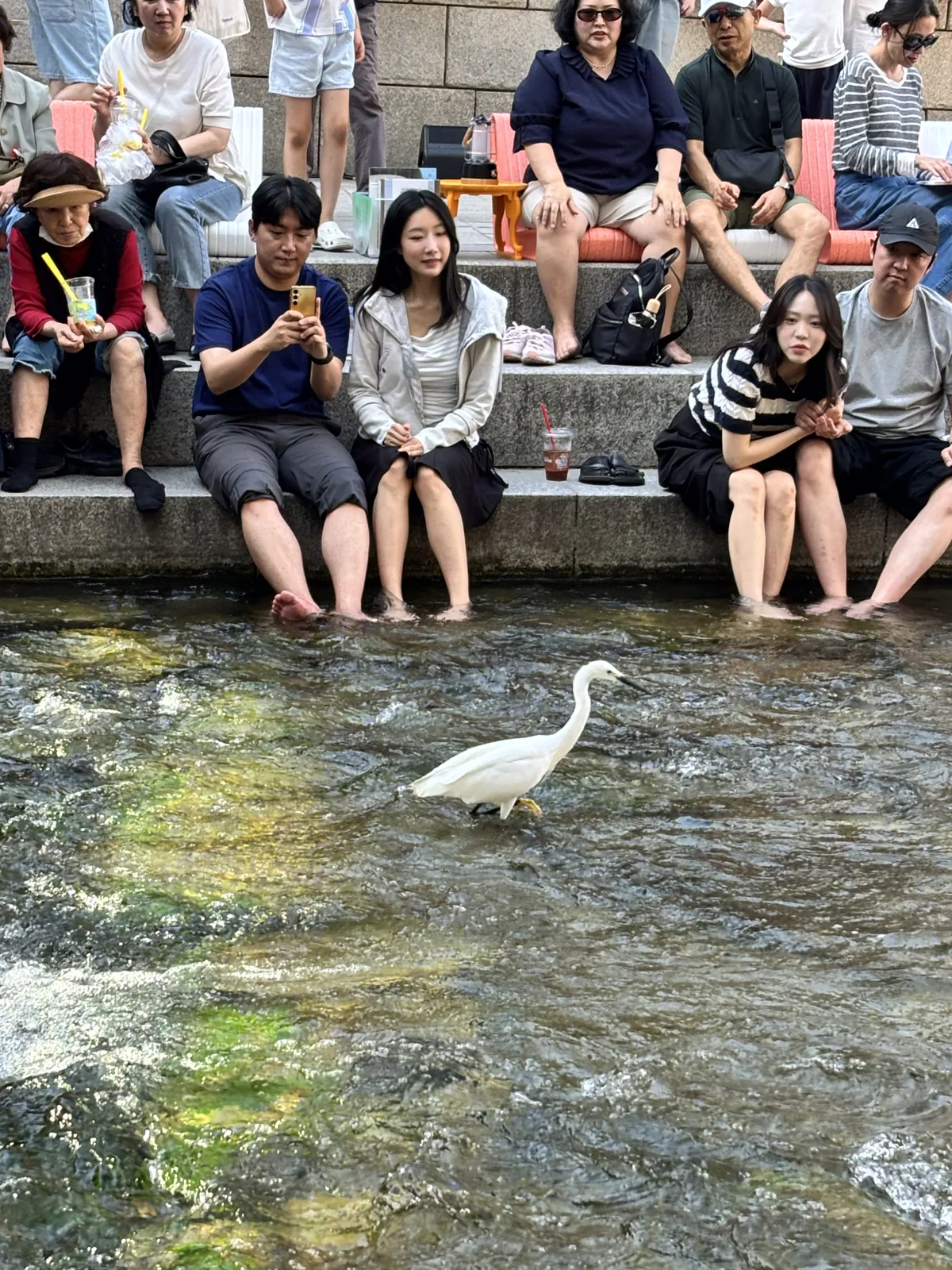
The single best summer thing to do here is the simplest: sit on the stone edge, roll up your trousers, and put your feet in. The water runs shallow, cool, and clear along the banks, and it is a completely normal thing locals do all along the stream. Within a minute of sitting down, the heat of the day just lifts off you.
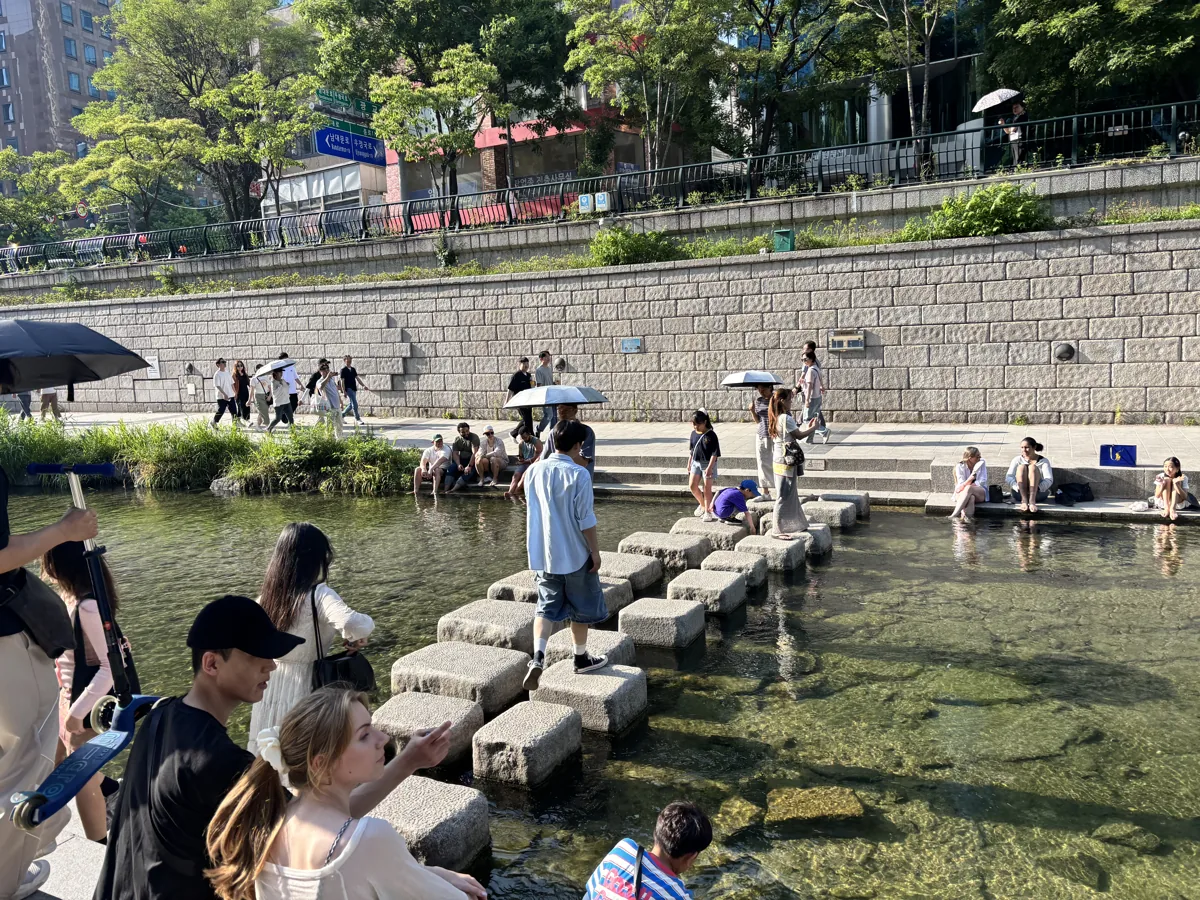
The stepping stones are the other summer ritual. Flat blocks set across the water let you hop from bank to bank, and in summer they are busy with people crossing, pausing mid-stream for a photo, and kids daring each other across. They sit just above the waterline, so take your time, because they can be slick and the queue behind you is patient enough.
A word of honest caution, though. The stream is fed by the city and rises fast after heavy summer rain, so the water can turn from ankle-deep and gentle to high and quick within hours. On clear days it is perfectly safe for paddling, but if it has been pouring, admire it from the bank rather than wading in. Common sense keeps it the lovely, easy thing it should be.
One tiny practical thing I have learned the hard way: bring a small towel or even a spare pair of socks. Your feet will be wet when you decide to move on, the stone paths are warm but not instantly drying, and squelching into your next stop is a small but real misery. A face towel weighs nothing in a bag and turns the dip from a one-off into something you will happily do twice in an afternoon.
The Herons and the Quiet Surprises
One thing that delights first-timers is the wildlife. For a stream running through the dead centre of a megacity, Cheonggyecheon is surprisingly full of life, and in summer you will often spot a white heron or egret standing dead still in the shallows, fishing, completely unbothered by the crowds a few metres away.
Once you start looking, there is more. Small fish dart around the stepping stones, ducks paddle the calmer pools, and dragonflies hang over the water on hot afternoons. It is a genuine little ribbon of ecology that the restoration brought back, and watching a heron hunt while skyscrapers loom overhead is one of those only-in-Seoul contrasts I never tire of.
This is also the half of the stream that rewards slowing down. If you only march along taking photos, you miss it, but if you sit with your feet in the water for twenty minutes, the birds and fish come to you. That stillness, in the middle of all that downtown noise, is the quiet surprise that makes a summer visit special.
It is worth remembering why any of this is here at all. Before the restoration, this exact spot was a buried stream under a concrete highway, with no water, no herons, and certainly nowhere to cool your feet. Bringing the stream back to the surface did not just give the city a pretty walk; it created a whole little summer habitat in the heart of downtown. Knowing that, watching a heron hunt where cars once roared overhead, adds a quiet weight to the scene that I think about every time I sit down on the bank.
How to Beat the Heat Down There
The stream is cooler than the street, but it is not magic, and in peak summer you still need a little strategy to enjoy it in comfort. The biggest factor is shade, which is patchy along the wide opening stretch and much better further downstream where the trees lean over the water.
Time your visit for late afternoon or early evening rather than the brutal midday sun. By around five or six o’clock the towers throw long shadows across the path, the worst of the heat has broken, and you can walk comfortably right into the prettiest light of the day. Bring water, a hat, and maybe a hand fan, which is what you will see locals carrying.
If you do come in the middle of the day, lean on the bridges. The undersides give real shade, the air moving along the water is cooler there, and they are where everyone clusters when the sun is at its worst. Treat the bridges as your rest stops and hop between them, and even a hot noon visit stays pleasant.
It also helps to think of the stream as one half of a hot-day loop rather than the whole plan. The streets just above are full of air-conditioned cafes, so a good rhythm in peak heat is twenty cool-footed minutes by the water, then a cold drink in the air conditioning upstairs, then back down again. Alternating like that lets you enjoy the stream for hours without ever getting overheated, and it is exactly how I pace a really sweltering afternoon down here.
A Summer Visit at a Glance
Here is a hot-day visit boiled down to the essentials so you can fit it around the rest of your day.
| Detail | What to Expect |
|---|---|
| Cost | Free, open 24 hours, no ticket |
| Best summer thing to do | Dip your feet and cross the stepping stones |
| Best time of day | Late afternoon into evening, for shade and light |
| Look out for | White herons fishing in the shallows |
| Bring | Water, a hat, a fan, easy-off shoes |
| Safety note | Stay out of the water after heavy rain |
Honest Tips for a Hot Day
A few small things make a summer visit much more comfortable, and they come from plenty of my own sweaty afternoons down there. None of it is essential, but each helps you enjoy the stream rather than endure the heat.
First, wear shoes you can slip off easily, because you will want your feet in that water within minutes and fiddling with laces by the bank is a small misery. Second, go late in the day; the difference between noon and five o’clock down there, in both heat and light, is enormous. Here is my honest Korea-versus-Australia moment: in Sydney, cooling off on a hot day means a drive to Bondi and a fight for a patch of sand, but in Seoul I just walk down some steps downtown and my feet are in cool water in under a minute. I miss that easy, free relief every Australian summer.
Third, make an evening of it. The stream is at its loveliest as the light softens, and you are perfectly placed to roll straight into dinner once you have dried off. The grill alleys just up the bank are exactly where I head, which I cover in my Korean BBQ near Cheonggyecheon guide.
How It Fits Your Seoul Summer
Cheonggyecheon in summer works best as a cool-down woven between hotter, busier plans rather than a destination in itself. It sits in the historic Jongno core, so it slots naturally between the palaces, the markets, and a downtown dinner, giving you a place to reset whenever the heat gets too much.
My favourite summer rhythm is to do the sweaty sightseeing in the morning, retreat to the stream for a cool-footed hour in the late afternoon, then eat nearby as it gets dark. If your trip happens to land in spring instead, the very same stretch puts on a completely different show with its lantern displays, which I write about in my Cheonggyecheon lantern festival guide.
So do not save it for a quick look. On a hot day, the stream is the part of your itinerary that makes the rest bearable, the cool, green, free seam that holds a sweltering Seoul afternoon together. Give it a slow hour with your feet in the water and it might be the bit you remember most fondly.
FAQ
Can you put your feet in the water at Cheonggyecheon in summer?
Yes, paddling in the shallow edges is a normal summer thing that locals do all along the banks. The water is cool and clean enough for dipping your feet, and it is one of the best free ways to beat the Seoul heat. Watch your footing on the slick stones, and stay out of the water after heavy rain, when it runs higher and faster.
Is Cheonggyecheon cooler than the rest of the city?
Noticeably, yes. Because the stream sits below street level with cool water running through it, the corridor feels several degrees cooler than the pavement above, which is exactly why locals flock to it in summer. The shaded stretches and the undersides of the bridges are cooler still, so use them as rest stops on the hottest days.
What is the best time to visit Cheonggyecheon in summer?
Late afternoon into early evening is ideal. By around five or six o’clock the towers cast shade across the path, the worst heat has broken, and you walk into the prettiest light of the day. Midday is doable if you stick to the shaded bridges, but the experience is far more comfortable once the sun drops lower.
Is there wildlife at Cheonggyecheon?
Surprisingly, yes, for a stream in the heart of a megacity. In summer you will often see white herons or egrets fishing in the shallows, along with small fish around the stepping stones, ducks in the calmer pools, and dragonflies over the water. The restoration brought a genuine little strip of ecology back to the city centre.
Is it safe to visit Cheonggyecheon after rain?
Enjoy it from the bank rather than the water after heavy rain. The stream is city-fed and rises quickly when it pours, turning from ankle-deep and gentle to high and fast within hours. On clear days it is perfectly safe for paddling, but if there has been a downpour, keep your feet on the path and just admire the flow.
My Thoughts
Of all the things I do when I am home in the heat, an hour with my feet in Cheonggyecheon is the one I look forward to most. It is not dramatic or expensive, just cool water, a heron, and the city humming somewhere above me, and that is exactly why I love it.
My honest advice is to lower your expectations and raise your patience. Do not treat it as a sight to photograph and leave; treat it as a place to sit. Roll up your trousers, get your feet in, watch the birds, and let the heat drain out of you for a while. That is the whole point.
It costs nothing, it is right where you already are downtown, and on a brutal Seoul summer day it can quietly become the best hour of your trip. Free, cool, and a little bit wild in the middle of all that concrete, the stream in summer is Seoul looking after you.
Planning a Hot-Day Visit?
Go late in the afternoon, wear shoes you can slip off, and bring water and a hat. Find a spot on the bank, get your feet in the cool water, and keep an eye out for the herons. Use the shaded bridges as rest stops, then roll into a nearby dinner as it cools. Read this alongside the guides below and you will use the stream exactly like a local would.