Disclosure: This post contains affiliate links. If you purchase through these links, I may earn a commission at no extra cost to you. As an Amazon Associate, I earn from qualifying purchases.
Some of the best Korean BBQ near Cheonggyecheon sits a two-minute climb up from the water, in the grilled-meat alleys behind Jonggak. After a slow stream walk one warm evening, we followed the smell of charcoal and pork into a place with a heavy stone grill sunk into every table. I grew up in Seoul, have lived in Sydney for twenty years, and come home once a year, so I have a lot to compare it to. Let me take you through that exact dinner.
Where This BBQ Area Actually Is
Cheonggyecheon runs right through the old Jongno district, and the moment you climb the stairs on the northern, Jonggak side, you are in one of central Seoul’s densest eating quarters. The lanes behind the Bosingak bell pavilion and the towers of Jongno are packed with grilled-meat restaurants, neon signs stacked floor on floor, and the constant hiss of meat hitting hot metal.
This is why the stream and dinner go together so naturally. You spend the late afternoon walking the water, then surface straight into a neighbourhood built for exactly this kind of evening. If you have not done the walk yet, my Cheonggyecheon stream walk in Seoul guide covers the stroll that leads you right here.
You do not need a reservation or a famous name to eat well here. The honest truth is that dozens of these places are good, busy, and full of locals, and wandering until one looks lively is a perfectly sound strategy. Look for a crowded room, a stone grill at each table, and staff moving fast, and you will rarely go wrong. For a little official context on the area, Visit Seoul has a useful overview of the Jongno dining streets.
The Stone Grill That Makes It Special
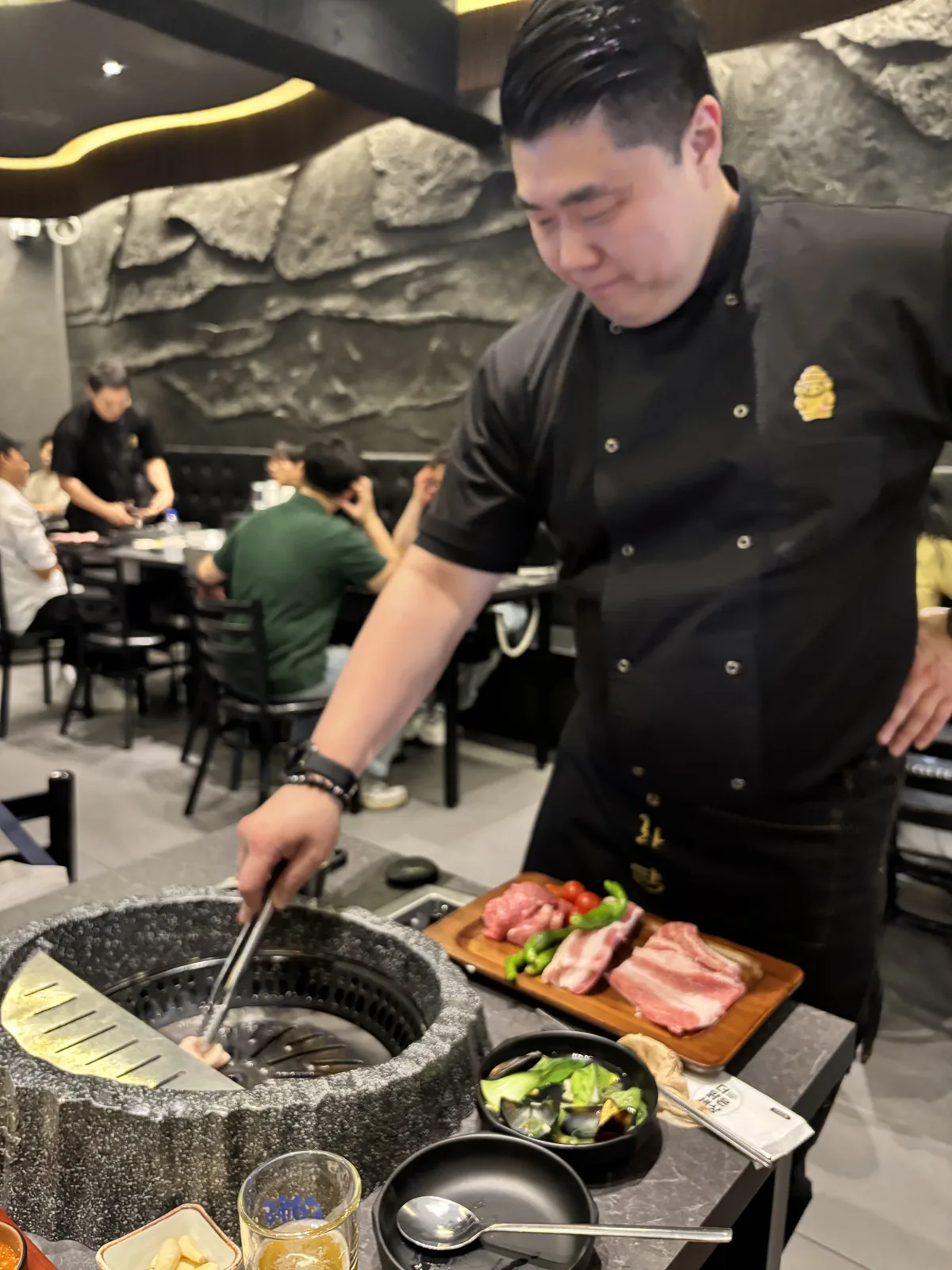
The thing that stopped me in my tracks was the grill itself. Instead of the usual gas grate or charcoal bucket, each table had a thick round stone slab cut with deep concentric grooves, like a record, with a little well in the centre. The grooves channel the fat away from the meat as it renders, so the pork crisps instead of stewing in its own grease.
That centre well is not just for show either. It catches the running fat and often holds a scoop of ssamjang, the thick savoury-sweet dipping paste, so it warms gently while you eat. The whole design is built around fatty cuts like pork belly, and it does something a flat pan simply cannot, giving you crisp edges and clean, non-greasy bites.
It also holds heat beautifully. Even after the burner is turned down, the stone keeps radiating, so the last pieces cook as slowly and evenly as the first. I have cooked Korean BBQ at home on cast iron and butane plates for years, and the difference this heavy stone makes to the texture of the meat genuinely surprised me. If you want the wider cultural background on Korean grilled meat, the Korea Tourism Organization has a good primer on the country’s barbecue traditions.
What We Ordered and Ate
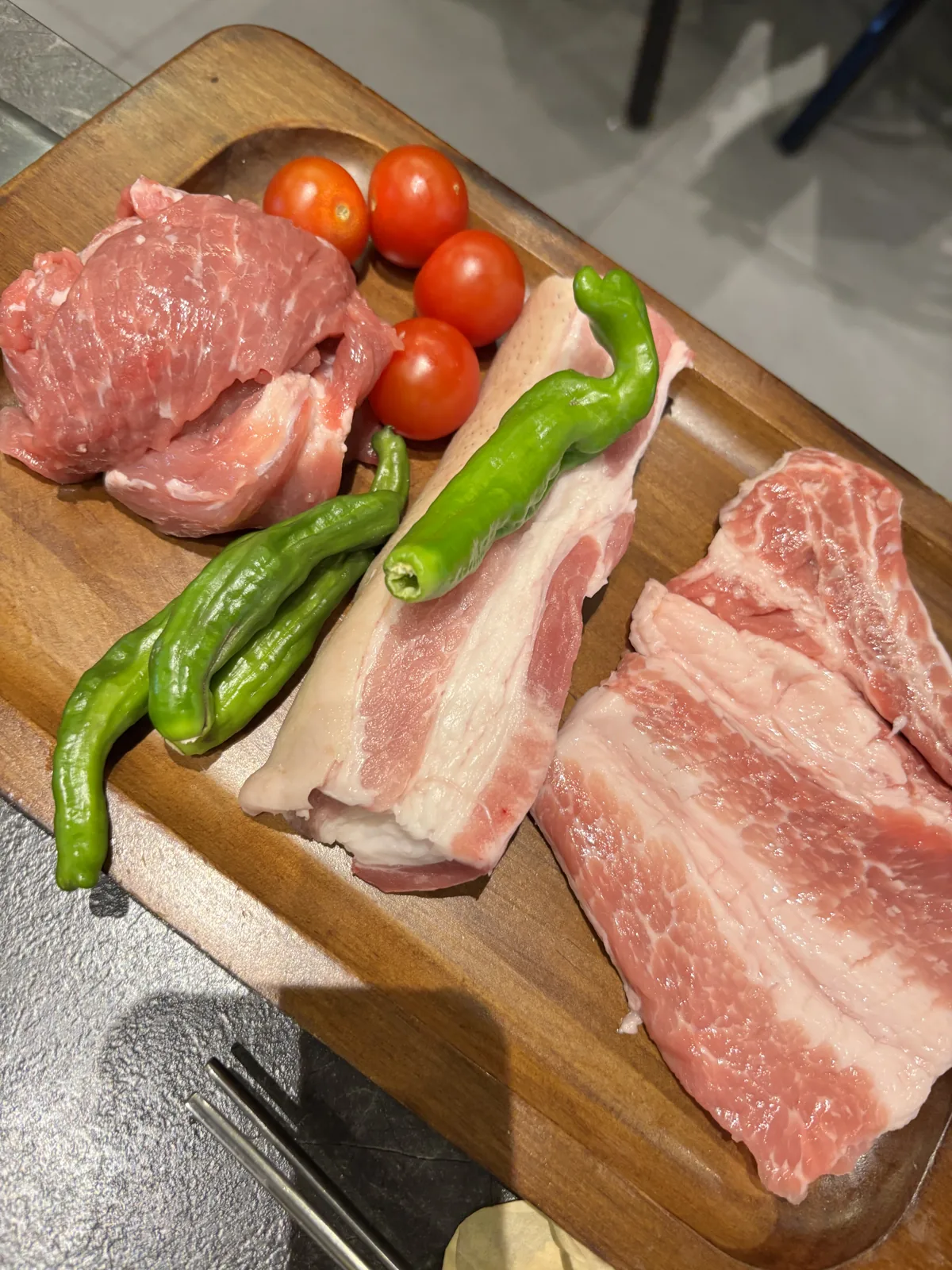
We kept it classic and ordered samgyeopsal, the thick-cut pork belly that is the backbone of Korean BBQ, plus a second marbled cut to compare. It came raw on a wooden board, beautifully striped with fat, ringed by cherry tomatoes and mild green chillies that grill down sweet alongside the meat. If you are unsure which cut to choose, my samgyeopsal vs galbi guide breaks down the difference.
Around the meat came the supporting cast that makes a Korean BBQ table feel generous. A spread of banchan side dishes, a sharp green-onion salad dressed in chilli and topped with a glossy egg yolk, lettuce for wrapping, and a bubbling little pot of soup with mussels and fish cake. We washed it down with cold bottles of Cass and Terra, the two beers you will see on every other table.
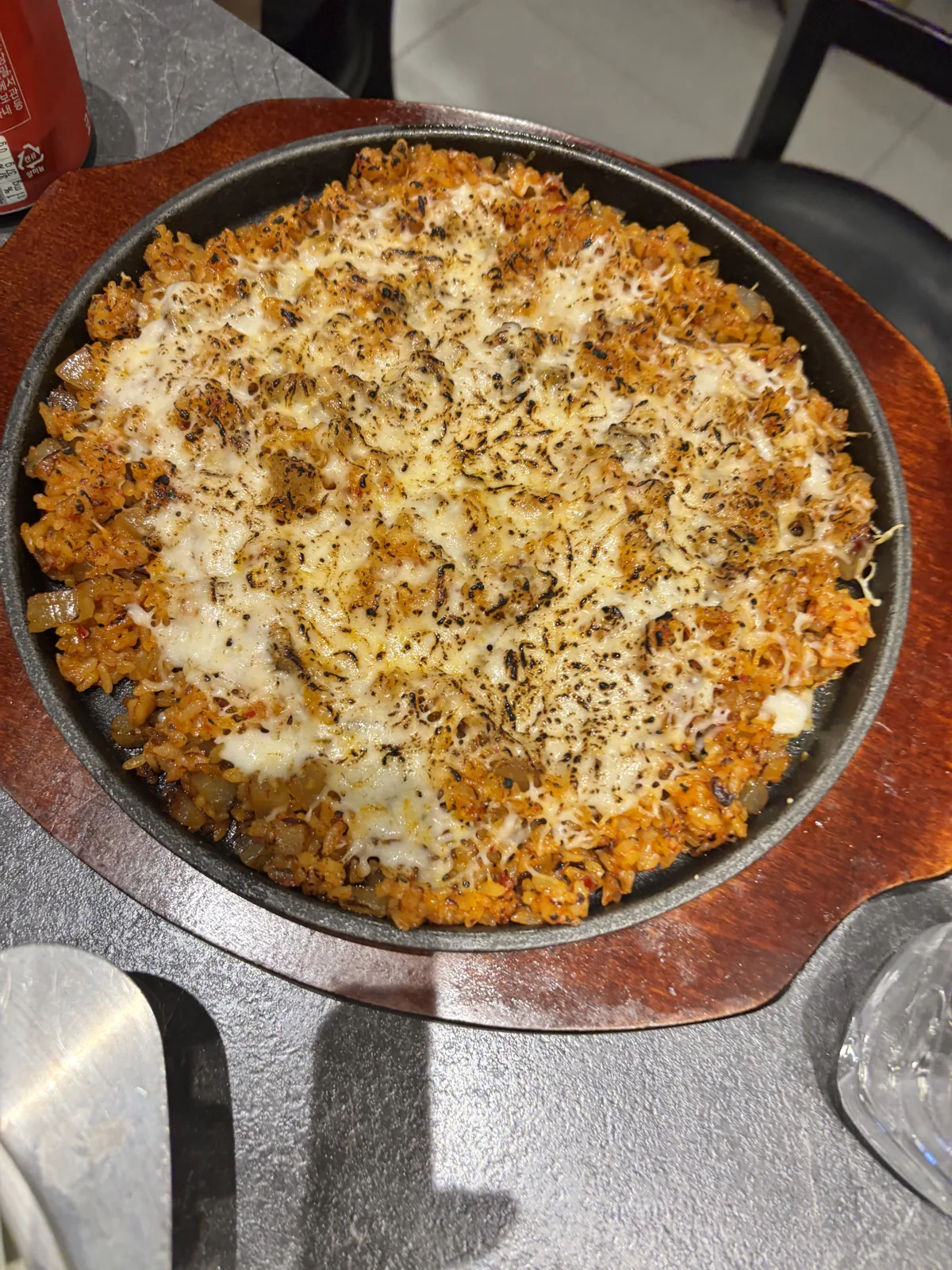
The finale is the part I always look forward to most. Once the meat is done, the staff scrape the grill and fry a pan of rice right in all that rendered fat and flavour, pressing it until the bottom turns golden and crisp. That bokkeumbap, studded with sesame and kimchi, is the single best mouthful of the whole meal, and it costs almost nothing to add.
A small thing I always tell first-timers is to pace the order rather than dump everything on the stone at once. Start with one portion of pork belly, let it crisp, eat it, then order the next round so nothing sits and overcooks while you talk. The green chillies and tomatoes go on around the edge where the heat is gentler, and a clove of grilled garlic tucked into a wrap is the detail that quietly makes the whole bite. None of this is a rule anyone enforces; it is just how you get the most out of a grill that rewards patience.
How a Grill-for-You Dinner Works
One thing that catches first-timers off guard is that you may not do the grilling yourself. At a lot of these places, a server comes over, lays the meat out on the hot stone, and tends it for you, turning and snipping each piece with scissors at the right moment. It takes all the guesswork out and means you never overcook the good cuts.
If that happens, just relax and let them work; it is a service, not a hint that you are doing it wrong. They will signal when a piece is ready, and your job is simply to grab it, drop it on a lettuce leaf with a smear of ssamjang and a sliver of garlic, wrap, and eat in one bite. Build each wrap small enough to actually fit in your mouth, which is the rookie mistake everyone makes once.
Ordering is easier than it looks even with no Korean. Meat is usually sold by portion, often a minimum of two servings, and pointing at the menu photo works fine. The banchan and the soup refill for free at most places, so do not be shy about asking for more kimchi or lettuce. A gourmet, chef-led version of this same ritual, if you would rather have it guided, is this dry-aged hanwoo BBQ experience with a chef.
The Meal at a Glance
Here is the dinner boiled down so you know what to expect before you sit down. Treat the prices as rough 2026 guidance, since they vary by cut and by restaurant.
| Detail | What to Expect |
|---|---|
| Area | Jongno and Jonggak, just north of Cheonggyecheon |
| Signature cut | Samgyeopsal pork belly on a grooved stone grill |
| Rough cost per person | ₩20,000–₩35,000 with meat, sides, and a drink |
| Who grills | Often the staff, tableside, with scissors |
| Do not skip | The fried rice cooked on the grill at the end |
| Best paired with | An evening Cheonggyecheon walk beforehand |
Is It Worth It, Honestly
Yes, and here is my honest Korea-versus-Australia maths. In Sydney, taking two people for Korean BBQ comfortably lands at well over a hundred dollars once you add a couple of meat orders, sides, and drinks, and the banchan is usually counted out stingily. That same dinner in Jongno, with better meat, free-flowing side dishes, and that fried-rice finale, came to a fraction of the price.
It is not only about cost, though. The generosity is the part I miss most when I am back in Australia: the refilled kimchi, the soup that just appears, the server who grills your meat so you do not have to. It feels less like a transaction and more like being fed, and that warmth is genuinely hard to find at the same price point overseas.
I will be honest about the downsides too. These rooms are loud, smoky, and tightly packed, and your clothes will smell of grill for the rest of the night, so do not wear anything precious. At peak times you may queue, and the grill-for-you pace can feel fast if you wanted a long, lingering meal. None of that stops me going back every single trip.
Recreating It Back Home
Once you have eaten off a grooved stone grill, you start wanting one at home, and I get a lot of messages asking how to recreate this in Australia. The good news is that the exact style of round, grooved plate that drains the fat is sold as a portable stovetop version, so you really can get close at home.
The one that matches what we used most closely is a portable butane-stove stone grill plate. It gives you the same fat-draining grooves and the same crisp-edged pork belly on your own kitchen bench or balcony. If you want one, you can check the latest price on Amazon, and pair it with good pork belly and a few banchan.
Of course, the meat and the sides matter as much as the gear, and that is a longer story. My Korean BBQ at home for beginners guide walks through cuts, sauces, and the side dishes that turn a plate of pork into an actual Korean BBQ spread. It will never quite match a smoky room in Jongno, but it gets you surprisingly close on a homesick night.
FAQ
Where is the best Korean BBQ near Cheonggyecheon?
The densest cluster sits just north of the stream in the Jongno and Jonggak lanes, behind the Bosingak bell pavilion. Rather than chase one famous name, look for a busy room full of locals, a stone or charcoal grill at each table, and fast-moving staff. Dozens of places here are genuinely good, so a lively, full restaurant is your safest signal.
How much does Korean BBQ cost in this area?
Expect roughly ₩20,000 to ₩35,000 per person for a satisfying meal with a couple of meat orders, the free banchan, and a drink. Prices vary by cut, with premium beef costing more than pork belly. Treat these as 2026 guidance, carry a card since most places accept them, and remember the side dishes and soup usually refill at no extra charge.
Do I grill the meat myself?
It depends on the restaurant. At many places near Cheonggyecheon a server grills tableside for you, turning and cutting the meat with scissors so it never overcooks. At others you cook it yourself, which is part of the fun. Either way, you wrap the cooked meat in lettuce with ssamjang and garlic and eat it in one bite.
What should I order at a Korean BBQ?
Start with samgyeopsal pork belly, the classic, and add a marbled beef cut if you want to compare. The banchan, lettuce, and a soup usually come with it, and you should always finish with the fried rice cooked on the grill. Beers like Cass or Terra, or soju, are the standard drinks to go with it.
Is it better to walk Cheonggyecheon before or after dinner?
I prefer before. Walk the stream in the late afternoon as the light softens, then climb up to the Jongno side hungry and ready to eat. A heavy grilled-meat dinner is not the best prelude to a long walk, whereas arriving at the table after an hour by the water feels perfectly earned.
My Thoughts
This little stretch of Seoul, the stream and the grill alleys stacked right above it, might be my favourite easy evening in the whole city. There is no planning, no ticket, no fuss. You walk by the water, you follow the smoke, you eat too much pork, and you finish with crisp fried rice. It is the most Seoul thing I can think of.
My real advice is to lean into the simplicity. Do not agonise over picking the perfect restaurant; pick a busy one, order the pork belly, let the staff grill if they offer, and save room for the rice. Wear clothes you can wash, go a little hungry, and bring someone you like talking to over noise.
Every trip home I tell myself I will try somewhere new and fancy, and every trip I end up back in these smoky Jongno lanes after a walk along the stream. Some rituals are worth keeping, and this one, cheap and generous and a little bit greasy, is right at the top of mine.
Planning Your Cheonggyecheon BBQ Night?
Walk the stream first, climb up on the Jonggak side, and pick a busy room with a stone grill at every table. Order samgyeopsal, let the staff grill it, wrap each bite small, and never skip the fried rice at the end. If you would rather have the whole ritual guided by a local or a chef, the booked experiences below take the guesswork out.
🛍️ Book it: a Traditional Korean cooking class and hidden-alley food tour in Seoul (affiliate link)