Disclosure: This post contains affiliate links. If you purchase through these links, I may earn a small commission at no extra cost to you. I only recommend products I personally use and trust.
I was 22 when I first walked into Hongdae as a university student. My friend grabbed my hand and pulled me toward a crowd gathered around a guitarist playing a song I recognized but had never heard performed live. The melody mixed with Seoul’s evening air, the distant smell of street food, and something I can only describe as pure creative energy. That moment — standing among strangers who were all there for the same reason, to experience raw, unfiltered music — changed how I understood my own city.
Twenty years later, living in Australia and missing home, I realized that Hongdae’s busking and live music scene is one of the things I think about most. When people ask me what makes Seoul feel alive, I don’t talk about skyscrapers or K-pop stadiums. I talk about Hongdae. I talk about the street performers who treat a concrete plaza like a concert hall. I talk about tiny clubs where the next big Korean indie band might be playing for forty people who will remember that exact night forever.
If you’re planning a trip to Seoul and want to experience Hongdae busking and live music Seoul the way locals do — without the tourist filter — this guide is for you. I’m sharing exactly where to go, when to go, what to expect, and how to make the most of one of Seoul’s most authentic cultural experiences.
Table of Contents
- Why Hongdae’s Music Scene Is Unlike Anything Else in Seoul
- The History of Busking in Hongdae
- Where to Find the Best Buskers in Hongdae
- What Type of Music to Expect
- The Best Indie Live Music Clubs and Venues in Hongdae
- When to Go: Timing Your Visit for the Best Performances
- Nanta Show: Seoul’s Most Famous Non-Verbal Performance
- My Thoughts: Why Hongdae Still Matters
- Plan Your Hongdae Music Experience
- Frequently Asked Questions
Why Hongdae’s Music Scene Is Unlike Anything Else in Seoul
Hongdae busking and live music Seoul isn’t just a thing that happens in Hongdae — it’s the identity of the neighborhood itself. Unlike other areas of Seoul that have been gentrified into Instagram backdrops, Hongdae still feels genuinely creative. When I walk through these streets, I’m not looking at a curated version of art culture. I’m watching it happen in real time.
The difference between Hongdae and other creative districts in Seoul is fundamental. This isn’t a government-designated “cultural zone” with state funding and careful brand management. Hongdae grew organically because artists and musicians moved here. The cheap rent (at least, it was cheap when I was younger), the abandoned warehouses, the community of creative people — these things attracted musicians like gravity. They stayed because something real was happening.
What makes Hongdae’s music scene special is its independence. You’ll find buskers on the street playing whatever they want, not what a promoter thinks will sell. You’ll walk into live music venues where the owner has been booking shows for 15 years because they believe in the artists, not because it’s a profitable franchise. When you experience how Hongdae compares to Seongsu-dong, another trendy creative neighborhood in Seoul, you’ll notice immediately that Hongdae has something that can’t be manufactured: authenticity.
The music scene here reflects Korea’s indie movement — a genuine counter-culture that emerged in the early 2000s when Korean indie musicians wanted an alternative to the polished, corporate K-pop machine. That spirit still lives in Hongdae’s streets and clubs. It’s quieter now than it was in the 2000s, sure. But it’s also more intentional. The people who are here now — the performers and the listeners — are here because they actually care.
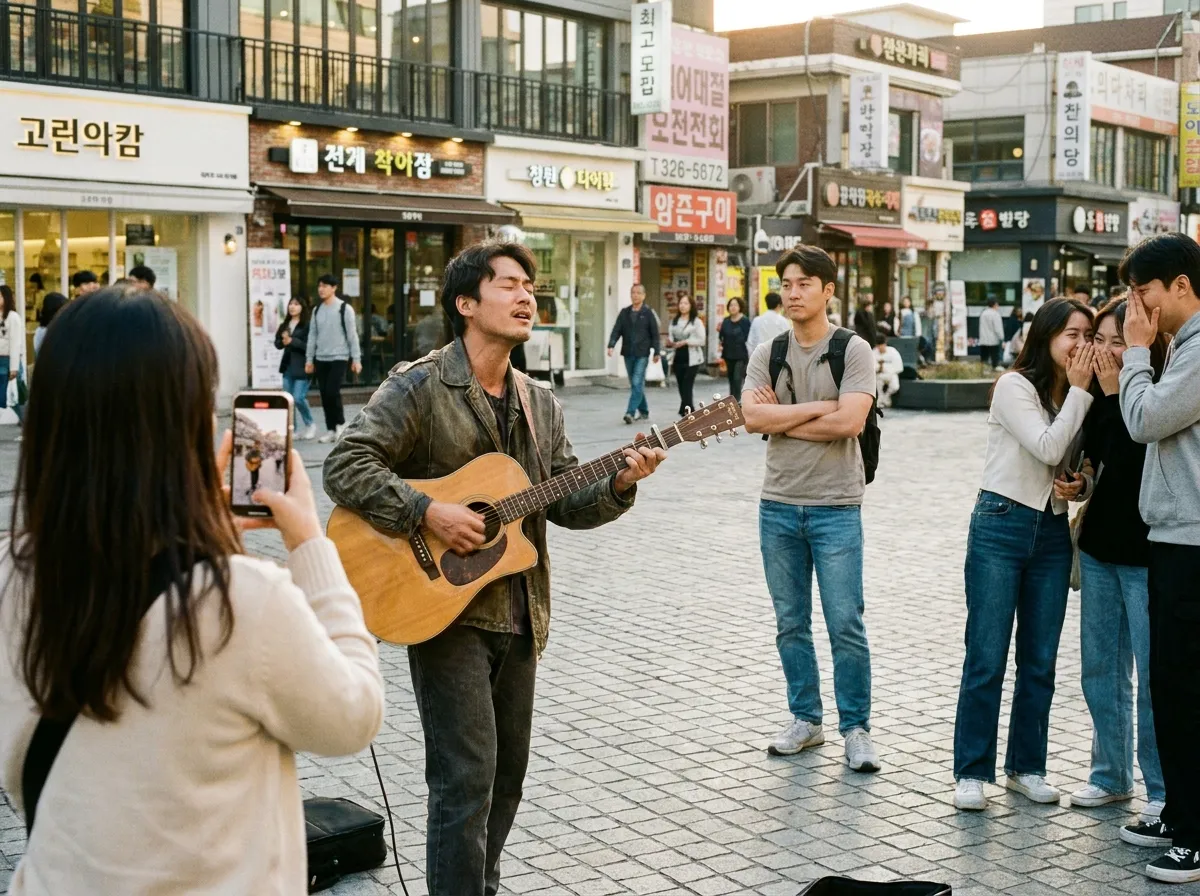
📸 A street performer playing acoustic guitar in Hongdae’s main plaza — a loose crowd gathered in a natural semicircle, some filming on phones, others swaying mid-song. Visualized by unniespicking.com using Nano Banana Pro AI
The History of Busking in Hongdae: How It Started and What It Means
Busking in Hongdae didn’t begin because the government decided it would be a good cultural strategy. It started because musicians needed to play, and the street was free.
In the late 1990s and early 2000s, when the indie music movement was building energy in Korea, university-age musicians moved to Hongdae looking for affordable housing and community. The neighborhood was industrial and unglamorous — perfect for artists who didn’t have money but had passion. They started playing on the streets because there weren’t many venues that would book them. Street performances became both a survival tactic and a creative declaration: “We exist, and we’re going to be heard, whether or not the establishment cares.”
What’s remarkable is that those early buskers created something larger than themselves. They drew crowds. Other musicians came. Music fans discovered the neighborhood. Local business owners began supporting artists. Tiny clubs opened. Coffee shops became unofficial venues. Over time, Hongdae transformed from an industrial district into a cultural hub — but it did so because of the musicians first, the tourism and commercialization second.
Today, busking in Hongdae carries that history in it. When you listen to a street performer play an original song to a crowd of fifteen people in a plaza, you’re witnessing the same spirit that animated Hongdae twenty years ago. These performers aren’t just playing for tips (though tips help). They’re participating in a tradition of independent, uncompromising creativity. They’re proving that music doesn’t need permission or funding or corporate approval to matter.
Where to Find the Best Buskers in Hongdae
The best busking spots in Hongdae are locations with natural gathering spaces — plazas, underpasses, and street corners where foot traffic is high and the acoustics work in the musician’s favor.
Hongdae’s Main Underground Plaza (Hongik University Station Area): This is the most reliable spot for finding buskers. The plaza sits beneath street level, which means the sound echoes and carries beautifully. You’ll usually find guitarists, vocalists, and occasionally small bands here. The crowd tends to be younger — university students, tourists, locals passing through. Performances happen throughout the day, with peak crowds in late afternoon and evening (around 5 PM to 9 PM).
Yeontral Park (Yeonnam-dong side of Hongdae): This park has become increasingly popular for street performances over the past few years. It’s a slightly more relaxed atmosphere than the main plaza — less foot traffic, but the people who stop are usually more engaged. I love this spot because it feels less like a performance venue and more like an organic gathering of people who want to hear music. The views are also beautiful, especially on clear days.
Wausan-ro Street: The streets radiating from Wausan-ro, which runs through the heart of Hongdae’s gallery and cafe district, often have buskers set up. These spots are good if you’re already gallery-hopping or exploring. The streets are narrower, so the sound is more intimate, and you’ll get a genuine neighborhood feel rather than a tourist-zone atmosphere.
Roof Garden Area: Several rooftop spaces in Hongdae occasionally host street performers or open-air jam sessions. These are more unpredictable than street plazas, so I’d recommend asking locals or checking Korean social media (Instagram, Naver) for current information if you’re interested in these spots.
What Type of Music to Expect
The music you’ll encounter in Hongdae is wonderfully diverse, reflecting both Korea’s musical heritage and global influences. Here’s what you’re likely to hear:
Korean Indie and Alternative Rock: This is the backbone of Hongdae’s music scene. You’ll hear original compositions influenced by Korean indie movements of the 2000s — think emotional vocals, intricate guitar work, and deeply personal lyrics sung in Korean. Many of these performers are trying to build a following for their own band or solo project.
K-pop Covers with a Twist: Some buskers perform covers of K-pop songs, but usually with their own artistic interpretation. They might strip down a famous idol song to just acoustic guitar and vocals, or reharmonize it in unexpected ways. It’s a way to draw crowds (because K-pop lovers will stop) while also showcasing the performer’s individual artistry.
Jazz and Soul: Hongdae has a small but solid jazz community. You’ll find performers playing standards and original jazz compositions, particularly in the evening when the atmosphere shifts slightly. The jazz scene tends to be concentrated in specific venues rather than street performances, but you might catch a jazz guitarist or vocalist busking occasionally.
Hip-hop and Rap: Korean hip-hop culture has strong roots in Hongdae. You’ll encounter rapper/producers doing freestyle sessions or performing original compositions. This scene is younger and more energetic than the indie rock crowd, and the performances often have a more interactive, audience-participatory feel.
Acoustic Singer-Songwriter: A lot of young Korean musicians are doing the singer-songwriter thing — solo artists with guitars, ukuleles, or keyboards, performing emotional ballads and folk-influenced songs. These performances are usually quieter and more introspective.
The unifying thread across all this music is that it’s real. These are people making music because they love it, not because a label told them to. That authenticity is what makes Hongdae busking so compelling.
The Best Indie Live Music Clubs and Venues in Hongdae
If you want to move from street performances to more formal live music experiences, Hongdae has an excellent selection of indie clubs and small venues. These spaces range from basement clubs with fifty-person capacity to mid-sized rooms that hold a few hundred.
Club Ffama: One of the most established indie live music venues in Hongdae. It books a range of indie rock and alternative bands, from emerging artists to more established acts. The atmosphere is intimate — you’re genuinely close to the performers. Check their schedule online (they update regularly on Korean music websites) to see who’s playing during your visit.
NB2 (Noriter’s Bar Basement): This venue has multiple rooms hosting different types of performances. It’s known for booking talented emerging artists across multiple genres. The vibe is relaxed and music-focused. Staff are usually knowledgeable and enthusiastic about the artists.
Road Park Camping: A quirky venue-cum-restaurant space that hosts live music alongside food and drinks. The name is unconventional (it’s meant to feel like an indoor camping experience), and the booking is eclectic. It’s a good spot if you want to combine music-watching with casual dining.
Venue X (Various Locations): Hongdae has numerous smaller venue spaces that open and close regularly — this is the nature of creative neighborhoods. Your best bet is checking Naver or Instagram for current live music schedules. Search “홍대 라이브” (Hongdae live) or “홍대 공연” (Hongdae performance) to find current venues and upcoming shows.
When planning a creative weekend in Seoul, you can combine street performances during the day with a live music club experience in the evening. Most clubs have shows starting around 8 or 9 PM, and cover charges are typically 10,000-30,000 KRW (about $8-25 USD), sometimes waived if you buy drinks.
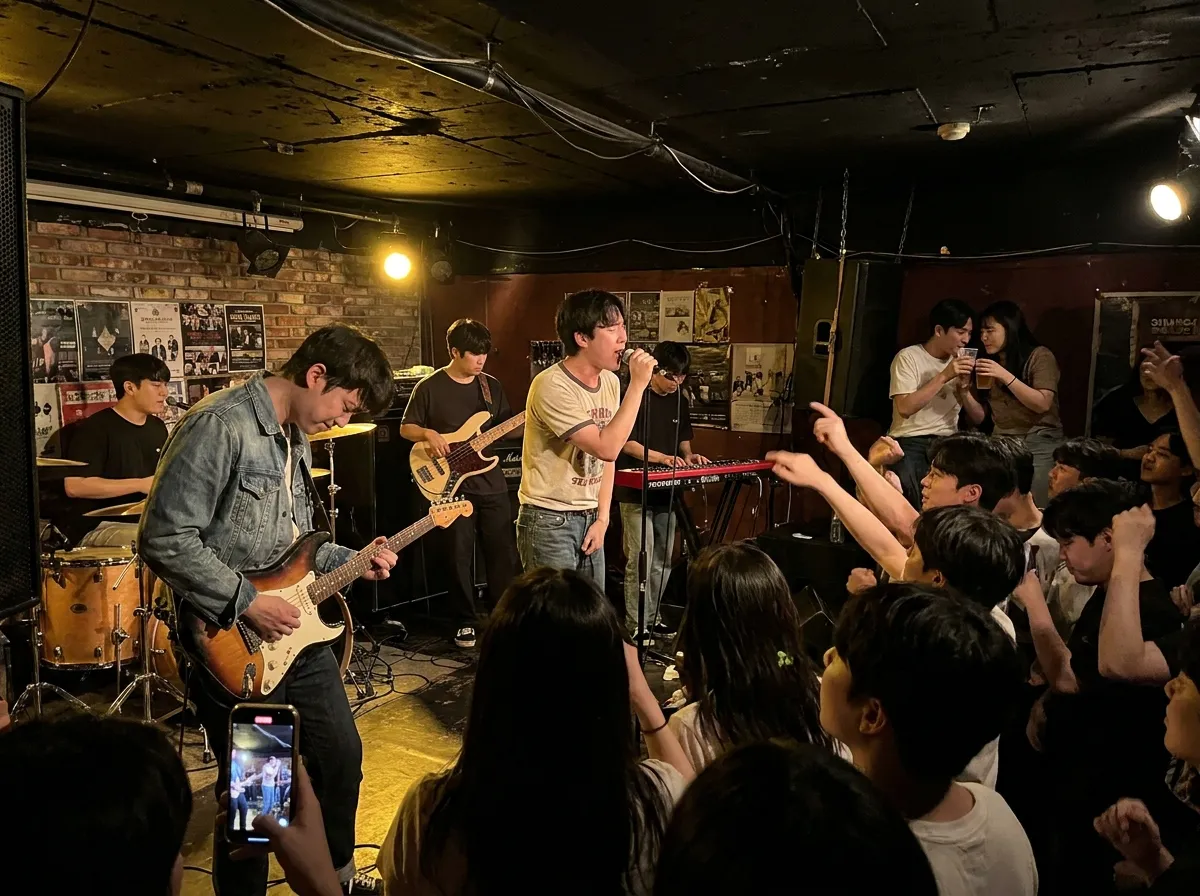
📸 Inside a small Hongdae indie live music club — a band mid-set under dim stage lights, a packed standing crowd with raised hands and genuine expressions. Visualized by unniespicking.com using Nano Banana Pro AI
When to Go: Timing Your Visit for the Best Performances
The timing of your Hongdae visit matters more than you might think. Street performance activity fluctuates based on season, day of the week, and time of day.
Best Season: Spring (April-May) and autumn (September-October) are ideal. The weather is comfortable for both performers and crowds, and the streets are active with people enjoying the pleasant temperatures. Summer can be hot and humid, which reduces both the number of performers and the comfort level for crowds. Winter is cold but still active, particularly on weekends when people are out doing cultural activities.
Best Days: Weekends (Saturday and Sunday) are undeniably busier and more vibrant. Friday evenings also see increased activity as people head out to start their weekend. Weekdays are quieter — there are still performers, but fewer of them, and smaller crowds. If you prefer a more intimate experience, weekday afternoons (Tuesday-Thursday) are excellent.
Best Times of Day: The plaza and street busking activity picks up in late afternoon and intensifies in the evening. Around 4-5 PM, people are finishing work and starting their evening activities. By 6-9 PM, the crowds are at their peak, the energy is highest, and you’ll encounter the most performers. After 10 PM, things start winding down, though some venues and performers continue late into the night.
Special Considerations: Korean holidays and vacation periods (like Chuseok in autumn or Lunar New Year) see massive crowds in Hongdae. This can be good if you want energy and activity, but it can also feel overwhelming. University semesters and exam periods affect the scene — when university students are in school, the neighborhood is more active during evenings and weekends; during vacation periods (winter and summer), activity might shift.
For optimal experience, I’d recommend visiting on a Friday, Saturday, or Sunday evening between May and October. Aim to be in the main plaza around 6-8 PM. This gives you peak activity, good weather, and excellent performance energy. You can also explore best food and culture spots in Seoul during the day and transition to Hongdae for your evening music experience.
→ Reserve the Absolute pub crawl in Hongdae on Klook (affiliate link)
Best on a Friday or Saturday, when both the buskers and the venues run late.
Nanta Show: Seoul’s Most Famous Non-Verbal Performance
While Nanta isn’t busking in the traditional street-performance sense, it’s become integral to the Hongdae entertainment experience, so it deserves mention in any comprehensive guide to music and performance in the area.
👉 If you want a guaranteed performance regardless of weather or timing, book the Nanta Show — it’s been running in Hongdae for over 25 years and there’s a reason it never gets old.
Nanta is a non-verbal percussion performance — think of it as a cross between a drum show, a comedy show, and a culinary demonstration. Performers use kitchen equipment (pots, pans, utensils, water, fire) to create rhythmic percussion, and the whole thing unfolds with slapstick humor and incredible musicality. It’s absurd and delightful in equal measure.
The show runs in a dedicated theater in Hongdae and has been running for years. Tickets are usually 50,000-60,000 KRW ($40-50 USD). Shows run multiple times daily, with schedule variations. It’s family-friendly despite occasional crude humor, and it’s a completely different experience from busking or indie clubs.
Nanta appeals to tourists and locals alike because it requires no Korean language understanding — the comedy and music communicate universally. If you want a more “produced” performance experience alongside your street-level Hongdae music exploration, Nanta is a quality choice.
Busking vs. Live Music Venues vs. Nanta: Quick Comparison
| Experience Type | Location | Cost | Best For | Time Needed | Booking Required |
|---|---|---|---|---|---|
| Street Busking | Hongdae Plaza, Yeontral Park, Wausan-ro | Free (tips optional, 10,000-20,000 KRW appreciated) | Casual atmosphere, discovering new artists, authentic street culture | 15 minutes to 1.5 hours | No |
| Indie Live Music Club | Club Ffama, NB2, Road Park Camping, various venues | 10,000-30,000 KRW cover charge + drink minimum | Focused listening experience, specific artist/band discovery, music community vibe | 1.5-3 hours | Yes (to confirm schedule and artist) |
| Nanta Show | Dedicated Nanta Theater in Hongdae | 50,000-60,000 KRW (~$40-50 USD) | Polished, family-friendly entertainment; non-verbal performance experience | Approximately 1 hour | Yes (shows run on schedule) |
My Thoughts: Why Hongdae Still Matters
When I think about what Hongdae’s busking and live music scene means, I think about that night in my university years when I first experienced it. I was 22, stressed about exams, worried about the future, caught between wanting to be a dutiful Korean daughter and wanting something more expansive than the path laid out for me. When that guitarist started playing, something inside me recognized itself. It was like the neighborhood was saying: “This is possible. You don’t need permission. You can create.”
I moved to Australia not long after. I built a different life there. I’m happy. But I’ve carried Hongdae with me all these years, and I realize now that what I’ve actually carried is an idea: that authenticity still matters, that creativity doesn’t need commercial approval, that gathering together to experience art is one of the most human things we can do.
Hongdae has changed since I left. The rent has gone up. Some of the early iconic venues have closed. Instagram has created pressure for every neighborhood to be “aesthetic” and photogenic. But something essential has remained. When I walk through those streets and hear a guitarist playing to a small crowd, I feel the same thing I felt twenty years ago. That’s remarkable, actually. That’s worth protecting. That’s worth experiencing if you ever get the chance.
If you’re traveling to Seoul, you can do the standard tourist things — the palaces, the shopping districts, the food tours. Those are worthwhile. But if you want to understand Seoul in a deeper way, if you want to feel the city as it actually is rather than how it’s packaged, spend an evening in Hongdae. Listen to a street performer. Feel the energy. Buy a coffee and sit in a neighborhood cafe and just observe. Let the neighborhood speak to you.
That’s what Hongdae does best. It speaks.
Plan Your Hongdae Music Experience
Ready to experience Hongdae’s busking and live music scene for yourself? Here’s how to get started:
- Check the calendar: Mark your Seoul trip for spring or autumn if possible (April-May, September-October). Plan for a Friday, Saturday, or Sunday evening.
- Get to the main plaza: Head to Hongik University Station (Seoul Metro Line 2). Exit toward the main Hongdae plaza area, which is near Yeontral Park.
- Arrive around 6 PM: This gives you the best combination of activity, daylight lingering, and peak performance energy.
- Bring cash: Many buskers prefer cash tips, and some smaller venues may not accept cards. You can find ATMs throughout Hongdae.
- Check live music schedules: Visit Naver or search “홍대 라이브 공연” (Hongdae live performances) to see what bands or artists are performing at venues during your visit.
- Book a club in advance: If there’s a specific artist or venue you want to visit, call ahead or check their Instagram/website to confirm schedules and secure tickets.
- Take time to explore: Beyond music, Hongdae has excellent cafes, galleries, vintage shops, and restaurants. Spend time wandering and discovering.
Your Hongdae experience will be uniquely yours. You might stumble upon a performer who becomes your favorite Korean artist. You might sit in a small club and witness a band having the night of their lives. You might just feel the creative energy of the neighborhood and understand why it matters so much to me, even from 10,000 miles away.
Related Articles
- Hongdae Seoul travel guide — the starting-point guide before you dive into the rest
- Hongdae nightlife guide — where the evening goes once the shops close
- K-pop experience in Hongdae — dance studios, album shops and idol spots in one place
- Things to do in Hongdae on a weekend — the day-plan that strings the best of Hongdae together
Frequently Asked Questions
Is it safe to walk around Hongdae in the evening?
Yes, Hongdae is very safe, even in the evening. Like any urban area, standard safety practices apply — stay aware of your surroundings, keep valuables secure, and stick to well-lit, populated areas. But Hongdae remains one of Seoul’s safest neighborhoods. The busking areas and cultural venues are heavily populated, especially on weekends.
Do I need to know Korean to enjoy Hongdae’s music scene?
Music is a universal language, so you can absolutely enjoy the busking and club experiences without speaking Korean. However, understanding some lyrics can deepen your appreciation of the indie music scene, since many songs deal with deeply Korean themes or emotional contexts. Consider downloading a translation app if you’re curious about specific lyrics. For club venues, English signage is usually available, and staff are accustomed to tourists.
What should I bring to a live music club?
Bring enough cash to cover the cover charge (10,000-30,000 KRW) and a drink or two. Most clubs are standing-room only, so comfortable shoes are essential. Some smaller venues get quite crowded, so consider bringing a small bag rather than a large backpack. Phone battery is helpful for checking schedules or taking photos/videos (if permitted). Dress casually — Hongdae’s scene is very low-key and casual about fashion.
Can I tip buskers if I don’t have cash?
Most street buskers do accept cash tips, and some may have Naver Pay or Kakao Pay QR codes for digital payment, though this is less common for street performers. I’d recommend carrying small amounts of cash (coins and small bills) specifically for tipping. Even small tips of 5,000-10,000 KRW are very much appreciated and encourage these artists to continue performing.
What’s the best way to discover current live music schedules?
Use Naver Music or Korean music websites to search “홍대” (Hongdae) and “라이브” (live). Instagram and TikTok are also great resources — search hashtags like #홍대라이브 or #hongdaelive to find recent content and current information. Venue websites (if they have them) and calling ahead are reliable ways to confirm schedules.
Are the buskers professional musicians or amateurs?
It’s a mix of both. Some buskers are semi-professional or professional musicians using street performance to build an audience or supplement income. Others are amateurs who play because they love music. This mix is actually part of what makes Hongdae’s scene special — there’s no gatekeeping. The quality of performance varies, but authenticity is consistent.