Disclosure: This post contains affiliate links. If you purchase through these links, I may earn a small commission at no extra cost to you. I only recommend products I personally use and trust.
Korean BBQ at home instead of restaurant — four years ago I made that switch and never looked back. I used to spend $120 on a single dinner for two. Every. Single. Week. Then one night, standing in a queue outside a packed restaurant in Sydney’s Strathfield, I had a thought: why am I paying this much when I grew up eating this food at home in Korea?
That was four years ago. I haven’t been back to a Korean BBQ restaurant since — not because they’re bad, but because what I cook at home is honestly better. Cheaper, too.
If you’ve been spending a fortune on Korean BBQ nights out and wondering whether you could pull it off at home, this is the guide I wish someone had handed me 20 years ago.
Table of Contents
- The Night I Finally Snapped
- What Korean BBQ Restaurants Don’t Tell You
- What You Actually Need at Home
- My Exact Home Setup
- Restaurant vs Home: Honest Comparison
- Tips I Learned the Hard Way
- FAQ
- My Thoughts
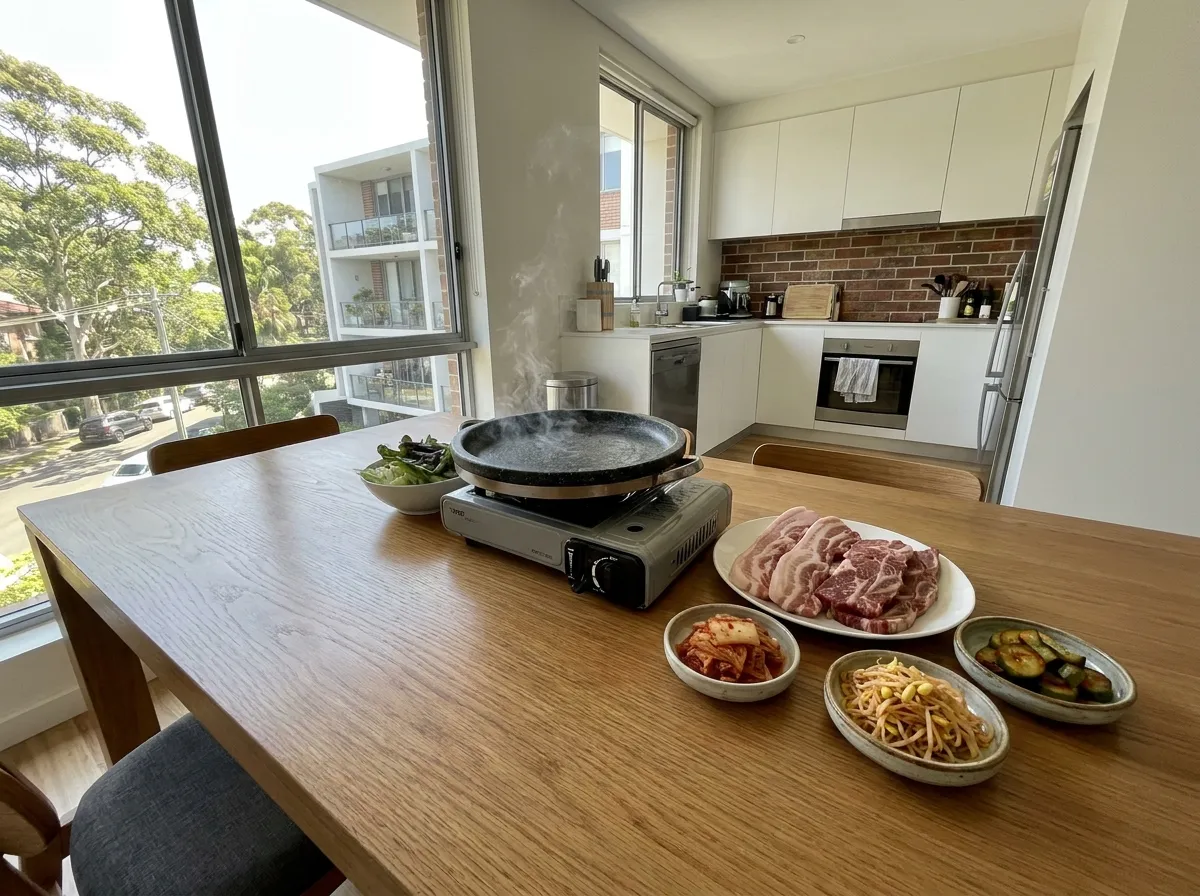
📸 A home Korean BBQ setup in Sydney — samgyeopsal, galbi, and banchan spread across a dining table with a portable butane stove.
The Night I Finally Snapped
It was a Saturday in July — cold, windy, and exactly the kind of night you want to be sitting around a grill with a cold Hite in hand. My husband and I had been waiting 45 minutes outside a Korean BBQ place in Strathfield. When we finally sat down, the bill came to $118 for two people. No drinks. Just meat and a few banchan.
On the drive home, I did the maths. We were eating Korean BBQ out at least twice a month. That’s nearly $3,000 a year — on food I literally grew up cooking in my mum’s kitchen in Busan.
The next morning, I pulled out my old grill pan, called my mum for her galbi marinade recipe, and never looked back.
What Korean BBQ Restaurants Don’t Tell You
Here’s the thing nobody talks about: Korean BBQ is not a complicated cuisine. The reason restaurants can charge $60 per person is atmosphere, service, and the theatre of it all — not the food itself.
The actual ingredients? Pork belly from your local Asian grocer costs about $12 per kilo. Galbi short ribs, maybe $18. The marinade is soy sauce, Asian pear, garlic, sesame oil, and a little sugar. That’s it.
What restaurants do have that you don’t — at least not yet — is the right equipment. A proper grill surface, a heat source strong enough to sear meat quickly, and good ventilation. Once you sort those three things, the gap closes fast.
I’ve also noticed that most Korean BBQ restaurants in Sydney use pre-marinated meat from commercial suppliers. When you make it at home with fresh ingredients and your own marinade, the flavour difference is immediately obvious. Homemade almost always wins.
What You Actually Need at Home
Let me cut through the noise. You don’t need a $500 built-in table grill. You don’t need a commercial exhaust fan. Here’s what actually matters: If you’re building your setup from scratch, the grill pan decision matters most. Our guide to the best Korean BBQ grill pans for stovetop use cuts through the noise and tells you exactly which ones are worth buying.
- A reliable butane stove — consistent heat is everything
- A good grill pan — raised ridges to drain fat, non-stick coating for easy cleaning
- Proper ventilation — open a window, turn on the range hood, or set up near a door
- The right cuts of meat — samgyeopsal (pork belly), galbi (short ribs), bulgogi (thin beef slices)
- Banchan — the side dishes that make or break the experience
That’s genuinely it. Everything else is optional. I’ve been doing this for four years in a standard Sydney apartment kitchen and it works perfectly.
My Exact Home Setup
I went through a few different setups before landing on what I use now. Here’s exactly what’s on my kitchen table every time we do Korean BBQ at home. For a complete walkthrough of everything — not just the grill — our Korean BBQ at home for beginners guide covers equipment, meats, marinades, and the step-by-step process from first shop to first meal.
The Stove
The single most important piece of equipment is your heat source. I use the SOGA Portable Korean BBQ Butane Gas Stove with Stone Grill Plate — it’s compact, heats up fast, and the stone grill plate gives you that slightly smoky, slightly charred finish that’s hard to replicate on a regular pan. The non-stick coating means cleanup takes about three minutes.
Before this, I tried a cheap electric hot plate. It took forever to heat up and never got hot enough to properly sear the meat. The butane stove solved that immediately.
The Grill Pan
On nights when I want more surface area — especially when we have guests — I swap to the TeChef Stovetop Korean BBQ Non-Stick Grill Pan. It sits directly on the butane stove, has a proper raised ridge design to channel fat away from the meat, and it’s PFOA-free. My mum would approve.
The ridges aren’t just for looks — they keep the meat elevated so it’s grilling, not steaming in its own fat. That’s the difference between crispy samgyeopsal and soggy pork belly.
The Marinade
I make my own galbi marinade from scratch most of the time. But on busy weeknights, I keep a few packets of CJ Beksul Pork Bulgogi Spicy Sauce in the pantry. It’s the closest thing to homemade I’ve found in a bottle — not too sweet, good depth of flavour, and it works on pork belly just as well as bulgogi.
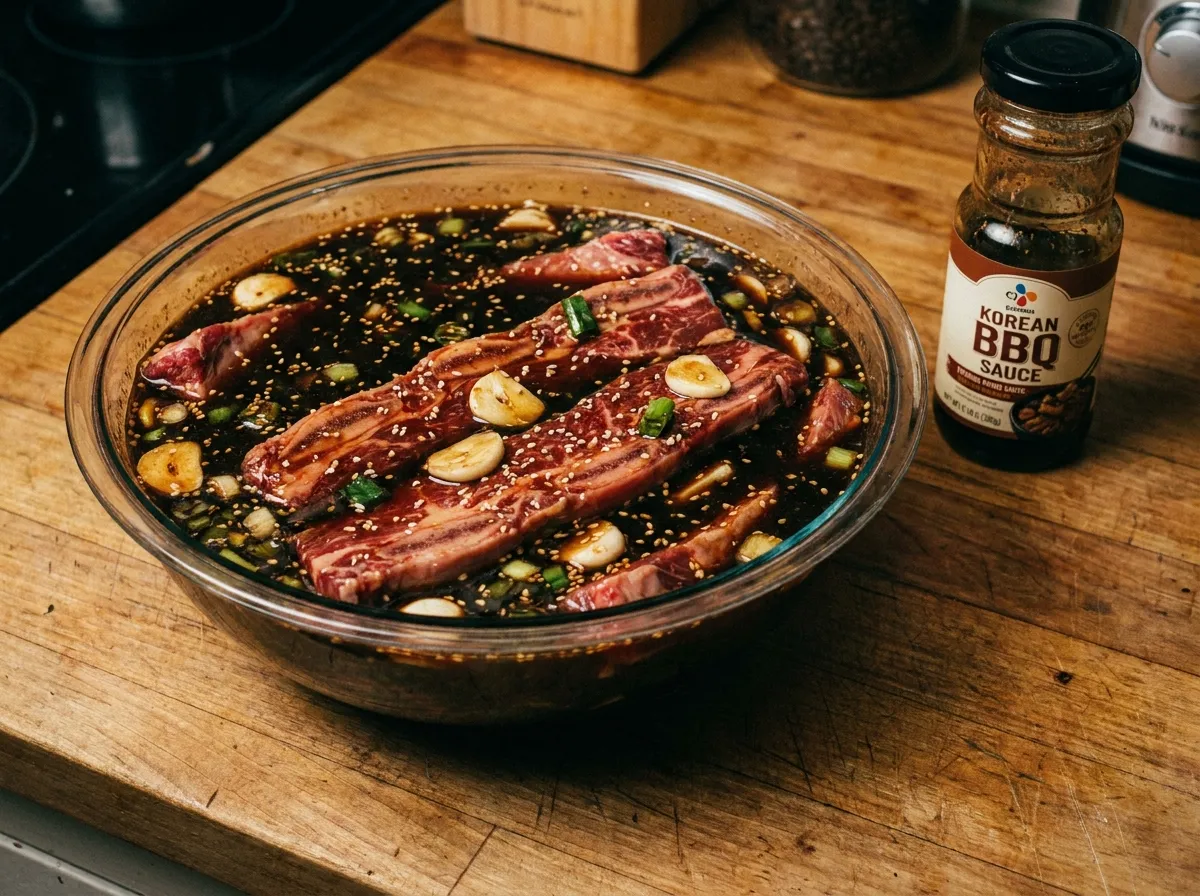
📸 Homemade galbi marinating overnight in CJ sauce — the secret to restaurant-quality Korean BBQ at home in Australia.
Restaurant vs Home: Honest Comparison
I want to be fair here. Restaurants offer things you genuinely can’t replicate at home — the energy of a full dining room, staff who manage the grill for you, and the social ritual of going out. But if we’re talking purely about food quality and value, the numbers speak for themselves.
| Factor | Korean BBQ Restaurant | Home Setup |
|---|---|---|
| Cost per person (2 people) | $50–70 | $15–25 |
| Meat quality | Commercial pre-marinated | Fresh, self-marinated |
| Banchan variety | 4–6 standard dishes | Whatever you make |
| Wait time | 30–60 min (weekends) | None |
| Atmosphere | Lively, social | Intimate, relaxed |
| Smoke management | Commercial exhaust | Open window + range hood |
| Customisation | Limited | Complete control |
| Cleanup | None (restaurant does it) | 15–20 minutes |
For a family of four, cooking at home saves roughly $150–200 per session. Over a year of monthly Korean BBQ nights, that’s up to $2,400 back in your pocket.
Tips I Learned the Hard Way
Four years of home Korean BBQ has taught me a few things that no recipe blog will tell you. These are the mistakes I made so you don’t have to. Knowing where to source good ingredients in Sydney made a huge difference to my home sessions. Our guide to buying Korean BBQ ingredients in Sydney lists the best Korean grocers by area — some gems I only found after years of trial and error.
Freeze your pork belly for 30 minutes before slicing
Pork belly is notoriously difficult to slice thinly when it’s fully thawed. Pop it in the freezer for half an hour first and it firms up just enough to cut clean, even slices. Restaurant-thin slices cook faster and get crispier edges.
Don’t skip the Asian pear in your galbi marinade
Asian pear contains natural enzymes that tenderise beef short ribs overnight. If you can’t find Asian pear, kiwi fruit works in a pinch. This is the step most home cooks skip — and it’s the reason restaurant galbi tastes more tender than homemade versions.
Heat the pan before the meat goes on
This sounds obvious but it’s the most common mistake. If the grill pan isn’t properly hot before the meat hits it, you’ll steam the meat instead of searing it. Wait until you see a faint wisp of smoke before you start cooking.
Ventilation matters more than you think
In a Sydney apartment, I open the kitchen window, turn the range hood to maximum, and set up a small desk fan pointing toward the window. It’s not perfect, but it keeps the smoke manageable. If you have a balcony, even better — set up the butane stove outside and bring the banchan to the table.
Make your banchan the day before
Kimchi, kongnamul (bean sprout salad), and japchae all taste better the next day. If you’re hosting, prep your banchan 24 hours ahead. It reduces stress on the day and the flavours are noticeably deeper.
FAQ
Is it safe to do Korean BBQ indoors?
Yes, with proper ventilation. Open windows, use your range hood, and consider a small fan to direct smoke outside. A butane stove produces less smoke than charcoal, which makes it much more manageable in a home kitchen. I’ve been doing this in my Sydney apartment for four years without any issues.
What’s the best cut of meat for home Korean BBQ?
Samgyeopsal (pork belly) is the easiest to start with — it’s forgiving, widely available at Asian grocers, and doesn’t require marinating. Once you’re comfortable, move to galbi (beef short ribs) and bulgogi (thinly sliced beef). Both require marinating but the results are worth it.
Do I need a special grill pan or will a regular frying pan work?
A regular frying pan will work in a pinch, but a dedicated Korean BBQ grill pan makes a real difference. The raised ridges drain fat away from the meat, which prevents steaming and gives you that slightly charred, crispy texture. The TeChef Korean BBQ Grill Pan is what I use and it’s been going strong for three years.
How do I stop my house from smelling like BBQ for days?
Three things: ventilate aggressively while cooking, wipe down surfaces immediately after (smoke residue settles fast), and simmer a pot of water with citrus peel and cinnamon on the stove after you’re done. It sounds old-fashioned but it genuinely works. My mum taught me this trick.
Where can I buy Korean BBQ ingredients in Sydney?
For fresh meat, H Mart in Eastwood or Lidcombe is your best bet. For pantry staples like soy sauce, sesame oil, and gochujang, any Korean grocery in Strathfield or Eastwood will have everything you need. If you’re not near a Korean grocery, most items are available online through Amazon AU.
My Thoughts
I want to be honest with you: I don’t think restaurants are bad. Some of my best memories in Sydney involve loud Korean BBQ restaurants, too much soju, and friends I hadn’t seen in months. That atmosphere is real and it’s worth paying for occasionally.
But as a weekly habit? It was draining our budget and, if I’m being completely honest, the food wasn’t as good as what I make at home. The meat I buy fresh from H Mart, marinated overnight in my mum’s recipe, cooked on a properly hot grill pan — it’s not even close.
The switch took about three sessions to get right. The first time, I didn’t heat the pan enough. The second time, I forgot to defrost the pork belly properly. By the third session, it clicked. Now it’s one of our favourite weekend rituals — no queues, no $120 bills, just good food and good company.
If you’ve been on the fence about trying this at home, consider this your sign. Start with samgyeopsal, get a decent butane stove, and call your mum for her marinade recipe. You won’t regret it.
Ready to Set Up Your Home Korean BBQ?
Everything you need is easier to find than you think. The SOGA Portable Korean BBQ Butane Gas Stove is where I’d start — it’s compact, reliable, and makes the whole setup feel genuinely restaurant-quality. → Check the latest price on Amazon
And if you ever find yourself in Seoul and want to experience Korean BBQ the way locals actually do it, Jason’s Curated Premium Private Korean BBQ Table in Seoul is an experience worth booking. → Book on Klook
Related Links
If you found this article helpful, you might also enjoy these related guides:
- Korean BBQ at Home for Beginners — What I Wish I Knew Sooner — New to home Korean BBQ? This guide covers everything from equipment to marinades to banchan, step by step.