🔺 Korea Travel Checklist 2025: Essential Tips for a Stress-Free Trip

This Korea travel checklist 2025 is your ultimate planning guide. Planning a trip to Korea is exciting, but if you’re anything like me, the real comfort comes from being prepared, the real comfort comes from being prepared. After living in Australia for over twenty years and frequently visiting Korea, I’ve realised that travel checklists here are not just about remembering socks or a charger—they are about navigating two completely different travel cultures. In Australia, the main concern is usually distance: long drives, booking motels along the highway, or making sure your fuel tank is full before a road trip. In Korea, the challenge is density and pace. Everything is close, but everything moves fast, and missing one small step—like not having the right app—can make your day unnecessarily stressful.

This hub is designed as your preparation partner. It combines practical checklists with real-life context, showing you not just what to bring, but why it matters in Korea specifically.

Korea Travel checklist 2025 illustration for Korea trip planning 2025 with clipboard and pencil

Why a Checklist Matters in Korea

I still remember the first time I returned to Korea after years in Australia. I landed at Incheon Airport late at night, thinking I could just grab a taxi with my Australian debit card. To my surprise, the driver shook his head, saying, “Cash only.” I ended up hunting for an ATM at midnight, dragging my luggage around. That experience taught me that in Korea, even though it’s highly digital, you must anticipate small gaps in the system.

A checklist is not about being overly cautious—it’s about giving yourself freedom. When you have the right payment card, SIM card, and travel apps ready, you move with ease, like a local. Without them, small inconveniences can snowball into wasted hours.

Korea Travel Checklist: Entry Documents & First Steps

K-ETA and Passport Validity

Travelers holding passports for Korea trip Checklist 2025

Unlike Australia, where most tourists can apply for an ETA in minutes, Korea’s K-ETA can sometimes take days to process. Don’t assume you can apply the night before. Also, Korean immigration is strict about the six-month passport rule. I’ve seen travellers stopped at Sydney Airport because their passports had only four months left.

Travel Insurance

In Australia, Medicare or private insurance often softens the blow of unexpected medical costs. In Korea, without proper travel insurance, you pay full price up front. Even a minor clinic visit can be surprisingly expensive if you’re uninsured. Always carry digital copies of your insurance in your email—Korea is digital-friendly, but hospital staff often ask to see immediate proof.

Money & Payments in Real Life

The Wise Card Experience

In Australia, my regular debit card works almost everywhere without extra fees. In Korea, I quickly learned that hidden international fees add up fast. The first time I used my Australian card in Korea, I paid nearly $50 extra in charges by the end of my trip. Now, I use a Wise card, and the difference is night and day. Tapping it in a Seoul café feels just as smooth as tapping in Melbourne, but without the financial sting later.

Cash in Unexpected Places

Most of Korea is cashless, yet I always carry at least 50,000 KRW. Why? Because rural taxis and some market stalls still prefer it. On one trip to Jeonju, my friend and I tried to pay for bibimbap at a small family-owned restaurant, only to find they didn’t take cards. Thankfully, I had cash, and the grandmother thanked me warmly, even giving us free side dishes. That small bill turned into a memorable story.

Staying Connected

In Australia, Google Maps and a local SIM are usually enough. In Korea, it’s different.

  • Naver Map and Kakao Map: Without them, you’ll feel lost. I once tried finding a guesthouse in Busan with only Google Maps and ended up circling the wrong block for twenty minutes. Naver Map had the correct alley marked within seconds.
  • Papago: While I speak Korean, I’ve watched my Australian friends survive thanks to this app. A restaurant in Daegu once had no English menu, but Papago translated everything instantly, saving us from random guessing.
  • Kakao T: Forget hailing taxis the old-fashioned way. Kakao T is Korea’s Uber, and drivers are polite and reliable.

Packing: Lessons from Trial and Error

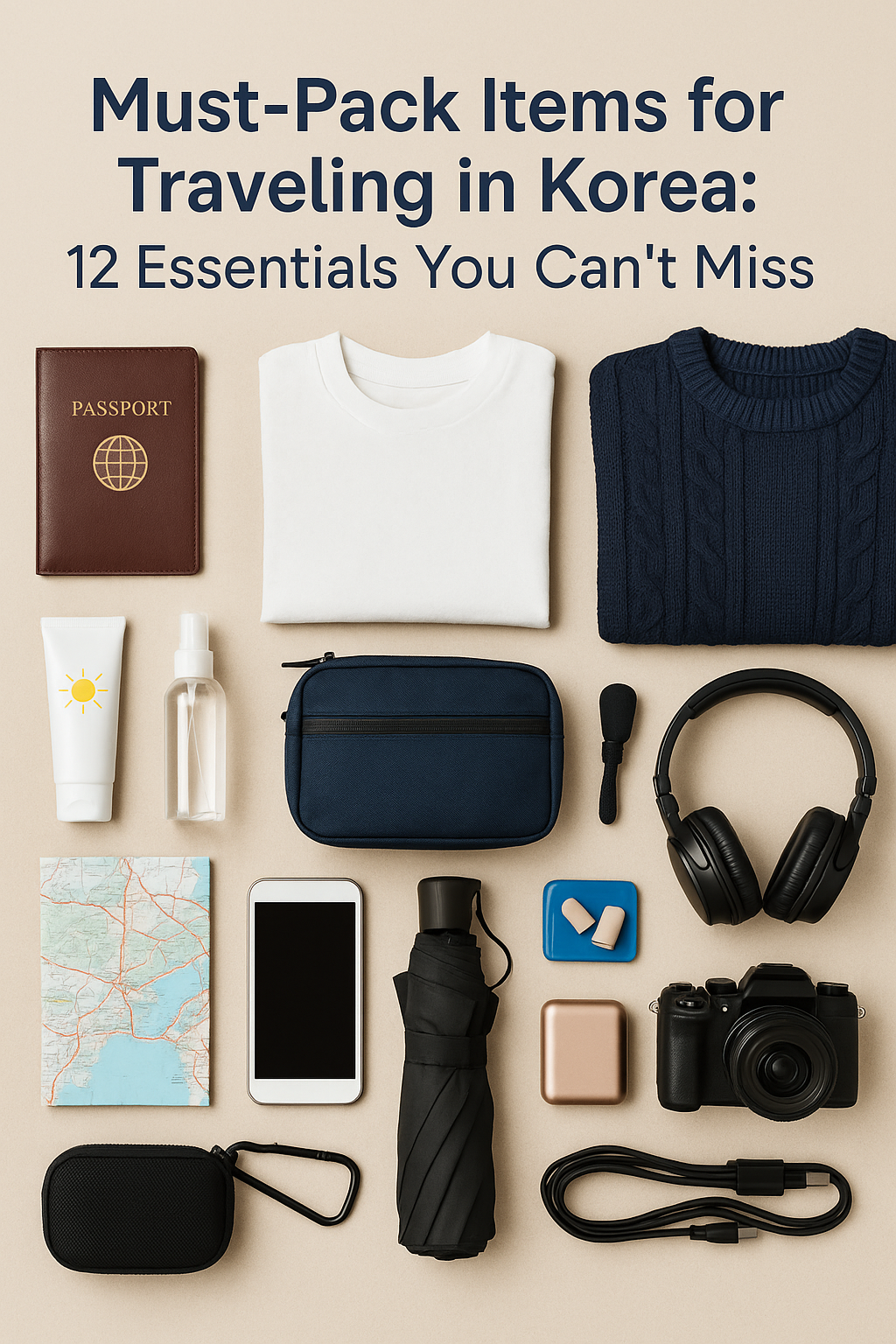
One winter, I arrived in Seoul from sunny Sydney with only a light jacket, thinking, “How cold can it be?” The -10°C wind proved me wrong. Since then, my packing checklist always adjusts to Korea’s extreme seasons. If you want a detailed breakdown, see our full guide on Essential Items to Pack for Korea

  • Spring: Layered clothing, because mornings are chilly while afternoons feel like summer.
  • Summer: Breathable shirts and a small towel. Korea’s humidity shocked my Australian body used to dry heat.
  • Autumn: Perfect for hiking. A light windbreaker is essential for temple stays or night markets.
  • Winter: Compact down jacket and lip balm. Heated floors in Korean homes are wonderful, but the icy winds outside are brutal.

First Hours After Landing

After many trips, I’ve learned that the first two hours in Korea set the tone.

  1. Insert your SIM or activate your eSIM before immigration. That way, you’re connected immediately.
  2. Buy a T-money card at a convenience store. Don’t wait—you’ll use it everywhere.
  3. Decide in advance: AREX train for speed, limousine bus for comfort, or taxi for convenience. I once wasted half an hour debating at the airport. Now I choose before I fly.

Cultural Etiquette You’ll Notice

Coming from Australia, where casual manners are the norm, Korea feels more formal but also more considerate.

  • Use two hands when giving money or cards—it shows respect.
  • Don’t speak loudly on subways; I learned this quickly when people gave me sharp looks for chatting in English with a friend.
  • Trash sorting is strict. In Sydney, recycling is straightforward, but in Seoul, I once spent minutes reading bin signs just to throw away a coffee cup correctly.

Quick Pre-Flight Checklist

  • Passport valid for 6+ months
  • K-ETA/visa approved
  • Travel insurance documents saved offline
  • Hotel address in English & Korean
  • Wise card + 50,000 KRW cash
  • SIM/eSIM confirmed

FAQ

Q1. Do I really need a Wise card?
Yes, if you want to avoid international fees. It’s not mandatory, but it saves a lot of money.

Q2. How much cash should I bring?
Not much—about 100,000 KRW. Most places accept cards, but small restaurants or taxis may not.

Q3. What apps are truly essential?
Naver Map, Kakao Map, Papago, and Kakao T. Without them, navigating Korea is frustrating.

Q4. What’s different from travelling in Australia?
Australia is about wide spaces, self-driving, and independence. Korea is about efficiency, density, and digital readiness. Preparation here is more about apps and payment methods.

Final Thoughts: Korea vs Australia Travel Prep

Travelling between Korea and Australia has shown me how different preparation can be. In Australia, trips feel like marathons—you cover long distances, often relying on a car, and packing is about comfort for the road. In Korea, trips feel like sprints—fast-paced, tech-driven, and dependent on tiny but crucial details.

The good news? Once you adapt, Korea becomes incredibly easy to enjoy. With the right checklist, you’ll move like a local, whether it’s tapping into the subway, ordering food with Papago, or hiking in crisp autumn air.

For me, preparation isn’t just about avoiding mistakes. It’s about unlocking the real Korea: a country where modern speed and deep tradition coexist. “With this checklist, you’re not just planning a trip—you’re setting yourself up to fully experience Korea without the distractions of unpreparedness. For me, preparation isn’t just about avoiding mistakes. It’s about unlocking the real Korea: a country where modern speed and deep tradition coexist.

Before you fly, it’s always wise to double-check the essentials directly from trusted sources. You can confirm entry requirements on the official K-ETA website, explore updated travel inspiration and cultural tips on Visit Korea, the official Korea Tourism Organization site, and if you’re planning train journeys, check schedules and book tickets in advance at the Korail official website. Bookmark these resources along with this checklist, and you’ll be fully prepared for a smooth and unforgettable trip to Korea.”

Check out the post related to the Checklist below

Scroll to Top