🌎 Table of Contents (What It’s Like Riding the Subway in Korea vs Australia 2025)
- Sydney Metro 2025: The Morning That Defined It All
- Seoul’s Subway 2025: The Art of Perfect Timing
- Sydney Metro Expansion: A New Kind of Movement
- Sound, Silence, and Social Space
- Technology vs Trust: Two Ways to Move
- Design and the Feeling of Movements
- When Speed Meets Peace
- The KTX: Korea’s High-Speed Pride
- Lessons from Both Worlds
- Related Reads
Sydney Metro 2025: The Morning That Defined It All
What it’s like riding the subway in Korea vs Australia 2025 is not just about transportation — it’s about culture, trust, and rhythm. Many travellers ask me what it’s like riding the subway in Korea vs Australia 2025, and I always say it’s more than just transportation — it’s about rhythm, trust, and cultural contrast.
👉 Planning a Seoul trip first? Read this step-by-step starter: Seoul Subway Travel Guide (2025).
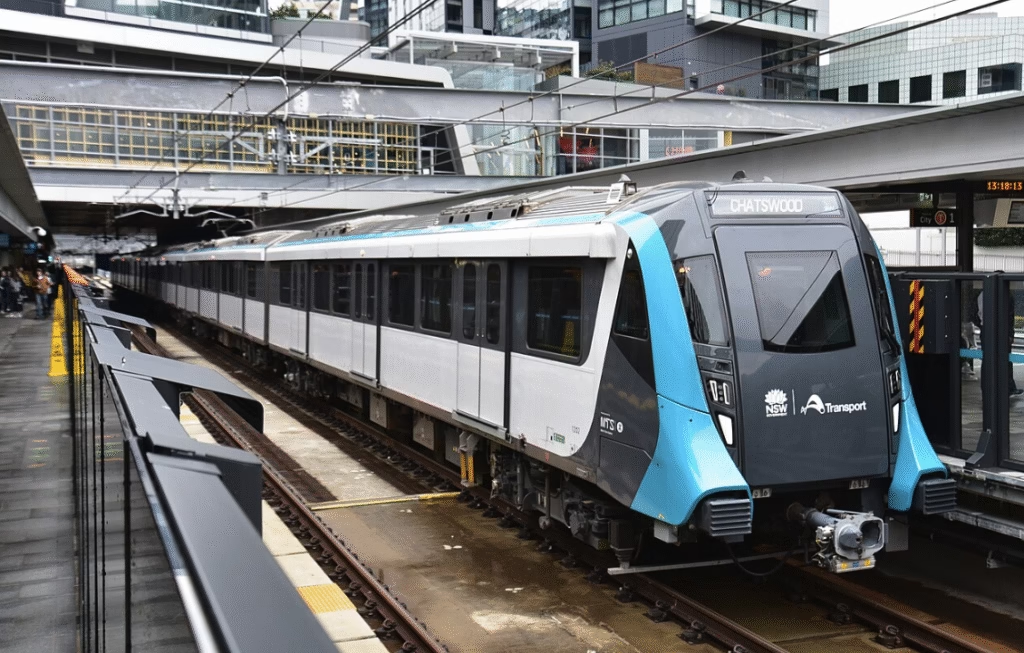
👉 Sydney Metro at Chatswood station. (Photo from Wikipedia)
It was early 2025, on Sydney’s brand-new Metro City & Southwest Line, a few months after it opened. The train hummed quietly through its glass-lit tunnels — clean, modern, almost futuristic. And then something happened that showed me exactly what makes Australian transport different.
A man near the carriage door suddenly collapsed. The reaction was instant, calm, and organised. A passenger pressed the Emergency Help button, and within seconds a composed voice spoke through the intercom:
“Emergency acknowledged. Assistance will be waiting at the next station.”
The announcement was brief but reassuring. People moved aside to make space, one woman knelt to help, and others looked on — not with panic, but quiet focus. When we arrived at Martin Place Station, the doors opened, and two Sydney Metro staff members were already waiting on the platform with medical equipment, ready to assist.
It was over in moments. No chaos. No delay. Just calm teamwork. That morning captured everything I love about Sydney’s new metro: its balance between advanced technology and genuine humanity.
Seoul’s Subway 2025: The Art of Perfect Timing
If you’ve ever lived in Seoul, you know how the subway feels like an extension of life itself — predictable, fast, and almost flawlessly orchestrated. By 2025, the Seoul Metro is expected to remain one of the most efficient in the world. Trains arrive every two minutes, transfers are seamless, and Wi-Fi is faster underground than in most homes.
Everything is optimised: real-time train tracking, AI-powered crowd data, and T-money cards that handle subways, buses, and even coffee shops.
👉Visiting Korea soon? Read my Korean Subway Guide 2025 to ride like a local.
However, there’s also a certain emotional rhythm at play. The silence in Seoul’s trains is comforting — not cold, but respectful. Everyone’s in sync: headphones in, eyes down, energy focused. The system works because people cooperate without needing to speak. In that sense, Korea’s subway isn’t just transportation — it’s a reflection of national character: disciplined, efficient, and quietly connected.
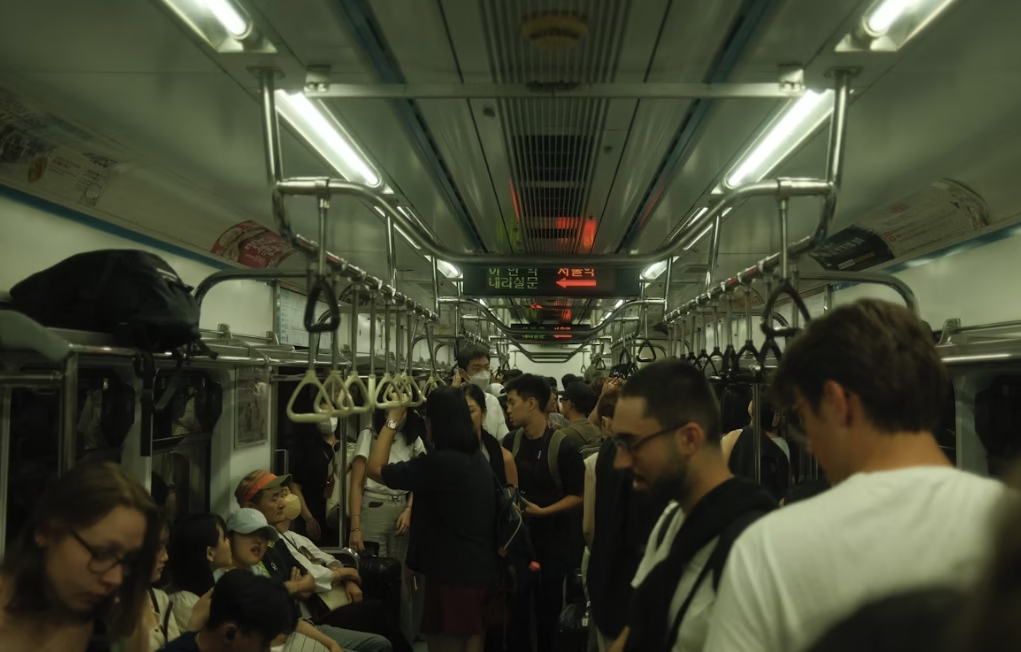
👉 Afternoon hour in Seoul’s subway (2025). Commuters move with quiet precision, reflecting the rhythm and discipline of modern Korean metro culture. (Photo from Unsplash.com
Sydney Metro Expansion: A New Kind of Movement
The Sydney Metro, especially since its 2024 expansion, has completely transformed how the city moves. Driverless trains run every four minutes. Stations like Barangaroo and Pitt Street are architectural art — airy, full of light, and lined with local design details.
There’s no pushing, no rushing. Commuters bring coffee, backpacks, surfboards, and even small dogs. People chat softly, laugh, or read as the train glides smoothly under the harbour.
That single moment with the emergency call button showed me that this metro isn’t just about technology. It’s about trust. Every feature — from automatic doors to responsive staff — reminds you that safety isn’t only engineered; it’s human. It’s easy to call Seoul’s subway perfect, but Sydney’s new metro feels alive. It breathes with its passengers.
👉 For official information, visit the Sydney Metro official site and Seoul Metro for updated routes and schedules.
Sound, Silence, and Social Space
Seoul’s trains whisper. Sydney’s hum. In Korea, silence is a shared courtesy. In Australia, a bit of noise feels natural — even comforting.
Neither is right or wrong. They’re simply reflections of cultural rhythm. I used to think noise meant disorder, but now I see it as a sign of openness. After living in both countries, I’ve learned that even the tone of a carriage — quiet or lively — tells you how a society defines respect.
Many people ask me what it’s like riding the subway in Korea vs Australia 2025, and I tell them that the answer lies in how both cultures handle silence and space.
Those small moments really define what it’s like riding the subway in Korea vs Australia 2025 — the rhythm of respect expressed differently.
Technology vs Trust: Two Ways to Move
Korea’s subway ecosystem in 2025 runs like software — optimised, predictable, full of real-time data. Every exit is labelled, every transfer timed. If something goes wrong, you know exactly when it’ll be fixed.
👉 Missed your last train in Seoul? You’ll need a plan — read my Korean Taxi Guide 2025 for after-midnight options.
Sydney’s system, by contrast, feels more human. If your Opal card fails, the staff simply wave you through. If a delay happens, announcements are personal, not robotic. That flexibility makes every ride a little warmer, a little more forgiving.
Both cities trust something different:
- Seoul trusts precision.
- Sydney trusts people.
And both work beautifully in their own ways.
Design and the Feeling of Movement
Seoul’s underground is a city below the city — full of stores, restaurants, and art. You can practically live your day without ever seeing sunlight. Sydney’s new metro stations, however, bring the sun down with you.
When you really see what it’s like riding the subway in Korea vs Australia 2025, you notice how Seoul’s design focuses on control while Sydney’s design focuses on comfort.
At Martin Place, natural light spills onto the escalators. At Barangaroo, the walls gleam with modern texture. Where Seoul feels like an engineered masterpiece, Sydney feels like a living museum. You sense openness, even underground — an intentional design to make people feel safe and seen.
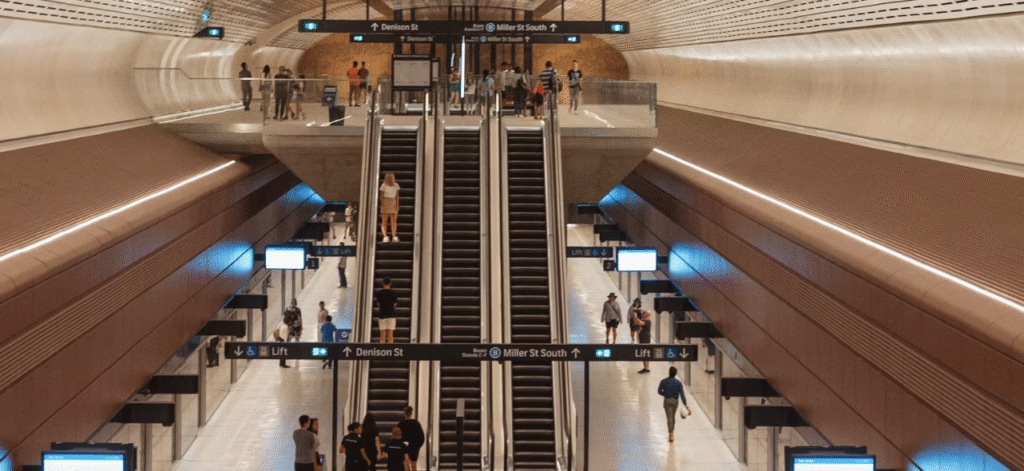
👉 Sydney Metro’s Victoria Cross Station (2025). A new era of Australian transport — modern, spacious, and calm, where technology and trust meet underground. (Photo from Unsplash.com)
When Speed Meets Peace
In Korea, missing the last train is a national heartbreak. You glance at your phone: “Last train in 1 minute.” You sprint. You make it — or you don’t, and the next step is the familiar glow of a taxi sign in the night.
In Sydney, that never happens. People accept the pace. Trains stop earlier, but nobody seems to mind. Time moves differently when you’re not racing against it.
The KTX: Korea’s High-Speed Pride
Every time I go back to Korea, I still take the KTX from Seoul to Busan just to feel the thrill of speed. Two hours, smooth as silk — coffee in hand, scenery flying by. It’s the perfect expression of Korean ambition: forward, fast, flawless.
👉 Planning your trip beyond Seoul? Check out my KTX Train Korea 2025 Guide for insider tips and Korail official English site for ticket booking and schedules.
Australia doesn’t have that kind of speed, but what it does have — especially through the new metro — is calm reliability. Different virtues, same goal: connection.
Lessons from Both Worlds
Living between these two systems has taught me that transportation isn’t just about getting somewhere — it’s about how we exist together while moving.
In Korea, every ride is a lesson in coordination and precision. In Australia, every journey feels like a reminder to slow down and look around.
And on that morning in 2025, inside the Sydney Metro, when a man fell and everyone moved as one, I saw how technology and trust can coexist beautifully. That’s what it’s really like riding the subway in Korea vs Australia as a foreigner in 2025 — two systems, two spirits, one shared humanity.
After experiencing what it’s like riding the subway in Korea vs Australia 2025, I’ve come to realise that transportation reflects who we are as societies.
After truly experiencing what it’s like riding the subway in Korea vs Australia 2025, I’ve realized that transportation reveals a nation’s deeper values.
👉Next: Seoul Subway Guide (2025) New to the city? Incheon Airport → Seoul Taxi (2025)
🚇 Explore Seoul Through Its Subway Stops
After learning what it’s like riding the subway in Korea vs Australia 2025, why not explore Seoul’s most iconic stops?
- Gyeongbokgung Palace — Ride Line 3 to Gyeongbokgung Station and step into Korea’s royal history.
- Hongdae — Hop off at Hongik Univ. Station for Seoul’s youth culture, street art, and indie cafés.
- Seongsu-dong — Known as Seoul’s “Brooklyn,” reachable via Line 2 for warehouse cafés and creative shops.
- Cheonggyecheon Stream — Get off at Gwanghwamun Station to enjoy Seoul’s best night walk by the water.