Disclosure: This post contains affiliate links. If you purchase through these links, I may earn a commission at no extra cost to you.
“Updated for 2026: I have reviewed the latest Seoul subway fares and transfer rules to ensure this guide is accurate for 2026 trip.”
Table of Contents (2026 Updated)
- Introduction
- Seoul Subway Guide – Key Highlights
- Popular Stations for Travellers
- How to Use the Metro – Tickets & Payments
- Essential Maps to Download
- Tips & Etiquette for First-Time Riders
- Final Thoughts – Exploring Seoul with Confidence
- Related Seoul Travel Guide
👇 “Before You Hop In — My First Korean Subway Ride (Shorts, 2026)” A real underground moment — created by Unniespicking.com
Introduction
This Seoul subway guide 2026 is the most reliable way to explore the city. It is clean, punctual, and very convenient to use.
I still remember my first time riding the Seoul subway. The station names felt impossible to pronounce both in Korean and English, and the map looked like a bowl of spaghetti. But after just a few rides, I was hooked — it’s by far the easiest and most efficient way to get around the city.
From people-watching in Hongdae to late-night shopping in Gangnam, and even peaceful strolls near Gyeongbokgung, the subway will take you anywhere you want to go.
This guide is based on my own experience — everything you need to ride the subway like a local, without the overwhelm.
Whether you’re heading to Hongdae, Gangnam, Gyeongbokgung, or Seongsu-dong, this guide will help you ride the subway like a local.
However, if you’re not prepared in advance, the system can feel a bit overwhelming. For one, Seoul has many subway lines that look like a spider web on the map, so understanding the route map is essential. In addition, you’ll need a transportation card to use the subway smoothly.
This Seoul subway guide will provide all the important information you need to know before riding the subway.
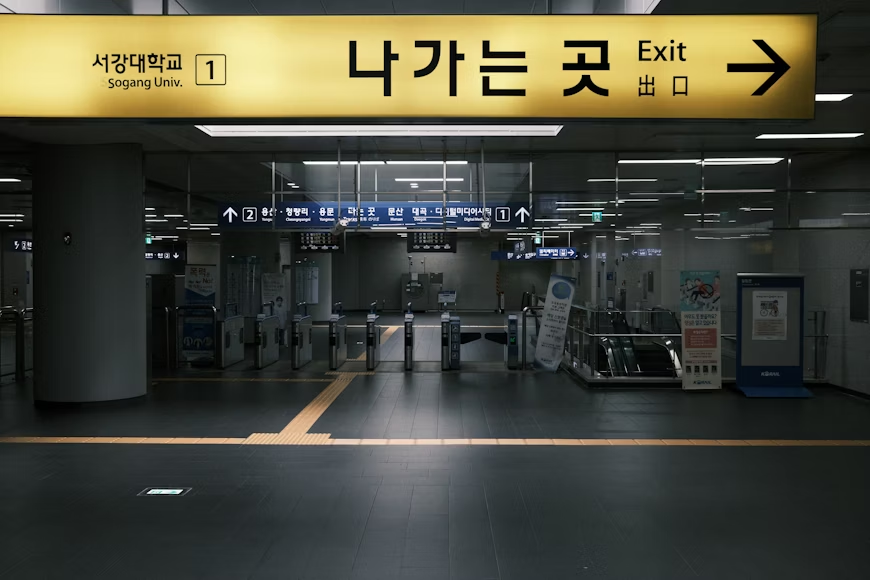
☝️Inside Seoul’s subway — clear signs and spotless stations make navigating the city surprisingly easy. (Image Source: Unsplash.com)
Seoul subway guide – Key Highlights
Did you know you can travel across Seoul for just about $1? Seriously — I was shocked too. Not only is it affordable, but the trains are clean, punctual, and come every few minutes, even during rush hour. Plus, everything’s clearly labeled in English, Chinese, and Japanese — perfect if you’re not fluent in Korean yet.
- Affordable & Efficient: Base fare ~1,550 KRW (~$1.10), trains every 3–5 minutes during peak hours.
- Clean & Safe: Highly renowned for safety and cleanliness.
- Multilingual Friendly: Signs and announcements are in English, Korean, Chinese, and Japanese.
- Wide Coverage: 23+ lines connecting all major neighbourhoods and attractions.
👉Planning both Seoul and Sydney?
Compare culture, speed, and comfort before you go: What It’s Like Riding the Subway in Korea vs Australia (2026 Update)
Popular Stations for Travellers
🎨 Hongdae (Hongik University Station – Line 2)
Hongdae is where I go when I want to feel young again. The moment you exit the station, the air changes — buskers are singing, dancers are battling it out on the streets, and couples are lining up for the newest dessert café. It’s chaotic in the best way. This is Seoul’s creative playground — full of thrift shops, photo booths, tattoo studios, and hidden speakeasies. Don’t be surprised if you lose track of time here. I often do.
👑 Gyeongbokgung (Gyeongbokgung Station – Line 3)
This stop “Gyeongbokgung” always feels like stepping into a different era. I love visiting on sunny mornings — the palace gates open, and hanbok-clad visitors gracefully walk through the courtyard, making it feel like a scene from a historical drama. If you walk a bit further, you’ll discover Bukchon Hanok Village, where old meets new — traditional tea houses next to design shops and art studios. Tip: Visit on the last Wednesday of the month — many museums around the area are free on “Culture Day.”
☕ Seongsu-dong (Seongsu Station – Line 2)
Seongsu feels like Seoul’s version of Melbourne’s Fitzroy or Sydney’s Newtown. It used to be full of shoe factories and dusty warehouses, but now? It’s an Instagram paradise. Every time I visit, there’s a new café with a 2-hour waitlist, and the bakeries? Unforgettable. I once queued 40 minutes for a salted caramel croissant, and it was totally worth it. Don’t miss Seoul Forest — especially during cherry blossom season. The contrast between nature and edgy cafés is what makes this area so cool.
💎 Gangnam (Gangnam Station – Line 2)
Gangnam is bold, flashy, and unapologetically modern. The moment you walk out of the station, giant billboards light up the streets, K-pop stores blast music, and the fashion here? Always two steps ahead. I often head to underground shopping malls here — you can find everything from trendy earrings to knock-off designer bags, all while staying cool in the AC. It’s a great place to feel the pulse of Seoul’s modern lifestyle — polished, fast, and always on trend.
Itaewon (Itaewon Station – Line 6)
No matter how many times I go to Itaewon, it always feels a little different. It’s the only place in Seoul where I can eat Turkish kebab for lunch, grab French macarons for dessert, and finish with a Korean fried chicken pub crawl. This area is diverse, loud, sometimes messy — but always alive. On weekends, the nightlife gets wild, and the clubs and bars spill out onto the streets. But if you’re more into quiet views, walk up to Noksapyeong or climb the hill toward the mosque — the sunsets there are stunning.
How to Use the Metro – Your Seoul Subway guide to Tickets & Payments
One of the best things I did when I arrived in Seoul? Buying a T-Money card. You can find them at any convenience store (mine had a cute Kakao Friends character on it) and use it on subways, buses, and even some taxis and convenience stores. Just tap and go — super easy.
💳 Fare-wise, everything below assumes you are tapping a T-Money Card or a WOWPASS (affiliate) — pick one up at the airport and the ticket machines become someone else’s problem.
🚕 Straight from the airport: if you would rather not haul luggage onto the subway on day one, a private Incheon Airport transfer takes you door-to-door — then start riding the subway once you are settled.
👉 Sometimes subways can’t take you everywhere — especially late at night.
That’s when taxis come in handy. Read our Seoul Taxi Guide 2026 for late-night rides, fare tips, and safe booking apps.
For navigation, I rely on KakaoMap and Naver Map. They’re lifesavers when you’re trying to figure out transfers or the fastest route. You can even check real-time train arrivals.
- T‑Money Card: Grab one at convenience stores or stations. Tap in/out, and use it across subways, buses, taxis, and even convenience stores.
- Apps for Travel:
- KakaoMap or Naver Map: Real-time navigation with English support
👉Don’t have a transportation card yet?
Check out T-Money Card Korea 2026 Guide for where to buy, reload, and use your card across Seoul.
🔢 Transport costs calculated — now what about everything else?
The subway is one of Seoul’s biggest budget wins. But once you factor in where you’re sleeping, what you’re eating, and what you’re doing — the total looks different. See the full picture.
Run your complete Seoul trip estimate →
Essential Maps to Download
📱 One practical note before you download anything: none of these apps work without data, so I sort a Korea eSIM before I fly and it is live the moment I land.
- Visit Seoul Interactive Subway Map:
▶ https://english.visitseoul.net/subway - Official Seoul Route Map (PDF):
▶ https://english.seoul.go.kr/service/movement/route-map/ - Secondmin Blog – Downloadable Subway Map (PDF Instructions):
▶ https://secondmin.co.kr/seoul-subway-map-pdf-free-download-and-information - Moovit Metropolitan Subway Offline Map (PDF):
▶ https://moovitapp.com/index/en/public_transit-Offline_maps_Metropolitan_Subway-map-%EC%84%9C%EC%9A%B8%EC%8B%9CSeoul-1802-1341
Tips & Etiquette
- Avoid rush hour mornings (8–9:30 AM) and evenings (5:30–7:30 PM).
- Stand in line and let passengers disembark before boarding.
- Observe priority seating policies.
- Stay quiet — speaking loudly on trains is considered rude.
- Most stations and trains offer free Wi-Fi and real-time arrival screens. :contentReference[oaicite:7]{index=7}
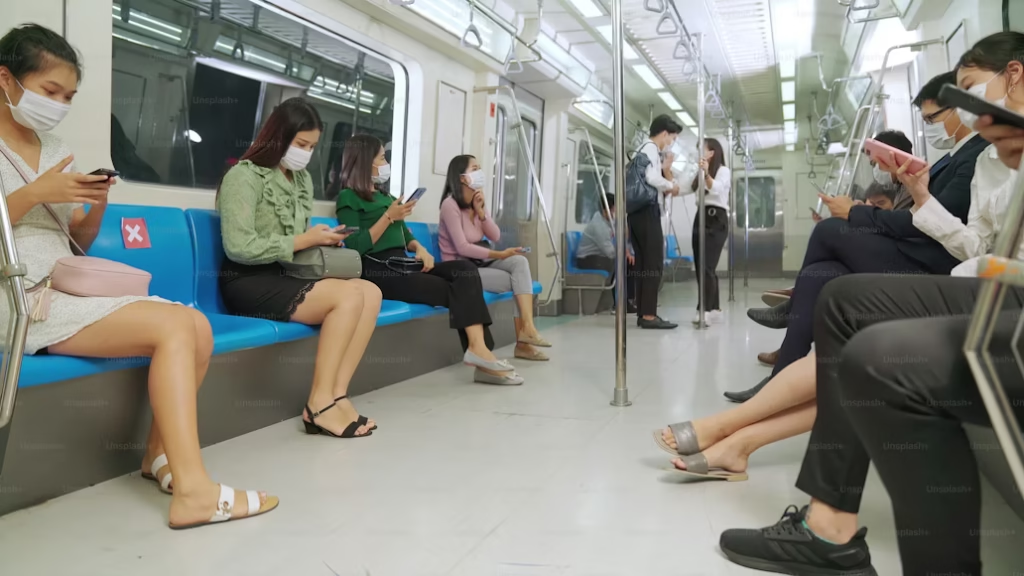
☝️ A glimpse inside the Seoul subway — clean, quiet, and connected, even during rush hour. (Image Source: Unsplash.com)
💡 Unnie’s Underground Beauty Secret: Since Seoul subways are quiet and have free Wi-Fi, it’s the perfect time to prep for your next stop. nstead of scrolling through social media, tell the quiz your skin type and discover your best-match Olive Young products It’s the smartest way to ensure you only buy the products that actually work for the Australian sun (or wherever you’re from) while you’re in Korea!
Frequently Asked Questions (2026 Updated)
Q1. What is the Seoul subway base fare in 2026?
About 1,550 KRW (roughly $1.10) for the first stretch when you tap a T-Money card, with small add-ons for longer distances. Paying by single-journey ticket costs a little more, so a card is always cheaper.
Q2. What are the Seoul subway operating hours in 2026?
Trains run roughly from 5:30 AM until around midnight. Exact first and last times vary by line and direction, so check KakaoMap or Naver Map for your specific route on the day.
Q3. What time is the last subway train in Seoul?
Most lines run their last train somewhere between about 11:30 PM and 12:30 AM. Once the subway stops, a taxi is your reliable late-night option.
Q4. How do I pay for the Seoul subway?
Tap a T-Money card or WOWPASS at the gate — it’s the fastest and cheapest way. Single-journey tickets are available from station machines but cost more and add a refundable deposit.
Q5. Is the Seoul subway easy to use in English?
Yes. Signs and announcements are in English, Korean, Chinese and Japanese, and stations are numbered. Pair that with KakaoMap or Naver Map and it’s very hard to get lost.
Q6. Which app is best for the Seoul subway?
KakaoMap and Naver Map are the locals’ choice — real-time arrivals, transfer directions and English support. Google Maps is unreliable for transit inside Korea, so skip it here.
Q7. When is Seoul subway rush hour I should avoid?
Weekday mornings from about 8:00–9:30 AM and evenings from 5:30–7:30 PM. Trains still come every few minutes, but they’re packed, so travel outside those windows if you can.
Q8. T-Money card or the Seoul Climate Card for the subway?
For a normal trip, T-Money (pay-as-you-go) is simplest. The Seoul Climate Card, an unlimited monthly pass, only pays off for long stays or heavy daily commuting, so most visitors are better off with T-Money.
📱 Worth a look: if you are packing in sightseeing, the Klook Pass Seoul bundles several top attractions for less than buying them one by one.
Final Thoughts
Seoul’s subway network connects you seamlessly to all corners of the city, from tourist landmarks to local hotspots. With the help of this Seoul subway guide, plus tips, maps, and apps, you’ll feel confident navigating the metro like a local
The subway answers about eighty percent of your transport questions in Seoul. For the other twenty — KTX day trips, intercity buses, late-night taxis — my complete Korea transport guide fills in the gaps.
🥩 Seoul Korean BBQ Guide 2026: 7 Best Spots (Don’t Get Scammed!) Every station mentioned in this guide has amazing BBQ nearby. But which ones are actually worth your T-Money balance? I’ve hand-picked 7 authentic spots that are all just a short walk from major subway exits.
🚄 NEXT ADVENTURE:
Ready to travel beyond Seoul?
👉 KTX in Korea – The High-Speed Rail That Changed My Travel Life
Or if you just landed, start here: Incheon Airport to Seoul Taxi Guide (2026).
Related Seoul Travel Guides
- Myeongdong Travel Guide 2026 – Shopping, Food & Street Culture
🚇 Accessible via Line 4 (Myeongdong Station)
Discover Seoul’s liveliest district — from K-beauty shopping and neon lights to late-night street-food adventures. - Gyeongbokgung Palace Museums – Seoul’s Best Free Cultural Gems
🚇 Accessible via Line 3 (Gyeongbokgung Station)
Step into Korea’s royal past and explore the National Palace and Folk Museums, just a short ride from central Seoul. - Seongsu-dong Seoul Guide 2026 – From Industrial Suburb to Trendy Youth Hub
🚇 Accessible via Line 2 (Seongsu Station)
Visit Seoul’s creative heart — warehouse cafés, local designer pop-ups, and the green trails of Seoul Forest. - Gangnam Travel Guide 2026 – Glamour, Nightlife & Modern K-Culture
🚇 Accessible via Line 2 (Gangnam Station)
Explore the global side of Seoul — luxury shopping, stylish cafés, and vibrant nightlife beneath the city lights. - Bukchon Hanok Village Travel Guide – Seoul’s Living Tradition
🚇 Accessible via Line 3 (Anguk Station)
Wander through narrow alleys lined with centuries-old hanoks, tea houses, and artisan workshops connecting Seoul’s past and present. - Korea vs Australia Subway 2026 – What It’s Really Like as a Foreigner
Wander through narrow alleys lined with centuries-old hanoks, tea houses, and artisan workshops connecting Seoul’s past and present.
Pingback: Seoul Shopping 2025: The Hyundai Seoul & Lotte World Tower