Table of Contents
- Introduction – Why Visit Seoraksan in Autumn
- Best Time to Visit
- What to Pack for Hiking Seoraksan
- Hiking Trails in Seoraksan
- Where to Eat Near Seoraksan
- Transportation Guide – How to Get There
- Where to Stay Near Seoraksan
- Seoraksan in Other Seasons
- Seoraksan Travel FAQ
- Final Thoughts – Comparing Korea & Australia
Introduction – Why Visit Seoraksan in Autumn
When I first saw Seoraksan in October, I understood why Koreans wait all year for autumn. The mountain doesn’t just change colour — it transforms mood, sound, even the way air feels on your skin. I remember standing under a maple tree, the wind scattering red leaves like confetti, and thinking, “This is what silence looks like.” In Australia, I was used to the soft rustle of eucalyptus and the vast openness of the Blue Mountains, but Seoraksan felt closer — almost intimate. Every trail seemed to carry stories from centuries past, blending nature with the quiet grace of Korean spirituality. If you’re visiting Korea in autumn, Seoraksan isn’t just a hike — it’s an experience that stays with you long after you’ve left.
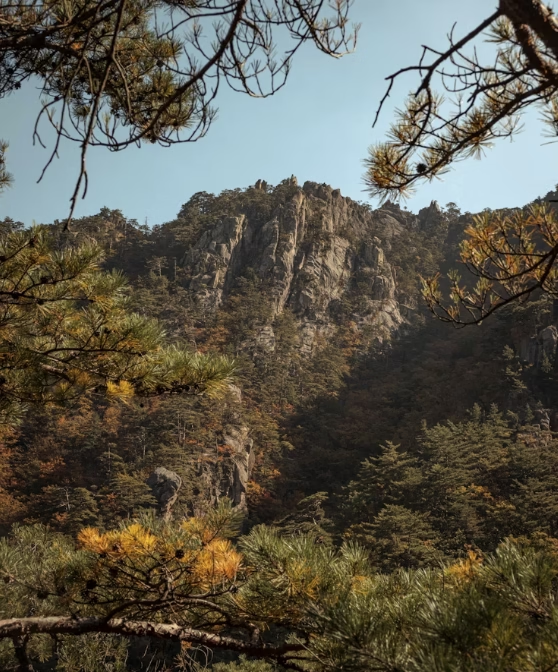
☝️ Autumn foliage at Seoraksan National Park, where crimson maples and golden ginkgo trees blanket the valleys under clear blue skies. One of Korea’s most breathtaking autumn destinations.(Image Source: Unsplash.com)
This Seoraksan Autumn Travel Guide will help first-time visitors plan their trip—covering the best hiking trails, transport tips, food recommendations, and where to stay. When it comes to Korea’s autumn foliage, few places compare to Seoraksan National Park. Located just a few hours from Seoul, it is one of the most popular destinations for hikers, families, and photographers.
I visited in late October during the peak fall foliage season, and in this guide I’ll share practical, first-hand tips: when to go, what to pack, the best hiking trails, where to eat, and how to get there. This Seoraksan Autumn Travel Guide will help first-time visitors plan the perfect hiking trip.
In Australia, I’m used to eucalyptus forests and wide bushwalking tracks like those in the Blue Mountains. Experiencing Korea’s autumn mountains, however, was an entirely different world—bursting with colour, history, and cultural depth. This article blends practical travel advice with personal comparisons between Korea and Australia, giving you a unique perspective for your trip.
👉While this guide focuses on Seoraksan, you can discover more fall destinations and a complete travel route in our Fall Foliage in Korea 2025: Top Spots + 6-Day Itinerary.
Best Time to Visit – Seoraksan Autumn Travel Guide
Autumn arrives early in Seoraksan — the colours peak around mid to late October, a few weeks before Seoul catches up. The mornings are crisp enough to see your breath, but the afternoons glow in a soft gold light that photographers chase every year. During my visit, the fog lifted just as the sun broke through the valley, turning the granite cliffs into amber. It’s one of those rare moments when time slows down, and all you can do is breathe. Unlike Australia’s gentle seasonal shift, Korean autumns are intense and short — blink, and the colours are gone. That’s what makes Seoraksan so precious: it’s beauty on borrowed time.
- Peak Foliage Season: Mid–late October (earlier than Seoul)
- Temperature Range:
- Morning: 5–10°C (41–50°F)
- Afternoon: 13–18°C (55–65°F)
- Weather Conditions: Mostly clear skies, low rainfall, occasional morning fog
👉 Tip: Dress in layers. Mornings are chilly, but it warms up by noon.
In Australia, autumn often feels like a mild extension of summer, with only subtle color changes. In Korea, however, autumn is strikingly dramatic. Seoraksan’s slopes transform into a vivid canvas of crimson maples, golden ginkgo, and rugged granite cliffs.
📌 For official seasonal forecasts, you can check the Korea Tourism Organization’s guide.
For more foliage spots in Korea, check our Korea Autumn Travel Guide 2025
What to Pack for Hiking Seoraksan
Packing for Seoraksan feels like preparing for two seasons in one day. At dawn, the air bites at your fingertips, but by noon, you’ll be peeling off layers under the bright sun. I learned the hard way on my first visit — I brought light sneakers and ended up slipping on the steep steps near Ulsanbawi. Since then, I have never forgotten proper hiking shoes, a fleece, gloves, and water. Korea’s mountains demand respect, not gear, but preparation shows it. And unlike the long, flat trails of Australian bushwalks, here every climb is short, sharp, and humbling — but that’s part of the beauty.
✅ Clothing
- Base layer + fleece + windbreaker/light down vest
- Hiking shoes or sturdy sneakers with grip
- Light gloves and a hat/neck warmer
- Extra socks
✅ Essentials
- Water (at least 500ml per person)
- Snacks: bananas, nuts, or an energy bar
- Wet wipes, sanitizer, small first aid kit
- Power bank for phone
- Trekking pole (very useful for Ulsanbawi Trail)
✅ Apps
- KakaoMap / Naver Map – real-time bus schedules, trail maps
- Korea National Park App – trail alerts, closures
⚠️ Avoid: Sandals, dress shoes, or shorts. Trails are steep and rocky.
Compared with Australia’s bushwalks—where sneakers and light clothing often suffice—Korea’s steep climbs and sharp weather shifts mean proper hiking shoes and layered outfits are essential.
Hiking Trails in Seoraksan
The Ulsanbawi Trail is Seoraksan’s heartbeat. Climbing those endless stone steps, I remember hearing the soft chant of hikers encouraging each other in Korean — “화이팅!” By the time you reach the top, the East Sea glimmers beneath you, and every ache feels worth it. For a gentler walk, the Biryong Falls Trail offers quiet forest paths where the air smells of pine and damp soil. And if you’re traveling with family, Sinheungsa Temple is the perfect stop — the sight of the giant bronze Buddha surrounded by fiery trees feels like stepping into a living painting. The Gwongeumseong Cable Car is another gem — a five-minute ride that delivers panoramic beauty that rivals Australia’s Blue Mountains Skyway, though the view here feels more ancient, more alive.
1) Ulsanbawi Rock Trail
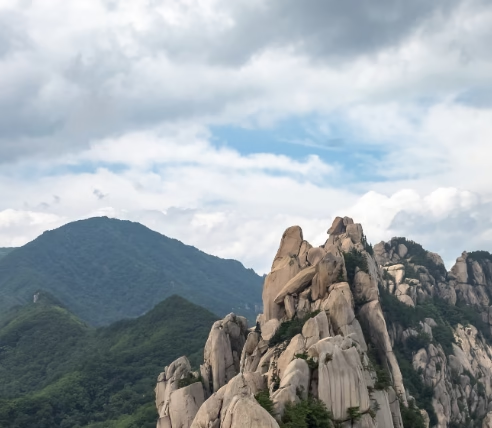
👉Ulsanbawi Rock at Seoraksan National Park, offering panoramic views of rugged granite cliffs and fiery autumn trees — a must-visit hiking trail in Korea’s fall season.(Image Source: Unsplash.com)
- Difficulty: Intermediate–hard
- Duration: 2.5–3 hrs round trip
- Highlights: 800+ steps, panoramic views of the East Sea & granite cliffs
- Tip: Start early in the morning to avoid crowds
2) Biryong Falls Trail
- Difficulty: Easy
- Duration: ~1.5 hrs round trip
- Highlights: Shaded forest path, peaceful waterfall
- Best for: Families, casual hikers
3) Sinheungsa Temple Trail
- Difficulty: Very easy
- Duration: 30 mins
- Highlights: Giant Bronze Buddha, tranquil temple grounds
4) Gwongeumseong Fortress Cable Car
- Price: ~11,000 KRW
- Duration: 5-min ride + summit walk
- Highlights: Wide-angle views without hiking
- Best for: Visitors short on time, non-hikers
👉 Compared to the Blue Mountains Skyway in Australia, Seoraksan’s cable car ride is shorter but more dramatic, revealing cliffs, valleys, and colorful foliage in minutes.
👉If you’d like to explore more of Korea’s scenic mountains beyond Seoraksan, check out our Fall Foliage in Korea 2025 Guide for Jeju, Naejangsan, and Odaesan travel ideas.
Where to Eat Near Seoraksan
After a long hike, there’s nothing quite like sitting in a small local restaurant near Seorak-dong, your hands still warm from climbing, a steaming bowl of doenjang jjigae in front of you. I found a place where the owner served mountain vegetable bibimbap with wild sesame oil — she smiled and said, “The taste comes from patience.” It reminded me of the quiet cafés in the Blue Mountains, except here, the flavours feel more grounded, more earthy. Nearby in Sokcho, locals gather over gamjatang (pork bone soup) and pajeon, their laughter filling the cool air. In Korea, food after hiking isn’t just a meal — it’s a celebration of the climb.
- Ondal Garden (온달가든)
- Must-try: Mountain vegetable bibimbap & soybean stew
- Why: Nutritious, comforting after a hike
- Sokcho Gamjatang Alley (속초 감자탕)
- Must-try: Pork bone soup + kimchi pancake
- Why: Spicy, hearty, filling—great for dinner
- Seorak Coffee
- Order: Americano with sweet potato cake
- Why: Relaxing café with mountain views
💡 Cultural difference: Australian mountain cafés (like in the Blue Mountains) are picnic-style with outdoor decks. Korean mountain cafés feel more like recovery zones—hot drinks and dense cakes designed to restore energy.
Transportation Guide
Getting to Seoraksan from Seoul is surprisingly simple — a 2.5-hour express bus ride, then a short local trip to Seorak-dong. The first time I went, I watched the city disappear, replaced by small fishing towns and distant peaks that seemed to grow taller with every kilometre. Public transport in Korea is punctual and easy to navigate; KakaoMap became my best friend. Unlike in Australia, where driving is almost a necessity for national park trips, here you can reach world-class landscapes without ever needing a car. And honestly, there’s something deeply peaceful about arriving by bus — it forces you to slow down before the mountain humbles you.
- Seoul → Sokcho:
Direct express bus from Seoul Express Bus Terminal → Sokcho (2.5–3 hrs). - Sokcho → Seoraksan:
Local bus #7 or 7-1 from Sokcho Intercity Bus Terminal → Seorak-dong (30 mins).
👉 Tip: Use KakaoMap for live bus tracking—it’s highly accurate in Sokcho.
📌 For Sokcho city maps and local events, visit the Sokcho City Official Tourism page.
Where to Stay Near Seoraksan
If you want to wake up with mountain air filling your lungs, stay near the park entrance in Seorak-dong. I stayed at a small guesthouse run by an elderly couple who brewed barley tea every morning — the kind of hospitality that feels like home. For a touch of comfort, the Kensington Hotel offers window views of mist rolling over the peaks, especially beautiful at sunrise. Sokcho city is another great base — ocean views, night markets, and seafood restaurants make it perfect for post-hike relaxation. In Australia, mountain stays often mean isolation; in Korea, they mean connection — to nature, food, and people. Wherever you rest, Seoraksan’s calm follows you indoors.
- Kensington Hotel Seorak
- Mid-range/high price, 5-minute walk from park entrance
- Stunning mountain views, convenient for early hikes
- Guesthouses in Seorak-dong
- Budget-friendly, simple stays
- Hotels in Sokcho city
- Ocean views, close to restaurants & night market
👉 In Australia, national park lodging often means camping or eco-lodges. In Korea, accommodations emphasise comfort and accessibility, perfect for early starts.
After your hike, many travelers choose to stay or dine in Sokcho city. For detailed recommendations on restaurants, seaside cafés, and the famous night market, check our Sokcho Travel Guide
Seoraksan in Other Seasons
Each season paints Seoraksan differently. Spring brings cherry blossoms that cling to the temple roofs like pink clouds, while summer fills the valleys with rushing waterfalls and thick, green air. Winter, though — winter is silence. The peaks turn white, and the trails crunch under your boots, every breath hanging like mist. I’ve never seen snow in Australia’s Blue Mountains, so standing in Seoraksan’s frozen forest felt otherworldly. It’s proof that beauty here doesn’t depend on colour — it lives in contrast.
- Spring (April–May): Cherry blossoms and azaleas
- Summer (June–August): Green valleys, popular for streams and waterfalls
- Winter (December–February): Snowy ridges, a paradise for photographers
Each season offers a completely different view—unlike in Australia, where landscapes remain relatively green year-round.
Seoraksan Travel FAQ
Most people ask if Seoraksan is too hard to hike, and my answer is always: it depends on your pace, not your fitness. Koreans hike with rhythm — steady, communal, unhurried — and you’ll often see families, children, even grandparents on the trails. Day trips from Seoul are possible, but staying overnight lets you see the mountain before the tour buses arrive. No, you don’t need to hike to enjoy it; the cable car shows you more than enough. And if you’re torn between staying in Sokcho or Seorak-dong, choose both. Hike first, then eat by the sea.
Q1. When is the best time to see autumn foliage in Seoraksan?
A1. Mid–late October is peak season.
Q2. Can beginners hike in Seoraksan?
A2. Yes. Biryong Falls & Sinheungsa Temple trails are beginner-friendly.
Q3. Is a day trip from Seoul possible?
A3. Absolutely. Leave early and you can return by evening.
Q4. Do I need to hike to enjoy the scenery?
A4. No. The Gwongeumseong Cable Car provides stunning views.
Q5. Should I stay in Sokcho or near the park?
A5. Stay near the park for early hikes, Sokcho city for food & seaside views.
Final Thoughts – Comparing Korea & Australia
In Australia, hiking is solitude — wide skies, the smell of gum trees, and the sound of cockatoos echoing through canyons. In Korea, it’s community — shared rice cakes, laughter, and that quiet “수고했어요” (“You did well”) at the summit. Both have beauty, but they move at different heartbeats. Seoraksan taught me that nature can feel sacred, not just scenic. It’s not just a mountain; it’s a reminder of how small we are and how connected we can be. Every time I leave, I carry its silence back to Sydney — a silence filled not with emptiness, but gratitude.
Hiking in Korea, especially at Seoraksan, offers experiences I rarely find in Australia:
- Colours: Blue Mountains in Australia stay green with subtle golden hues. Seoraksan explodes into fiery reds and yellows.
- Distance: Australian hikes are usually long but flat; Seoraksan hikes are shorter, steeper, and more intense.
- Culture: Australians often finish with a BBQ or coffee. Koreans enjoy bibimbap, soup, or makgeolli after hiking.
For me, this Seoraksan Autumn Travel Guide highlights one of the most rewarding experiences in Korea. It’s not just the landscapes but the cultural richness—temples, food, cafés—that make it unforgettable. If you’re in Korea in October, Seoraksan should be at the top of your itinerary.
If Seoraksan feels too far for your schedule, you can still enjoy a similar mix of nature and city views at Namsan (N Seoul Tower) right in the heart of Seoul.
Related Guides & Resources
If you loved exploring Seoraksan’s fiery autumn trails, here are more travel stories and guides to help you experience both Korea’s natural beauty and Australia’s iconic landscapes — places that capture the same sense of wonder, each in their own way.
- 🇰🇷 Namsan Park Seoul Night Walk – City Lights & Autumn Leaves
Experience Seoul’s balance of nature and neon. Perfect for travellers who want a peaceful walk after busy sightseeing. - 🇰🇷 Gangnam Travel Guide 2025 – Where Modern Seoul Comes Alive
From stylish cafés to rooftop bars, explore how Seoul’s urban rhythm contrasts beautifully with Seoraksan’s stillness. - 🇦🇺 Blue Mountains Echo Point – The Three Sisters Lookout Experience
Just like Seoraksan’s Ulsanbawi, this Australian lookout offers sweeping views that make you feel both small and alive. - 🇦🇺 Blue Mountains Skyway – Floating Above the Valley
Glide through the air above the Jamison Valley — an Australian cable car experience that echoes Seoraksan’s Gwongeumseong ride. - 🇦🇺 Blue Mountains Scenic Railway – The World’s Steepest Train Ride
Compare the thrill of Seoraksan’s climbs with this breathtaking descent through ancient rainforests in Australia’s most beloved national park.
2 thoughts on “🇰🇷 Seoraksan Autumn Travel Guide – A Complete Itinerary from Seoul”