Table of Contents
- Introduction – Finding the Best Korean BBQ Around the World 2025
- Seoul – The Origin of Flavour and Fire
- Sydney – A Modern Take on a Classic
- Melbourne – Where Community Meets Grill
- Comparing the BBQ Experience – Korea vs Australia
- Beyond the Grill – The Emotional Side of BBQ
- The Future of K-BBQ – Global, Sustainable, Creative
- Travel Tip – Create Your Own Korean BBQ Journey
- Final Thoughts – The Smoke That Connects Us
- Related Reads on Unniespicking
Introduction – Finding the Best Korean BBQ Around the World 2025
If you’ve been searching for the best Korean BBQ around the world 2025, this guide will take you through Seoul, Sydney, and Melbourne with real experience-based insights.
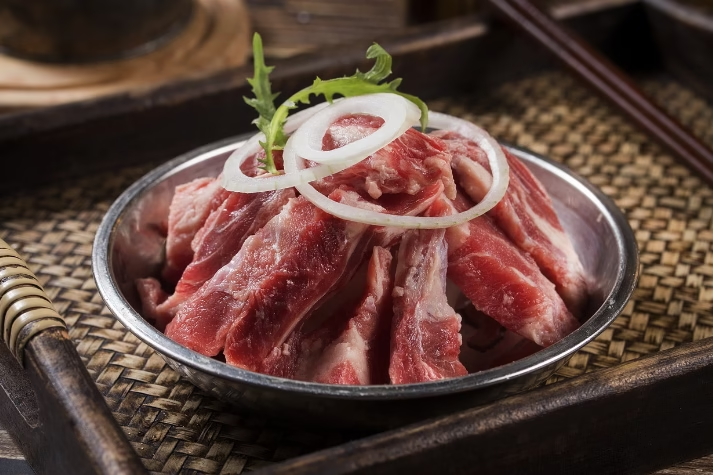
I’ve eaten Korean BBQ on three different continents, yet the experience always brings me home. Whether it’s the sizzling sound of marinated beef hitting a hot grill in Seoul or the smoky scent of pork belly floating through a laneway restaurant in Melbourne, there’s a universal warmth that transcends borders.
In 2025, K-BBQ has become one of the most recognisable faces of Korean culture worldwide. What was once a humble communal meal is now part of global dining scenes—from Gangnam’s late-night restaurants to Sydney’s polished urban grills.
But despite its popularity, every city tells the story differently. Seoul’s BBQ is about precision and heritage; Sydney’s is about creativity and premium cuts; and Melbourne’s is about multicultural energy and community.
This article isn’t a checklist of restaurants—it’s a journey. A cross-cultural look at what Korean BBQ means in 2025, through both personal experience and local insight.
Seoul – The Origin of Flavour and Fire
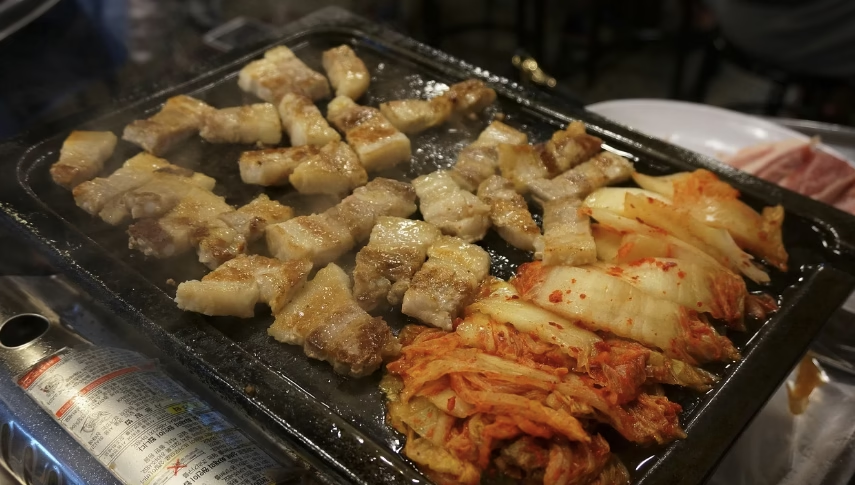
No matter how global Korean BBQ becomes, it always starts in Seoul. Here, the tradition is sacred—every cut of meat, every banchan, every bowl of ssamjang tells a story.
When I visited in late autumn, the air smelled like chestnuts and roasted sesame. In Gangnam, I tried hanwoo beef so tender it barely needed chewing; in Hongdae, college students were laughing over all-you-can-eat pork belly; and in Itaewon, I found fusion BBQ served with truffle salt and craft makgeolli.
👉 Read more: 🇰🇷 Seoul Korean BBQ Guide 2025 – The Ultimate Neighborhood-by-Neighborhood Tour
In Seoul, the ritual is as important as the flavour. You grill the meat yourself—perfectly seared on one side, turned once, then wrapped in lettuce with garlic, kimchi, and rice. It’s tactile, social, and deeply cultural.
When compared with Western barbecue, Korean BBQ isn’t just about smoke and sauce. It’s about balance—between spice and sweetness, heat and freshness. That’s why it has conquered international palates so easily: it satisfies both comfort and curiosity.
Even the etiquette is fascinating. In Korea, elders grill first; you never flip someone else’s meat without permission. These gestures may seem small, but they reflect a cultural rhythm—a respect for order and harmony that runs deep in Korean dining.
👉 If you’re interested in exploring more of Korea’s traditional food routes, check our Jeonju Hanok Village Guide 2025, where Korean cuisine meets cultural heritage.
Sydney – A Modern Take on a Classic
When I moved to Sydney, I expected to miss Seoul’s food scene. Instead, I discovered a thriving K-BBQ culture with an Australian twist.
Sydney’s restaurants are sleek and cosmopolitan. You’ll see wagyu marinated in gochujang, served alongside Australian craft beer instead of soju. The grills are cleaner, the portions larger, but the heart of the meal—the sharing—remains the same.
👉 Read: 🇦🇺 Best Korean BBQ in Sydney (2025 Guide): An Expert’s Perspective
What stands out most in Sydney is the ingredient quality. Australian beef is world-renowned, and many Korean restaurants proudly advertise “local wagyu, Korean taste.” The result? A fusion that’s both luxurious and familiar.
At one Surry Hills restaurant, the owner told me:
“We don’t just cook Korean food—we translate it.”
That philosophy sums up Sydney’s multicultural energy. Diners might dip grilled short ribs in wasabi butter, pair spicy pork with Australian sauvignon blanc, or finish their meal with matcha tiramisu. It’s fusion done with respect, not gimmick.
💬 Cultural note: Unlike Seoul’s late-night BBQ culture, Sydney’s scene is earlier and calmer—more dinner conversation than party. Yet when the grill starts sizzling, the same feeling spreads: a sense of togetherness.
📎 External reference: Australian Good Food Guide – Korean Restaurants Sydney
👉 Hurricane’s Grill vs Korean BBQ — See How the Two Cultures Compare
A quick breakdown of textures, flavours, dining style, and what Korean BBQ lovers feel when trying Hurricane’s Grill in Sydney.
Melbourne – Where Community Meets Grill
If Seoul is tradition and Sydney is modern innovation, Melbourne is conversation. The city’s Korean BBQ culture thrives on its multicultural spirit.
👉 Read: 🇦🇺 Best Korean BBQ in Melbourne 2025 – An Expat’s Guide to Meat, Culture and Community
When I first visited Melbourne’s CBD, I followed the scent of grilled bulgogi down Little Lonsdale Street. Inside a cozy restaurant, a group of Korean students and Australian coworkers were laughing over kimchi stew and beef brisket. It reminded me that food doesn’t just feed hunger—it creates belonging.
Melbourne’s K-BBQ places are often small, family-run, and always full of chatter. You can taste authenticity in every side dish: handmade kimchi, pickled radish, and perilla leaves that bite back just enough to balance the fat of the meat.
But what impressed me most was how Melbourne’s BBQ scene bridges cultures. Local butchers now stock galbi cuts; non-Korean chefs attend K-food festivals; even vegetarian versions—grilled mushrooms in gochujang glaze—are finding fans.
If you spend an evening here, you realise K-BBQ isn’t foreign—it’s local now. It has become a language everyone speaks, with chopsticks instead of words.
Comparing the BBQ Experience – Korea vs Australia
| Aspect | Seoul | Sydney | Melbourne |
|---|---|---|---|
| Meat Source | Hanwoo beef, marinated pork belly | Australian wagyu, free-range pork | Mix of Korean marinades + Aussie beef |
| Dining Style | Late-night, social & noisy | Early-evening, upscale | Casual, multicultural |
| Atmosphere | Tradition & hierarchy | Modern fusion elegance | Warm community vibe |
| Price Range | Moderate (₩20,000–₩40,000) | High (A$50–A$100 per person) | Mid (A$35–A$60 per person) |
| Beverage Pairing | Soju & makgeolli | Wine & local beer | Craft beer & rice wine |
| Best Season to Visit | Autumn (cool weather, clear air) | Spring (outdoor BBQ spots) | Year-round (indoor comfort) |
Each city offers its own interpretation, but they share one truth: Korean BBQ is more than food—it’s theatre. The flames rise, the meat sizzles, and conversations flow.
Beyond the Grill – The Emotional Side of BBQ
For Koreans abroad, BBQ carries nostalgia. The moment the first piece of samgyeopsal touches the grill, memories awaken—of family dinners, after-work gatherings, laughter echoing in smoky rooms.
When I cook it in my Australian kitchen, I follow the same steps: sesame oil, salt, thin slices of garlic, and lettuce wraps. It’s not about recreating Korea perfectly—it’s about keeping the connection alive.
I’ve also noticed how non-Koreans approach BBQ differently but with the same love. Australians focus on sharing plates, which matches Korean dining values perfectly. Maybe that’s why the cuisine fits so naturally here—it’s inherently social, just like Australian outdoor culture.
The Future of K-BBQ – Global, Sustainable, Creative
Looking ahead, Korean BBQ is evolving fast. Restaurants are experimenting with sustainable sourcing, AI-assisted menus, and fusion side dishes that respect tradition while embracing innovation.
In Seoul, plant-based BBQ joints are popping up, using mushrooms and soy cuts with bulgogi marinade. In Sydney, chefs are collaborating with local farms for carbon-neutral beef. And in Melbourne, pop-up K-BBQ events combine live music with food sharing, turning meals into cultural performances.
But no matter how modern it gets, the heart remains unchanged: the grill in the middle, friends around it, and stories shared through flavor.
Travel Tip: Create Your Own Korean BBQ Journey
If you plan a “Korean BBQ trail” across Korea and Australia, here’s my suggestion:
1️⃣ Start in Seoul – Visit Gangnam or Myeong-dong for authentic cuts.
2️⃣ Fly to Sydney – Experience high-end K-BBQ paired with Australian wine.
3️⃣ Finish in Melbourne – Enjoy local community spots and street-style BBQ nights.
While you’re in Korea, don’t miss the mountain views and food experiences described in the
👉 🇰🇷 Seoraksan Autumn Travel Guide – A Complete Itinerary from Seoul
You can also explore more foodie itineraries in
👉 🇰🇷 Fall Foliage in Korea 2025: Top 5 Spots + 6-Day Itinerary
Both guides connect perfectly with this story—because good travel always leads to good meals.
Final Thoughts – The Smoke That Connects Us
After years of tasting Korean BBQ across continents, I’ve realised that the grill is a symbol of connection. It unites generations, cultures, and strangers at one table.
In Seoul, I learned precision. In Sydney, creativity. In Melbourne, the community. Together, they form the global identity of K-BBQ in 2025—a cuisine that keeps evolving while holding tight to its soul.
Whenever the grill starts to smoke, I remember why this dish matters:
It’s not just meat on fire. It’s memory, belonging, and the warmth that turns a table of strangers into friends.
So next time you hear that sizzle, wherever you are—pause.
Take a breath. Smile.
Because that sound is home.
And maybe, in every smoky breath, Korea finds its way back to you — no matter where you are.
Related Reads on unniespicking.com
- 🇰🇷 Seoul Korean BBQ Guide 2025
- 🇦🇺 Best Korean BBQ in Sydney (2025 Guide)
- 🇦🇺 Best Korean BBQ in Melbourne 2025
- 🇦🇺 Hurricane’s Grill Circular Quay Review (Compared to Korean BBQ)
👤 Author Bio
Written by UnniesPicking, a Korean writer based in Australia. Through years of exploring BBQ culture across Seoul, Sydney, and Melbourne, she shares how food builds connection beyond borders.
[Read more → About me]