Disclosure: This post contains affiliate links. If you purchase through these links, I may earn a small commission at no extra cost to you. I only recommend products I personally use and trust.
When I left Korea twenty years ago, Hongdae was still finding its voice. Now, every time I return to Seoul, this neighbourhood surprises me all over again. It’s changed, but it’s stayed true to itself—chaotic, creative, and absolutely unfiltered. If you’re planning a trip to Seoul and you skip Hongdae, you’re missing the part of the city where real people actually live. This Hongdae Seoul travel guide covers everything you need to know to experience it like a local, not a tourist.
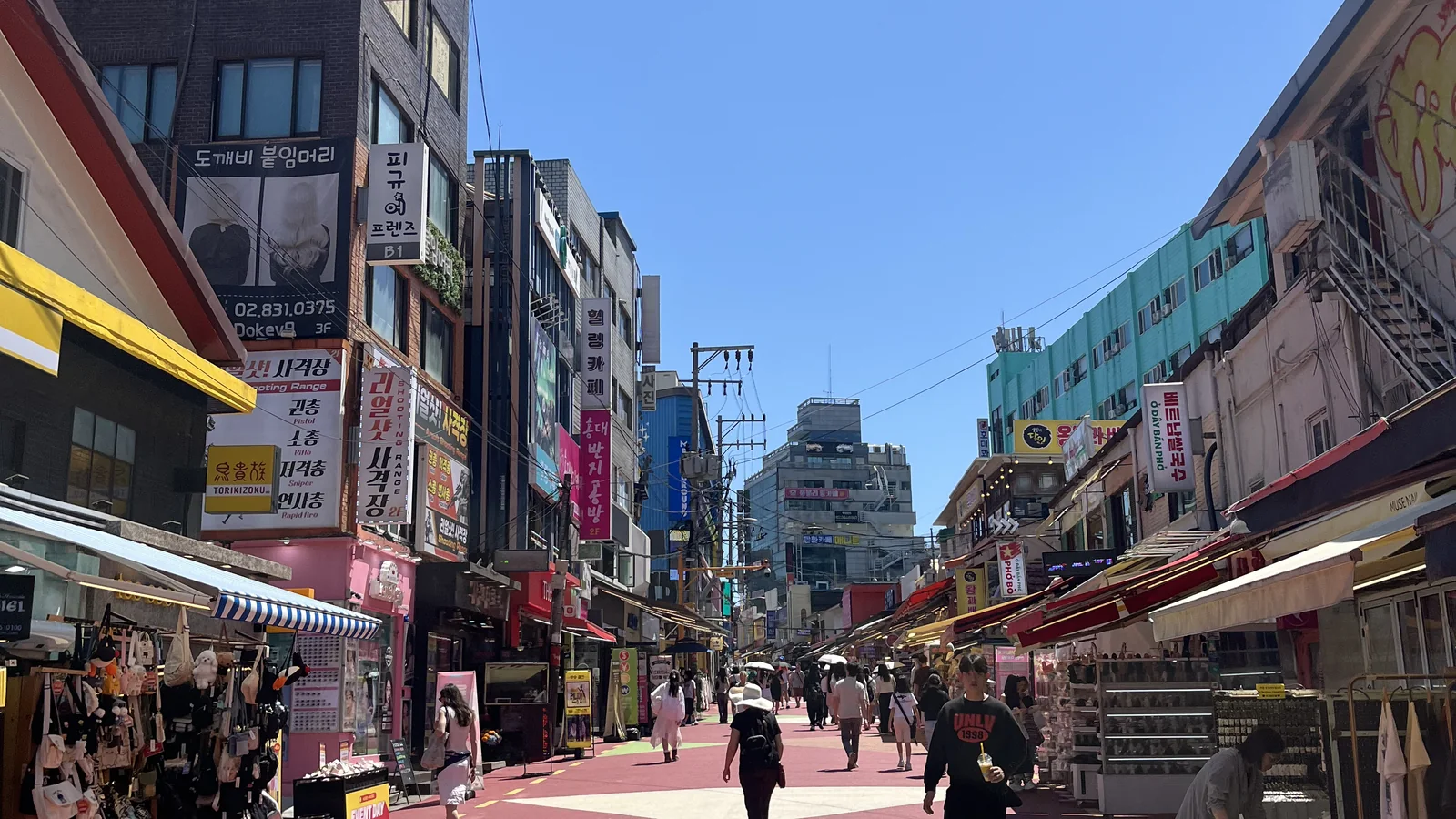
Table of Contents
- What Makes Hongdae Different From Every Other Seoul Neighbourhood
- Getting to Hongdae (and the Best Exit to Use)
- The Best Cafes in Hongdae (Overview)
- Street Food You Cannot Leave Without Trying
- Nightlife in Hongdae: What to Expect
- Shopping in Hongdae: Vintage, K-fashion, and More
- K-pop and Live Performance Culture
- Photo Booths and Unique Experiences
- Practical Tips for First-Timers
- Frequently Asked Questions
- My Thoughts
- Related Links
What Makes Hongdae Different From Every Other Seoul Neighbourhood
Hongdae isn’t polished. It’s not trying to impress you with luxury brands or five-star restaurants—well, not most of it anyway. What makes this neighbourhood special is that it’s genuinely alive with creative energy. The streets feel like they belong to artists, musicians, students, and people who chose to build something unconventional here. You see street performers at 2 AM, indie galleries tucked into basement corners, and college kids debating philosophy in tiny coffee shops that charge 3,000 won for an americano.
I’ve been coming back to Hongdae for the past two decades, and what strikes me most is the contrast. You’ll walk past a 400-year-old temple, then turn a corner into a neon-soaked alley with retro video game cafes and fashion brands you’ve never heard of. That clash between ancient and ultra-modern, between money and meaning, is pure Seoul. But Hongdae captures it more honestly than anywhere else I know.
The vibe is young. The average age here skews toward people in their twenties and thirties who are doing their own thing. If you’ve been to Myeongdong and felt overwhelmed by crowds shopping for the same things, Hongdae is the antidote. If you want to compare your options, check out my full Seongsu-dong vs Hongdae comparison to see which fits your style better.
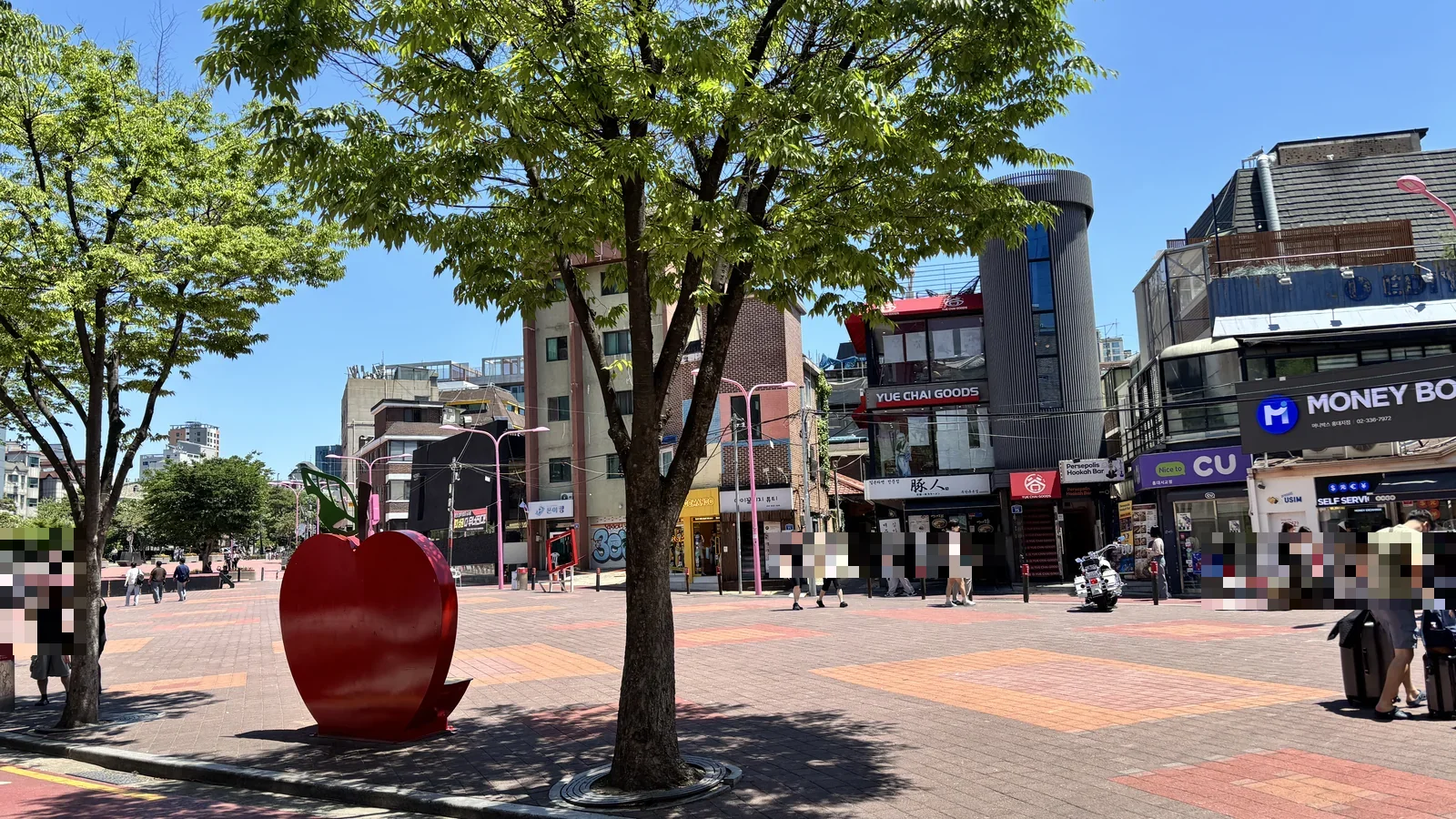
📸 Hongdae’s red apple landmark on the pedestrian plaza near the station exit — a reliable meeting point and photo stop. Taken by me in Hongdae, Seoul
Getting to Hongdae (and the Best Exit to Use)
The easiest way to reach Hongdae is via Line 2 subway. Get off at Hongik University Station (Line 2, Exit 9). This is the pedestrian gateway everyone uses, and honestly, it’s the best one. The moment you step out, you’re immediately in the thick of it. Street vendors, the smell of tteokbokki and hot dogs, buskers warming up—you’ll know you’re in Hongdae instantly.
Exit 9 puts you directly on the main pedestrian strip. This is your baseline for orientation. The most intense energy radiates from here, especially after sunset. If you want a slightly quieter experience, use Exit 2 instead, which leads to the residential areas and smaller galleries further from the main drag.
Pro tip: Don’t drive here unless you have to. Street parking is impossible, and the roads are cramped with delivery scooters weaving through pedestrians. The subway really is your best option. If you’re staying in another neighbourhood, getting to Hongdae by subway takes under thirty minutes from central Seoul.
For broader context on getting around Seoul and other neighbourhoods, read my Seongsu-dong travel guide which covers similar transit logistics for a different neighbourhood vibe.
The Best Cafes in Hongdae (Overview)
Hongdae is famous for its cafes, and it deserves that reputation. I’m talking about hundreds of them—literally. You could spend a week here visiting a different cafe every day and not repeat yourself. The range is wild. There are third-wave coffee shops where baristas trained in Melbourne or Seattle, vintage cafes with furniture from the 1980s, artistic cafes where the owner made all the interior design, and cosy holes in the wall where you can hide for hours with a book.
Most cafes charge between 4,000 and 7,000 won for coffee. The really trendy ones might hit 8,000 won. None of them are expensive by Western standards. Many have no time limits, so you can genuinely stay as long as you want. In summer, tiny outdoor patios fill with people on laptops or just watching the street.
I’ve dedicated an entire guide to this topic because it deserves its own deep dive: The Best Cafes in Hongdae Seoul. For now, just know that if you like coffee, atmosphere, and being surrounded by creative people, Hongdae is your neighbourhood.
Street Food You Cannot Leave Without Trying
The street food scene in Hongdae is incredible. This is where you eat, not at restaurants. You’ll find tteokbokki stalls with long lines even at midnight, hot dog vendors with gochujang mayo, fish cakes on skewers, and corn cheese—yes, corn with melted cheese in a paper cone, which sounds weird until you eat it at 11 PM after a few drinks and suddenly it’s the best decision you’ve ever made.
Tteokbokki (spicy rice cakes) is the unofficial Hongdae food. There are probably fifty places to get it, and they’re all slightly different. Some use a brothier sauce, some use thick sauce. Try a few and develop your own opinion. My preference is for the stalls near the main pedestrian zone where they cook it fresh right in front of you.
Bungeoppang (battered and fried vegetables and fish cakes) is another essential. There’s something about standing on a cold Seoul evening with a paper cone of hot bungeoppang and a can of beer that just feels right. For more extensive food exploration, check out my guide on the best food markets in Seoul, which covers different food scenes across the city.
Beyond the stalls, restaurants in Hongdae are casual and unpretentious. You’ll find Vietnamese pho places, Mexican tacos, ramen shops, and Korean BBQ. Most mains cost between 8,000 and 15,000 won. The key is to eat like you live here, not like you’re on vacation. Eat what locals eat at the hours they eat it.
Hongdae Street Food Seoul will give you an in-depth breakdown of the best stalls and their specific specialties. For now, just know that your dinner budget here is incredibly low if you stick to street food.
Nightlife in Hongdae: What to Expect
Hongdae comes alive after sunset. The energy completely transforms. Neon signs light up, music spills from clubs and bars, and the main pedestrian zone becomes packed with people. The energy is youthful, creative, and a bit chaotic—in the best way possible.
There are late-night clubs here that go until sunrise. Some are tiny basement bars with maybe fifteen seats and a DJ in the corner. Others are proper nightclubs with multiple floors. The music ranges from K-pop remixes to house to indie rock. Entry fees vary wildly, from free if you’re drinking to around 30,000 won with one drink included.
If you’re not into clubs, there are hundreds of bars and pubs. Some are rowdy university hangouts where shots flow freely. Others are sophisticated cocktail bars with bartenders who actually care about their craft. There are noraebang (karaoke rooms) on every block, and the whole vibe is very “come have fun, don’t worry about being proper about it.”
The nightlife scene is covered in detail in Hongdae Nightlife Guide Seoul, where I’ll break down specific venues, prices, and what kind of crowd to expect. For now, just know that Hongdae is where Seoul goes to let loose.
Shopping in Hongdae: Vintage, K-fashion, and More
Shopping in Hongdae is an experience. The main streets are lined with indie fashion boutiques, vintage stores, and brands you’ve never heard of. Many of these shops are run by the designers themselves. You’ll see styles that are bold, experimental, and very Korean—but in a way that feels authentic, not mass-produced for Instagram.
Vintage shopping is huge here. There are entire alleys dedicated to second-hand clothing, where you can find authentic 1990s pieces for cheap. If you’re into vintage, you’ll spend hours here. Prices are reasonable—a good vintage piece might be 20,000 to 50,000 won. In the vintage sections, haggling is sometimes acceptable, especially for multiple items.
K-fashion boutiques sell contemporary Korean design. Expect minimalist pieces, bold colors, interesting cuts, and a very Seoul aesthetic. Prices range widely depending on the designer, but you can find good pieces in the 40,000 to 100,000 won range.
Beyond clothing, there are bookstores, record shops, stationery stores, and art supply shops. If you’re creative at all, you’ll find something here that speaks to you. Many of these shops are tiny and tucked away, so just wander and explore. Getting lost in Hongdae is part of the charm.
For a deep dive into vintage shopping specifically, check out Vintage Shopping in Hongdae Seoul. That guide will cover the best shops by style and price range.
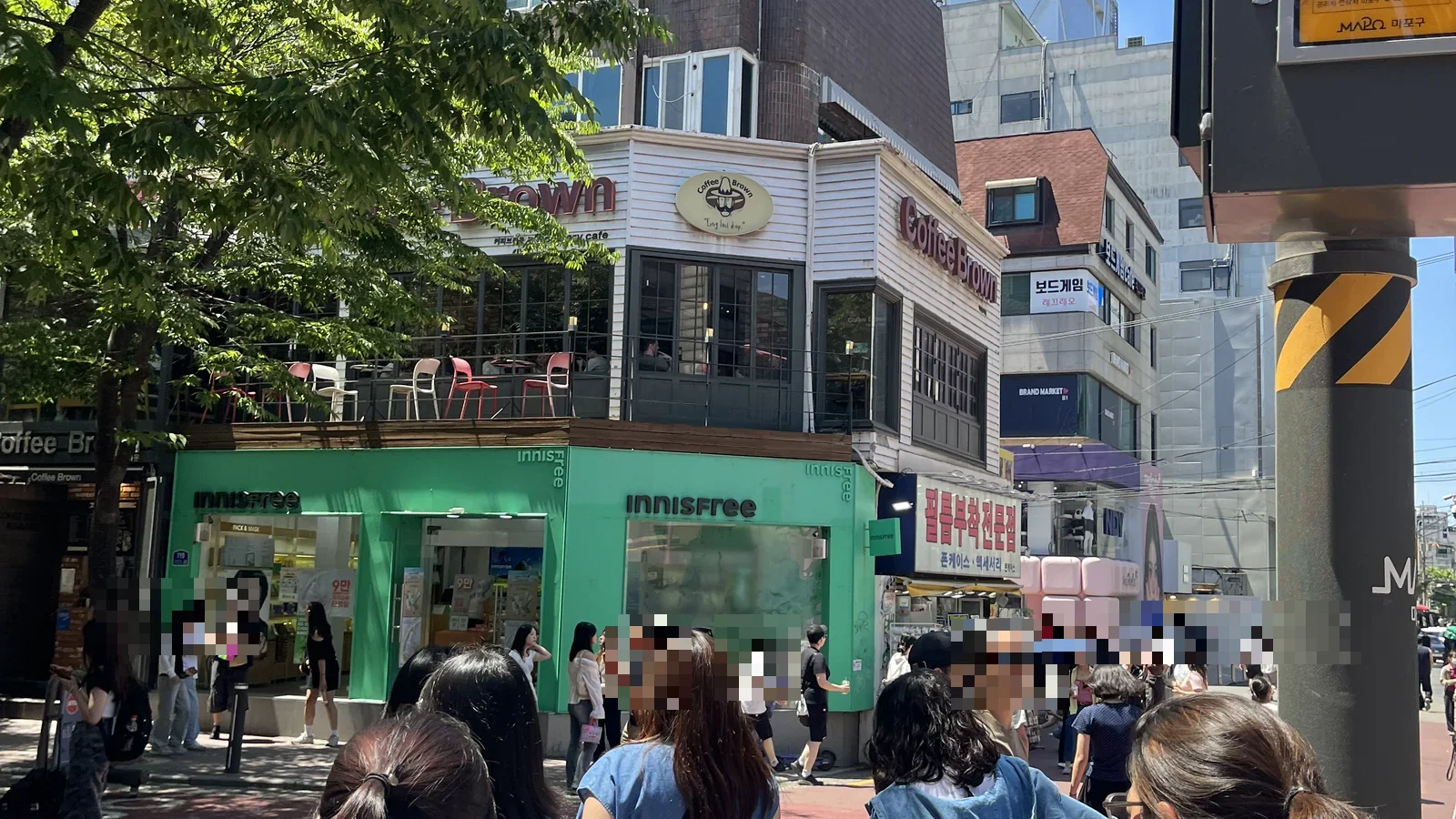
📸 Shopping and cafe corner in Hongdae — K-beauty stores sit right under rooftop coffee terraces. Taken by me in Hongdae, Seoul
K-pop and Live Performance Culture
Hongdae is the heart of Seoul’s live music scene. There are live music venues on almost every block. You’ll see signs for small basement clubs with live bands, jazz cafes, and rock venues. The quality varies hugely, but the energy is always genuine. These aren’t polished productions—they’re real musicians playing for real audiences who care about the music.
K-pop is everywhere in Hongdae, but not in the manufactured way. You’ll see young dancers practicing choreography on street corners, street performers doing K-pop covers, and clubs playing K-pop remixes. The culture here is more about independence and doing your own version of the music you love.
If you want a more structured K-pop experience, there are companies offering K-Pop Idol One Day Experience in Seoul tours and classes that let you learn choreography and record a K-pop music video. These typically cost around 150,000 to 200,000 won and are genuinely fun, especially if you’re with friends.
The live performance culture here is what makes Hongdae feel alive. Street performers are everywhere, and they’re usually talented. Buskers play guitar, dance, do beatbox, or perform juggling acts. The unwritten rule is that if they’re good, you tip a few thousand won. If they’re exceptional, you sit down and actually watch.
For more on K-pop specifically, see K-pop Experience in Hongdae Seoul. That guide will dive into fan culture, where to meet other K-pop fans, and the best venues for K-pop live performances.
👉 If you want to dive straight into Hongdae’s K-pop culture, the One Day K-POP Dance Class in Hongdae is the single most popular activity visitors book — 90 minutes, no experience needed.
Photo Booths and Unique Experiences
Photo booths—or “photo boxes” as they’re called in Korea—are everywhere in Hongdae, and they’re actually worth doing. These aren’t like the cheap booths you might remember from your childhood. Korean photo booths are high-tech, fun, and the prints are excellent quality. You get four poses, plus digital copies, plus the ability to customize effects and add stickers and text.
A session costs around 8,000 to 10,000 won and takes about fifteen minutes total. Most booths are open until midnight or later. You’ll see groups of friends, couples, and solo travelers using them. It’s a very Korean experience, and it’s actually a nice way to remember your time in Hongdae.
Beyond photo booths, there are other unique experiences. You can find pc bangs (internet cafes) where you can play online games with locals. There are vintage arcades with 80s and 90s games. There are artist studios where you can watch people work, and some will sell you art directly. There’s a real sense of creative experimentation here.
For a complete guide to photo booths and other Instagrammable moments, check out Hongdae Photo Booth Experience Seoul.
Practical Tips for First-Timers
Here’s what you need to know before you go. First, bring cash. Many small restaurants, street food vendors, and vintage shops don’t take credit cards. There are ATMs everywhere, but carrying 100,000 to 200,000 won in cash is smart.
And if you’d rather not plan at all, my guide to things to do in Hongdae on a weekend strings the cafes, stalls and shops into one ready-made route.
Second, comfortable shoes are non-negotiable. You’ll be walking on uneven sidewalks, navigating crowds, and potentially standing in lines for food. Bring good shoes. This neighbourhood is all about moving and exploring, not sitting still.
Third, download a translation app. Many older shop owners and street food vendors don’t speak English. Google Translate works well enough for basic communication. Take a picture of a menu and let the app translate it. It’s helpful and often entertaining.
Fourth, dress casually. Hongdae is very casual. Wear whatever makes you comfortable. People here don’t dress up to go out during the day, and even at night it’s more about personal style than formality. You’ll fit in better in jeans and a shirt than in formal wear.
Fifth, go during off-peak hours if you want a calmer experience. The main pedestrian zone is absolutely packed from 7 PM to midnight on weekends. If you prefer less chaos, visit during weekday afternoons or very early mornings.
Sixth, learn a few basic Korean phrases: “Annyeonghaseyo” (hello), “Gamsahamnida” (thank you), “Eolmayeyo?” (how much?), and “Juseyo” (please). Koreans appreciate the effort, and it opens doors.
Seventh, respect the creative spaces. If you see an artist working in a gallery or on the street, don’t interrupt unless they’re clearly open for interaction. Photography is generally okay, but always ask before taking someone’s picture.
Hongdae vs Other Seoul Neighbourhoods: Quick Comparison
| Neighbourhood | Vibe | Best For | Price Range | Crowd Type | Busiest Time |
|---|---|---|---|---|---|
| Hongdae | Creative, youthful, chaotic | Art, nightlife, street food, vintage | Budget-friendly | Students, artists, young professionals | Nights & weekends |
| Seongsu-dong | Hip, industrial-chic, emerging | Trendy cafes, design shops, galleries | Mid-range to upscale | Young professionals, Instagram-conscious | Afternoons & weekends |
| Itaewon | International, diverse, touristy | International food, clubbing, nightlife | Mid-range to expensive | Expats, international tourists | Nights & weekends |
| Myeongdong | Commercial, crowded, brand-focused | Shopping, dining, K-beauty | Wide range | Tourists, shoppers, families | All day, especially afternoons |
Hongdae rewards one planned splurge. Everything else here is wander-and-see — but these two are the kind you book, then build the day around:
🎬 K-pop idol experience in Seoul (hair, makeup and photoshoot) — get styled by a pro team and walk out with idol-grade photos of yourself. About as “only in Korea” as an afternoon gets.
🍺 Hongdae and Itaewon pub crawl — the easiest way to borrow a crowd for the evening. The hosts handle the bar-hopping logistics; you just show up.
(affiliate links)
Frequently Asked Questions
What is the best time to visit Hongdae?
Spring (April-May) and autumn (September-October) are ideal. The weather is comfortable, and the vibe is energetic without the summer crowds or winter chill. If you want the most energy, come on a Friday or Saturday night after 8 PM. If you want a more relaxed experience, visit on a weekday afternoon.
How long should I spend in Hongdae?
If you’re visiting Seoul for the first time, I’d suggest at least one full day—that’s one afternoon and one evening. Ideally, two days. This gives you time to explore different areas, try different cafes and food, and experience both the daytime and nightlife vibes. If you love art and creative spaces, you could easily spend three days here.
Is Hongdae safe for solo travellers?
Yes, absolutely. Hongdae is very safe, even late at night. The streets are well-lit and busy, and locals are generally friendly. The main thing to watch out for is pickpocketing in very crowded areas during peak hours. Keep your bag close and be aware of your surroundings like you would in any busy city neighbourhood.
How much money should I budget for a day in Hongdae?
Budget 40,000 to 80,000 won per day if you’re eating street food and visiting free attractions. This includes meals, snacks, and basic activities. If you want to go out clubbing or eat at nicer restaurants, add another 50,000 to 100,000 won. Hongdae is genuinely affordable if you stick to local spots.
What’s the best subway exit to use in Hongdae?
Exit 9 of Hongik University Station (Line 2). This puts you directly in the centre of the action. If you want something quieter, use Exit 2 to access residential areas and smaller galleries.
Do I need to speak Korean to visit Hongdae?
No, but basic phrases help. English isn’t widely spoken in Hongdae, especially among older shop owners and street vendors. A translation app is helpful. Most young people speak some English, but they might be shy about using it. Learning a few basic Korean phrases shows respect and opens doors.
What should I absolutely not miss in Hongdae?
Street food late at night, a live music performance, vintage shopping, at least one photo booth session, and just wandering the side streets without a plan. These experiences capture the essence of Hongdae better than any specific landmark.
My Thoughts
After twenty years away from Korea, Hongdae still feels like home in a way that surprises me. It’s changed—everything is shinier, more expensive, more developed. But the spirit is the same. It’s still a place where people come to be themselves, to create, to express, and to connect with others who are doing the same.
What I love most about Hongdae is that it hasn’t been completely sanitized for tourism. Yes, there are tour groups and Instagram influencers, but they’re a small part of the ecosystem. The neighbourhood is still primarily driven by young people living their lives. You’ll see real artists, real students, real musicians making real art. That authenticity is becoming rare in Seoul.
If you’re visiting Seoul, don’t skip Hongdae because it’s “touristy” or because someone told you it was better ten years ago. Yes, it’s changed. But it’s still incredible. It’s still where the creative energy of Seoul concentrates. It’s still the place where you can eat incredible food for almost no money, see amazing street performers, and feel the pulse of Korean youth culture.
Come with an open mind. Wander. Get lost. Eat things you can’t identify. Talk to people. Watch street performers. Go to a club at midnight on a Saturday and dance with strangers who become friends by the end of the night. That’s the Hongdae experience. That’s why I keep coming back.
Related Links
- Hongik University Station Guide — exits and getting in and out of Hongdae by subway.
- Hongdae Shopping Street Guide — a local’s walk down the main shopping strip.
- Hongdae During the Day — what to do before the night crowd arrives.
- Seongsu-dong vs Hongdae: Which Seoul Neighbourhood Should You Visit? — a side-by-side if you are deciding between the two creative districts
- Seongsu-dong Seoul Travel Guide: Everything You Need to Know — the full neighbourhood guide to Seoul’s trendiest district
- Best Food Markets in Seoul: Where Locals Really Eat — where to eat your way through Seoul’s old markets