Disclosure: This post contains affiliate links. If you purchase through these links, I may earn a commission at no extra cost to you.
Quick Summary
- Discover the Gyeongbokgung Palace Museums, two of Seoul’s best free cultural attractions.
- Explore royal treasures at the National Palace Museum and everyday life at the National Folk Museum.
- Both museums are free to enter and are located within the grounds of Gyeongbokgung Palace.
- Easily accessible by subway, bus, or a short taxi ride from anywhere in Seoul.
- Ideal for travellers interested in Korean history, art, and daily culture.
- End your visit with dinner or shopping in Myeongdong, a café in Seongsu, or a walk along Cheonggyecheon Stream.
Table of Contents
- Introduction
- National Palace Museum of Korea – The Royal Story Up Close
- National Folk Museum of Korea – Everyday Life in Korea’s Past
- Why You Shouldn’t Skip the Gyeongbokgung Palace Museums
- Suggested Itinerary – A Day Around Gyeongbokgung
- Opening Hours & Admission Information
- Frequently Asked Questions
- Final Thoughts: Are the Museums Worth Your Time?
Introduction
This guide offers essential details on the National Palace Museum and the National Folk Museum, including what to see, how long you’ll need, and how to plan your visit efficiently.
The Gyeongbokgung Palace Museums were the first places I visited after returning to Korea, and they quickly became the most practical starting point for understanding royal and folk culture in one visit. Although I had visited Gyeongbokgung before, I realised I had overlooked the two museums that provide the most structured and informative look into Korean history. Inside the palace grounds are two free museums— the National Palace Museum of Korea and the National Folk Museum of Korea—both offering clear, well-organised exhibits that help visitors understand Korea’s royal and everyday history at no cost.
While Gyeongbokgung is popular for its architecture and hanbok photography, many visitors overlook the two free museums inside the grounds. Both provide structured, easy-to-understand exhibits that explain Korea’s royal traditions and everyday culture — completely free of charge.
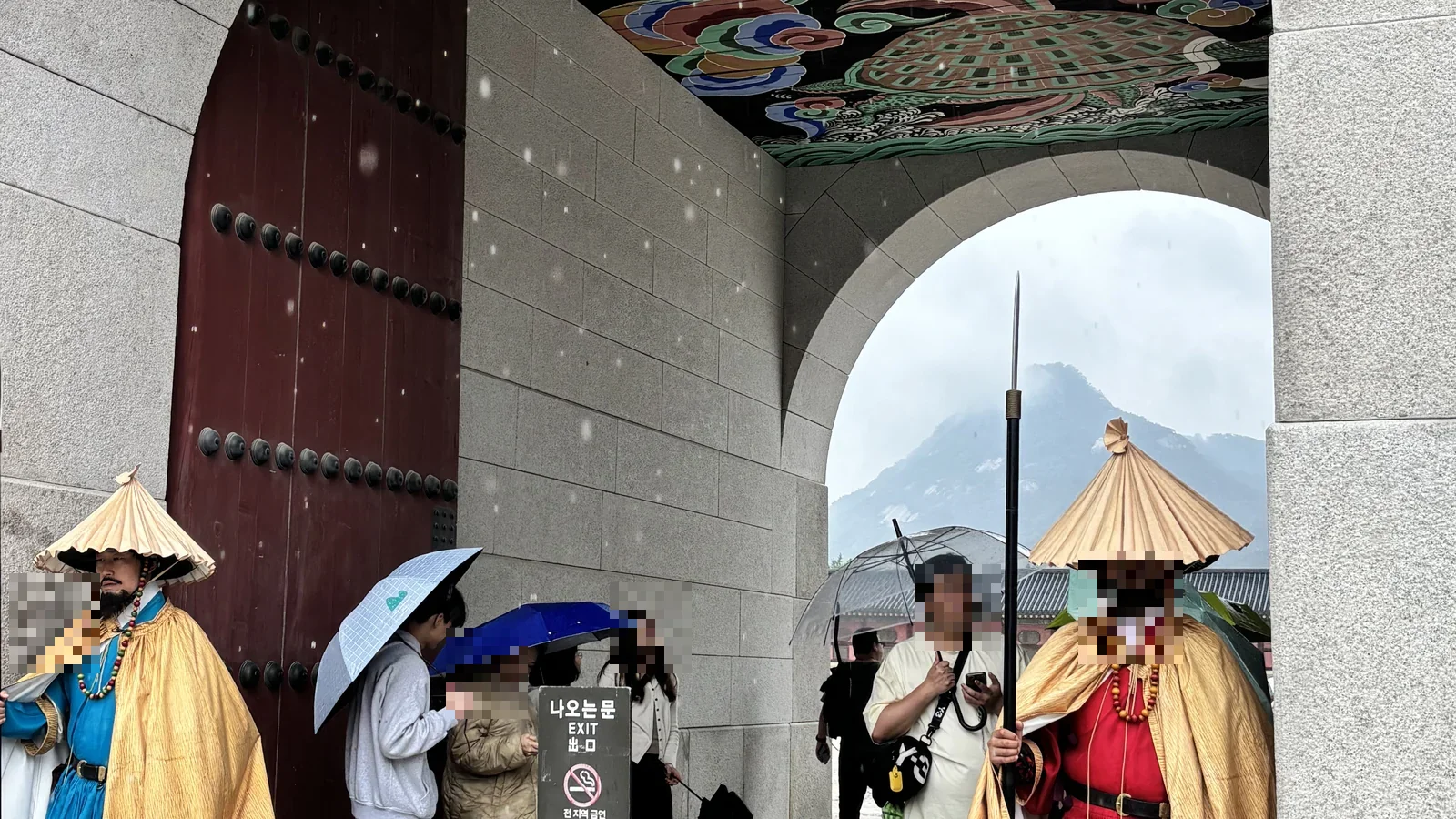
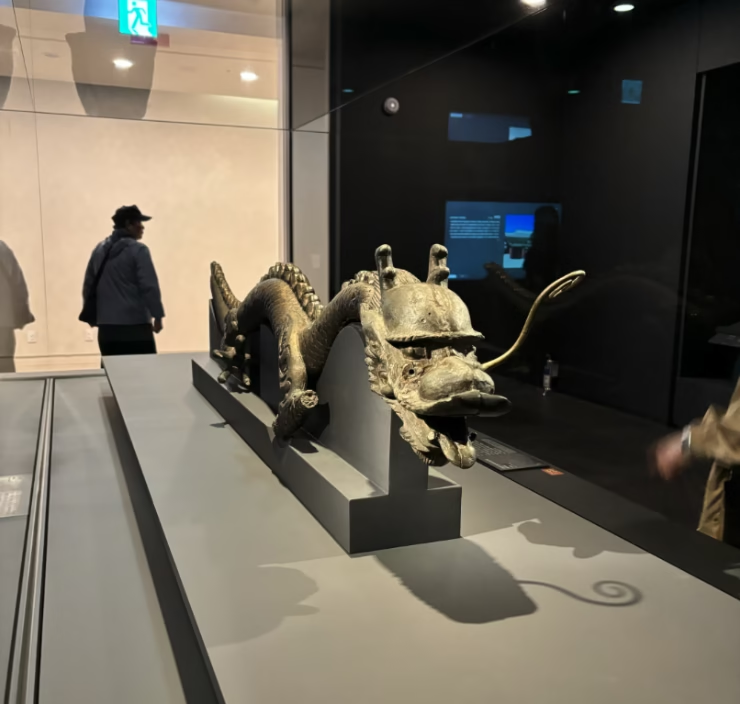
☝️ Bronze dragon roof ornament from the Joseon Dynasty, displayed inside the National Palace Museum of Korea at Gyeongbokgung Palace. (Image Source: Unniepicking.com)
After years of living in Sydney, I had grown used to museums where everything is interactive and digital — history told through touchscreens and projections. In Seoul, stepping into a palace museum feels different. The air is still. The past whispers rather than shouts. Here, you don’t “see” history — you feel it in the polished floors and faded silk robes.
In Australia, museums are usually modern, interactive, and designed to make you feel like part of the story. In Korea, museums inside palaces still carry a sense of tradition — you walk into spaces that once held real artifacts of kings and queens. Visiting these two museums gave me the feeling of reconnecting with my roots, while also realising how accessible Korean culture can be for travellers. If you’re planning free activities in Seoul, the Gyeongbokgung Palace Museums are a perfect choice.
National Palace Museum of Korea: The Royal Story Up Close
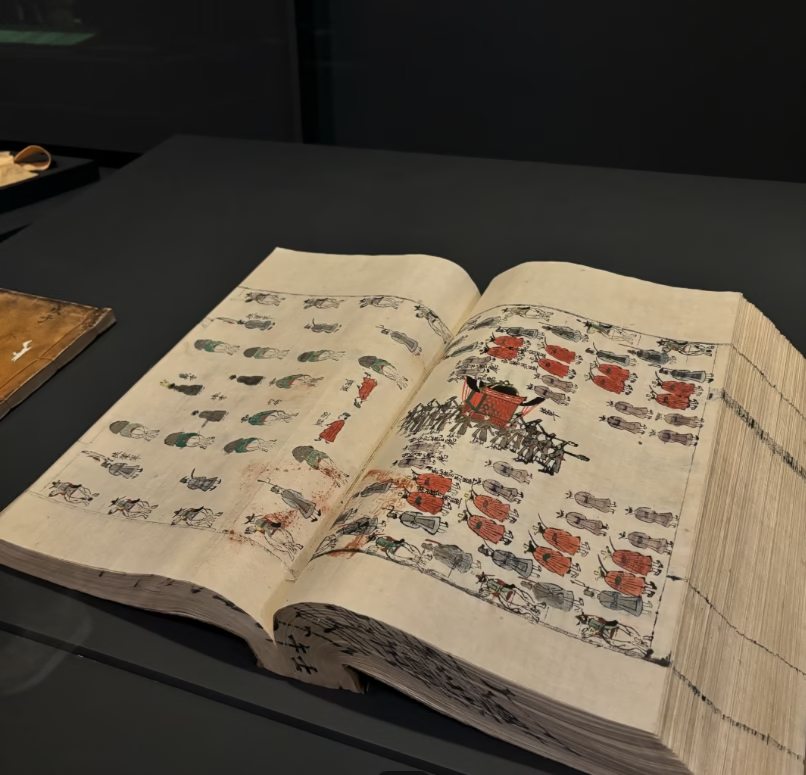
☝️ Illustrated royal procession record from the Joseon era, part of the archives displayed at the National Palace Museum of Korea. (Image Source: Unniepicking.com)
Near Gwanghwamun Gate, the National Palace Museum stands quietly beside the busy road. I entered after taking the subway, amazed at how seamlessly Seoul’s modern world connects to its royal past. Must-see exhibits include: the Royal Seal Collection, Joseon ritual artifacts, and the detailed Royal Procession Archives. It reminded me of how, in Australia, history often feels like something we look at from a distance. But in Korea, it feels close enough to touch. Unlike many museums that rely on replicas or digital displays, this museum presents original royal artifacts, allowing visitors to see authentic items used by the Joseon kings.
Each room felt alive — royal seals carved with authority, scrolls filled with Confucian philosophy, and even ritual objects used by the Joseon court. In Australia, museums show replicas. Here, you’re face-to-face with the real thing — the weight of time captured in gold and silk.
Another advantage is that no Gyeongbokgung ticket is required — the museum can be entered directly and is completely free. It’s also a great alternative if you visit on a Tuesday when the main palace is closed.
| 💡 Getting There: The museum is steps away from Gwanghwamun Station. Take the subway or a bus if you’d like to see the city from street level. (See our Seoul Subway Guide and Bus Tips for Travelers.) If it’s your first day in Seoul, start here — the museum is air-conditioned, compact, and the perfect way to ease into the city’s rhythm |
National Folk Museum of Korea: Everyday Life in Korea’s Past
Deeper inside the palace lies the National Folk Museum, where the royal story fades and the everyday story begins. Exhibits cover traditional farming tools, household items, wedding customs, children’s games, and seasonal folk traditions. As I walked through recreated hanok kitchens and market stalls, I remembered my grandmother’s stories from Korea’s countryside. To my Australian friends, it was fascinating — how a farming society could transform into the tech-driven Seoul we see today.
The museum is located on the northeastern side of Gyeongbokgung, approximately a three-minute walk from Hyangwonjeong Pavilion. This is where you’ll find over 4,000 artifacts depicting everything from farming tools to wedding customs.
For me, it wasn’t just nostalgia — it was a homecoming. The smell of wood, the sound of old market chatter playing softly through speakers — it made me realize how much of Korea I’d carried inside, even while living oceans away in Australia. The recreated hanok-style kitchens, seasonal markets, and festive displays reminded me of my grandmother’s stories from her youth in Korea. Meanwhile, my Australian friends who visited with me were fascinated by how Korea’s farming-based society evolved into today’s high-tech lifestyle in just a few generations.
Outdoor areas include stone pagoda displays, folk sculptures, and seasonal installations — all excellent spots for photography — perfect for photography. For families, the Children’s Museum offers hands-on exhibits where kids can try traditional games and crafts.
Recommended visit duration: 60–90 minutes, depending on interest. The exhibits spill outdoors into courtyards filled with stone pagodas and folk sculptures — perfect for slow walks or photos. Families can enjoy the Children’s Museum, where kids can play traditional Korean games.
The museum is bigger than it looks, and if you enjoy photography, you’ll easily spend more time exploring both the indoor and outdoor exhibits. Families visiting the Gyeongbokgung Palace Museums often enjoy the interactive folk exhibits.
Why You Shouldn’t Skip These Museums
Many travellers rush through Gyeongbokgung for photos, but these two museums transform it into a living story. They show how power and people, royalty and farmers, once coexisted. And since both are free, they might just be Seoul’s best-kept secret for travellers who love meaning as much as beauty. Both the National Palace Museum and the National Folk Museum together form the Gyeongbokgung Palace Museums, offering history and culture in one place. Instead of seeing the palace as just a backdrop, you’ll understand the cultural meaning behind its architecture, clothing, and daily practices. And since both museums are free, they are some of the best-value attractions in Seoul.
They’re also perfect for rainy days or when you need a break from outdoor sightseeing. Personally, I think these museums strike the perfect balance — detailed enough for history lovers, but visual and interactive enough for casual visitors.
After visiting the museums, walk toward Gwanghwamun Square — the statue of King Sejong rises proudly, reminding you that wisdom outlives time. From there, take the subway or a short taxi ride to Myeongdong, where the smell of street food fills the air. If you have more energy, ride the bus toward Hongdae for live music, or head south to Gangnam for city lights that never dim. (Explore our Taxi in Seoul Guide and Gangnam Travel Itinerary.)
From there, it’s only a couple of subway stops to Myeongdong, one of Seoul’s busiest shopping districts, where you can grab street food and shop for cosmetics before ending your cultural day.
Suggested Itinerary
- 09:00 – 📸 Pick up your pre-booked Hanbok near Gyeongbokgung
- 10:00 — Watch the Royal Guard Changing Ceremony at Gwanghwamun Gate.
- 10:40 — Visit the National Palace Museum (40–60 minutes).
- 11:40 — Walk through major palace sites such as Geunjeongjeon Hall and Hyangwonjeong Pavilion.
- 13:00 — Visit the National Folk Museum (60–90 minutes).
- 15:00 — Transfer to Myeongdong via subway or taxi for dinner and shopping.
This flow allows you to experience royal history, palace architecture, folk culture, and modern Seoul life in one seamless journey.
Insadong sits one street east of the palace — tea houses and craft shops that pair naturally with a museum morning; my Insadong guide maps that little loop.
📸 Make your visit unforgettable: Renting a Hanbok is the best way to take stunning photos at the palace. I recommend the Gyeongbokgung Hanbok Rental & Photoshoot Experience for its variety of styles and convenient location.
👉 The Best Food Markets in Seoul – A 2026 Guide picks up exactly on this — seoul is a city that never sleeps, and at its heart are the best food markets in seoul — places where tradition, culture, and it goes from there.
Opening Hours
- National Palace Museum of Korea: 9:00 am – 6:00 pm (closed on some holidays).
- National Folk Museum of Korea: Same as Gyeongbokgung Palace hours (closed Tuesdays).
For the latest updates, check the official Visit Korea site or the National Palace Museum website before your visit.
Frequently Asked Questions About the Gyeongbokgung Palace Museums
Are the Gyeongbokgung Palace museums free to enter?
Yes, and this is the part most visitors miss. Both the National Palace Museum and the National Folk Museum are completely free, so you don’t need the ₩3,000 palace ticket to walk into either one.
Do I need a Gyeongbokgung Palace ticket to see the museums?
No. The two museums sit on the palace grounds but have their own entrances, so you can visit them on their own. Only the palace courtyards themselves carry an admission fee.
What days are the Gyeongbokgung Palace museums closed?
The National Folk Museum keeps the same schedule as Gyeongbokgung Palace and closes on Tuesdays, so don’t plan a Tuesday visit. The National Palace Museum runs 9am to 6pm and only closes on certain national holidays, so I always check the official site before I go.
Can I wear hanbok to get into Gyeongbokgung for free?
Yes. Wearing hanbok gets you free admission to the palace grounds, and rental shops line the streets nearby. The museums are already free, but hanbok makes the palace photos genuinely beautiful — it’s the one tourist thing I still do every time I’m back in Seoul.
How long should I spend at the Gyeongbokgung Palace museums?
Give yourself about an hour per museum if you actually read the displays, a little less if you’re skimming. Combined with the palace and the changing-of-the-guard ceremony out front, it’s a relaxed half-day.
Are there English explanations at the museums?
Yes. Both museums have English signage, free English guided tours at set times, and audio guides, so you won’t feel lost even if you don’t read Korean.
Final Thoughts: Are the Museums Worth Your Time?
Here’s the honest verdict: most visitors rush through Gyeongbokgung chasing hanbok photos and walk straight past these two museums — and they miss the best free thing on the grounds. Twenty minutes in the National Palace Museum and the throne hall you just photographed finally makes sense; another twenty in the Folk Museum and you see how ordinary Koreans actually lived alongside all that royalty. Air-conditioned, genuinely free, and never crowded — for me they’re the easiest “worth it” call on a Seoul itinerary.
My tip: do the museums first, while your legs are fresh, then wander the palace courtyards afterwards. And if you haven’t mapped out the palace itself yet, pair this with my full Gyeongbokgung Palace guide for opening times, the changing-of-the-guard schedule, and where to get the best photos.
Related Seoul Travel Guides
- Seoul Taxi Guide 2026 – How to get around the city easily, from late-night rides to airport transfers.
- Seoul Subway Guide 2026 – Navigate the city like a local with essential maps, apps, and travel tips.
- Myeongdong Travel Guide 2026 – Shopping, street food, and night lights just minutes from Gyeongbokgung.
- Gangnam Travel Guide 2026 – Discover Seoul’s modern side, where luxury, K-pop, and city life meet.
- Seongsu Café & Design District Guide 2026 – Explore Seoul’s creative hub filled with hidden cafés and art spaces.
- Cheonggyecheon Stream Night Walk 2026 – End your day with a peaceful riverside walk through downtown Seoul.
Pingback: Seoul Hotels Guide 2025 – Top Luxury & Budget Stays
Pingback: Best Places to Visit in Korea 2025: Seoul, Food & Seasonal
Pingback: 📸 The Ultimate Guide to Taking Photos in Hanbok at Gyeongbokgung Palace - KOREA HUNTERS
Pingback: Discover Cheonggyecheon Stream: Seoul's Urban Oasis Near Gyeongbokgung - KOREA HUNTERS